Combat Profile
Salmon's Refusal
Aino's drowned spirit appears as a speaking salmon; any hero who attempts to claim her is permanently haunted by her grief and loses one point of luck whenever they next try to win a bride
Tragic Witness
Aino's death has consecrated the lake where she drowned; women fleeing forced marriages who reach that water gain her invisibility and protection until they are safely beyond pursuit
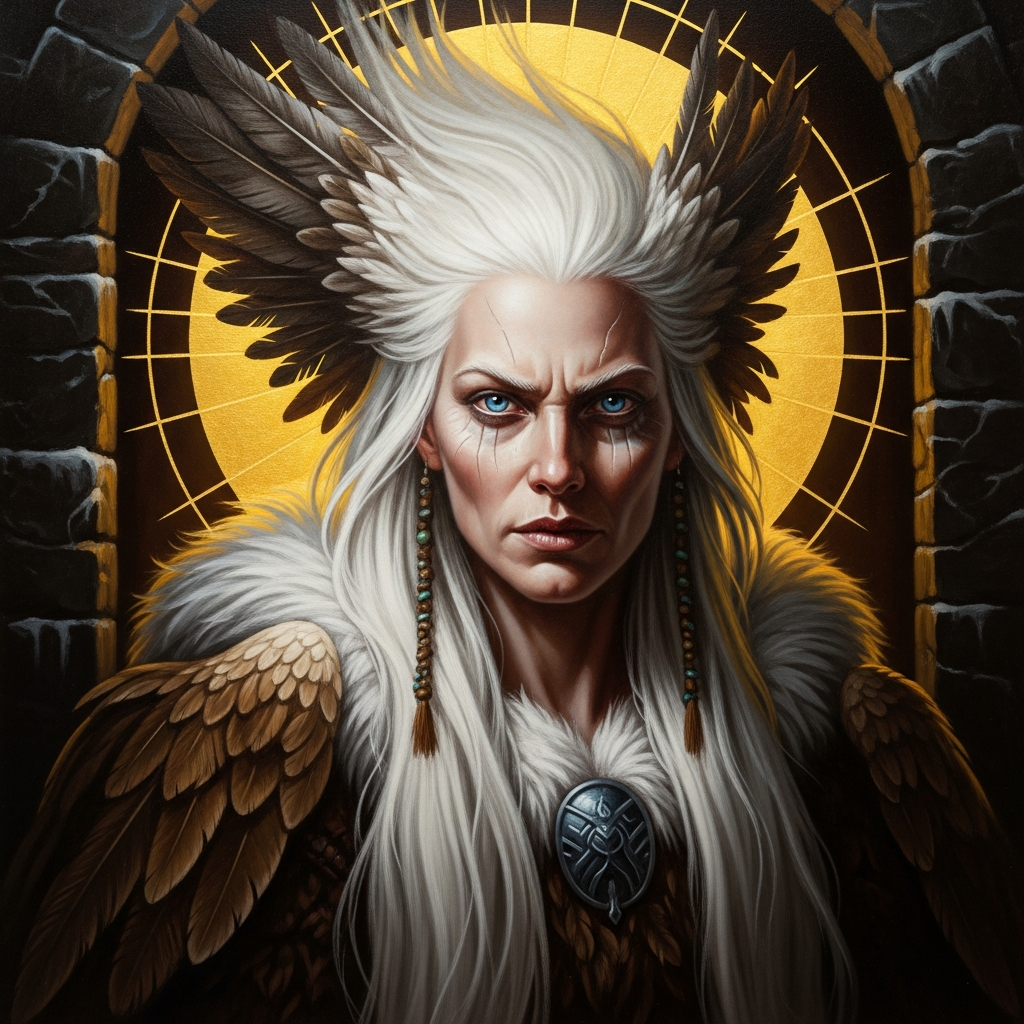
Aino is one of the most heartbreaking figures in any mythological tradition. She is the young sister of the boastful Joukahainen, who challenges Väinämöinen to a singing-duel and loses so completely that he sinks into a swamp up to his neck. To save his life, Joukahainen offers his sister Aino as bride to the ancient sage. Aino refuses. She does not want to marry an old man. She walks into the forest, weeping, takes off her clothes, and walks into the lake to drown herself rather than become Väinämöinen’s wife. Her body becomes a salmon; when Väinämöinen later catches a fish that speaks to him in her voice and reveals herself, she slips from his hands and is lost forever.
Aino is the Kalevala’s indictment of patriarchal marriage-bartering. The poem does not soften her death or moralize it; she is given a long, lyrical lament and a death that is grieved by the natural world itself. She is the figure of every young woman traded between men against her will, the irrecoverable cost of the heroic system’s casual brutalities. The name Aino has become one of the most-used female names in Finland since the Kalevala’s publication.
Biblical Parallels: Aino parallels Jephthah’s daughter (Judges 11:34-40), the young woman sacrificed to honor a male’s vow — and like Aino, the Hebrew text gives the daughter a lyrical lament and lets the tragedy stand without false consolation. She also echoes Iphigenia in being the victim of an arranged sacrifice she did not choose.
Cross-Tradition: Parallels Greek Iphigenia (sacrificed for the Trojan expedition), Hindu Sita (whose ordeals are also forced upon her), and the broader “tragic maiden” archetype. Her transformation into a salmon connects her to the Celtic Salmon of Wisdom and to the wider mythological pattern of women transformed into fish or birds to escape forced unions.
1 min read