The Woman-Warrior's Island
circa 110 BCE — before the Táin, during Cú Chulainn's young adulthood · The Isle of Shadow (Dún Scáith), traditionally located in Skye, Scotland
Contents
Cú Chulainn crosses the Plain of Ill Luck and the Bridge of Leaps to reach the fortress of Scáthach, the greatest warrior-teacher in the world, and emerges a year and a day later carrying weapons no other living man can use.
- When
- circa 110 BCE — before the Táin, during Cú Chulainn's young adulthood
- Where
- The Isle of Shadow (Dún Scáith), traditionally located in Skye, Scotland
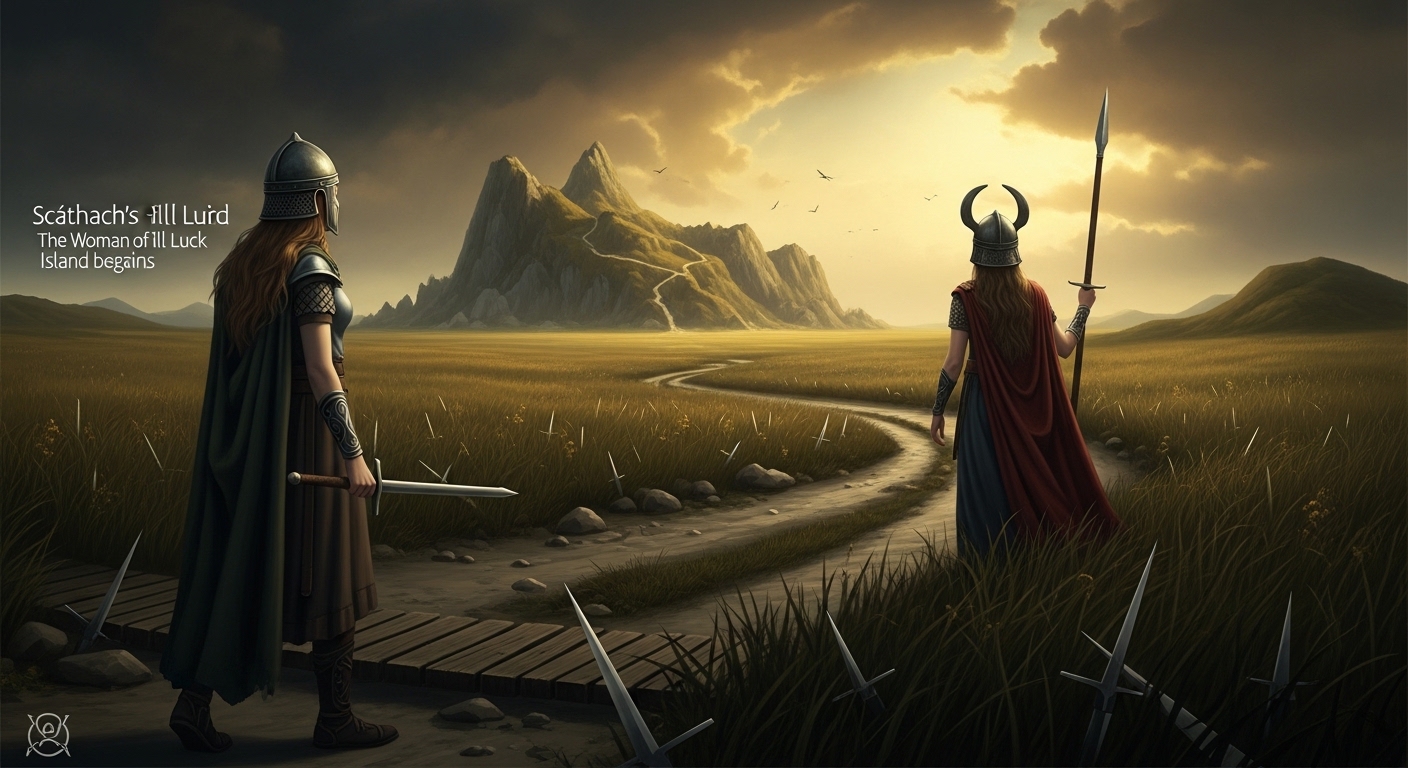
The road to Scáthach’s island begins on the Plain of Ill Luck, where the grass blades are sharp as knives and the ground shifts beneath anyone who crosses without a guide.
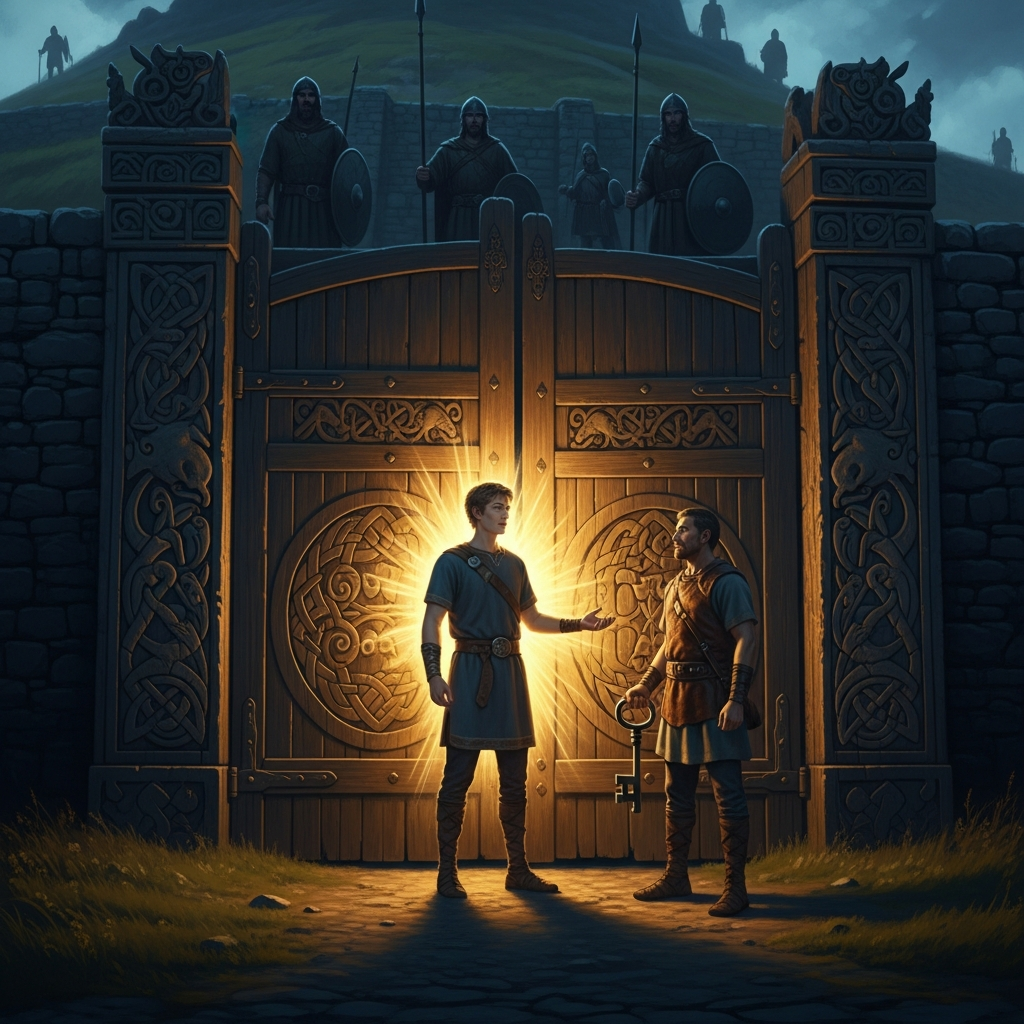
Cú Chulainn crosses alone, guided only by a golden wheel given to him by a young man he met at a crossroads — a young man with eyes too old for his face, who he will later understand was Lug Lámhfhada, his divine father, stepping into the human world briefly to keep his investment alive. He rolls the wheel and follows its track, and the plain does not cut him.
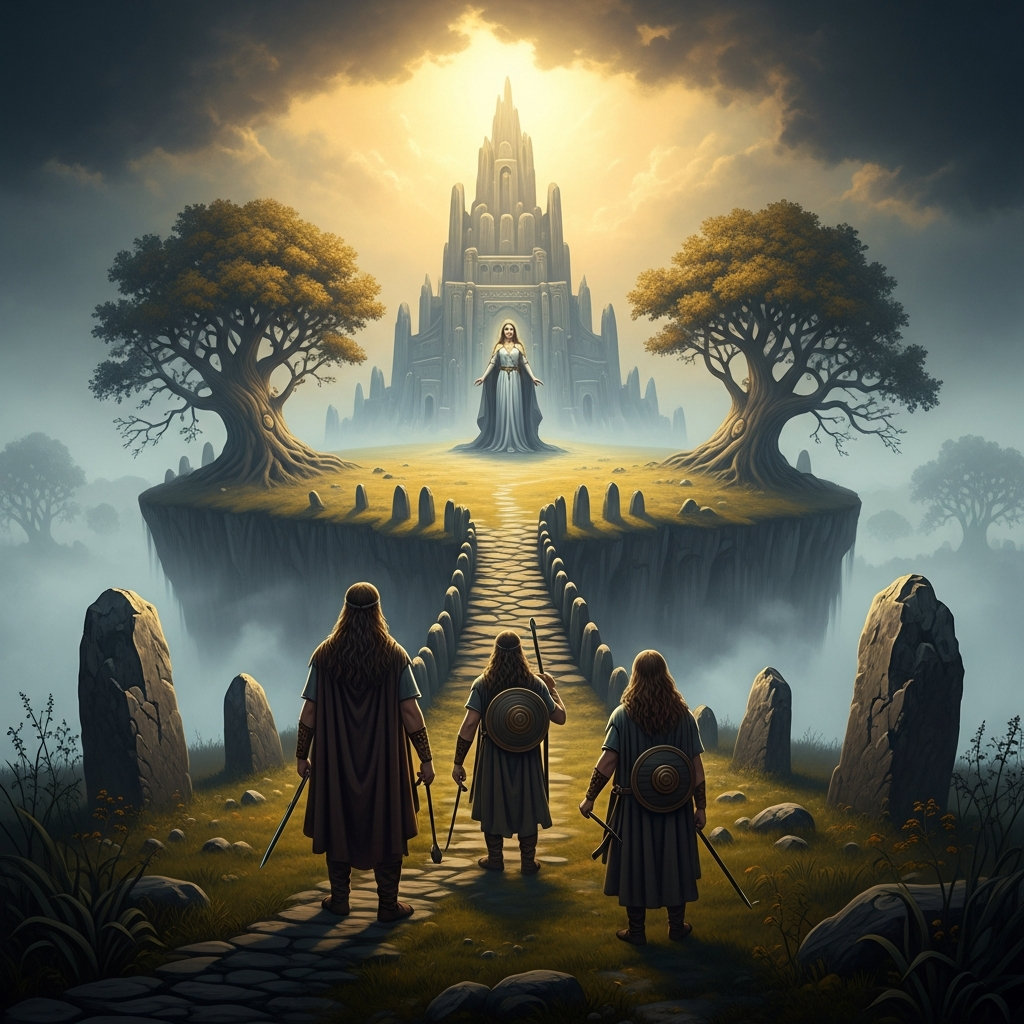
Beyond the plain is the Perilous Glen and beyond that is the Bridge of Leaps — a narrow span that rears vertical when anyone stands on it, pitching travelers into the water below. Warriors have been trying to reach Scáthach’s fortress for generations; many of them are still in the water, or rather, what the water has made of them.
Cú Chulainn makes the bridge on his third attempt: a salmon-leap from bank to center at the moment the bridge rears, landing past the midpoint, riding the swing of it down to the far shore. The women training in Scáthach’s yard go still when he lands. One of them goes inside to tell the teacher.
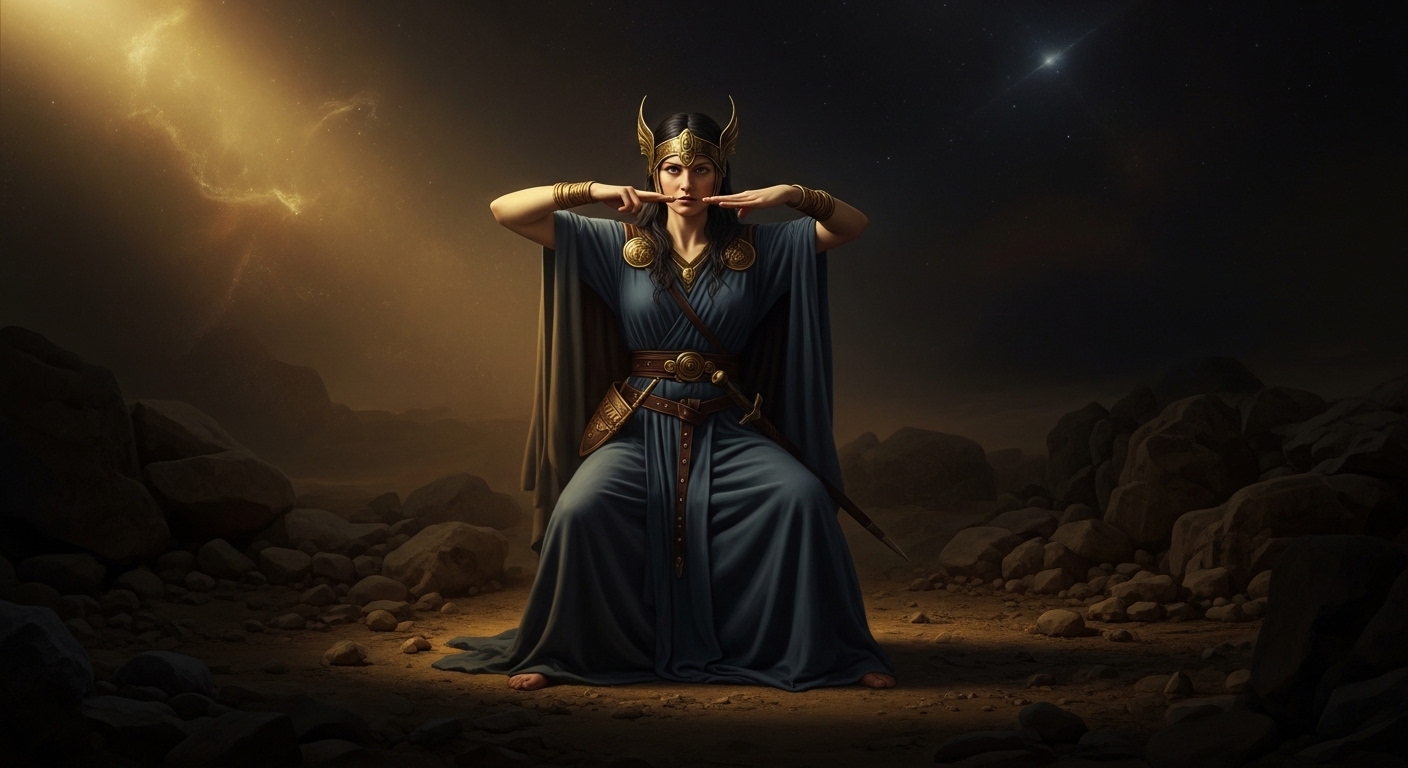
Scáthach herself is a compact woman of indeterminate age, dark-haired, precise in every movement the way a master calligrapher is precise — nothing wasted, everything carrying information. She does not seem impressed that he crossed the bridge. She seems, if anything, interested.
He presses the point of his sword to her throat — this is, the texts say, the proper way to demand training from Scáthach — and asks for instruction. She agrees to three things: to train him as long as he needs to be trained, to give him her daughter Uathach as his companion, and to tell him his future.
The future, she tells him, is glorious and short. She does not say this to discourage him. She says it to allow him to choose.
He stays.
The training is a year and a day of everything the warrior arts can hold: weapons, wrestling, breath control, the discipline of the battle-cry that stuns opponents, the technique of the chariot-charge. He trains with Ferdiad, who becomes his closest companion, his foster-brother in arms, the man he will one day have to kill at the ford in the most anguished combat of his life. They learn everything together and neither of them knows yet what the learning is building toward.
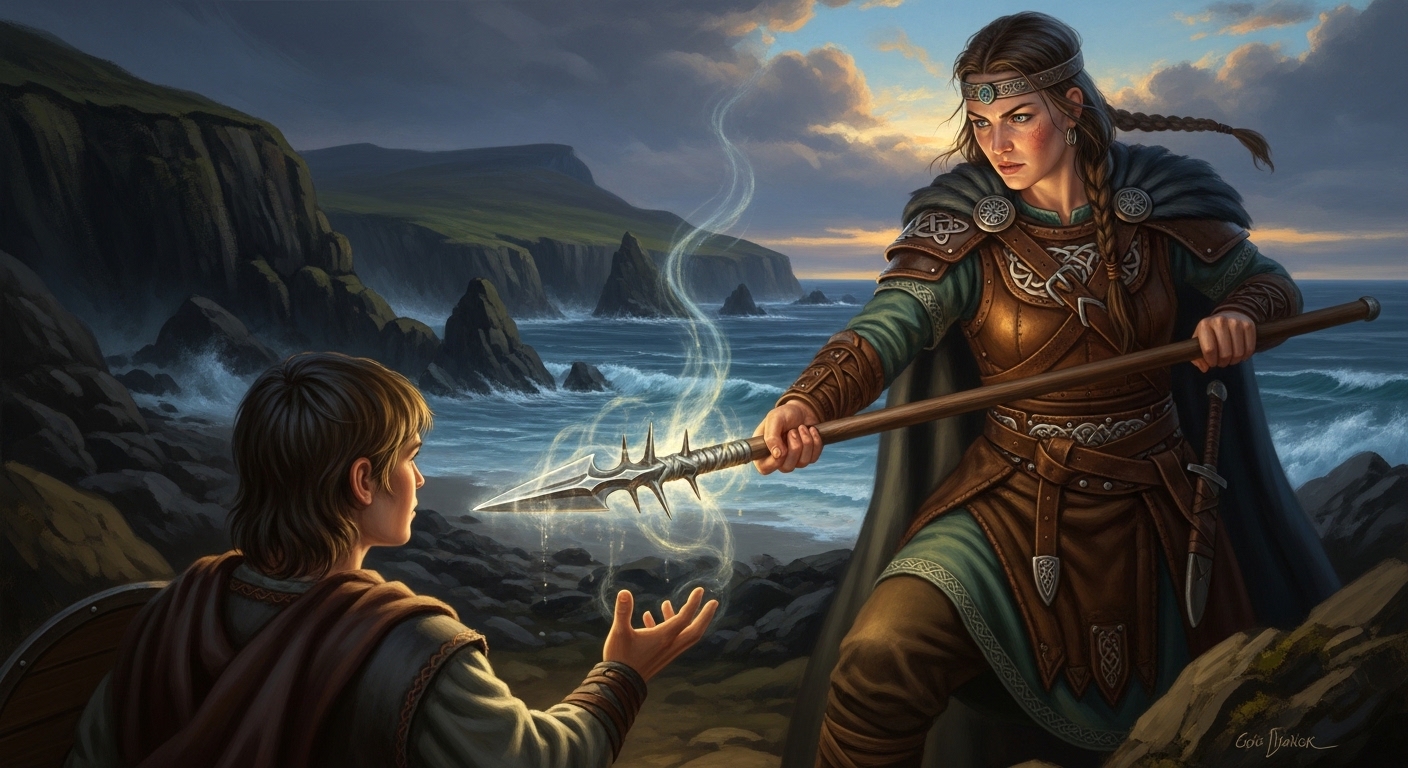
The Gáe Bolga is the last thing Scáthach teaches him and she teaches it to him alone.
It is a spear that cannot be described without inadequacy: it enters the body through a single wound and opens into multiple barbs within, filling every cavity. It is thrown with the foot rather than the hand, from a specific braced position, and the technique is so complex that Scáthach has never been able to teach it to anyone but Cú Chulainn. He is the only student who can throw it and survive the throw. This is itself a form of prophecy.
He uses it once against Aífe, Scáthach’s great rival-sister, whom he fights and defeats and spares — spares because she carries his son, Connla, the child who will come to Ireland years later as a stranger, and whom Cú Chulainn will kill at a ford before either of them knows who the other is. The wheel turns in Scáthach’s shadow and it never stops turning.
He leaves the island after the year and a day. He walks back across the Plain of Ill Luck — the grass does not cut him this time either, though he has no golden wheel — and returns to Ulster carrying the weapons no other living man can use, and the knowledge of a future laid out ahead of him like a road he can see clearly and cannot leave.
Scáthach watches him go from the high window of her fortress above the strait. The raven is already on the wall. Everything she told him is already in motion.
Scenes
Echoes Across Traditions
Entities
- Cú Chulainn
- Scáthach
- Aífe
- Ferdiad
- Láeg
Sources
- Thomas Kinsella, trans., *The Táin* (Oxford University Press, 1969)
- Jeffrey Gantz, trans., *Early Irish Myths and Sagas* (Penguin, 1981)
- Nerys Thomas Patterson, *Cattle-Lords and Clansmen: The Social Structure of Early Ireland* (University of Notre Dame Press, 1994)