Contents
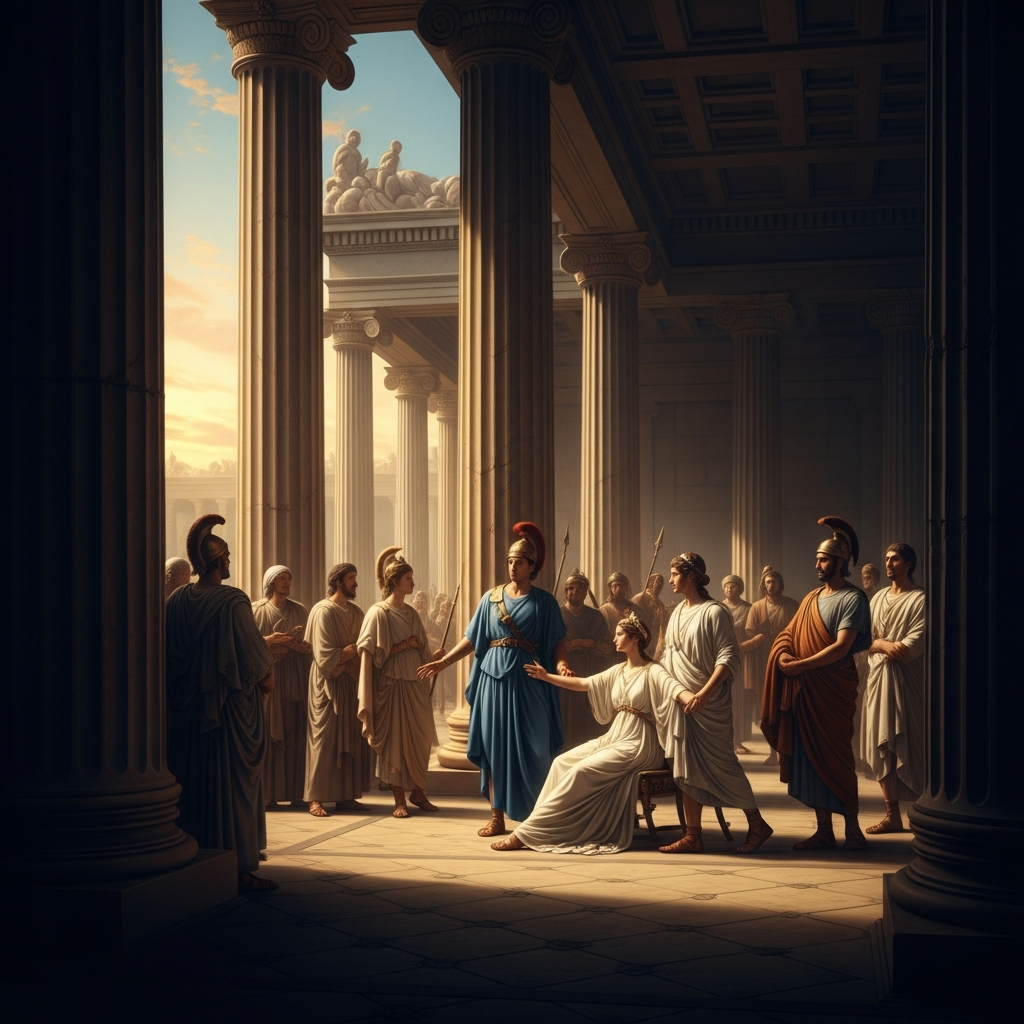
When the Etruscan army of Lars Porsenna marches on the newly-formed Republic, one soldier — Horatius Cocles — plants himself at the Sublician Bridge and holds the entire army alone while his countrymen chop down the bridge behind him.
- When
- Traditional date c. 508 BCE — the first years of the Roman Republic
- Where
- Rome — the Sublician Bridge over the Tiber, the Janiculum Hill
The Janiculum Hill has fallen.
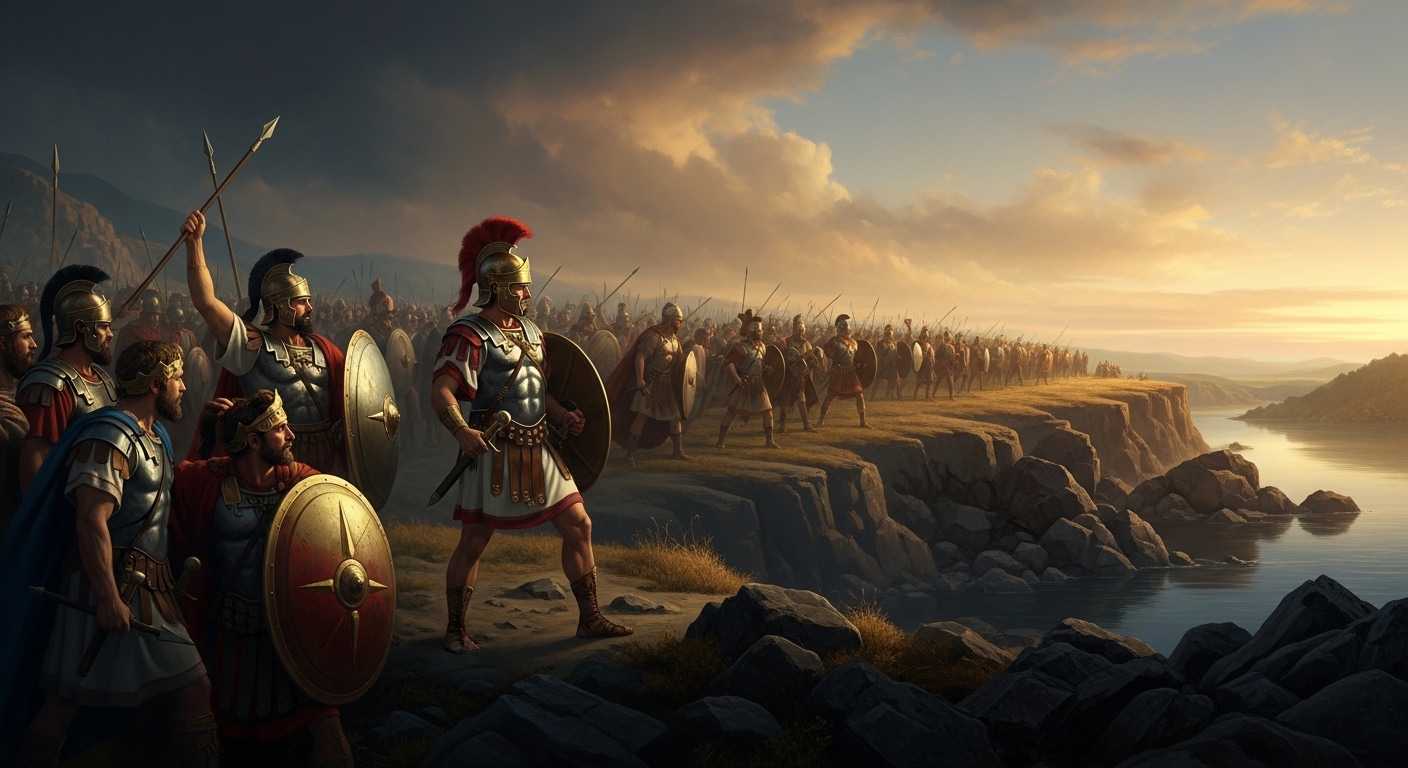
Lars Porsenna — the Etruscan king of Clusium, who has come to restore the Tarquins — has taken the high ground above the Tiber’s right bank in a dawn attack. From the Janiculum, his forces can see Rome directly across the water. There is one bridge.
If Porsenna crosses the Sublician Bridge, Rome falls. The city is crowded with refugees from the surrounding countryside; the army that was defending the Janiculum has just broken and run. The citizens watch from the walls as the Etruscan force comes down the hill at a run.
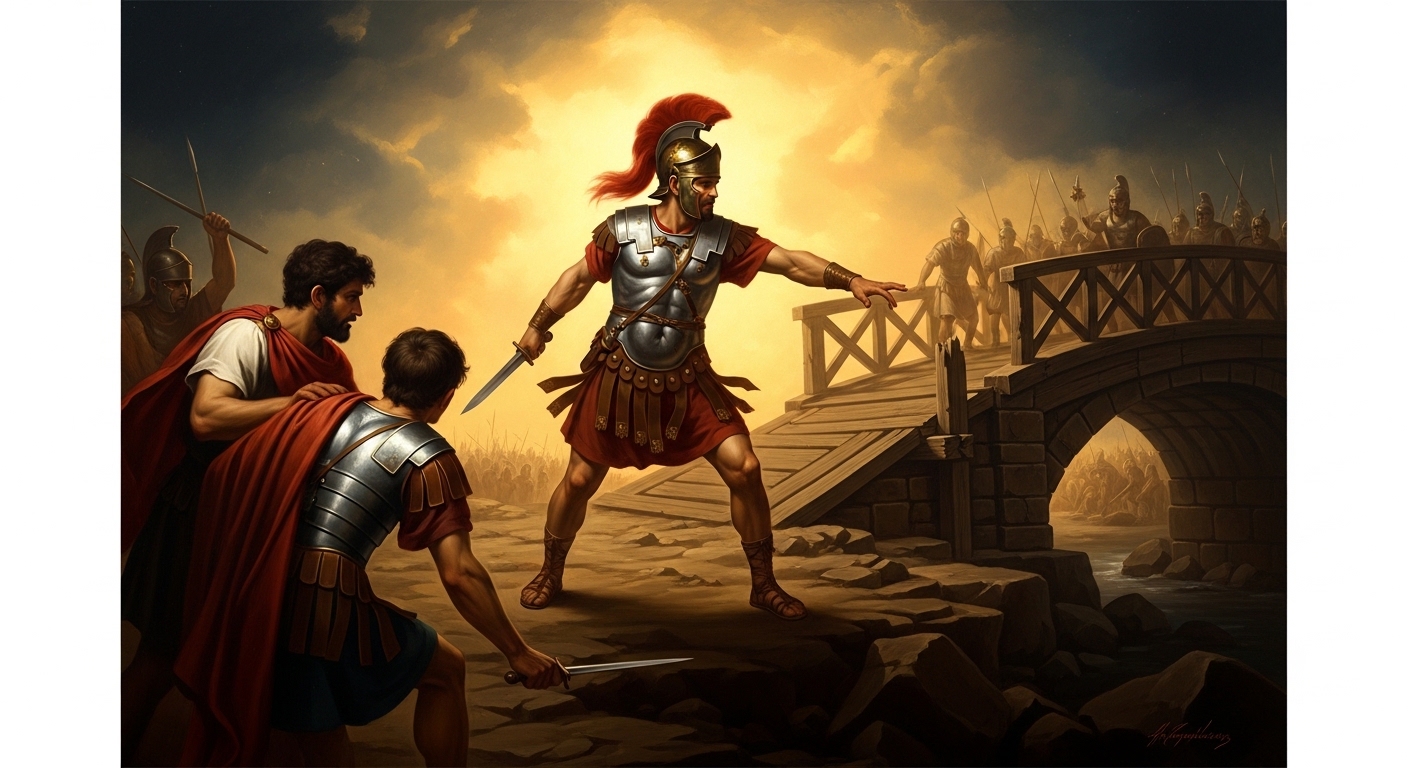
At the bridgehead, Horatius Publius Cocles plants himself.
The name Cocles means one-eyed, or possibly cyclops. He may have lost an eye in an earlier battle; the sources are unclear. What is clear is that he is at the bridge end before anyone else has thought of what to do, and he is turning to face the Etruscan army, and he is shouting at the Roman soldiers streaming past him: go back. Cut the bridge. I will hold them here.
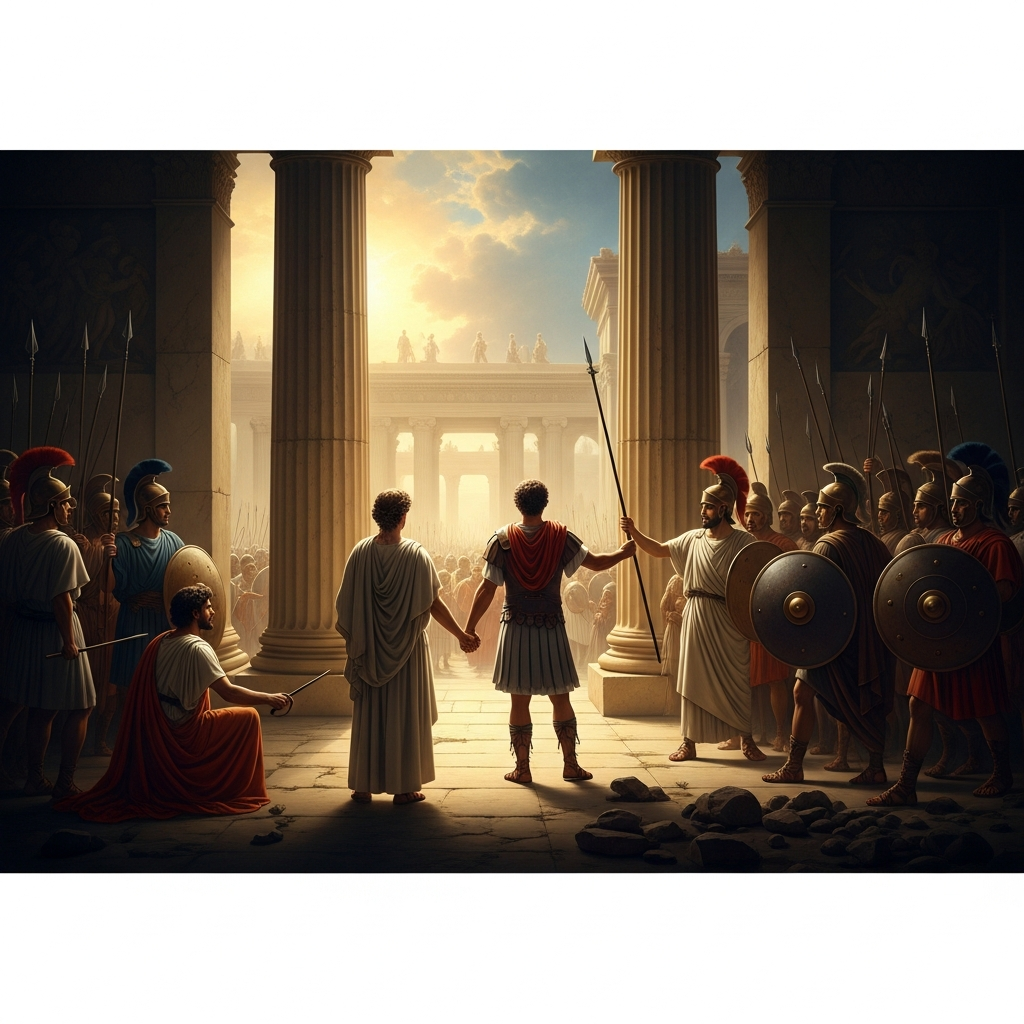
Two men — Spurinna Lartius and Titus Herminius — are shamed by this into staying with him. The three hold the bridgehead while the Etruscan vanguard crashes into them. Livy says Porsenna’s advance guard is stopped not by three men but by the sight of three men — the sheer implausibility of the defense, the terrible confidence of a person who has decided this is the place and the time.
When the bridge is nearly cut, Horatius orders his two companions back.
He stays.
He is alone on the bridgehead with the Etruscan army building up against him. The Romans behind him are sawing at the bridge timbers. He fights. He is hit. He is hit again. He does not move.
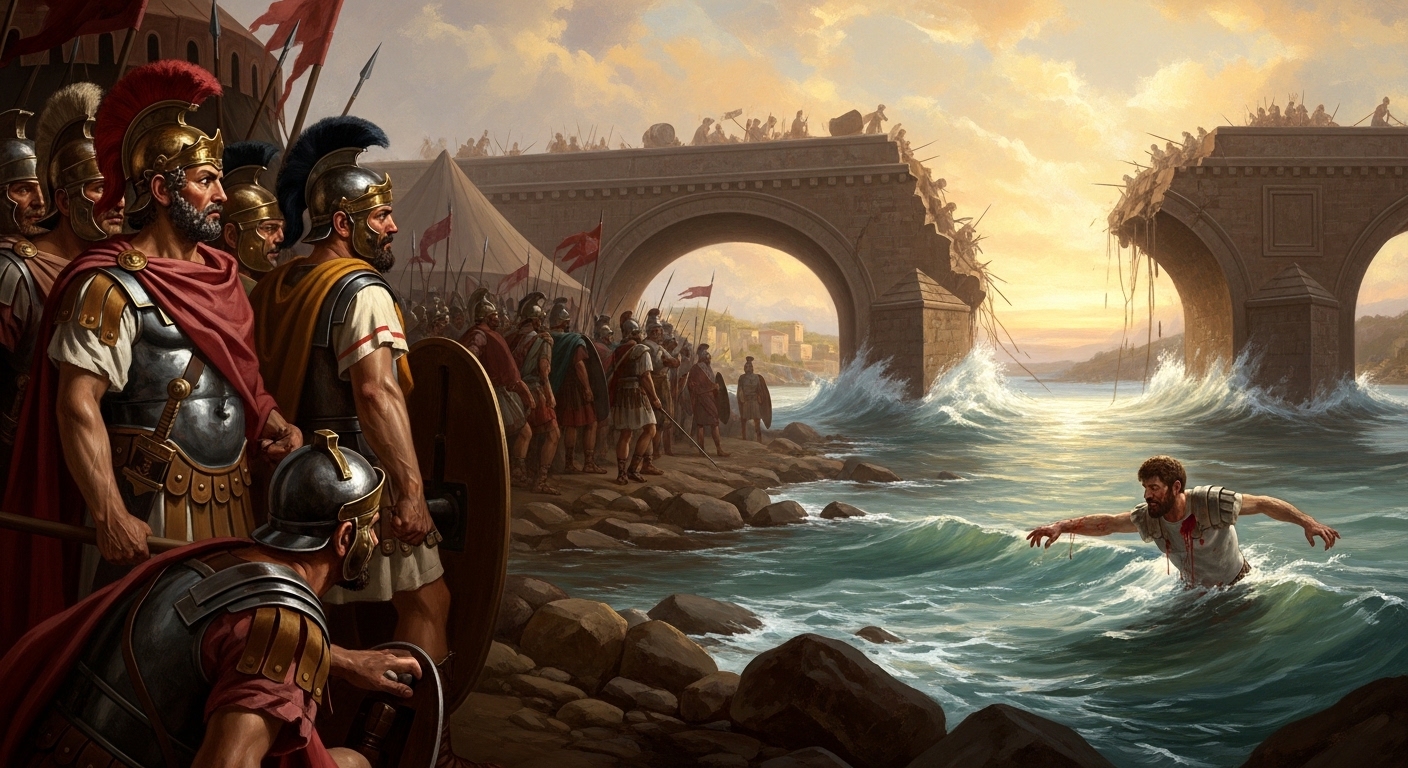
The bridge falls.
The sound of it going into the Tiber is — in every telling of this story — the moment that matters: the thud and crash of the timbers, the splash of the wreckage, the gap between Rome and the Etruscan army opening. Horatius, on the wrong side of the newly-opened gap, does what anyone with any sense would do.
He jumps into the Tiber in full armor.
The Roman sources are honest: this should kill him. The Tiber is running fast; it is early spring; a man in armor has no business surviving this. But Horatius swims across and emerges on the Roman bank, and the Romans who watch from the walls erupt in the sound that only comes when something impossible is true.
Porsenna, Livy says, was openly astonished at his survival.
This is the detail that saves the story from pure propaganda: even the enemy acknowledges the miracle. Porsenna, the opponent, the king who has taken the Janiculum and will besiege Rome for months afterward — even he is moved by what one man did at the bridgehead. The tribute from the adversary is Rome’s way of validating the claim: if your enemy honors your courage, the courage was real.
Rome rewards Horatius with as much land as he can plow in a day. The city erects a statue to him in the Comitium — the political assembly space. In subsequent generations, the statue is said to have prevented disasters by its presence: when lightning struck it and augurs predicted ruin, the ruin did not come, because Horatius was there.
The deeper significance is not the statue. It is the formula: one man, one bridge, the right moment, the decision to stand. Rome had this story available to it for the entirety of its history as an explanation of what the Roman character meant at its best. Not the grand military machine, not the Senate deliberating, not the triumphal procession returning with captives — just one soldier at a bridge who decided that here was the line, and stood there.
He was not trying to win. He was trying to buy time. He bought it.
Scenes
Echoes Across Traditions
Entities
- Horatius Cocles
- Lars Porsenna
- Spurinna Lartius
- Titus Herminius
- the Tiber River
Sources
- Livy, *Ab Urbe Condita* II.10 (c. 27-25 BCE)
- Polybius, *Histories* VI.55 (c. 130 BCE)
- Macaulay, *Lays of Ancient Rome* (1842) — the Victorian poem that made the story famous in English
- Dionysius of Halicarnassus, *Roman Antiquities* V.23-25 (c. 7 BCE)