The Dharma King Who Invited the Tantric Masters
c. 755–797 CE — 8th-century Tibet, height of the Tibetan Empire · The imperial court at Lhasa and Samye, central Tibet — the center of an empire extending from Bengal to Central Asia
Contents
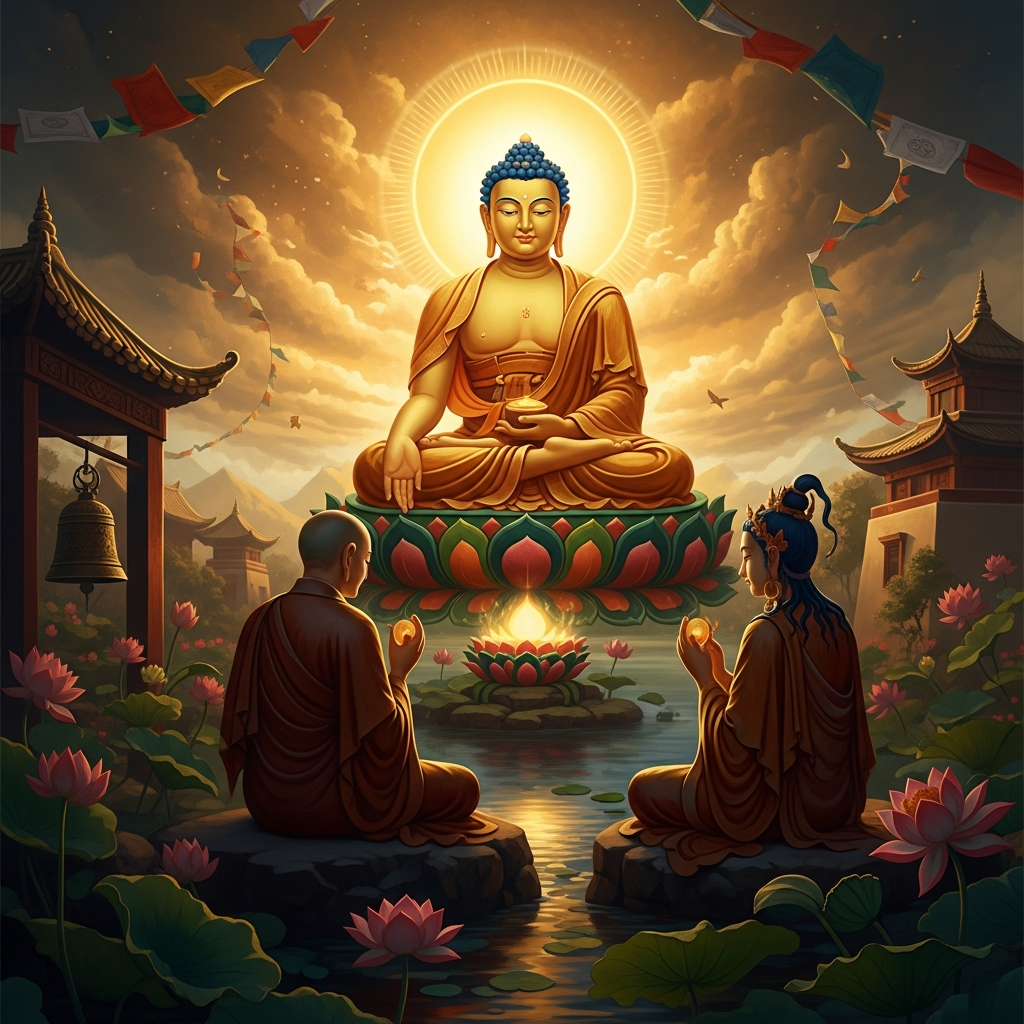
King Trisong Detsen — the greatest of the three Dharma Kings of Tibet — opens the imperial court to Indian Buddhist masters, funds the translation of the entire Buddhist canon into Tibetan, and stakes his kingship on the establishment of monasticism in a culture that had never known monks.
- When
- c. 755–797 CE — 8th-century Tibet, height of the Tibetan Empire
- Where
- The imperial court at Lhasa and Samye, central Tibet — the center of an empire extending from Bengal to Central Asia
He inherits a court that hates Buddhism.
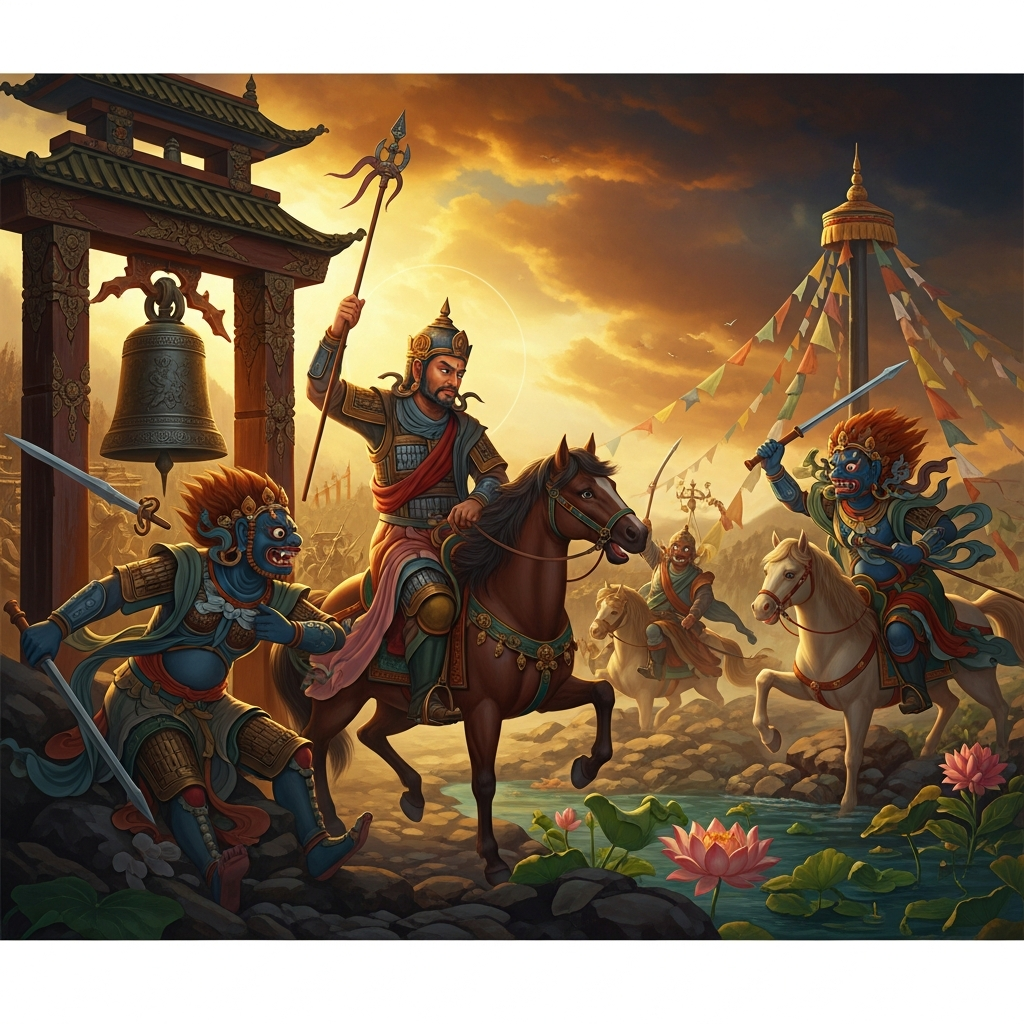
This is not an exaggeration. When Trisong Detsen comes to power as a young king, his court is dominated by ministers who practice Bon or who are simply hostile to the new Indian religion on political grounds — they see it as a foreign influence that weakens the martial culture of the empire. His father’s Dharma-sympathetic policies have already been reversed, the Buddhist temples locked, the monks expelled or killed. The anti-Buddhist faction at court is organized, powerful, and in possession of institutional momentum.
Trisong Detsen is seventeen or eighteen years old when he makes the decision to reverse this.
The decision is not impulsive or naive. He is a sophisticated political actor governing the most powerful empire in Central Asia at the time. He studies the situation. He corresponds with Indian scholars. He receives teachings in secret while his ministers believe he is occupied with ordinary kingly business. He prepares.
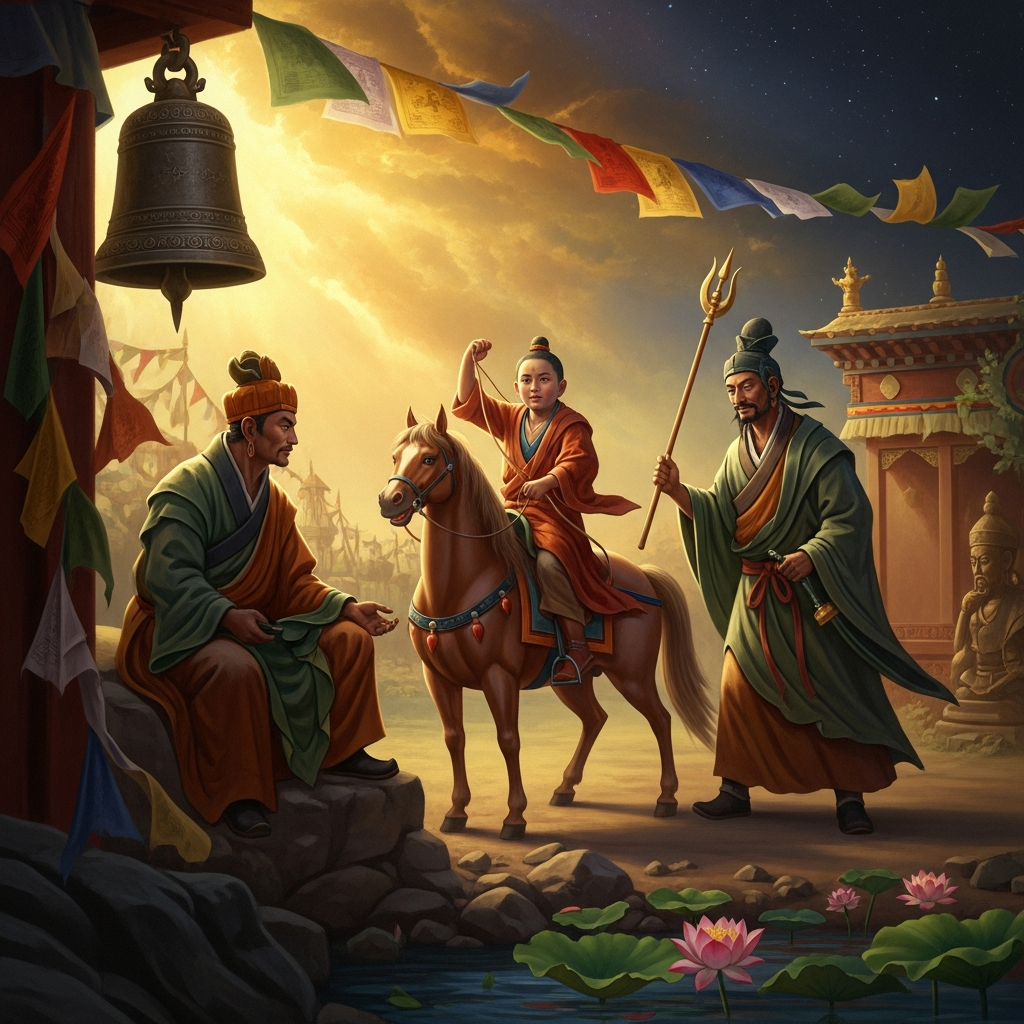
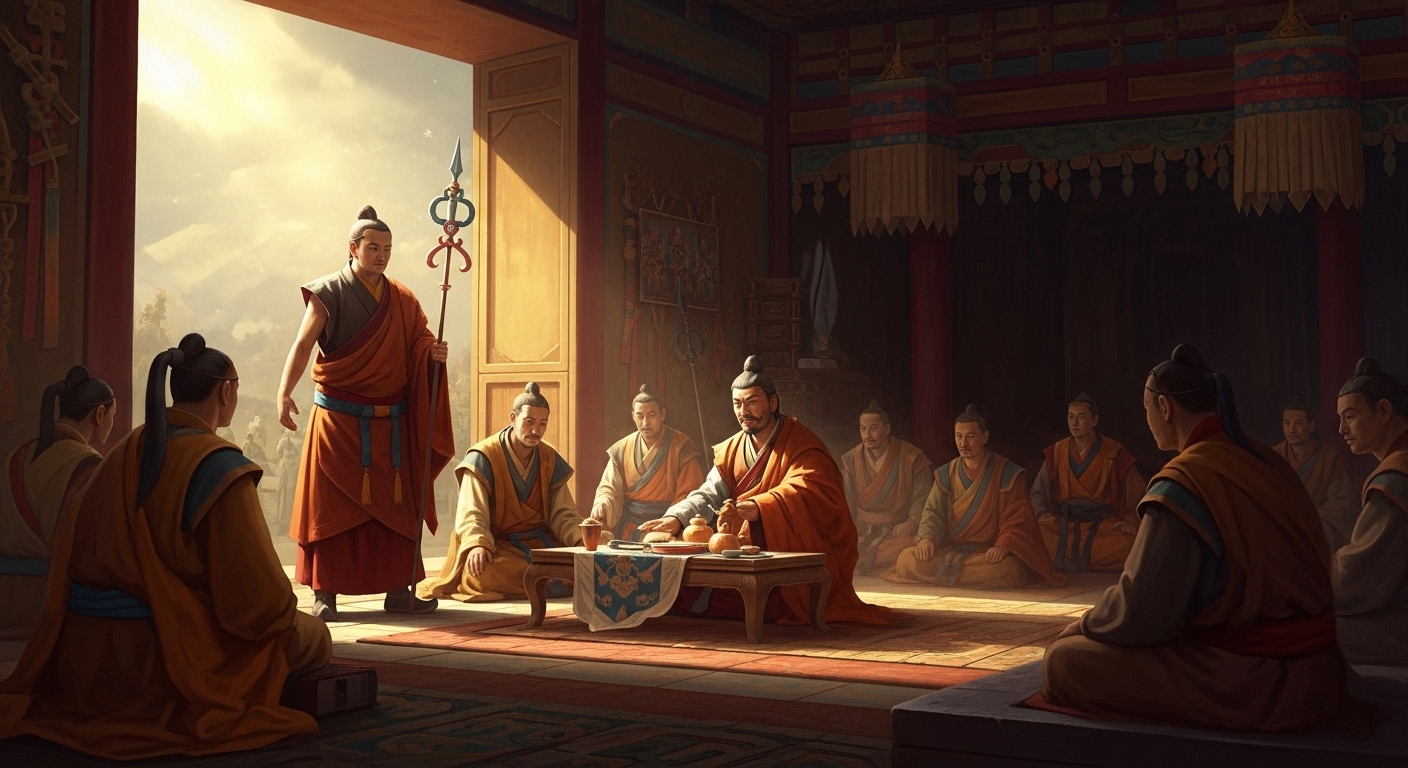
When he acts, he acts decisively: he reasserts royal authority over the anti-Buddhist ministers, dismisses the most hostile, and issues the decree inviting Śāntarakṣita to Tibet. This is a provocation. He knows it is a provocation. The ministers who remain understand what it means.
The founding of Samye is his central achievement.
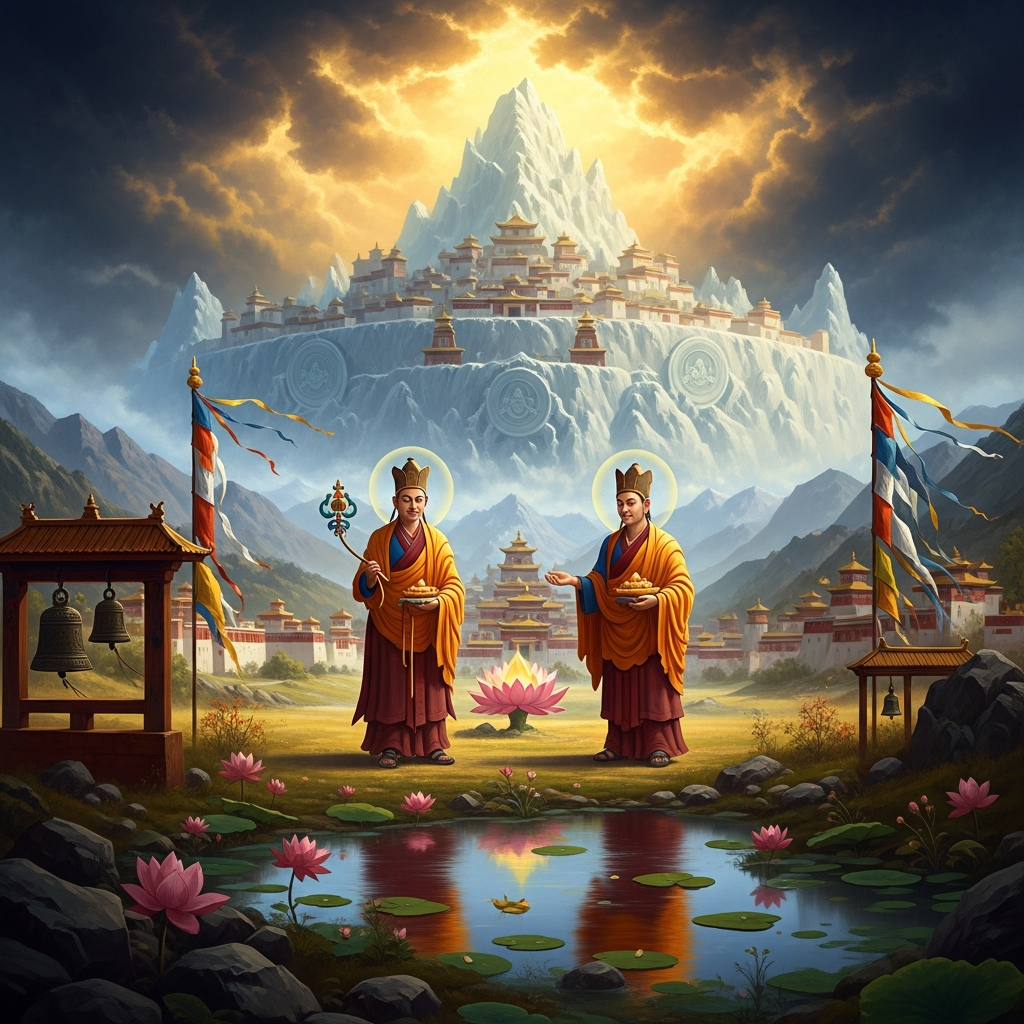
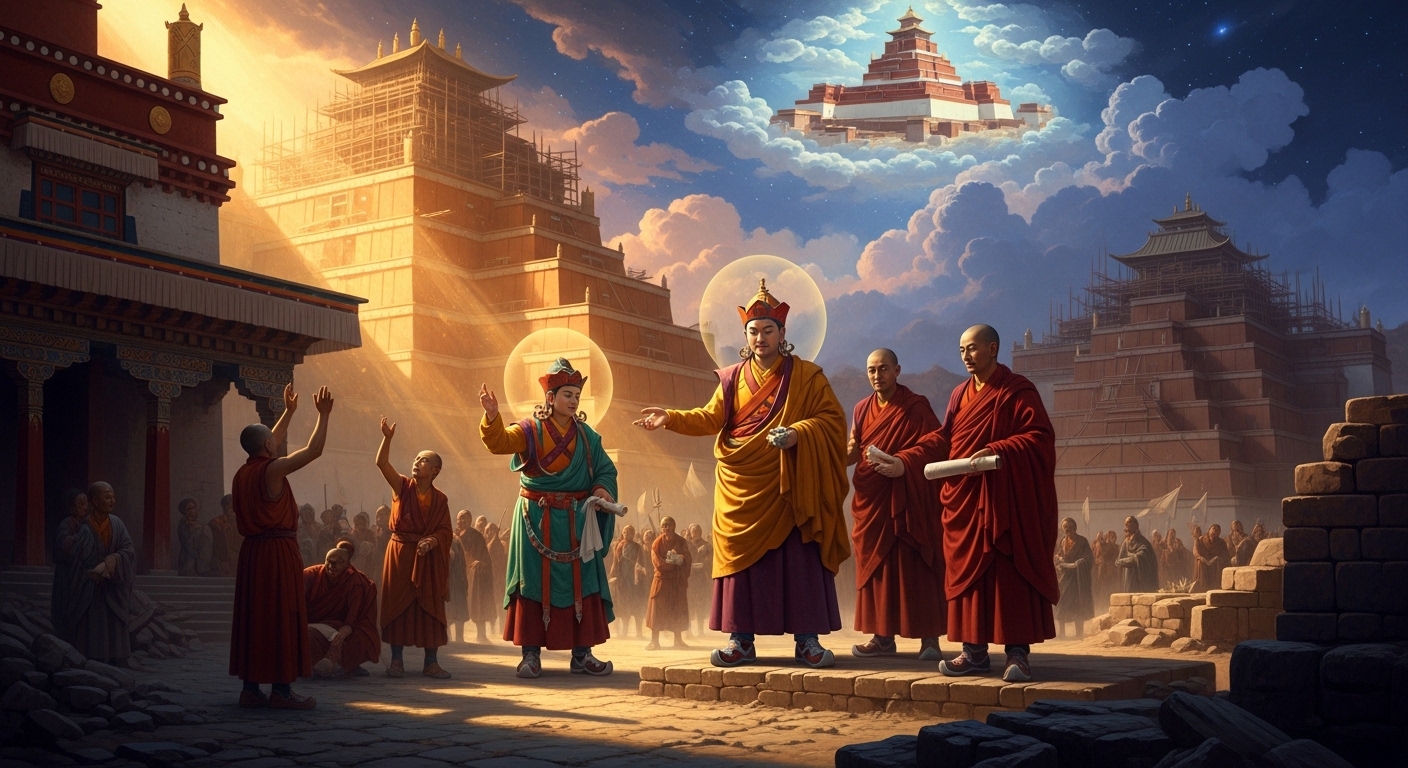
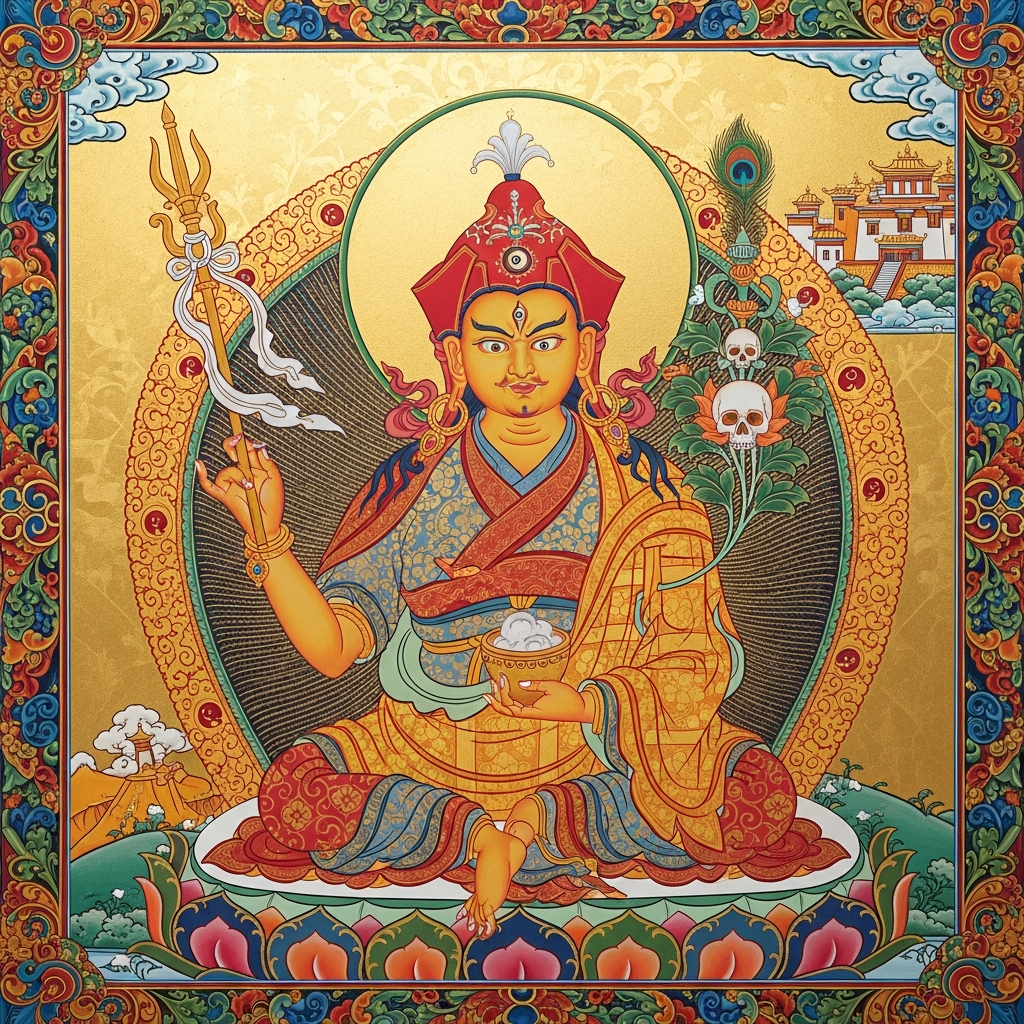
Building the monastery over the objections of indigenous spirits and hostile ministers and the sheer logistical challenge of construction at altitude is Trisong Detsen’s signal act of faith. He is not simply a patron who gives money. He is physically present at the construction site. He participates in the ceremonies. He is learning — from Padmasambhava directly, in the teachings the guru gives specifically to the king — what it means to be not just a political supporter of Buddhism but a practitioner.
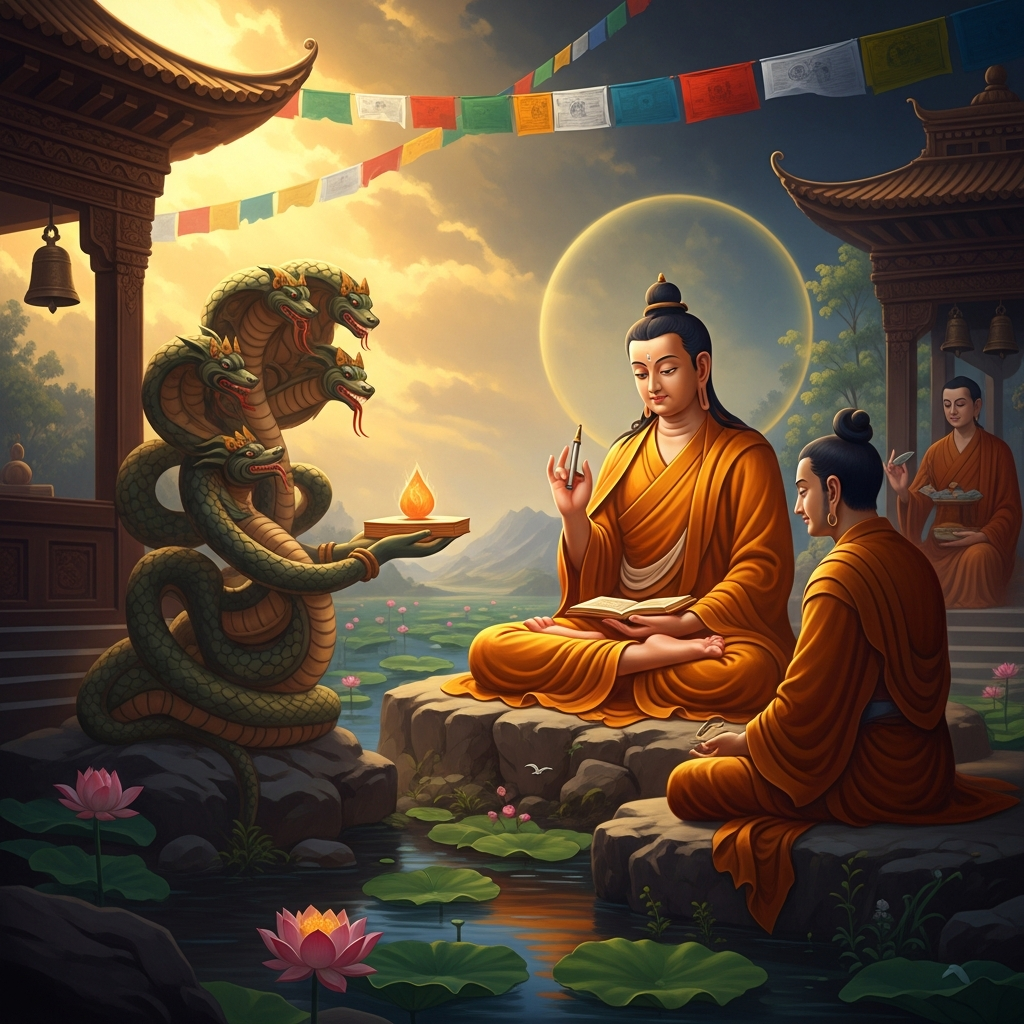
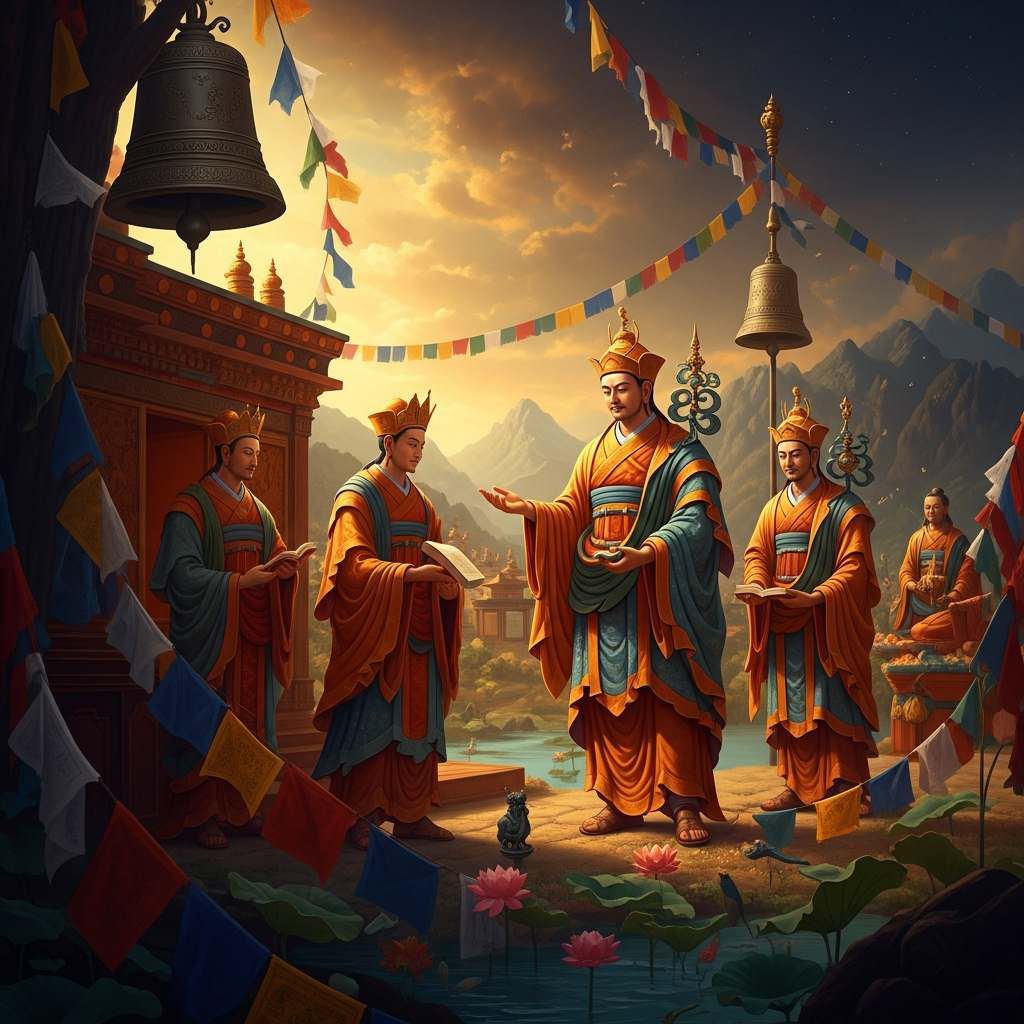
The translation project he initiates at Samye is arguably his most lasting contribution. He recruits Tibetan scholars and Indian pandits, establishes the methodology, creates the institutional infrastructure for systematic translation of the entire Buddhist canon from Sanskrit into Tibetan. This project will continue for centuries after his death. The Tibetan canon — the Kangyur and Tengyur — is its eventual product: the most complete preservation of Indian Buddhist literature in any language, containing texts that were lost in India and survived only in the Tibetan translations made under the auspices of what Trisong Detsen began.
He is understood as a bodhisattva.
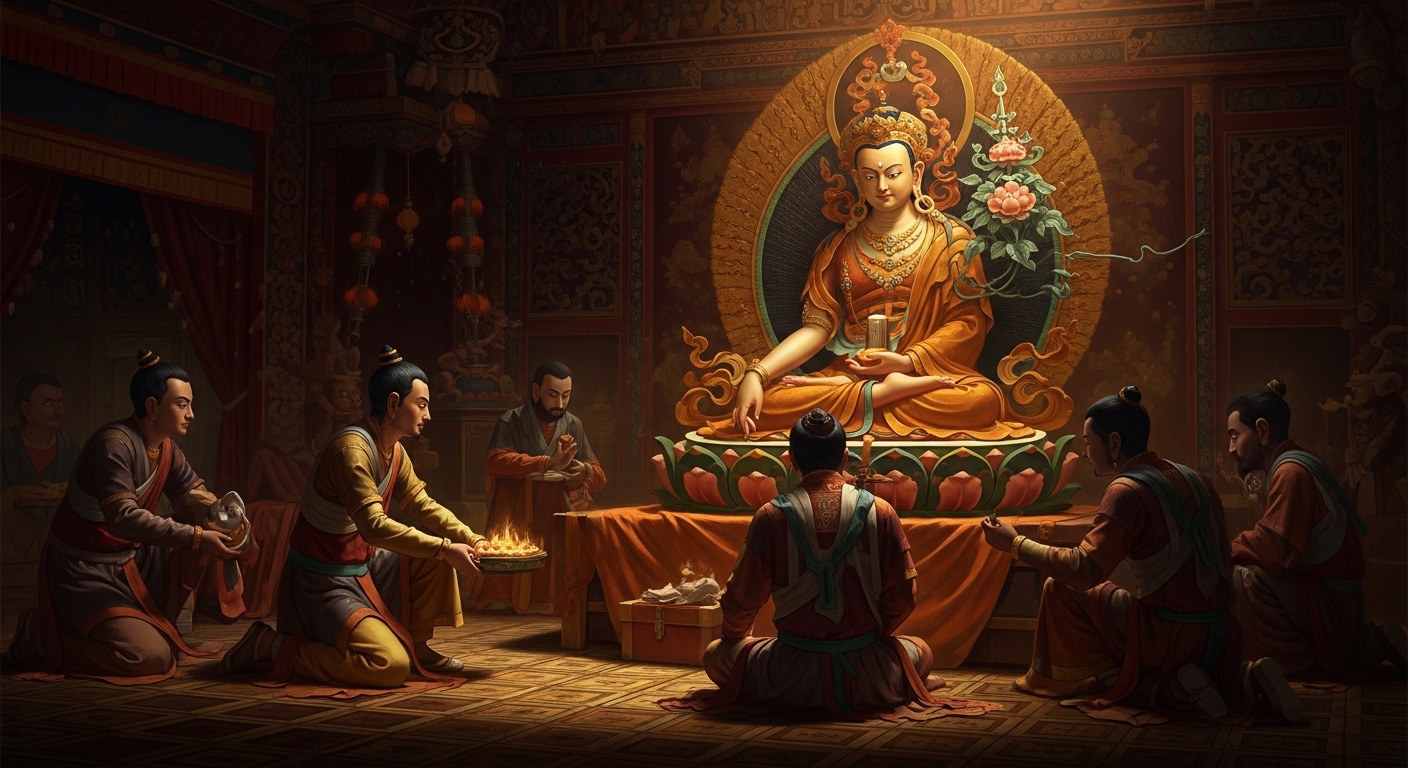
The tradition’s retrospective reading of his kingship frames him as a Manjushri emanation — the wisdom bodhisattva working through a Tibetan king. This is the standard Tibetan Buddhist method of integrating historical figures into the sacred narrative: the great figures of history are understood as emanations of the Buddhas and bodhisattvas, their historical actions as the play of awakened activity in the world.
Whether this is true in the literal sense or in the functional sense, the assessment is accurate: Trisong Detsen used his power with the precision and the orientation of someone who understood what the power was for. He could have used the Tibetan Empire as it had been used before — as a military machine for territorial expansion. He chose instead to use it as a vehicle for the Dharma.
The empire dissolved within a century of his death. The Dharma he established is still there.
He is one of three kings called the Dharma Kings of Tibet — the trio of Songtsen Gampo, Trisong Detsen, and Ralpachen who together created the conditions for what Tibet became. He is the middle one, the peak, the king who had the most difficult circumstances and accomplished the most against them.
The young man who inherited a court that hated Buddhism left behind a civilization that made Buddhism its entire meaning.
Scenes
Echoes Across Traditions
Entities
- King Trisong Detsen
- Padmasambhava
- Śāntarakṣita
- the anti-Buddhist ministers who oppose him
Sources
- Christopher Beckwith, *The Tibetan Empire in Central Asia* (Princeton University Press, 1987)
- Dudjom Rinpoche, *The Nyingma School of Tibetan Buddhism* (Wisdom Publications, 1991)
- R.A. Stein, *Tibetan Civilization* (Faber and Faber, 1972)