The Twelve Years of Silence
c. 599–527 BCE (traditional dates); twelve years, five months, and fifteen days following renunciation at age thirty · The towns and forests of the Gangetic plain, Bihar, Magadha, and Anga; culminating at Jrimbhikagrama village near the Rijupalika river
Contents
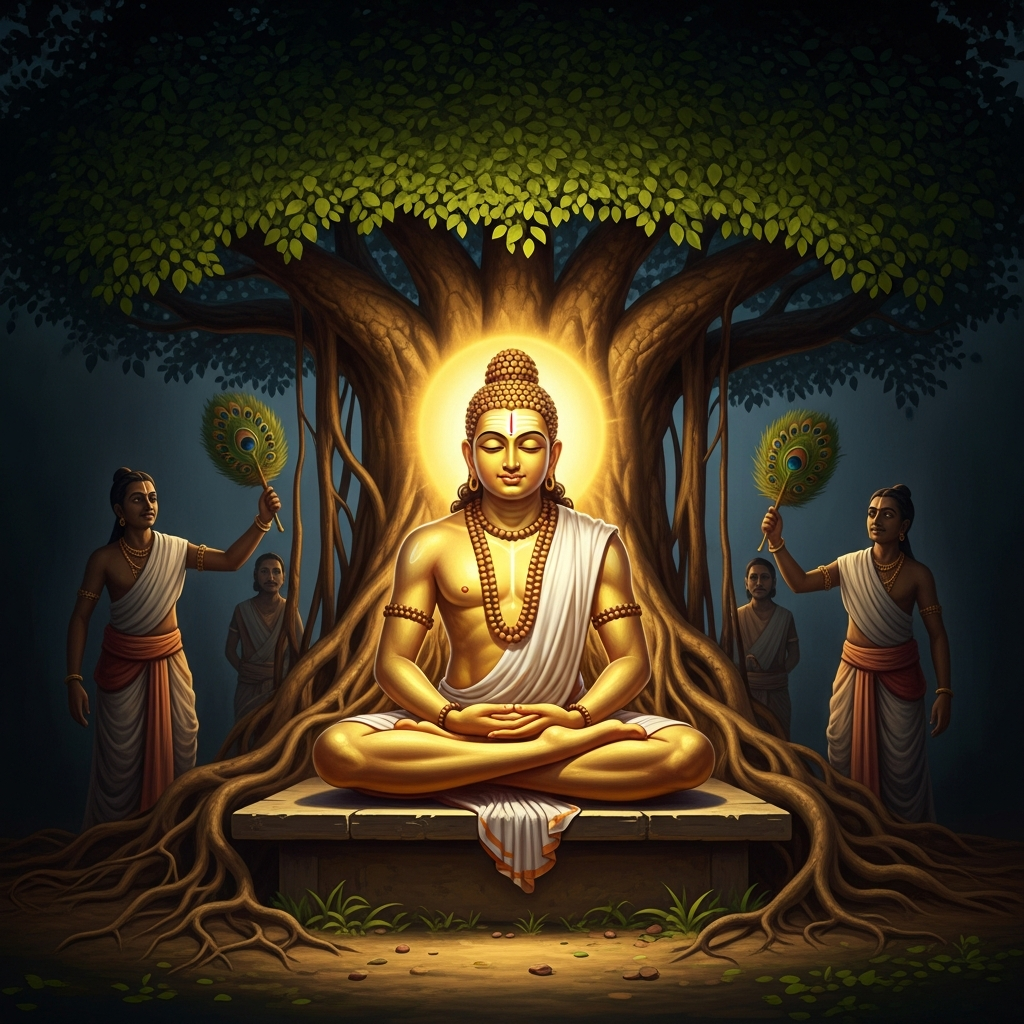
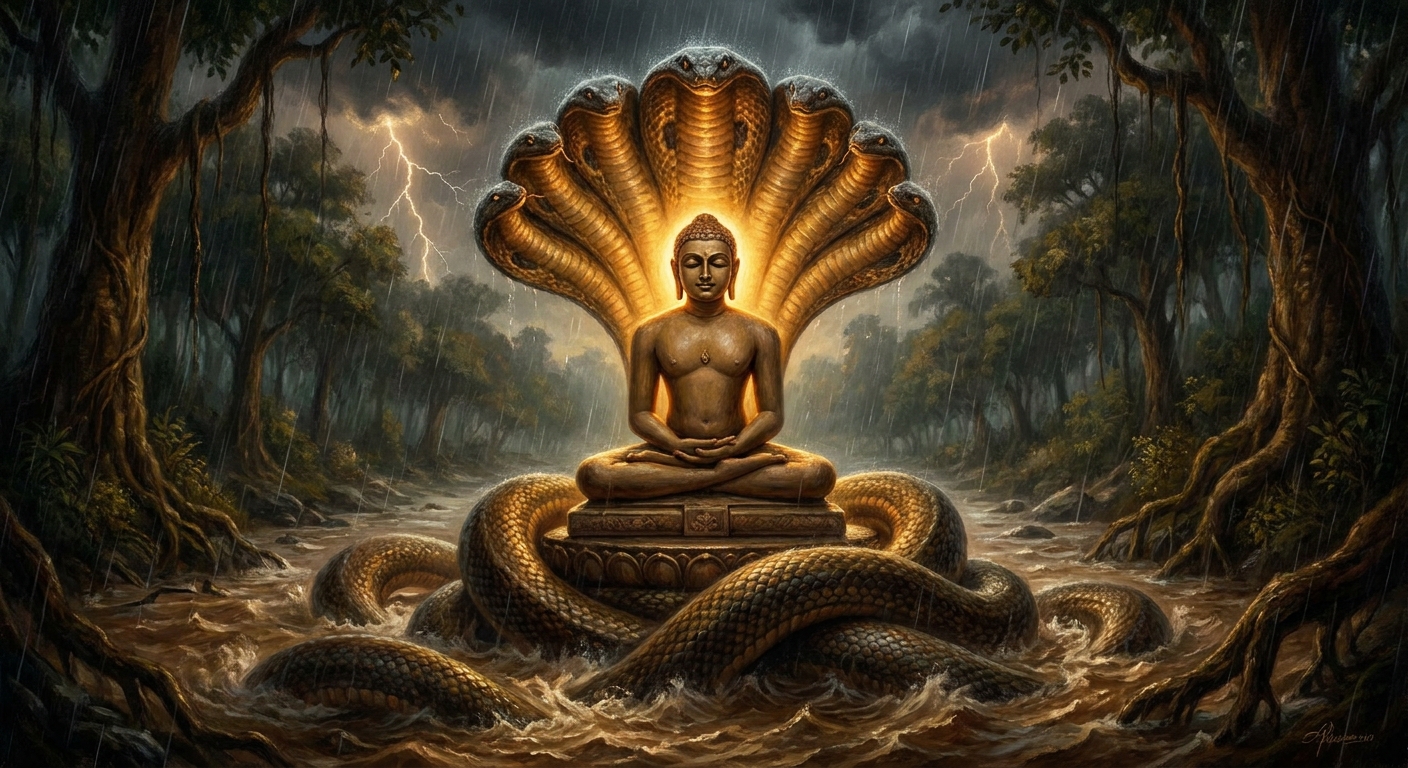
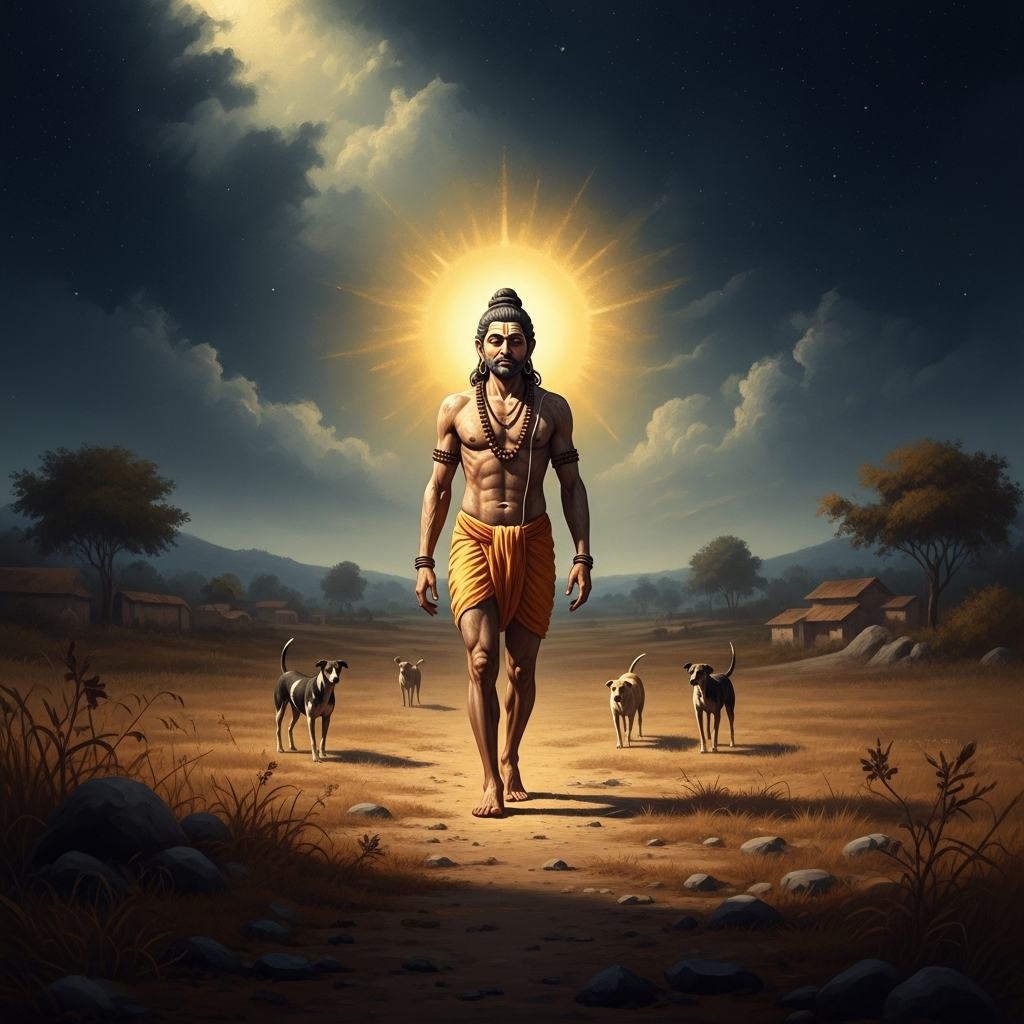
After Mahavira renounced the world, he spent twelve years, five months, and fifteen days in complete silence — moving from village to village, enduring every hardship without complaint or self-defense. Dogs bit him. Children threw rocks. Adults cursed him and poured hot water over him. A cowherd drove stakes through his ears. He said nothing. He felt everything. The silence was not indifference but the most radical act of non-violence imaginable: refusing to harm even with a word.
- When
- c. 599–527 BCE (traditional dates); twelve years, five months, and fifteen days following renunciation at age thirty
- Where
- The towns and forests of the Gangetic plain, Bihar, Magadha, and Anga; culminating at Jrimbhikagrama village near the Rijupalika river
He keeps one robe for a year and a half.
The Acaranga Sutra tracks the robe the way a ledger tracks a debt. He takes it at renunciation. He tears a piece from it to use as a filter for water, so he does not accidentally swallow insects — ahimsa extends to the visible and the invisible, to the creature you can see and the creature you cannot. He tears another piece for another purpose, then another, and then the robe is gone, and after that he owns nothing at all, not even cloth, and walks naked across the Gangetic plain in whatever the weather is.
He walks naked in the monsoon. He walks naked in the winter. He does not build a shelter. He sleeps under trees, in the open, on the floors of empty buildings when someone offers them, standing in fields when nothing else is available. He does not, in the technical Jain sense, sleep: he rests in a state of reduced consciousness that is not quite sleep, because full sleep is a form of inattention and inattention allows karma to enter. He is always slightly awake. For twelve years, five months, and fifteen days, he is always slightly awake.
He travels in irregular circuits through Magadha and Vajji and Anga — the kingdoms that are now Bihar and Jharkhand — stopping in villages long enough to seek alms, moving before he becomes a fixture. The texts chronicle specific stops and specific incidents with the precision of court records, which is what the Acaranga Sutra functionally is: a record intended to establish the normative conditions for monastic life by describing what the exemplar experienced.
In the village of Sravasti, a man sets dogs on him. Mahavira stands still. The dogs bite his legs and he does not flinch and does not move and the dogs eventually lose interest. The point the text makes is not that the dogs were wrong or that their owner was wrong — though both of these things are also true — but that Mahavira’s stillness is an act of ahimsa: non-violence toward the dogs, who cannot be blamed for doing what dogs do when confronted with something they do not understand.
In Ladha, which the texts describe as a particularly difficult region, children throw stones. Adults pour hot water over him. Villagers who do not understand what he is make the reasonable mistake of assuming he is a threat. He does not explain himself, because he has taken the vow of silence, and he does not defend himself, because defense requires generating the intention to harm, which generates karma, which defeats the purpose. He moves through the village the way weather moves through a village: present, affecting everything, unresponsive to argument.
For the first two years and some months, he has a companion.
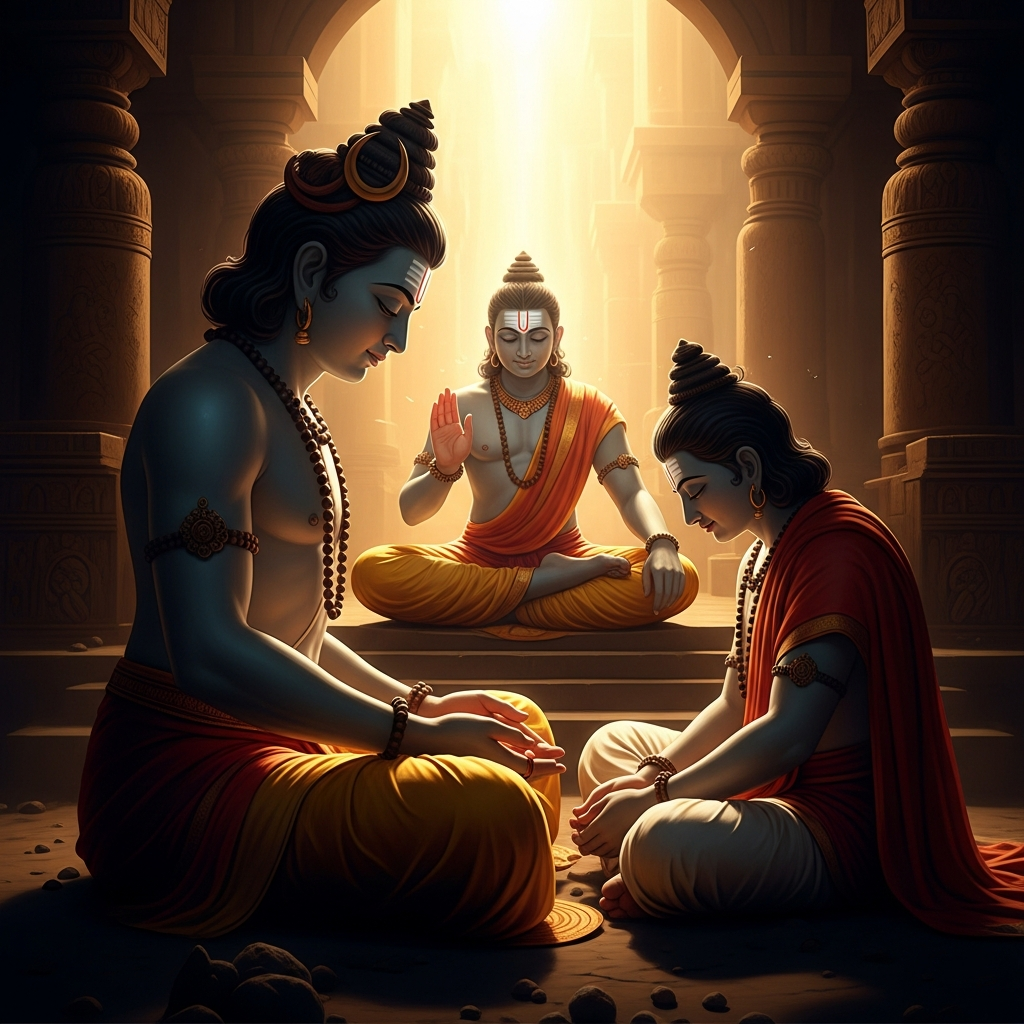
Gosala Mankhaliputta — later Gosala, founder of the Ajivika tradition — attaches himself to Mahavira and follows him through the wanderings. The Bhagavati Sutra records their conversations, which are the philosophical disagreements of two men who share a practice but not a metaphysics. Gosala believes in niyati — fate, determinism — the doctrine that every soul’s liberation or non-liberation is fixed in advance by the mechanics of the cosmos, and no act of will can accelerate or retard it. Mahavira disagrees absolutely: karma is responsive to effort, liberation can be approached by discipline, the will matters.
They part, eventually, over exactly this question.
The split is recorded without drama in the texts. Gosala goes his own way. The Ajivikas become, for several centuries, a major philosophical school in India before disappearing entirely. What Gosala represents — the teacher who almost understood but took the wrong turn at the one decisive fork — is the shadow that walks beside Mahavira through the twelve years and then peels away at the moment of maximum proximity. He is the warning that austerity and philosophy are not the same thing, and that the second can be present without the first bearing fruit.
The most precise violence recorded in the Acaranga Sutra belongs to a cowherd.
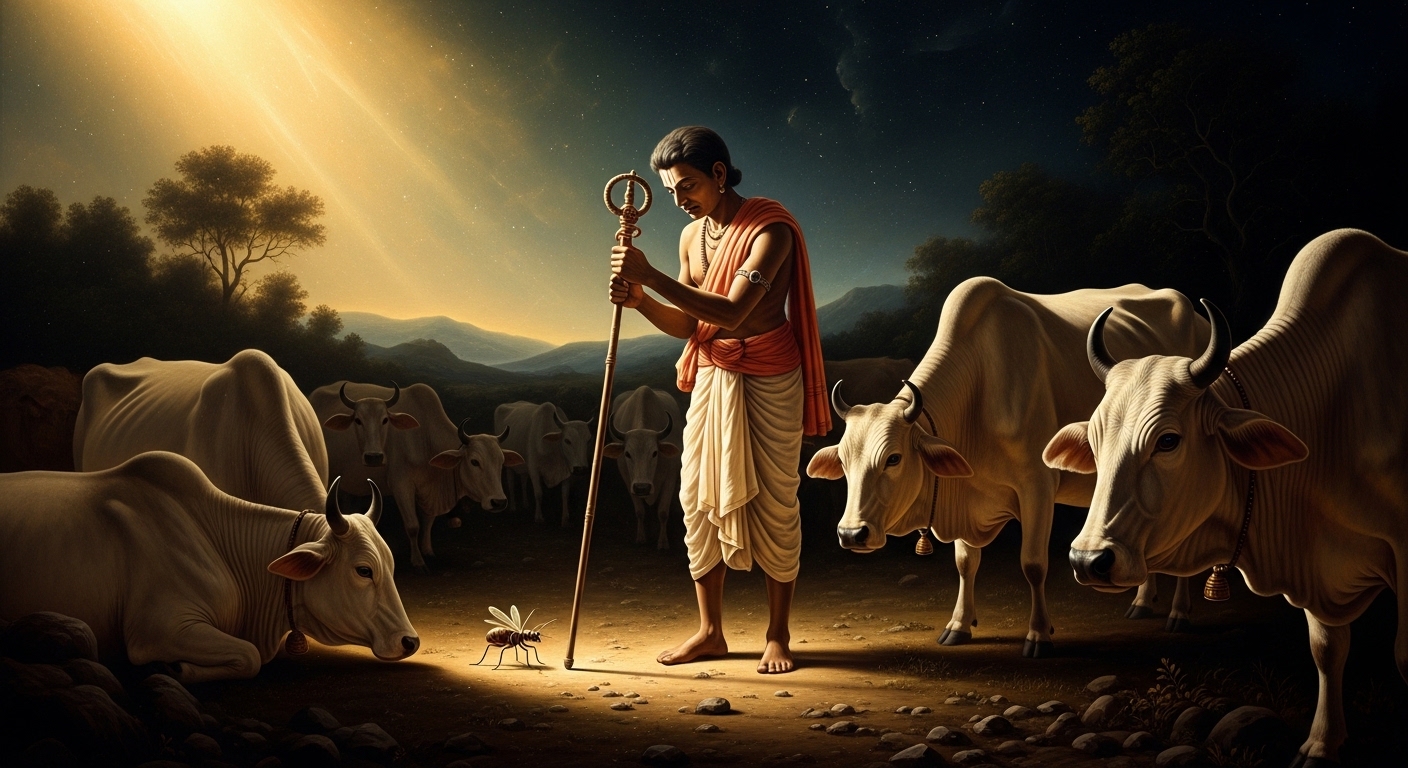
In the village of Vajjagama, Mahavira meditates in a field in the early evening, standing in the vitasana posture — body slightly bent, hands crossed behind the lower back, face neutral — near where cattle are grazing. The cowherd asks him to watch the cattle while he goes on an errand. Mahavira makes no response — the vow of silence — which the cowherd mistakes for assent. The cowherd returns to find one of his cattle missing and accuses Mahavira of negligence or theft. Mahavira makes no response.
The cowherd drives sharpened stakes through his ears.
The Acaranga Sutra describes Mahavira walking afterward with the stakes still in his ears until a blacksmith named Siddhartha, recognizing what has happened, removes them with a mallet and pincers. The sequence is clinical: the insertion of the stakes, the walk to the blacksmith’s shop, the extraction. No account of pain. No consequence for the cowherd. No response from Mahavira before, during, or after.
This is the most radical version of non-violence in any religious tradition: not the refusal to harm others, but the refusal to protect the self from harm. The Jain logic is exact. If every act of retaliation or self-defense generates karma — if even the intention to harm, even in justified defense, attaches material particles to the soul — then the practitioner of radical ahimsa must absorb harm without generating the intention that would dissolve it. The cowherd’s violence is his karma. Mahavira’s silence is the absence of new karma. The gap between them is the space in which liberation happens.
He fasts, in these twelve years, in patterns the texts record with the precision of a training log.
Six-day fasts. Eight-day fasts. He goes entire months eating only on alternate days. He takes water only once every two or three days, in quantities his cupped hands can hold. His body, over twelve years of this, becomes what the texts describe without metaphor: a burned-down structure, the flesh consumed by the practice the way a fire consumes fuel, leaving only what cannot burn. The Acaranga Sutra says he reduced his body to bones and skin. It says this not as a criticism but as evidence. The fire was working.
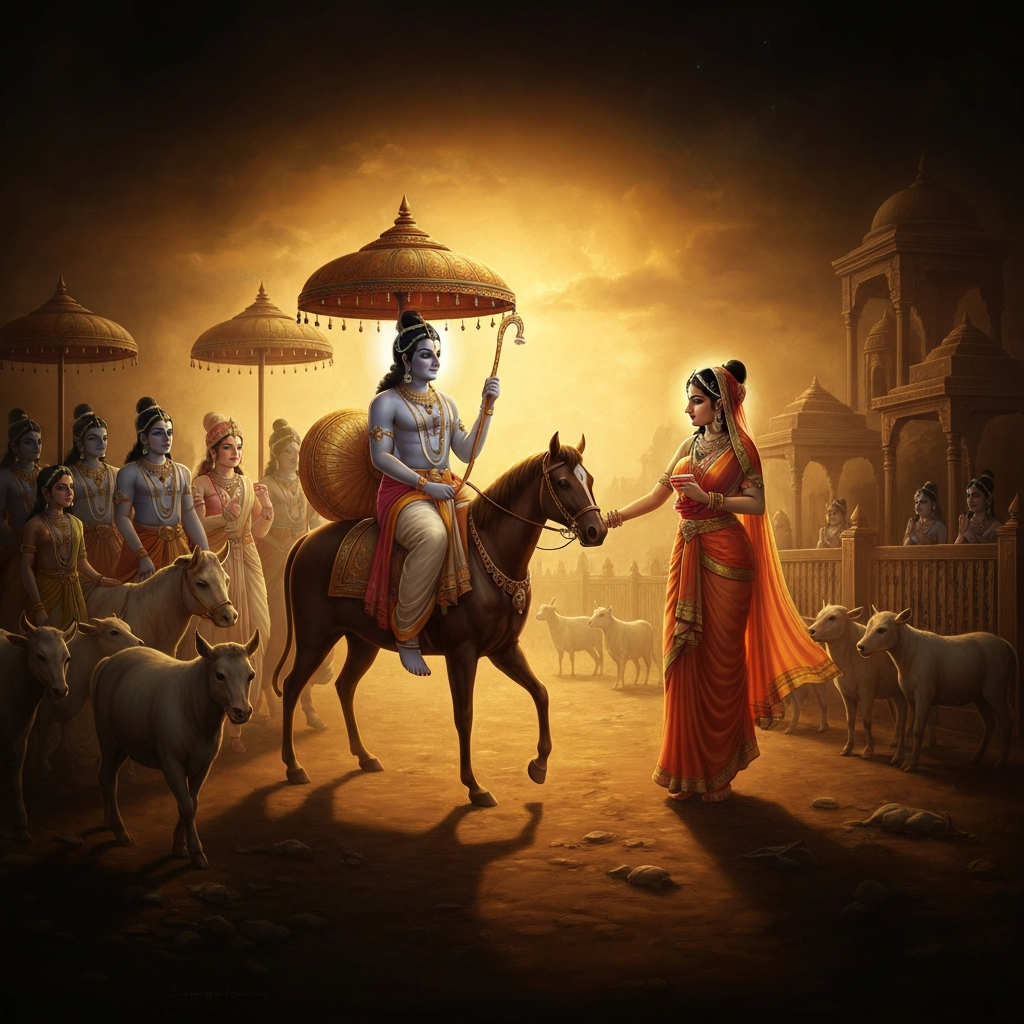
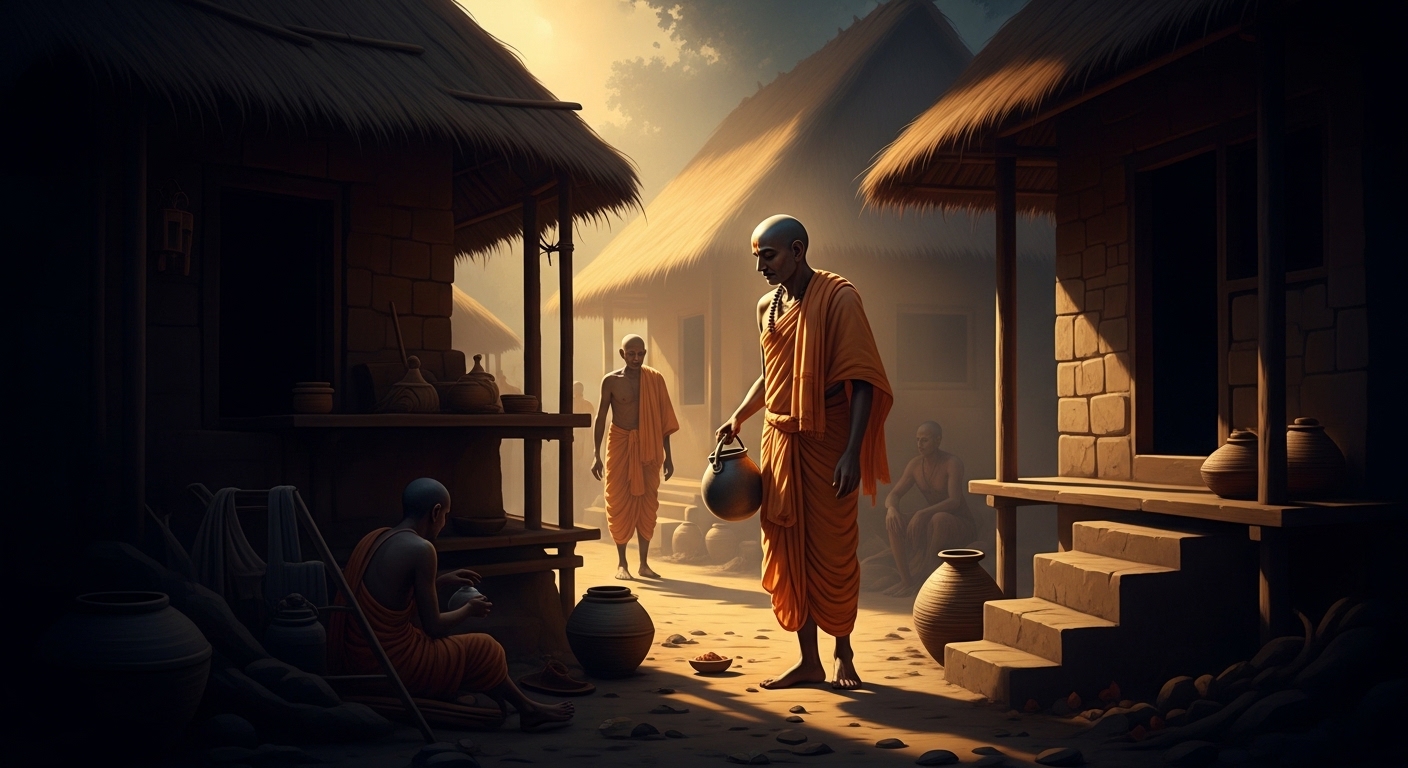
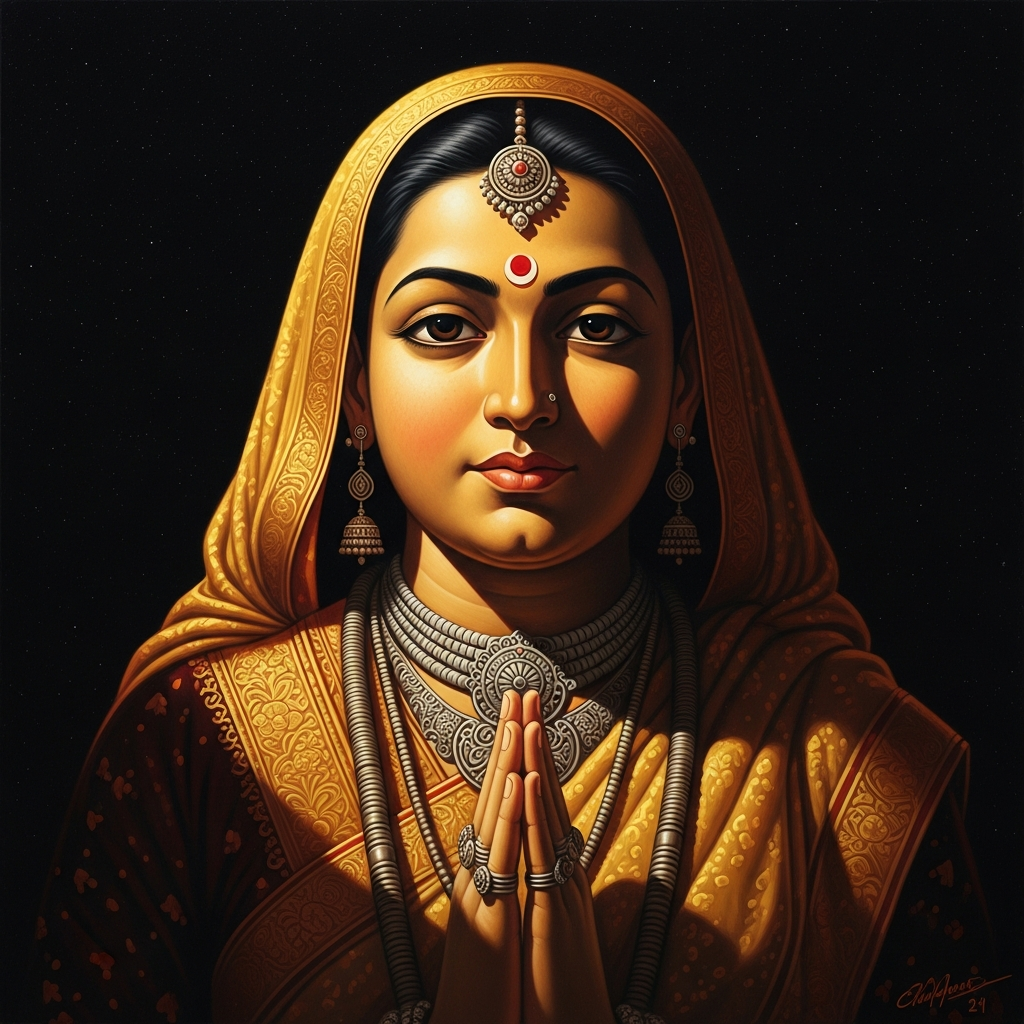
In the eleventh month of the twelfth year, in the monsoon season, he has wandered back toward the Rijupalika river. He has been five months in this final phase without eating at all. He arrives at the house of the merchant Dhanavah in the city of Vaishali. A slave woman named Chandanbala is locked in the cellar, her head shaved, her ankle chained, falsely accused of theft by the merchant’s jealous wife. She has only split lentils in a winnowing basket and she offers these — the worst possible gift by every conventional measure — with the steady hands of a woman who has given up on being rescued and gives what she has anyway.
Mahavira has been waiting, for five months, for exactly this kind of offering. Not the best food in a gold vessel. The worst food in the worst container from the worst circumstances, given without hope of return.
He eats the lentils.
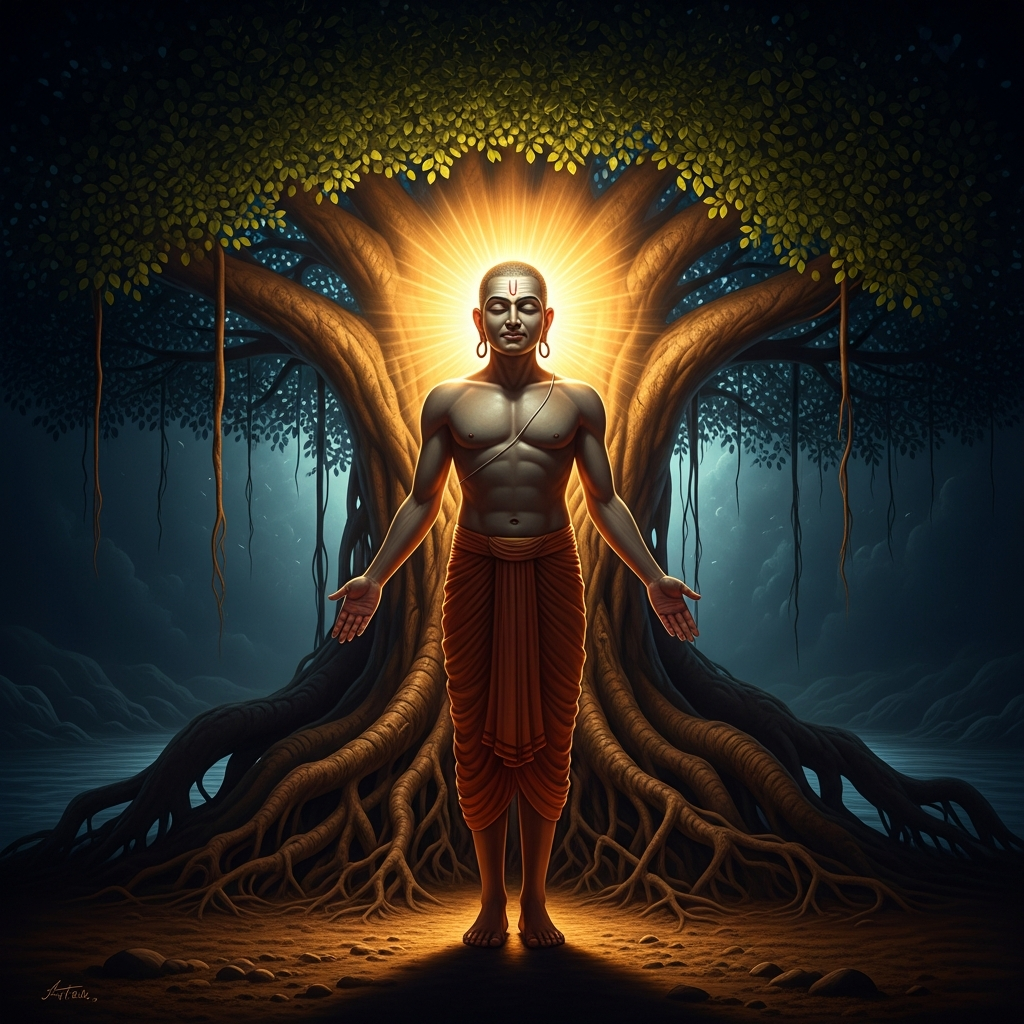
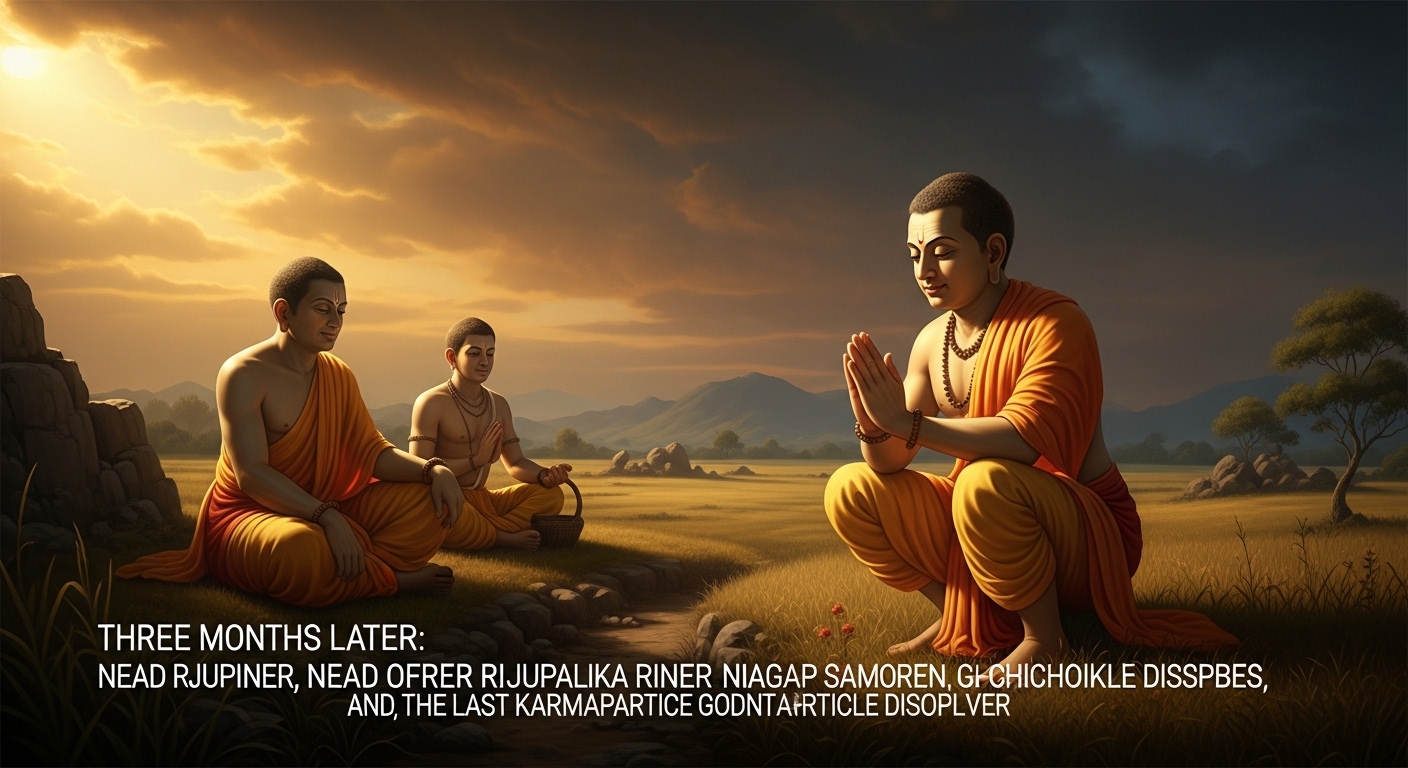
Three months later, near the Rijupalika river, in a field owned by a man named Samaga, squatting in the godohika posture in the second month of summer, the last karma-particle dissolves.
Kevala-jnana — omniscience — opens in him the way a window opens when the latch is released: all at once, without effort, without the sense of opening, simply the state that has always been available behind the state that was. He sees every soul in every realm of the cosmos simultaneously, without angle, without effort. He sees the cowherd and the dogs and Gosala and Chandanbala and every previous life of every being, past and future, the mechanics of the cosmos laid flat and comprehensible.
He walks out of the field and teaches for the next thirty years.
The twelve years are not the interesting part of Mahavira’s story for most people who encounter it. The interesting part is the omniscience, or the teaching, or the elaborate doctrine he transmits. But the twelve years are actually the argument. Everything Mahavira teaches about karma and liberation is implicitly a claim about what the twelve years were doing: not suffering borne for its own sake, not mortification as punishment, but the precise mechanical process by which matter is removed from a soul. The torture the cowherd performed and the torture the winter performed and the torture of hunger are not different from each other in kind. They are all heat. The fire does not care where its fuel comes from.
The Acaranga Sutra ends its account of the wandering with a phrase that every Jain monk memorizes: he was not frightened, he was not embarrassed, he was not proud. Three negatives that are really a single description of the state the twelve years produced: a soul with nothing left to react with.
Scenes
Echoes Across Traditions
Entities
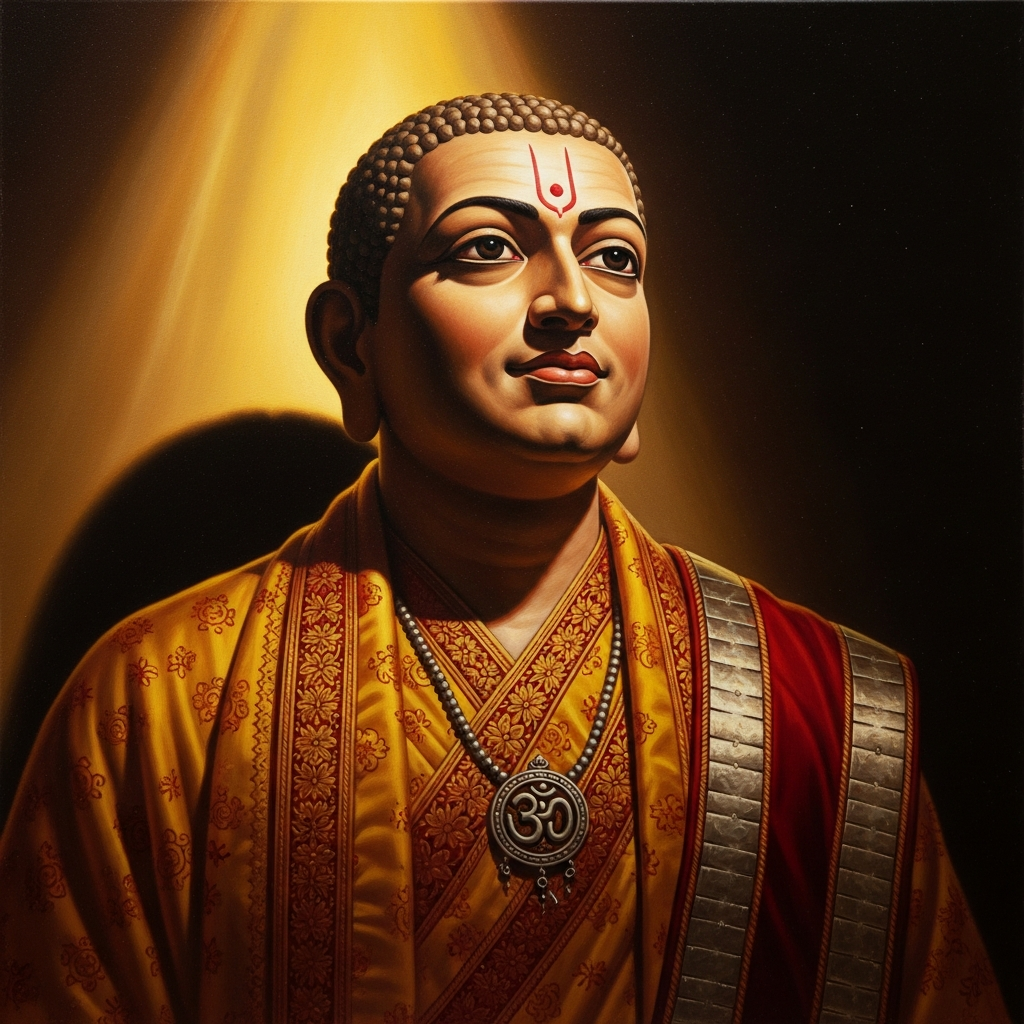
- Mahavira (Vardhamana)
- Gosala Mankhaliputta
- the villagers of Ladha
- the cowherd Siddhartha
- Chandanbala
Sources
- *Acaranga Sutra* 1.7–9 (the oldest account of Mahavira's wanderings; Hermann Jacobi trans., *Sacred Books of the East* vol. 22, 1884)
- *Kalpa Sutra* (Bhadrabahu, c. 4th century BCE)
- *Uttaradhyayana Sutra* — doctrinal summaries attributed to Mahavira
- Paul Dundas, *The Jains* (Routledge, 2nd ed. 2002), ch. 2
- Padmanabh S. Jaini, *The Jaina Path of Purification* (University of California Press, 1979), ch. 1
- Hermann Jacobi, 'Introduction to the Acaranga Sutra,' *Sacred Books of the East* vol. 22 (Clarendon Press, 1884)