Contents
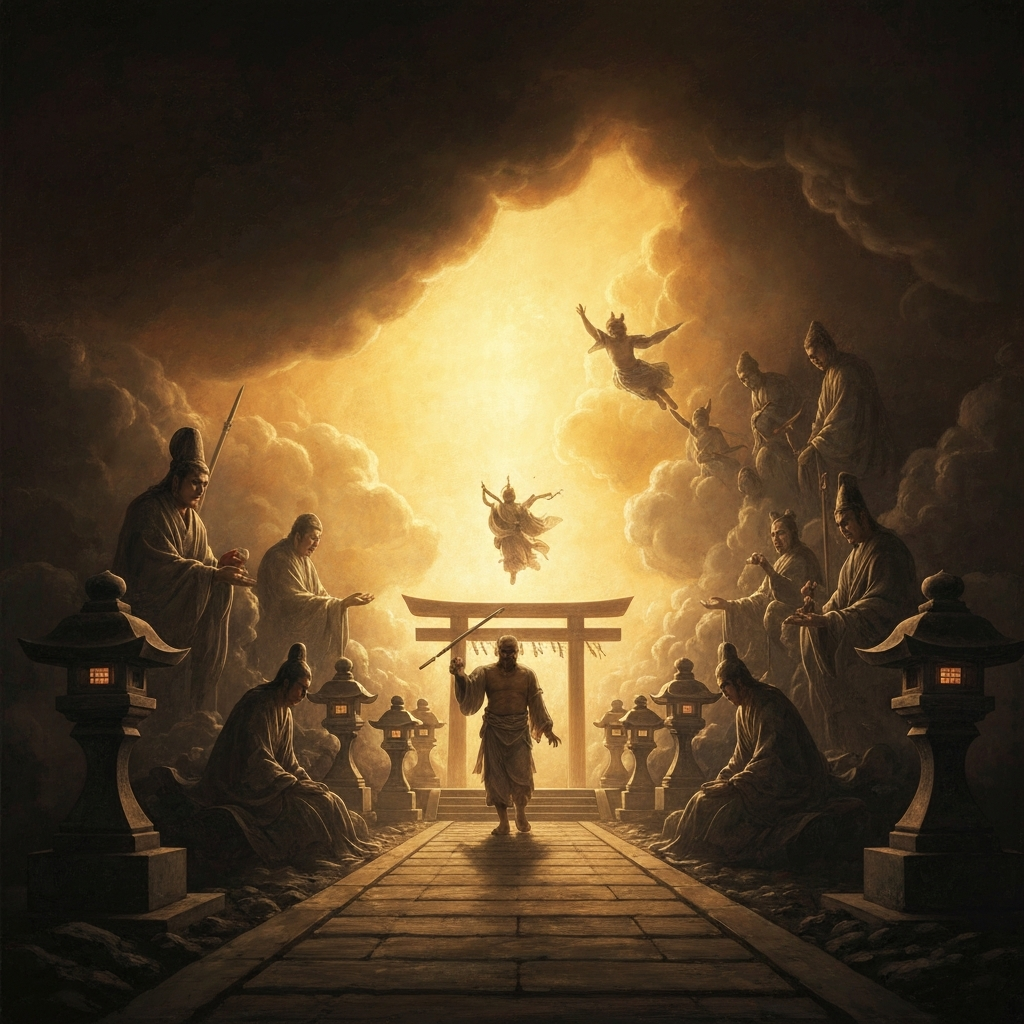
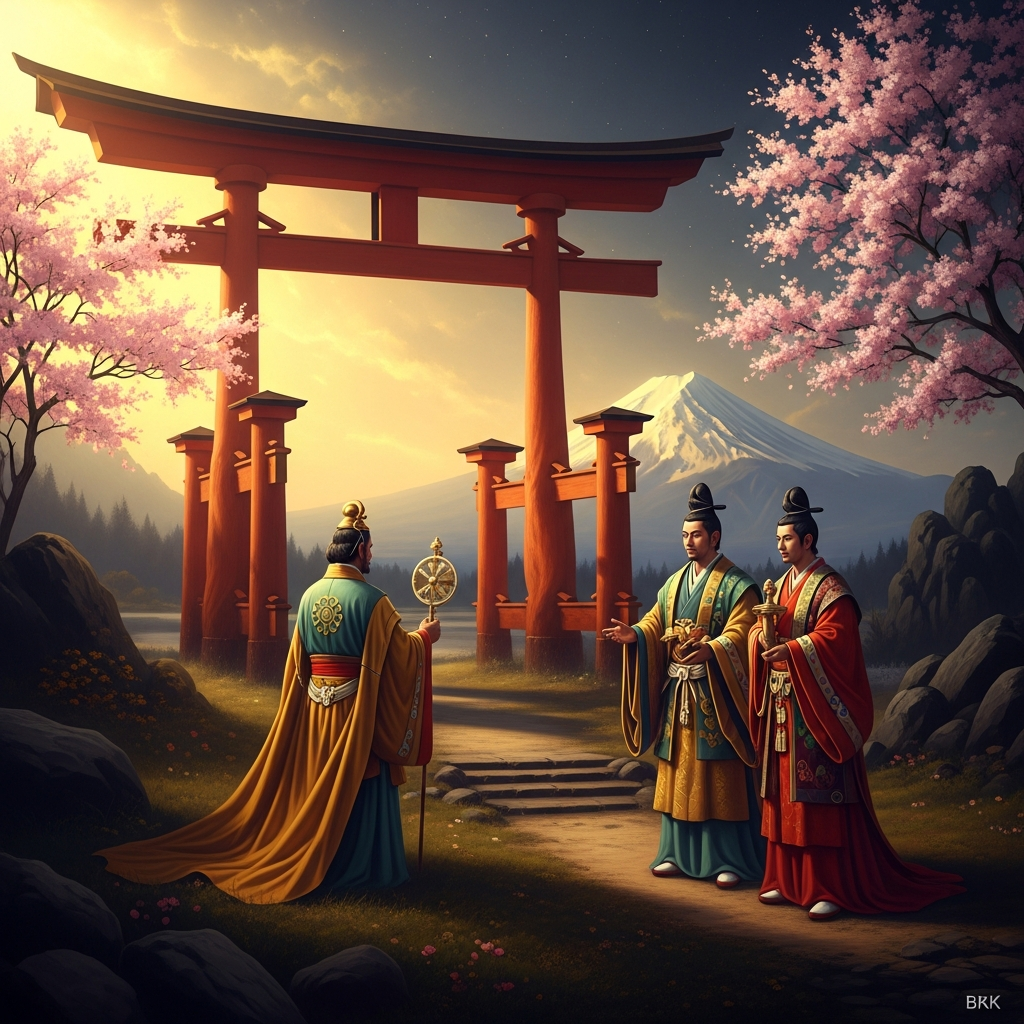
The great earth-builder god, having pacified the land and filled it with medicine and agriculture, meets two divine envoys from heaven and agrees to yield the world he made in exchange for a great shrine.
- When
- Age of the Gods — the era of the earthly deities, Kojiki Book I
- Where
- Izumo Province — the western coast of Honshu, at the shore of the Sea of Japan
He built the land from the bottom up.
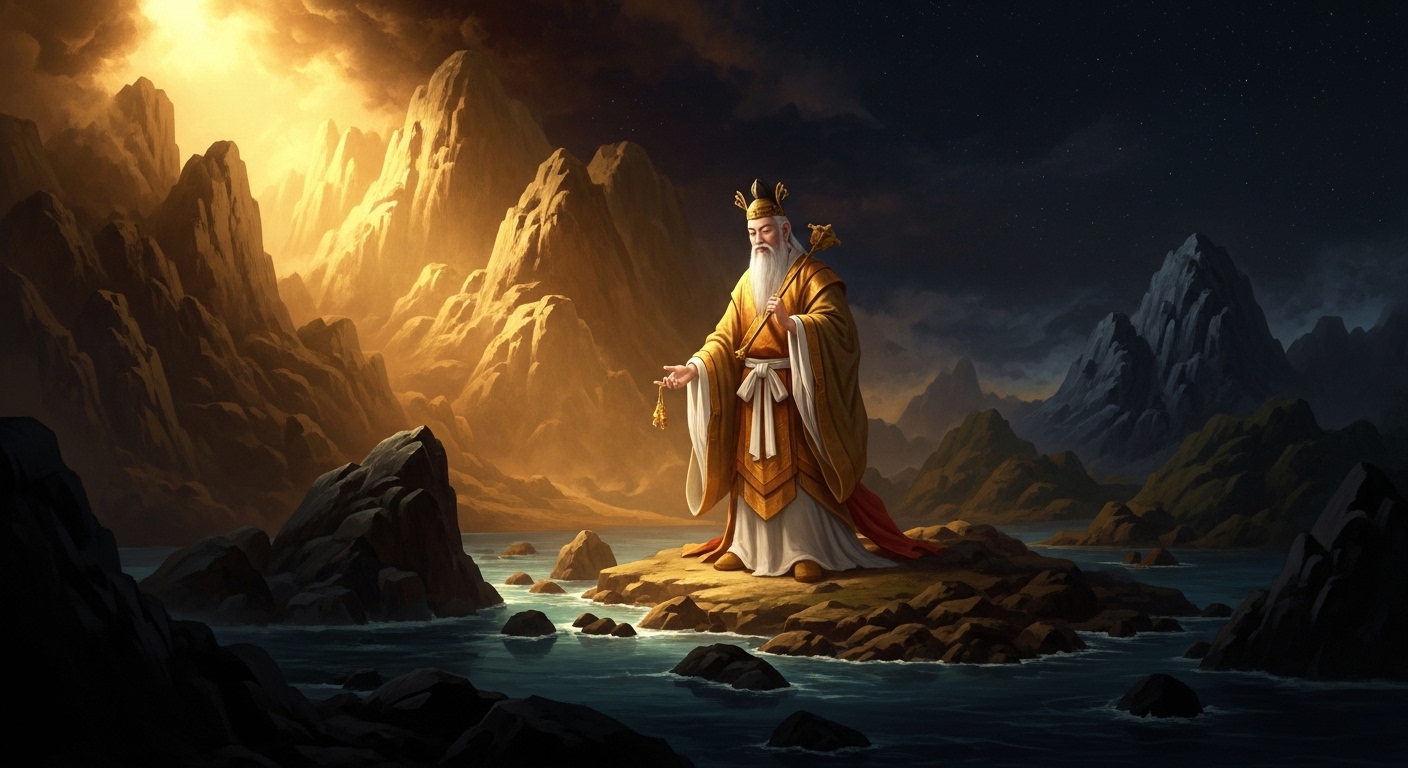
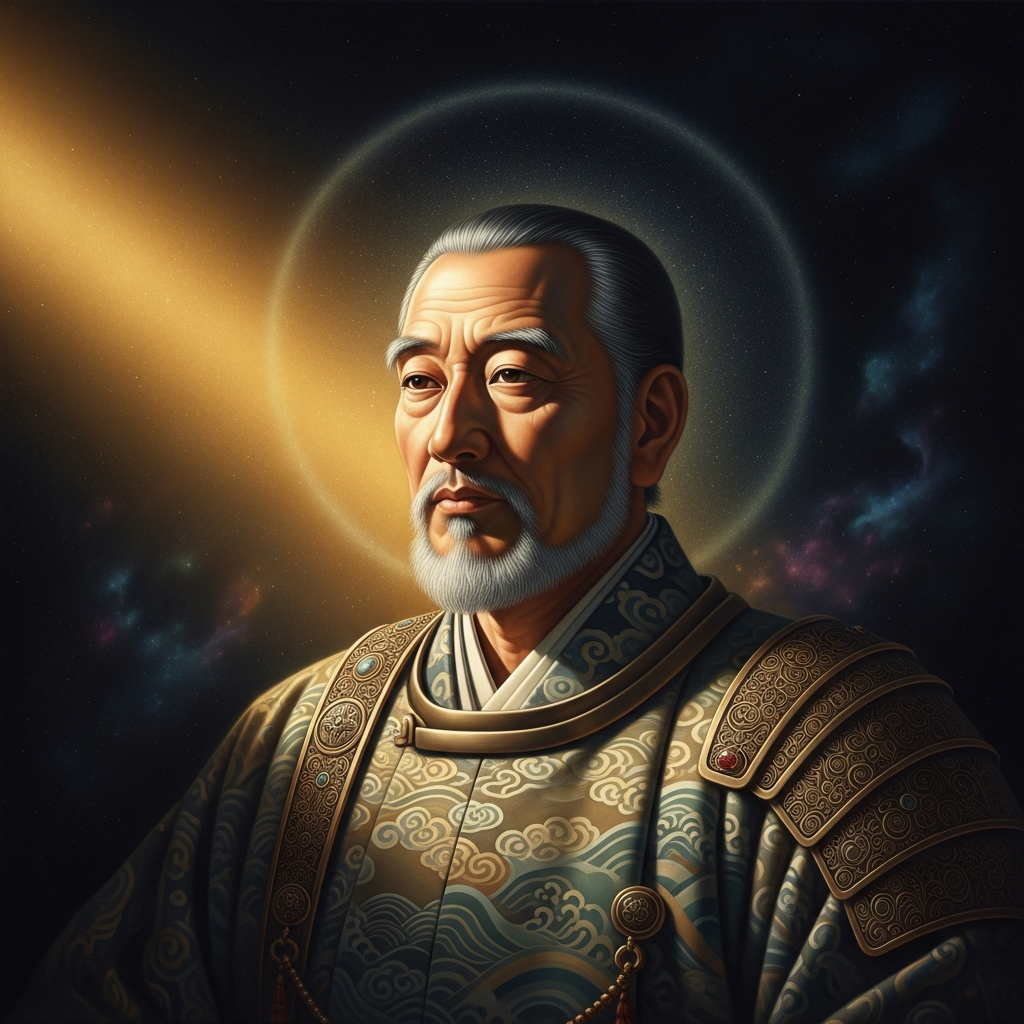
Ōkuninushi — the Great Land Master, also called Ōnamuchi, the Great Name Bearer — inherited a world that was partially made: the islands were there, the rivers and mountains were there, but the invisible structure of the world, the medicine and the agriculture and the knowledge of how to live in the place, was not. He built those things.
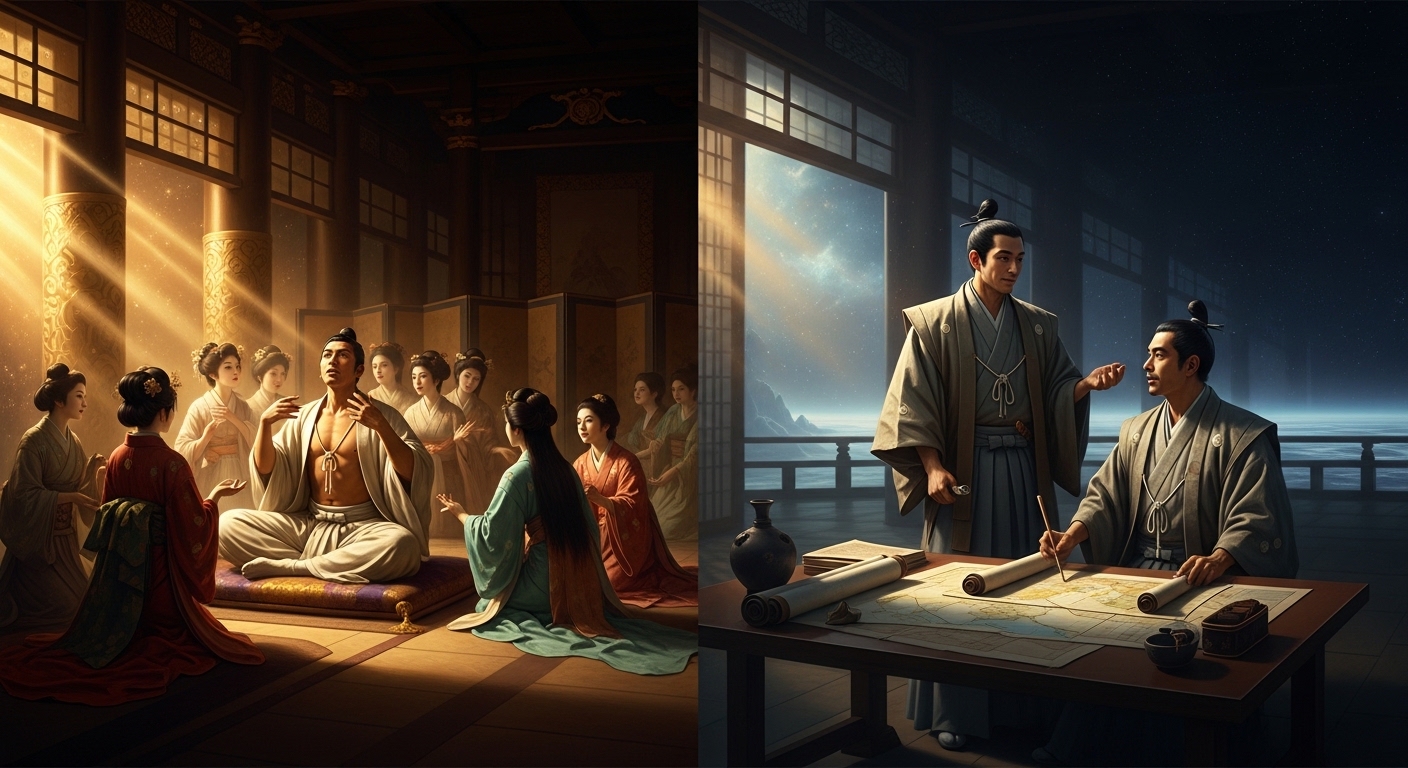
He had a partner: Sukunabikona, the Small Lord, a tiny deity who arrived in a boat made from a pod of the kaga-mi plant and who was so small that he slipped through the fingers of any god who tried to catch him. Sukunabikona was the god of medicine, of sake, of hot springs, and together the two of them traveled through the land — the great one and the tiny one — and they bound the diseases and taught the remedies and established the practices that would keep the human world alive.
Then Sukunabikona left. He climbed a stalk of millet, let it spring back, and went somewhere beyond the sea.
Ōkuninushi continued alone.
He ruled well. The Kojiki praises him for the orderly world he made — a world where the crops grow and the diseases can be treated and the shrines are properly placed. He had many wives in many provinces and his children populated the land. He was, in the estimation of the earthly deities, a good ruler of a good world.
But the heavenly deities — Amaterasu and Takamimusubi, the lords of the Plain of High Heaven — had decided the land below should be governed by their descendants. They sent envoys to request its transfer.
The first envoy was seduced and stayed. The second became a colleague of Ōkuninushi’s son and never came back. The third turned, at the passage, into a pheasant and sat at the entrance to Ōkuninushi’s house, shot by an arrow.
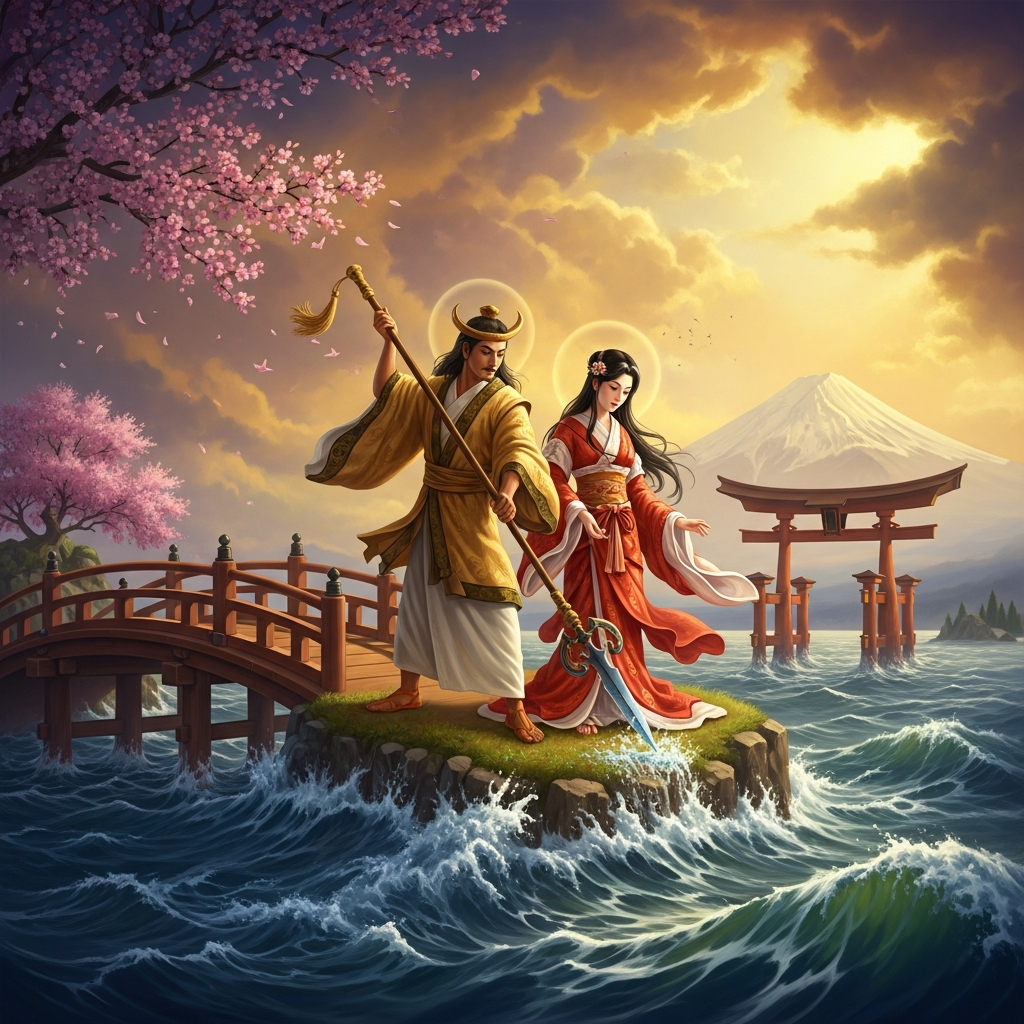
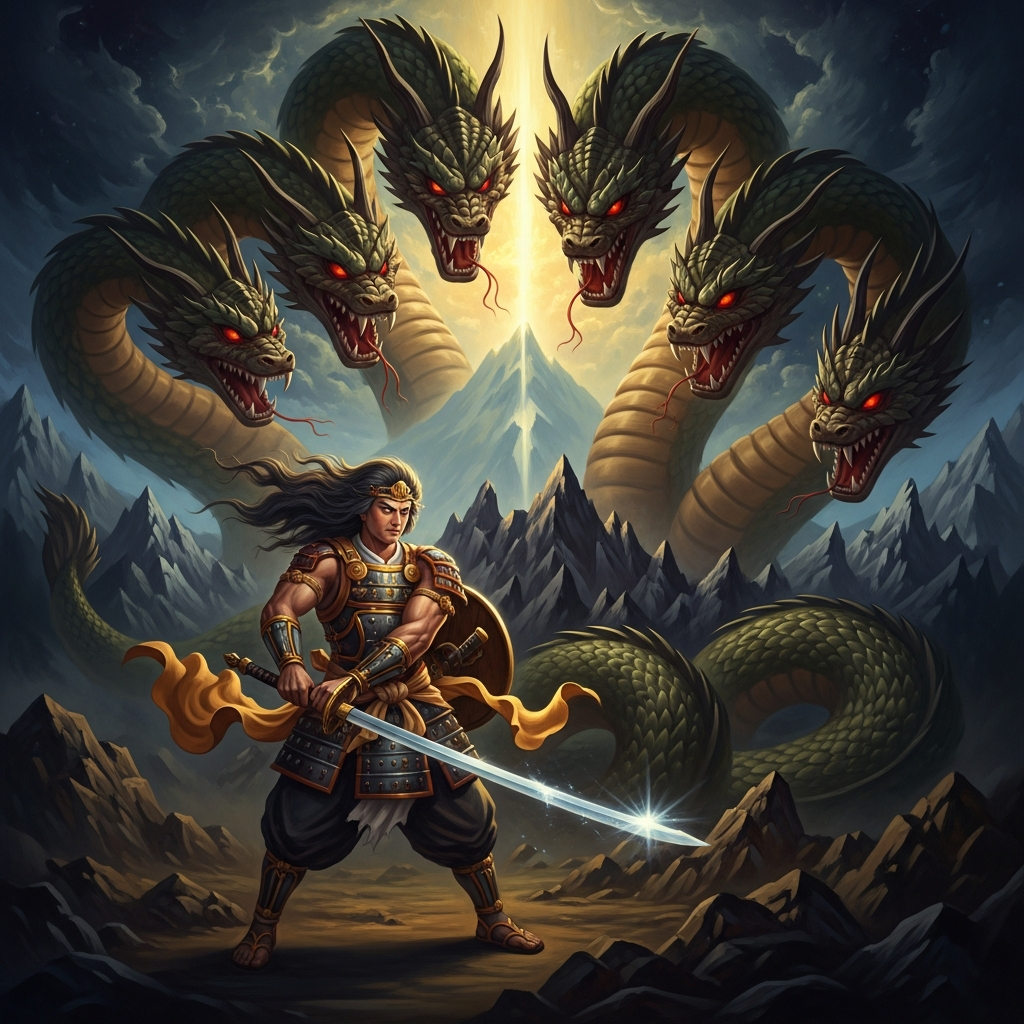
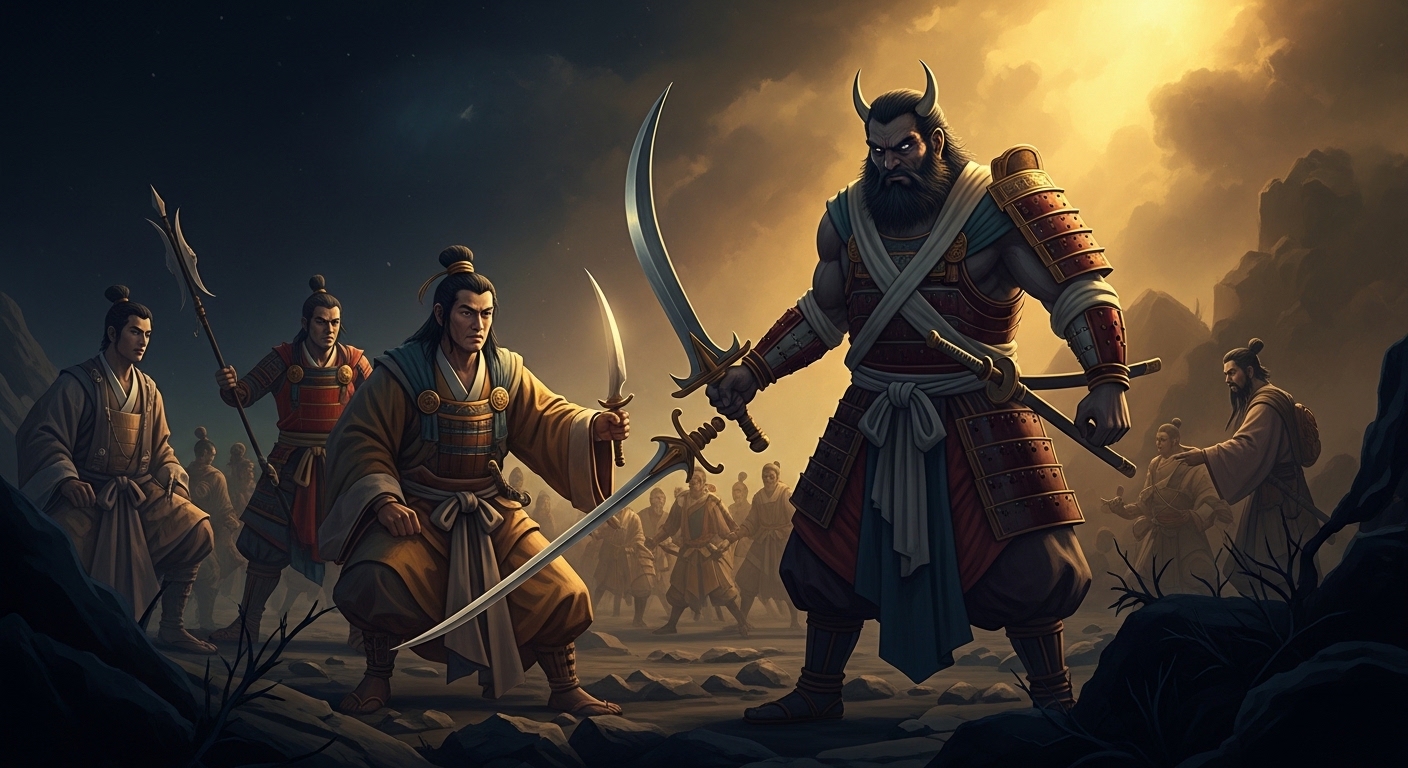
Finally they sent Takemikazuchi, the Thunder Deity, the one born from blood when Izanagi killed the fire-god Kagutsuchi with his sword. Takemikazuchi planted his sword upside down in the waves at the shore of the Sea of Japan and sat on its pommel and asked his question to Ōkuninushi directly:
This land — shall you yield it, or shall we take it?
Ōkuninushi did not answer immediately. He said: Ask my son Kotoshironushi.
Kotoshironushi was fishing on the sea. The messenger went and asked. Kotoshironushi said: My father should yield it. I assent. He hid himself in a green fence he built on the waves, and was seen no more.
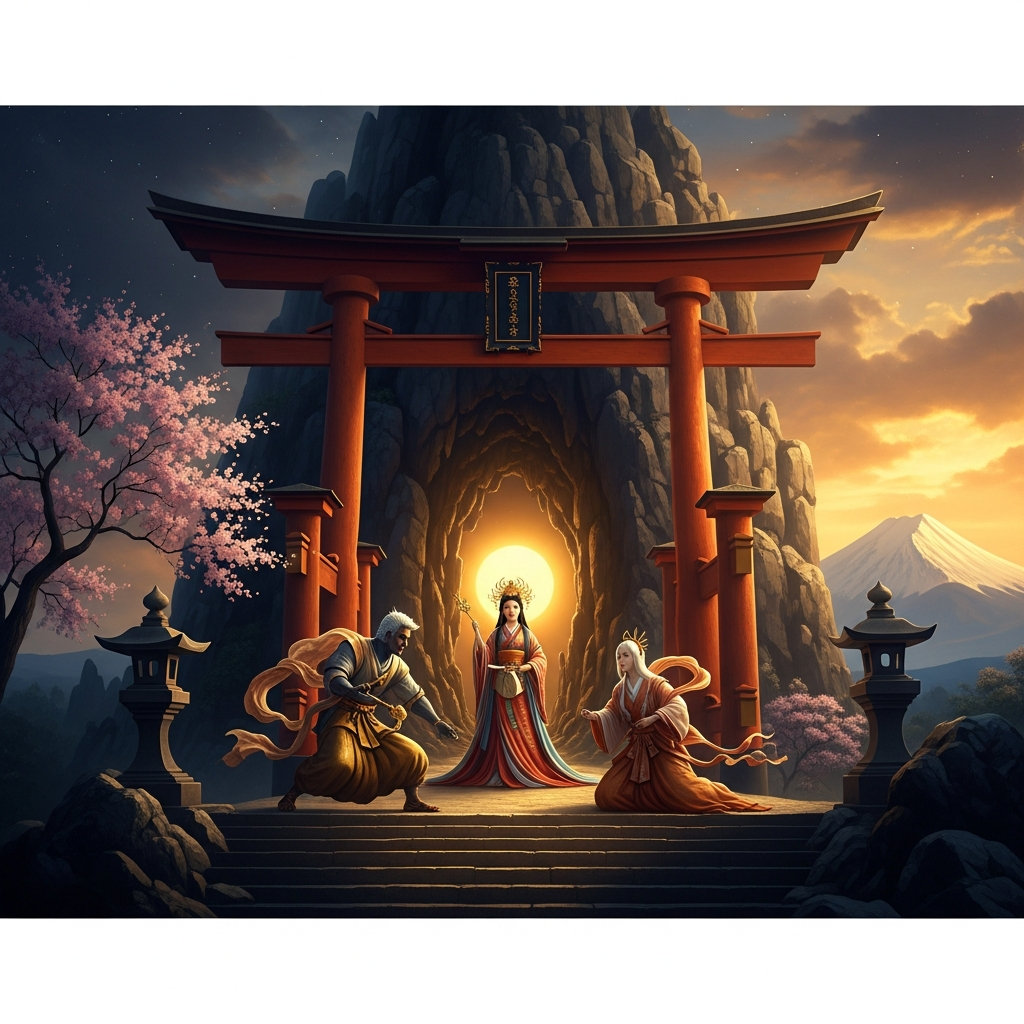
Takemikazuchi returned. Ōkuninushi had one more son, the warrior Takeminakata, who challenged the thunder god to a test of strength. Takemikazuchi seized Takeminakata’s arm and crushed it like a green reed. Takeminakata ran, was chased to the shores of Lake Suwa, submitted, and agreed never to leave Suwa.
The sons had spoken. There was nothing left to argue.
Ōkuninushi said: I yield the land.
He said: In exchange, build me a shrine. A great shrine, a palace as grand as the palace on the Plain of High Heaven, with thick pillars driven deep into the rock below the earth, with high-reaching rafters touching the sky. Build me that, and I will yield.
They built it at Izumo.
It stands there still, rebuilt in the ancient way every generation, its pillars sunk deep in the soil of the province he built from nothing. In the tenth month of the lunar calendar — the month called Kannazuki, the Month Without Gods, everywhere else in Japan — at Izumo it is called Kamiarizuki, the Month With Gods. That is when all the eight million deities are said to gather at the great shrine to conduct the divine business of marriages and fate.
The man who built the world still holds court once a year in his shrine on the Izumo coast.
He yielded. He did not disappear.
Scenes
Echoes Across Traditions
Entities
- Ōkuninushi
- Kotoshironushi
- Takemikazuchi
- the heavenly messengers
- Sukunabikona
Sources
- Kojiki (Record of Ancient Matters), compiled 712 CE, Book I, Sections 26-33
- Nihon Shoki (Chronicles of Japan), compiled 720 CE
- Kurano Kenji, *Kojiki* (Iwanami, 1958)
- Okano Haruko, 'Ōkuninushi and the Meaning of Kuniyuzuri,' *Japanese Journal of Religious Studies*, 1992