The Rabbit of Inaba and the God's Kindness
Age of the Gods — Kojiki Book I, early career of Ōkuninushi · Cape Keta in the province of Inaba (modern Tottori Prefecture) on the Sea of Japan coast
Contents
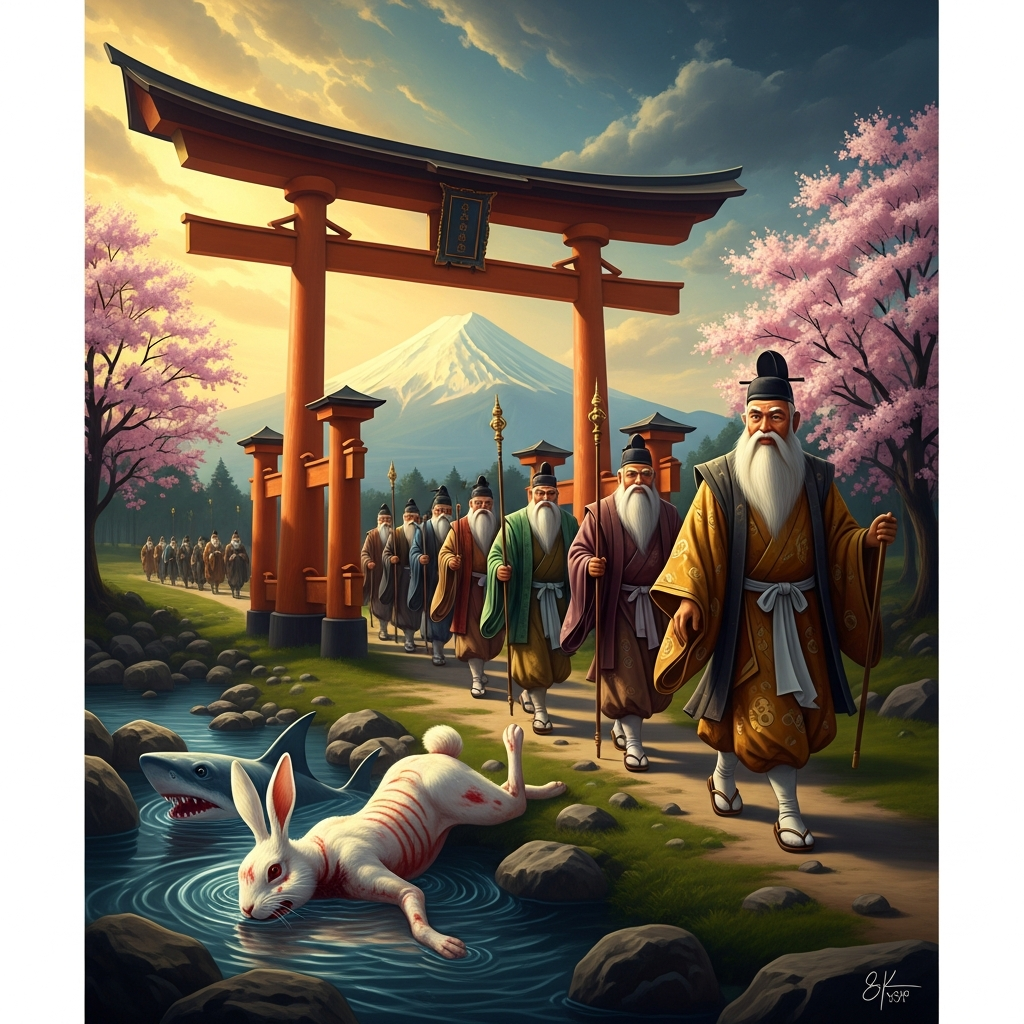
A skinned rabbit writhes in pain after being tricked by sharks, and while eighty arrogant gods walk past, only the last one — young Ōkuninushi, carrying the baggage — stops to give it the cure.
- When
- Age of the Gods — Kojiki Book I, early career of Ōkuninushi
- Where
- Cape Keta in the province of Inaba (modern Tottori Prefecture) on the Sea of Japan coast
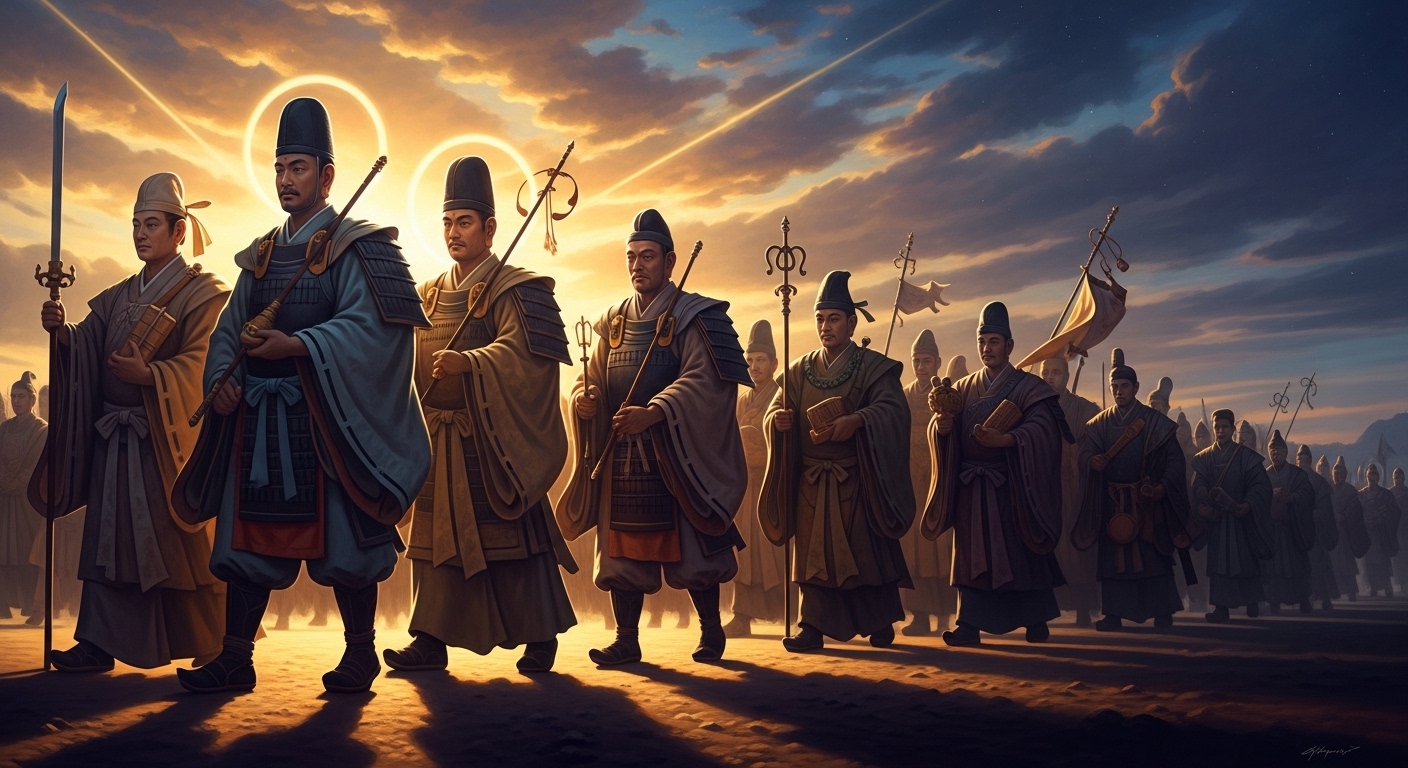
The eighty gods are going to Inaba to court a princess.
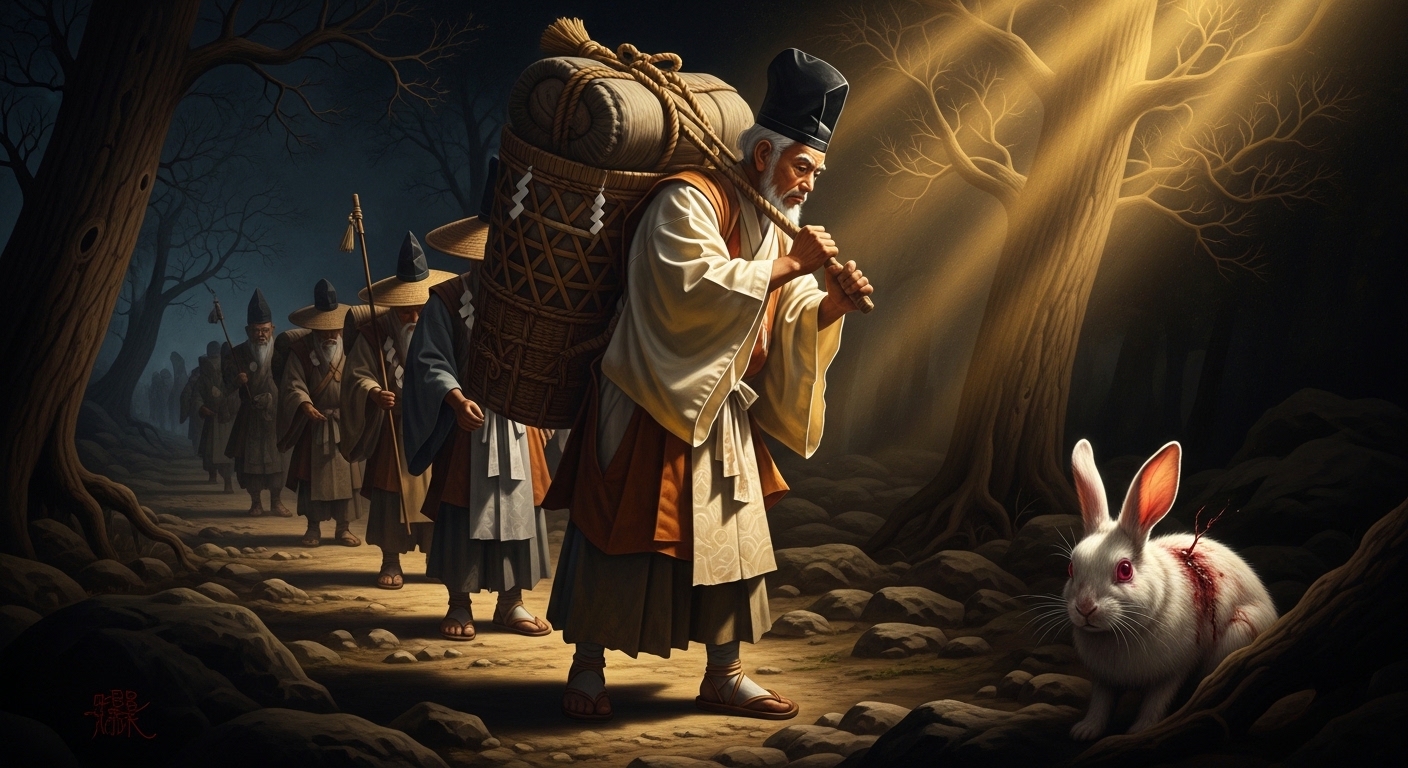
Yagami-hime of Inaba is beautiful and desirable and the eighty deities — the Yasogami, the arrogant brothers — are traveling there in procession to propose. They have given Ōkuninushi, the youngest and least considered of their company, the baggage to carry. He walks behind them with all their things, trailing, arriving at every place after the important people have already passed.
At Cape Keta, a rabbit sits on the beach.
It has no fur. The skin is raw and red, the flesh exposed, and the rabbit is in obvious agony. It is lying in the sun at the edge of the sea, and the eighty gods see it as they pass. They tell it: Lie down in the sea-water and let the wind dry you. This is false advice, delivered carelessly or cruelly — salt water in an open wound, wind on wet skin. The rabbit follows it. The pain becomes worse.
The eighty gods walk on.
Ōkuninushi comes last, carrying the luggage. He sees the rabbit. He stops.
He asks what happened.
The rabbit explains. It had been on an island in the sea and wanted to cross to the mainland. It had no boat. So it had gathered the sharks — wani, sea-creatures, possibly crocodiles — and told them: Let us count which are greater in number, your kind or the rabbit-kind. The sharks had lined up across the sea and the rabbit had counted them by jumping across their backs, one by one. But at the last jump, when the rabbit reached land, it had laughed and told the truth: there was no counting, no contest, it was only a trick to get across the sea.
The shark at the far end had grabbed it, stripped its fur in revenge, and thrown it on the beach.
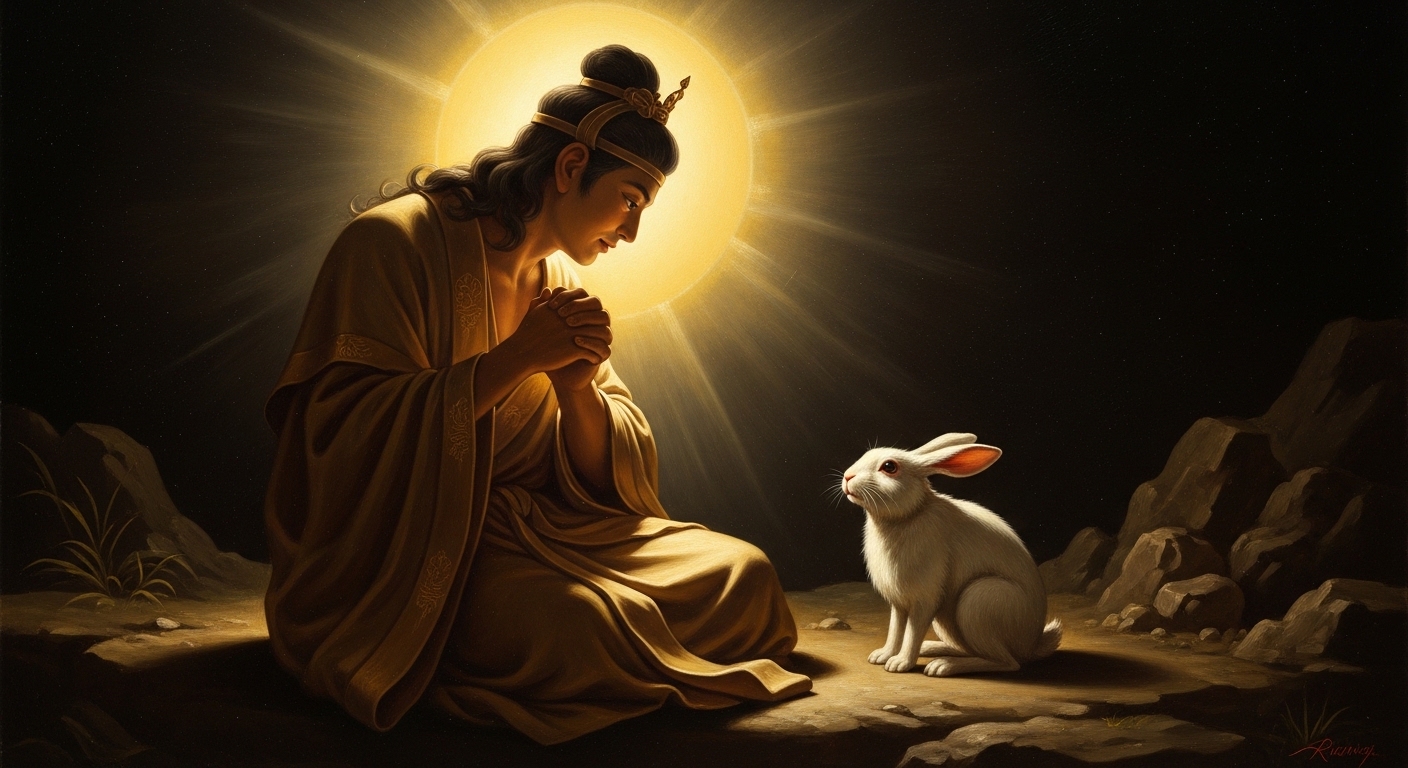
Ōkuninushi listens to the whole story. He does not judge the rabbit for the trick. He does not tell it that its suffering is its own fault.
He says: Go to the river mouth and wash yourself in fresh water. Then gather the pollen of the sedge-rushes that grow there and roll in it.
The rabbit goes. The rabbit does exactly as told. The white fur begins to grow back. The wound closes. The pain stops. The rabbit stands whole on the beach of Inaba, its fur white again, facing the young god who stopped when everyone else passed.
It says: Those eighty gods will not obtain the princess of Inaba. You will — though you carry the bag.
A skinned animal at the edge of the sea makes a prophecy to the god of compassion.
The prophecy comes true. Yagami-hime sees the eighty gods arrive and turns them all away. When Ōkuninushi arrives, trailing behind with the baggage, she chooses him. Not the powerful ones, not the magnificent ones — the one who stopped.
The rabbit, according to the Kojiki’s note, is the White Rabbit of Inaba, enshrined at Hakuto Shrine in what is now Tottori Prefecture, where it continues to receive prayers for safe relationships and cures for skin disease.
It was a rabbit who chose who should rule the world.
It made its choice based on who stopped.
Scenes
Echoes Across Traditions
Entities
- Ōkuninushi
- the White Rabbit of Inaba
- the Eighty Deities (Yasogami)
- Yagami-hime
Sources
- Kojiki (Record of Ancient Matters), compiled 712 CE, Book I, Sections 21-23
- Nihon Shoki (Chronicles of Japan), compiled 720 CE
- Royall Tyler, *Japanese Tales* (Pantheon, 1987)
- Motoori Norinaga, *Kojikiden* (Commentary on the Kojiki), 1798