Contents
When Persia and Turan agree that an arrow will define their border — the border will be wherever the arrow lands — the Persian king asks for a warrior who can shoot the farthest. Arash steps forward. He knows what it will cost. He puts his entire life force into the arrow, draws the bow, and the arrow flies from Mount Damavand at dawn and lands on a walnut tree at the banks of the Oxus River — at the moment Arash falls dead.
- When
- One of the oldest Persian myths; referenced in texts from the 9th century CE; likely pre-Islamic
- Where
- Mount Damavand, Iran; the great arrow's path across Central Asia; the Oxus River
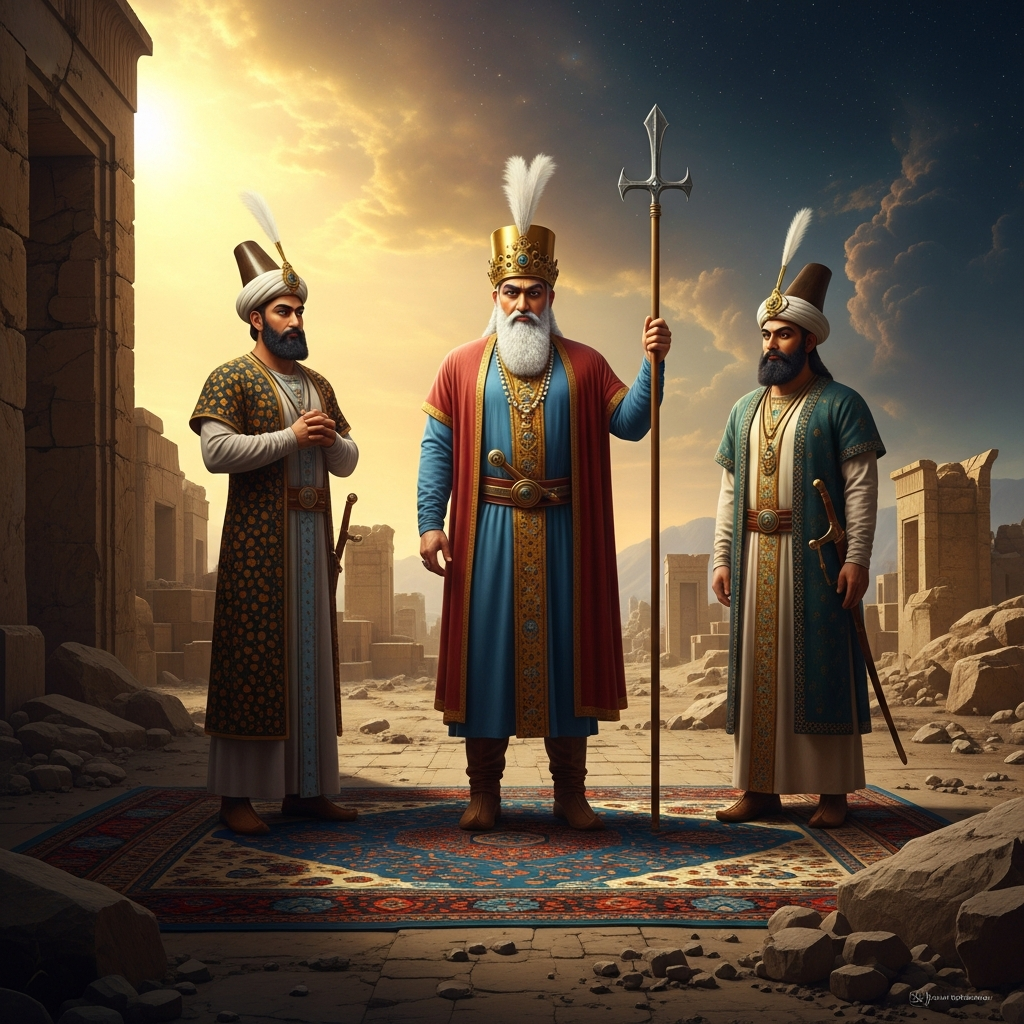
The war between Persia and Turan has lasted longer than any man on either side can remember. Afrasiab of Turan — the great enemy of the Iranian people, the figure whose shadow falls across a hundred years of the Shahnameh — has pressed the Persians back to the northern slopes of their own mountains. The land they once held is now a question. The border is not a line but a wound.
The two kings meet. They agree to a settlement, because they are tired or because something beyond exhaustion is involved — a recognition that neither side can destroy the other, that the question of territory has to be answered by something other than blood.
The treaty takes the form of an arrow.
One man will shoot from the top of Mount Damavand at dawn. Wherever the arrow lands — that will be the border. The Persians will hold everything south of the arrow’s landing place; Turan will hold everything north.
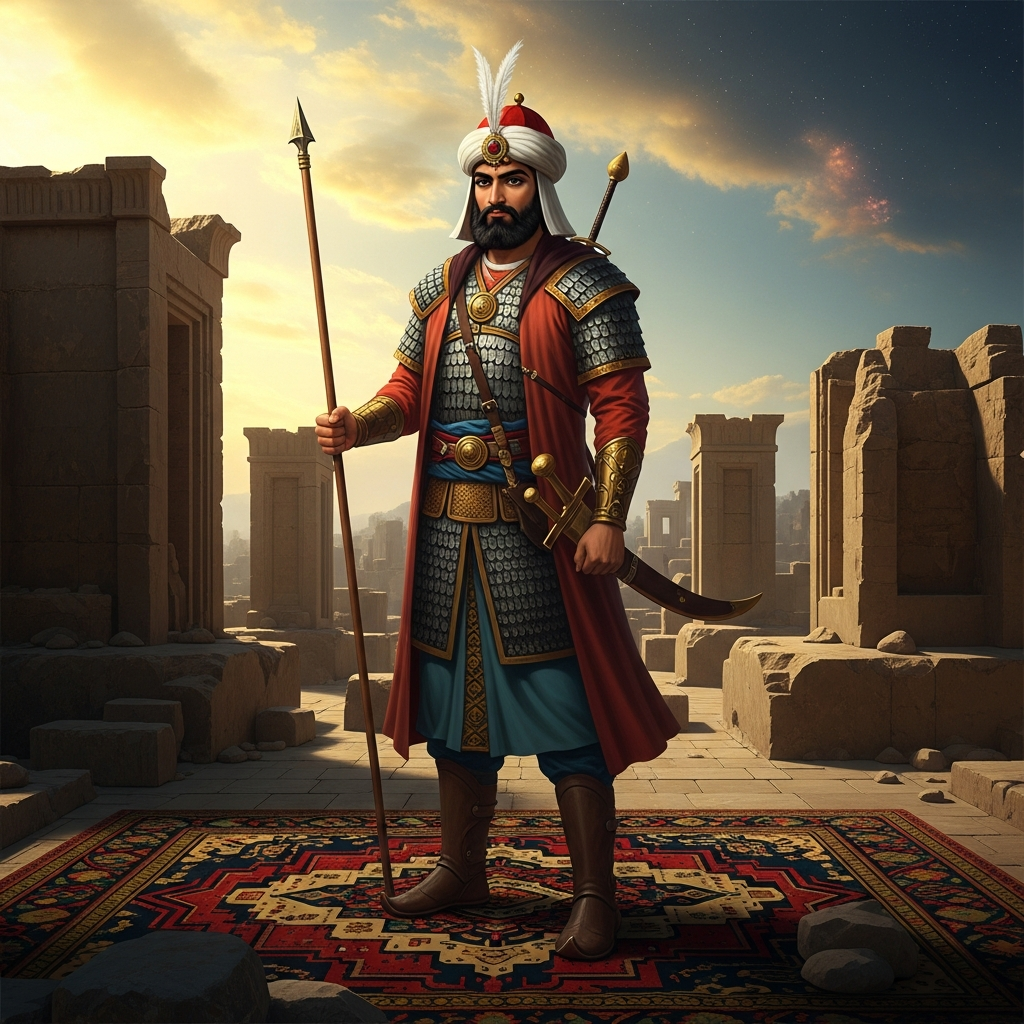
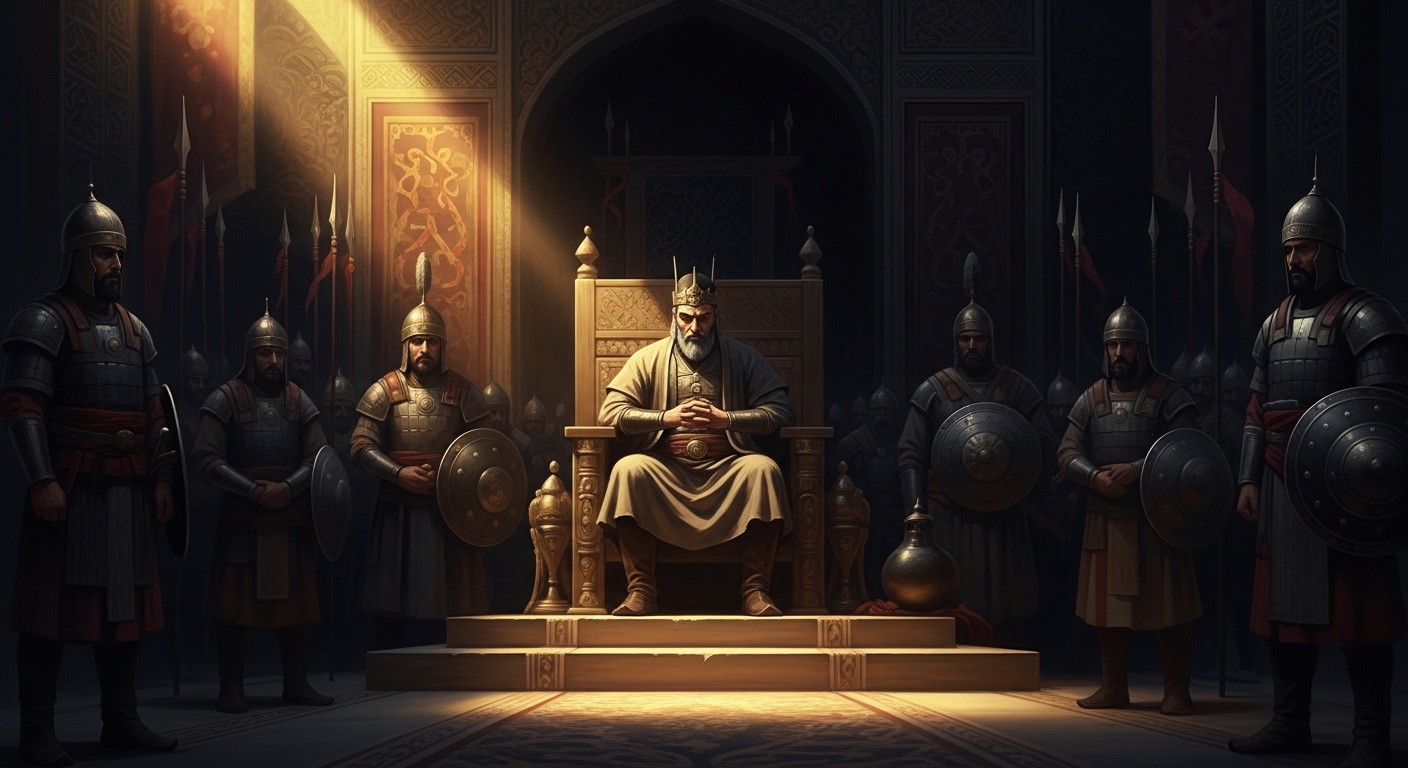
The Persian king announces this in his camp and then asks: who among his archers can make the arrow fly the farthest?
Arash steps forward.
He is not introduced at length. The early sources — the ninth-century Zoroastrian text Wizidagiha-i Zadspram, and Biruni’s encyclopedic account of the Iranian calendar written a century later — do not give him a family or a biography. He is a soldier. He has a reputation as an archer. He steps forward when the king asks.
He says: I can shoot the farthest arrow any man has ever shot.
The king asks what he means.
Arash says: I will put everything I am into the arrow. Every virtue I have accumulated. Every breath I have left. The arrow will fly as far as my life is worth. He pauses. I will not survive the shot.
The king is silent. His generals are silent. This is not what any of them expected the negotiation to produce. They had imagined a contest of skill — the strongest archer lined up beside others, making the best shot possible. They had not imagined a man explaining, calmly, that the best shot possible requires the archer’s death.
Arash undresses.
He shows his body to the army, which is a ritual act: he is demonstrating that he is clean, unmarked, not hiding a wound or a corruption that would disqualify him as a sacrifice. His body is the body of a man who has lived correctly. It is fit for expenditure on something that matters.
He dresses again. He takes his bow.
They climb Mount Damavand before dawn.
The mountain is the highest place in the Persian world and the coldest. The summit is above the clouds most days; in the hour before sunrise it is in a darkness that is not the darkness of night but the darkness of altitude, a darkness with edges. The snow under their feet is the permanent snow of the high cone — not winter snow but the mountain’s own substance, decades deep.
Arash stands on the summit.
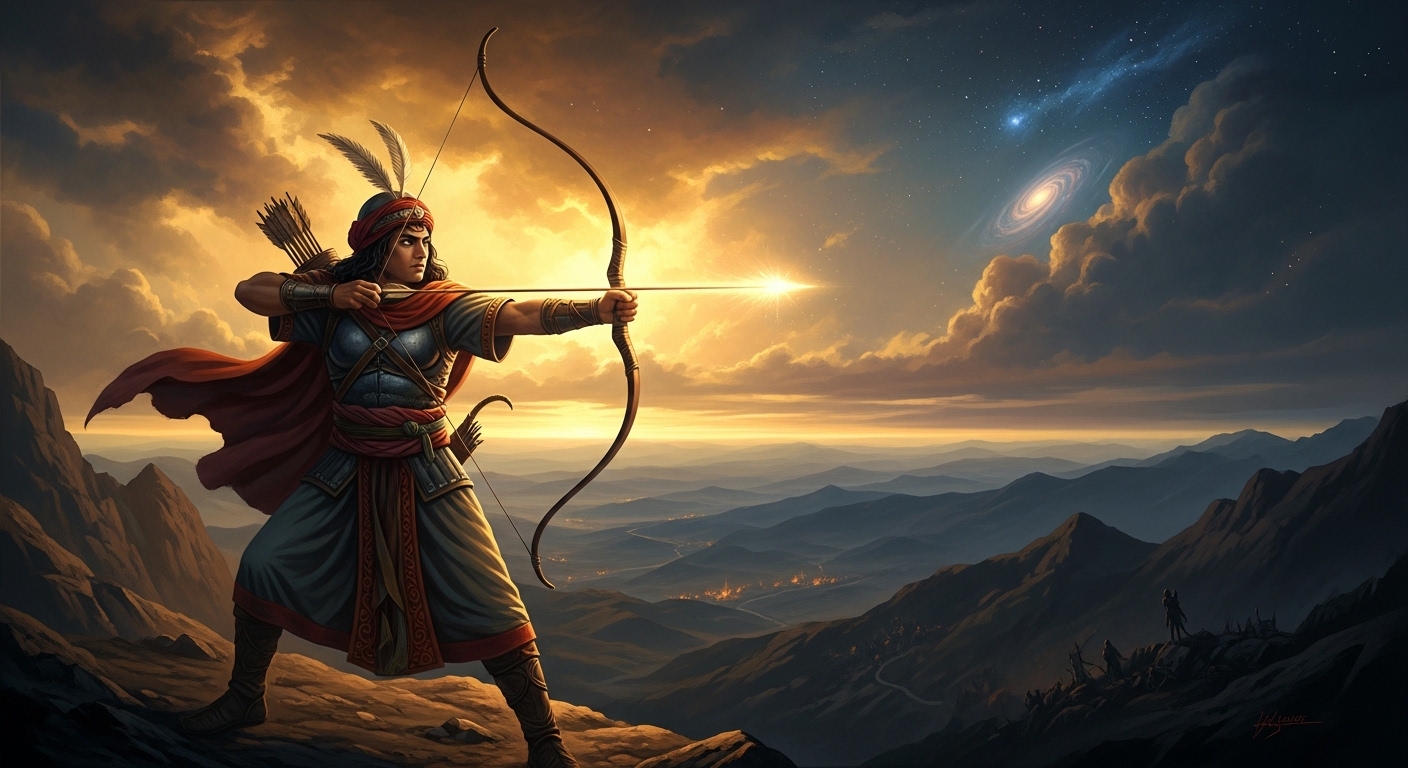
He faces north. He draws the arrow from his quiver. He sets it to the string.
The sun is not yet up. They are waiting for the agreed-upon moment — the first light, the technical dawn when the sky shifts from black to the dark blue that precedes color. Around him, the army is present. The Persian king is there. Messengers from Afrasiab’s court are there, to witness the shot from the Turanian side.
The sky changes.
Arash draws the bow.
What he puts into the shot, the sources do not describe in mechanical terms. The Zoroastrian tradition understands it as xvarnah — the divine effulgence, the sacred fire of legitimate power and personal virtue that the great men of Iranian tradition carry in their bodies. He is not putting muscle into the draw. He is putting the substance that makes him who he is. The arrow fills with light that is not quite visible, the way a lens fills with light when held correctly — concentrated and directional and burning.
He releases.
The arrow leaves the bow at the moment of sunrise. It crosses the sky of the northern world. The witnesses on the mountain watch it go — it passes beyond sight quickly, and then there is only the sky and the sound of the bowstring and the particular silence that follows a release.
Arash falls.
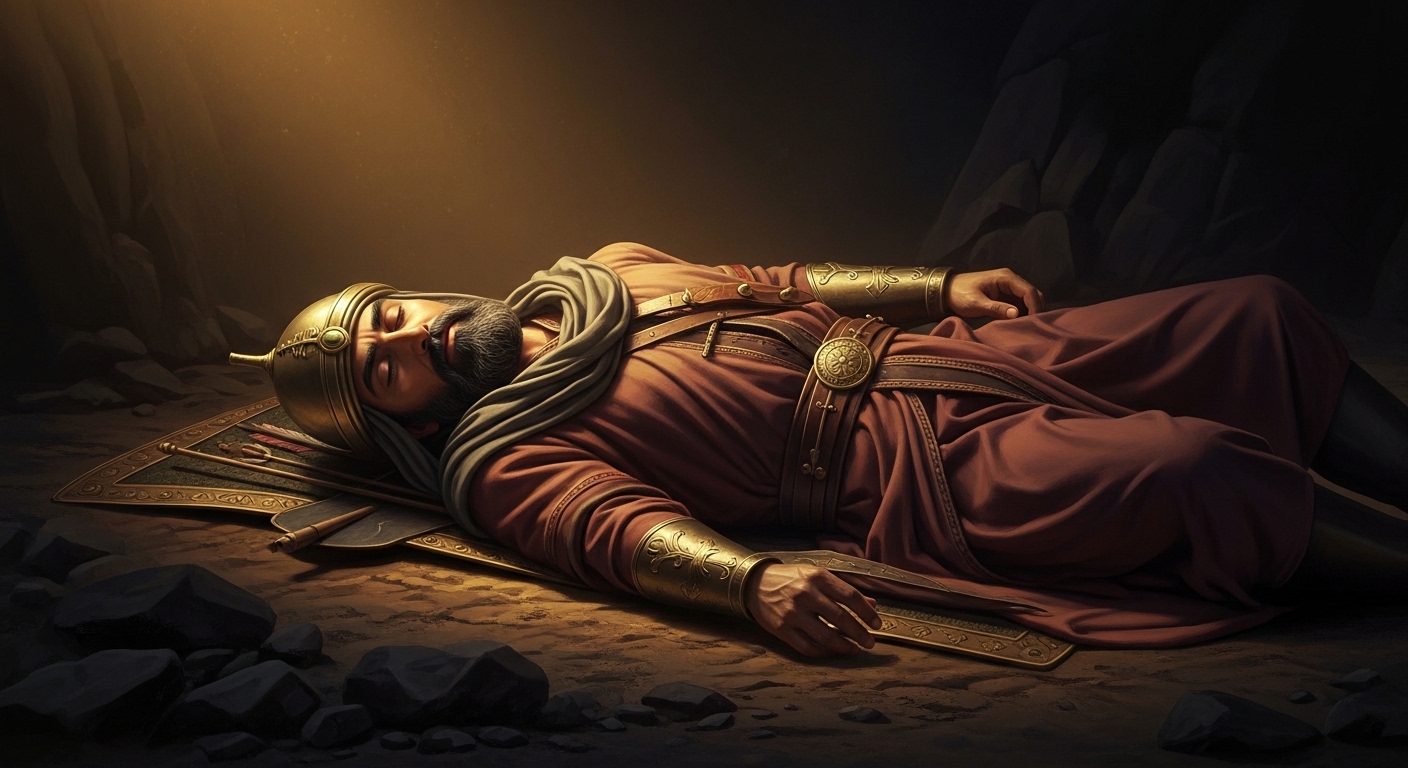
He falls at the moment of release. Not struck. Not killed by anything outside him. He simply empties, the way a vessel empties when you tip it fully. There is nothing left inside to keep the form upright. His body hits the snow. The army gathers around him. He is dead.
He is completely dead. There is no conventional thing to do with the expression on his face; the sources do not describe it. The body is present and the man is gone in the same moment as the arrow.
The arrow flies from sunrise to dusk.
This is the consistent number across all versions of the myth: a full day of flight. It flies north across the Alborz range and across the steppe and across the lower ranges and across the distance that would take an army months to cross. When it lands — when it strikes the bark of a great walnut tree on the bank of the Oxus River — the sun is setting on the opposite horizon from where it rose.
The Oxus becomes the border. Everything south of the Oxus — an enormous swath of Central Asia — is returned to Persia. Afrasiab honors the agreement. The arrow is testimony, and testimony of that kind cannot be argued with.
The walnut tree stands for generations. In later centuries, travelers seek it out. It is a marker tree — the kind that accumulates meaning until the wood itself feels different under the hand, denser, as if the arrow’s impact traveled inward and changed the grain.
Arash is not buried on the mountain. There is no tomb. This is consistent with the myth’s logic: you cannot memorialize the expenditure because the expenditure is the memorial. The arrow’s landing place is the monument. The border is the grave.
The summer festival of Tirgan — the Iranian feast of water and rain, celebrated on the thirteenth of the month Tir — incorporates the memory of Arash through the ritual throwing of water and, in some regions, the ceremonial shooting of arrows. The name Tir is cognate with the name of the month and the arrow (tir means arrow in Persian) and possibly with Tishtrya, the Avestan rain-deity. The festival is older than the specific story attached to it; the story gathered around a pre-existing rite of midsummer, archery, water, and the cosmic arrow that defines space.
Every year, in the heat of the Iranian summer, someone throws water and someone else shoots an arrow and the motion from the body into the air commemorates a man who understood that some measurements can only be taken in this currency.
The arrow is still flying, in the myth’s time. It has not landed yet. It will land at dusk, when the border is finally fixed, and everything south of the landing place will be what his life was worth.
Scenes
Echoes Across Traditions
Entities
- Arash
- Afrasiab of Turan
- the Persian king
- the arrow
- Mount Damavand
Sources
- Zadspram, *Wizidagiha-i Zadspram* (9th century CE) — earliest known prose reference to Arash
- Biruni, *Athar al-Baqiya* (c. 1000 CE) — describes the Tirgan festival and Arash's role
- Abolqasem Ferdowsi, *Shahnameh*, trans. Dick Davis (Penguin, 2016) — passing reference to the myth
- Sadeq Hedayat, *Arash-e Kamangir* (related modern meditation)
- Siavash Kasravi, *Iranian National Identity and the Arash Legend* (2001)
- Encyclopaedia Iranica, s.v. 'Arash' (online edition)