Contents
Rumi opens the Masnavi with eighteen verses about a reed cut from its reed bed — a reed that has been weeping ever since, and whose weeping is not complaint but the very voice of God calling to God.
- When
- c. 1258 CE — Konya, Anatolia, a decade after Shams disappeared
- Where
- Konya, Seljuk Anatolia — the city of whirling dervishes and Persian poetry under Turkish patronage
Listen to the reed, how it tells a tale of separations.
This is the first line. Not consider — listen. The Masnavi begins as a command of the ear, not the mind. Rumi is telling you: this book is not argument. It is music. The reed does not reason about its separation from the reed bed. It plays.
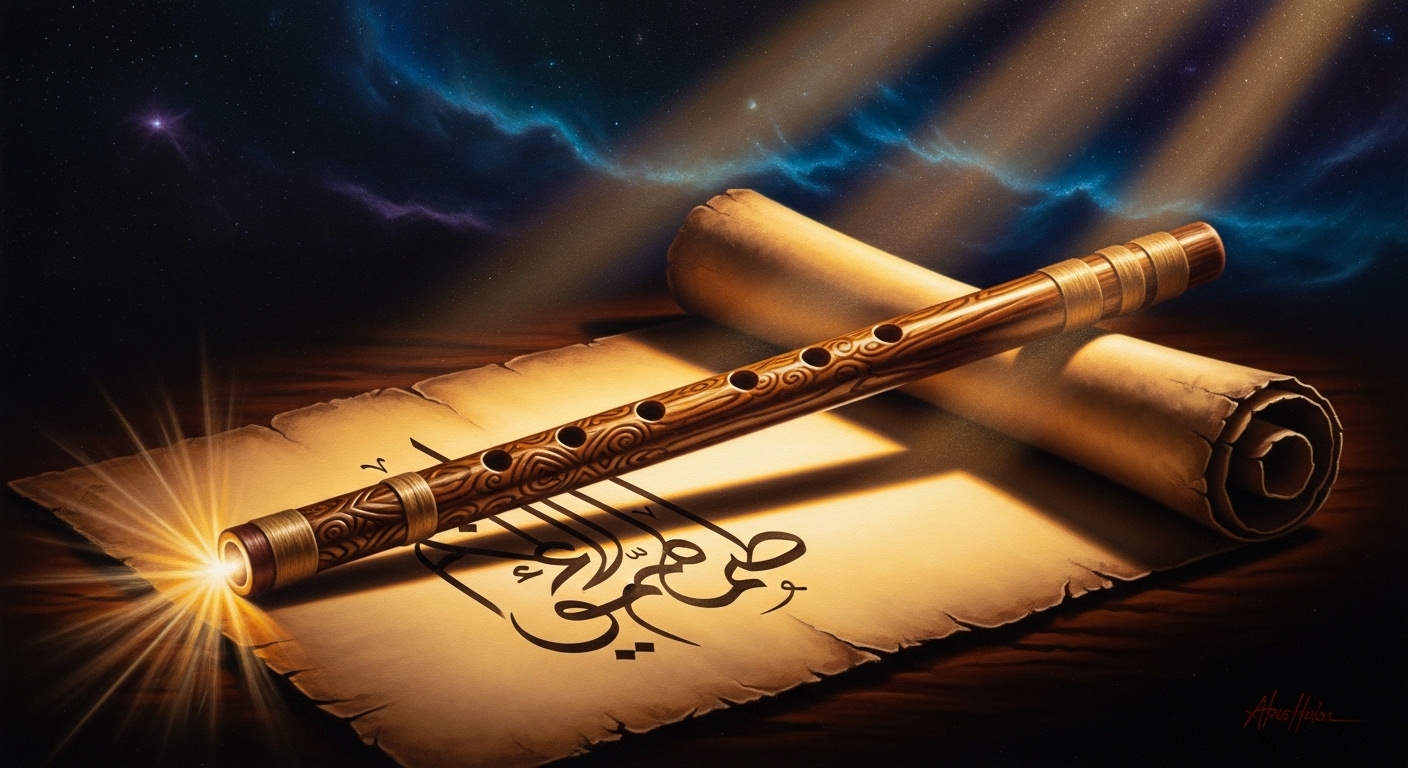
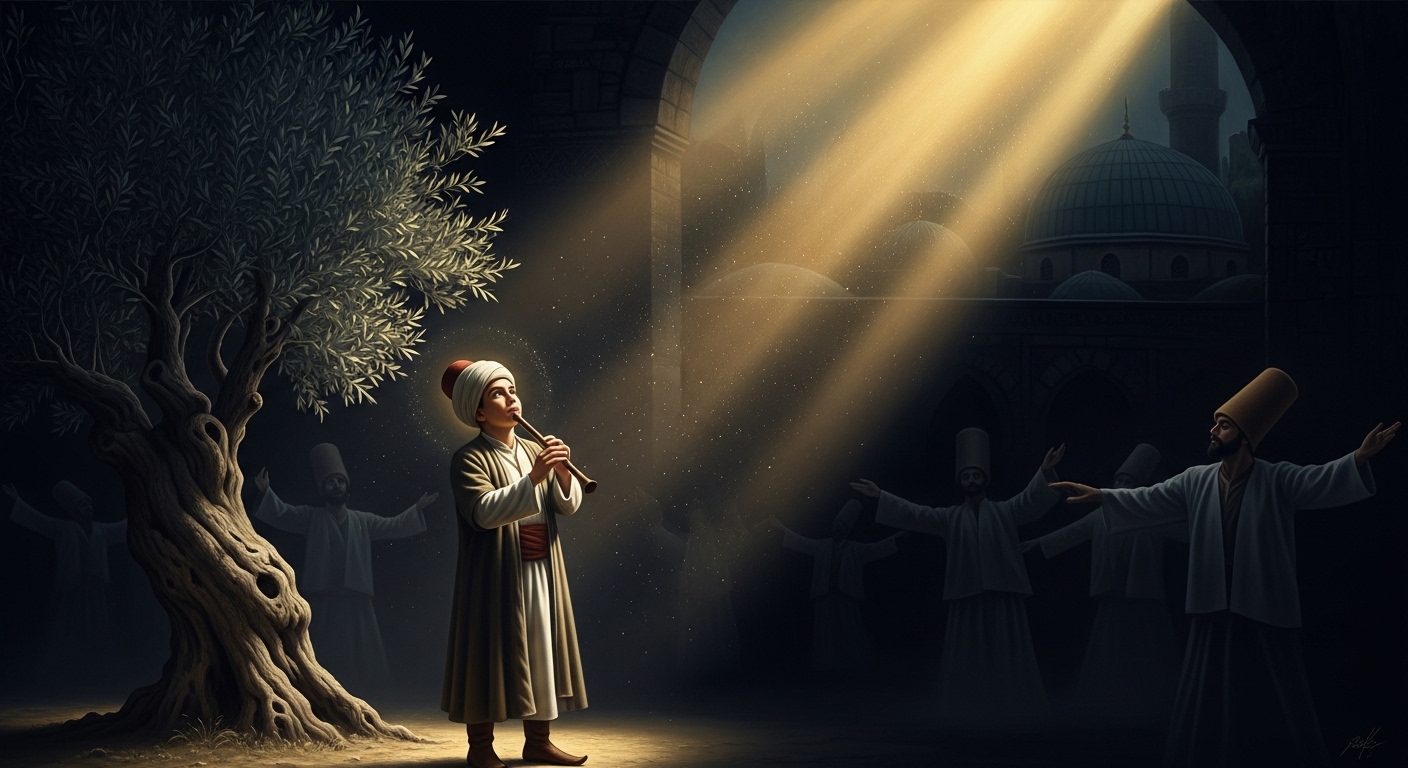
The image is precise and ancient. The ney, the Persian end-blown flute, is made from a hollow reed that grows in marshes along river banks. To make it an instrument, the craftsman cuts it from the roots. The cutting is permanent. The reed will never grow back. And from the moment of cutting, the reed carries an emptiness — the channel through which breath passes — that is identical to its wound. The flute does not play despite being severed from the reed bed. It plays because of the severing. The channel of absence is what makes it musical.
Rumi opens the poem he will spend the next fifteen years writing with this: the soul is a cut reed.
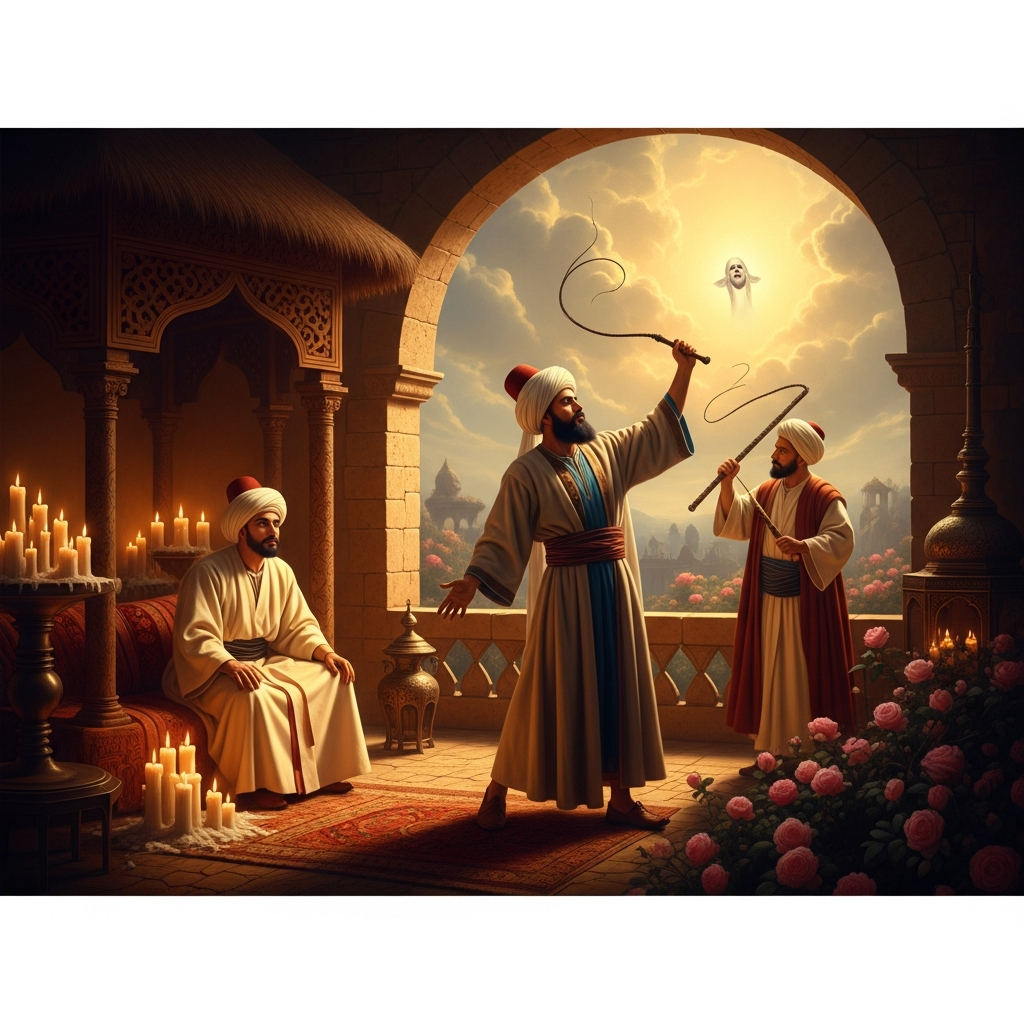
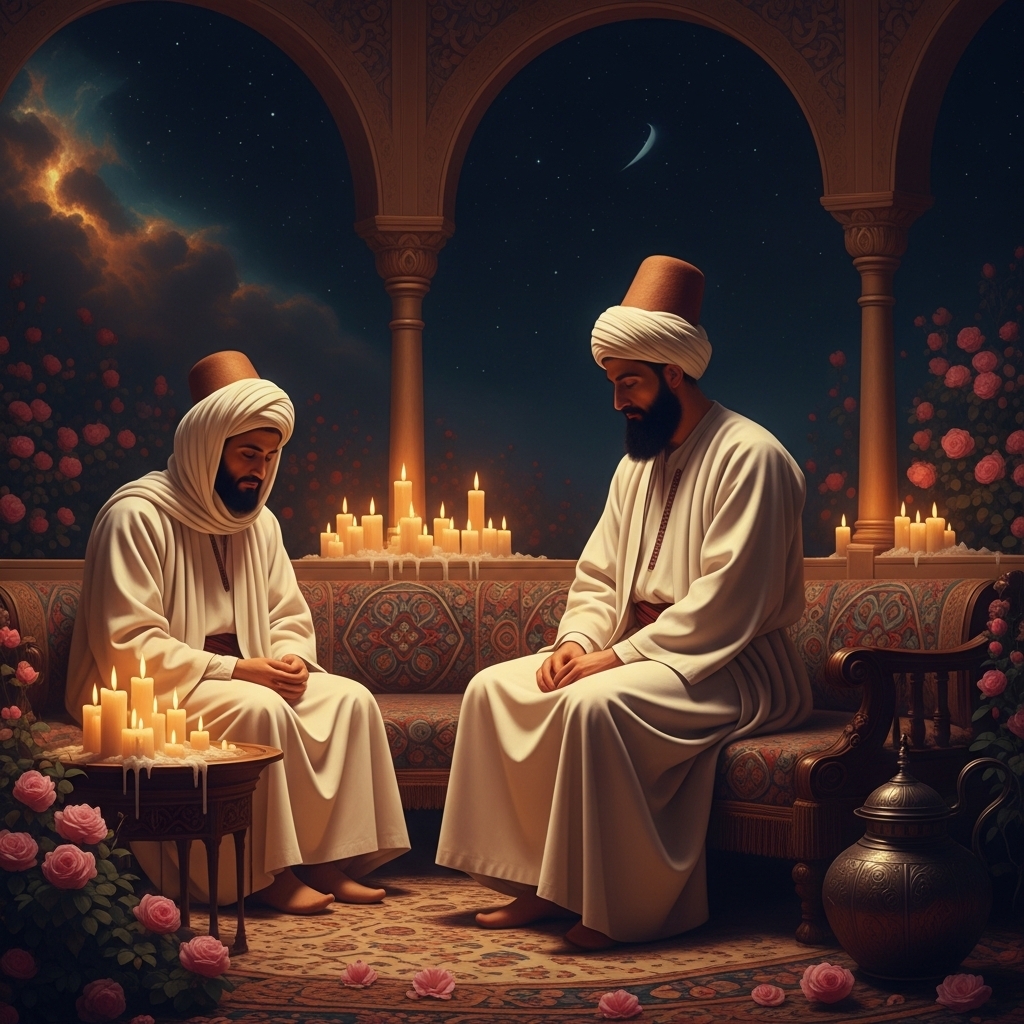
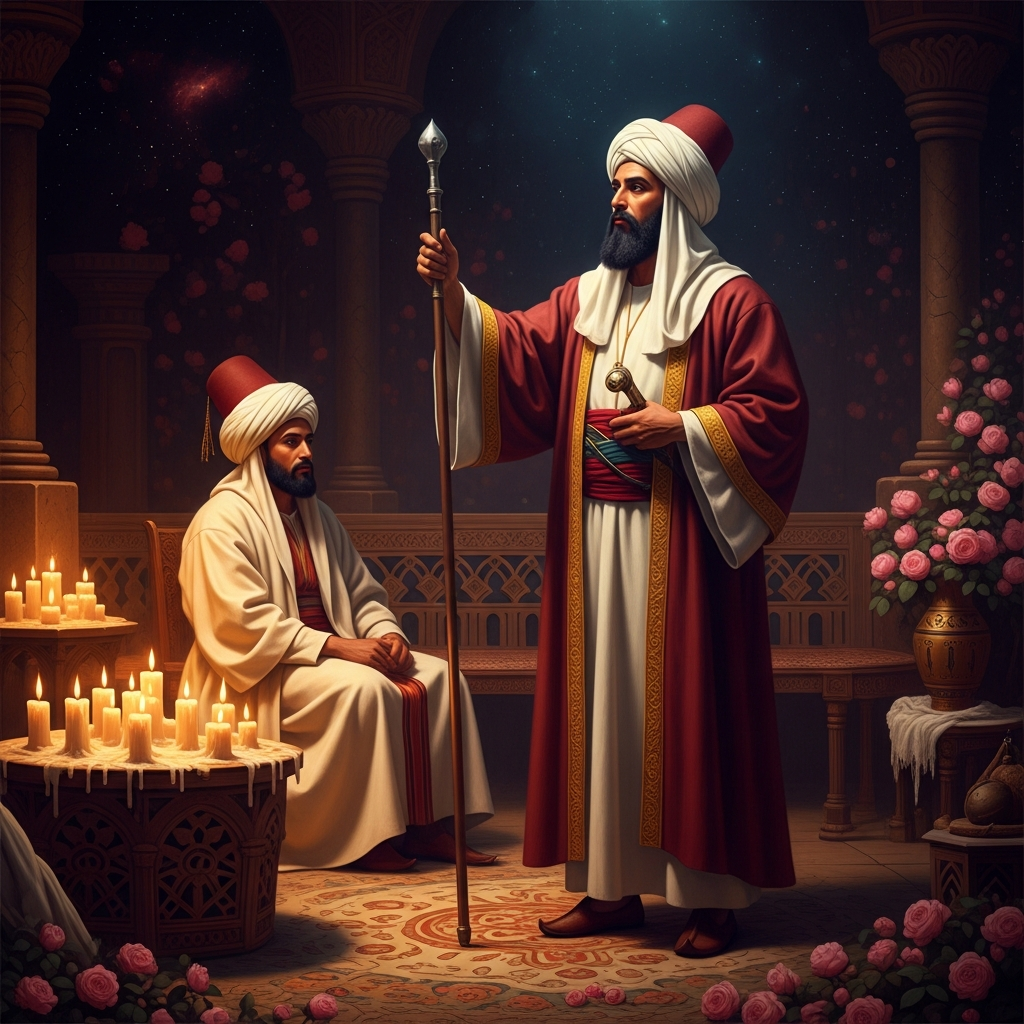
It is approximately 1258 in Konya, capital of the Seljuk Sultanate of Rum in central Anatolia. Rumi is in his mid-fifties. He has been dictating — improvising, singing, weeping, whirling — for his devoted student Husam Chalabi for several years. Husam carries the notebook everywhere. When Rumi stops, Husam reads back what was dictated. Rumi corrects, expands, continues. The Masnavi grows to twenty-five thousand verses across six books.
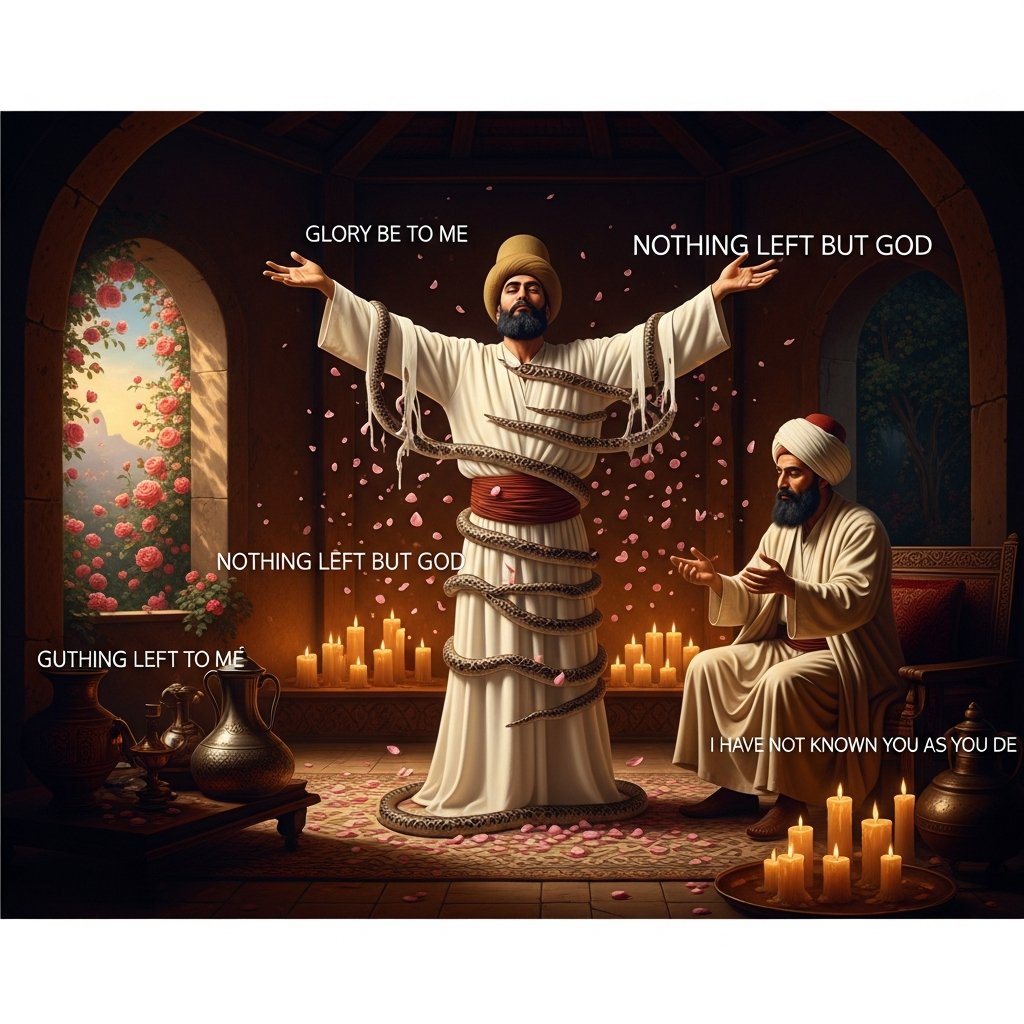
But the opening eighteen verses were not dictated to Husam. They are older. They were composed in the years immediately after Shams-i-Tabrizi disappeared for the second and final time — probably killed, possibly fled — leaving Rumi undone. The reed verses are Rumi making sense of the wound. Not healing it. Making sense of it.
The reed says: Ever since I was cut from the reed bed, men and women have lamented alongside me. Not because of me. Alongside me. The reed does not claim to cause the lamentation. It claims to be the sound that names what was already there. Every human being who has ever longed for something they cannot reach — God, a person, their own wholeness, their home — recognizes the sound of the ney and says: yes. That is it. That is the sound.
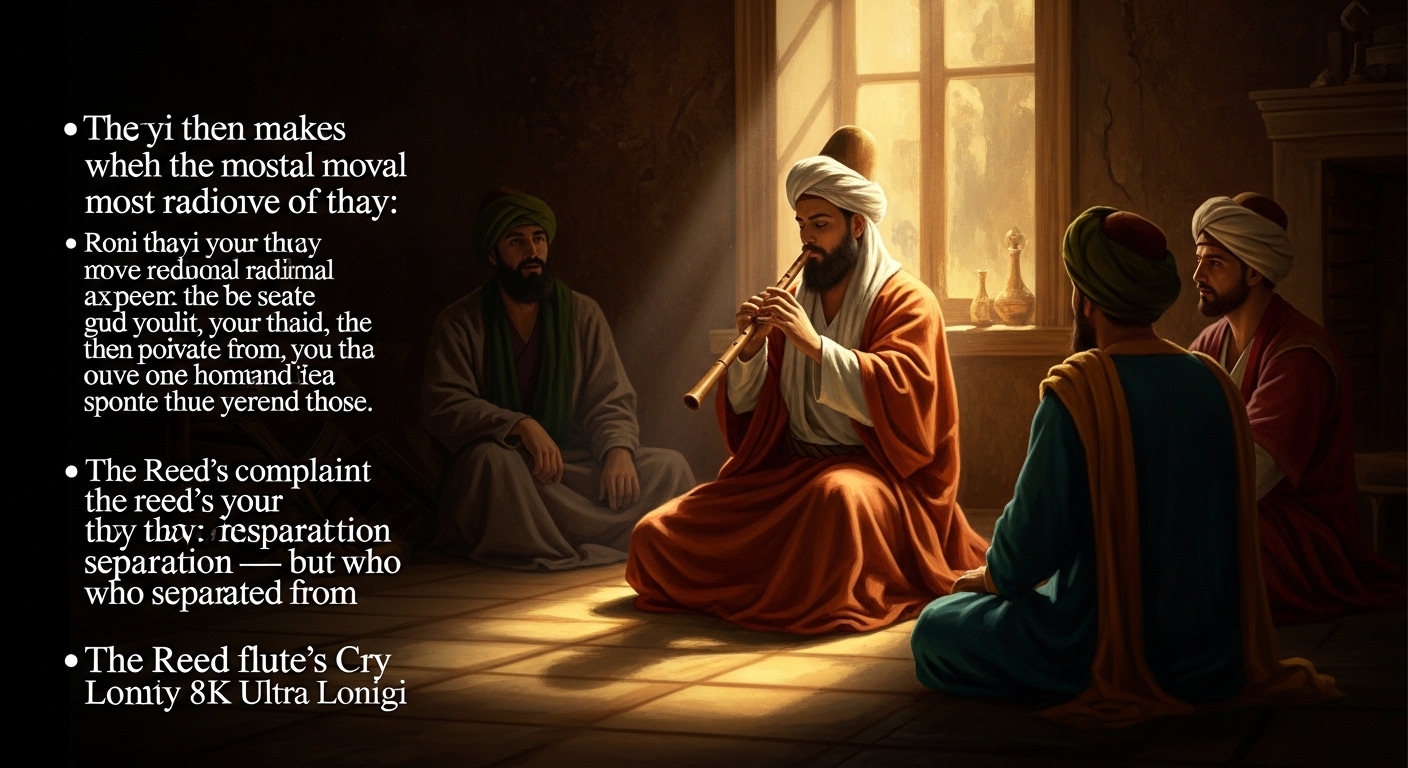
Rumi then makes the most radical move of the poem. He says: the reed’s complaint comes from separation — but who is it separated from? Not from Shams, though Shams is present in every line. Not from paradise, though paradise is present in the image of the garden where the reed grew. The reed is separated from God. And God is separated from the reed. And the music is the wound of both.
My secret is not far from my complaint, but eye and ear lack that light. The separation is an open secret. Rumi is not hiding it. He is saying: you already know this. The longing you feel is itself the evidence. The very fact that you ache for what you cannot reach proves that what you’re reaching for is real. Hunger is not evidence that food doesn’t exist.
This is the theological ground the Sufis have been building since Rabia of Basra: love of God is not a means to an end. The longing itself is the end. The music of the cut reed is not a lament for a future reunion. It is the reunion, happening continuously, in the ache.
Husam reads the eighteen verses back. Rumi confirms them. The Masnavi begins with a wound.
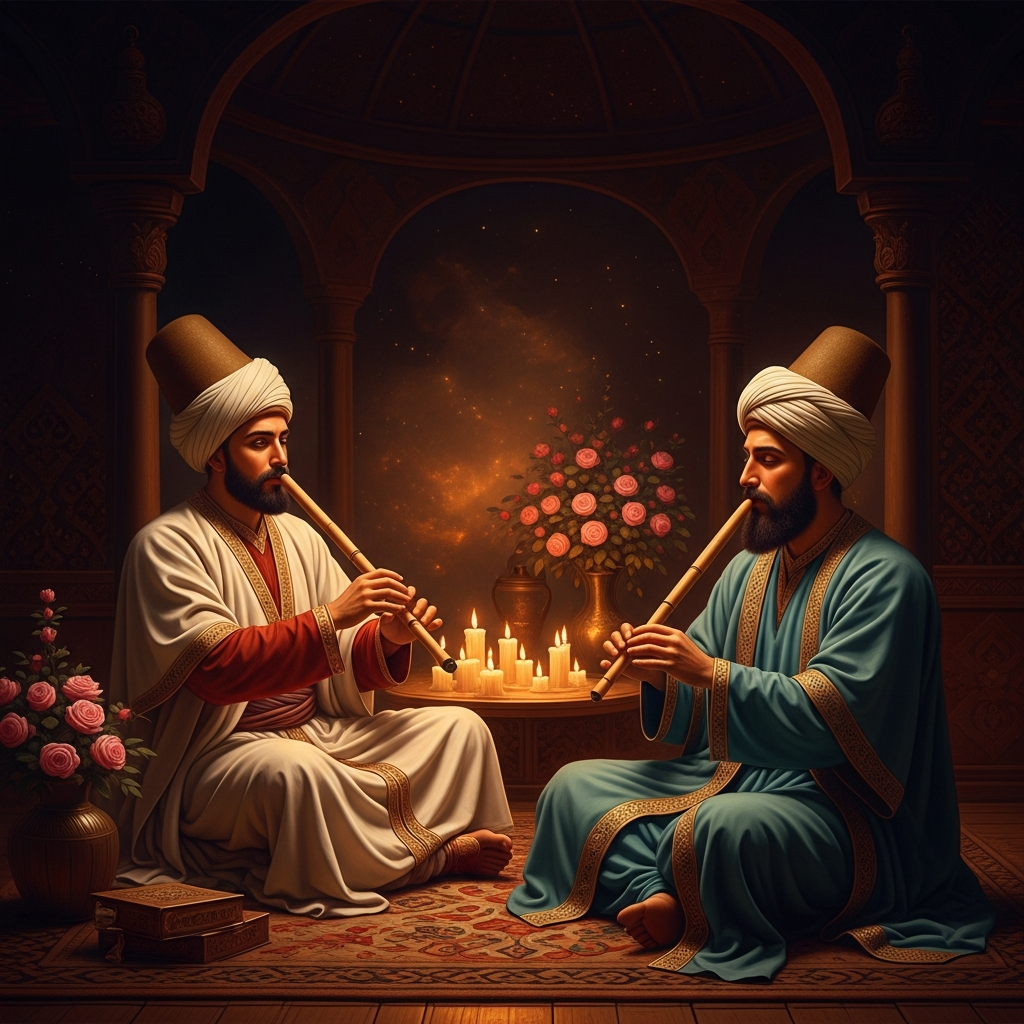
For seven hundred and sixty years, the poem opens with the same command: Listen to the reed. Every performance of the Mevlevi sama — the ceremony in which white-robed dervishes whirl in silence and then in sound — begins with a solo ney improvisation. The flute plays first. Before the voice, before the drums, before the whirling, the cut reed sings.
The musicians who play the ney train for decades before they are permitted to play the opening. They are not learning technique. They are learning separation. A ney player who has not lost something — a teacher, a love, a life they thought would be theirs — cannot play the opening honestly. The sound will be technically correct and spiritually empty. The music requires the wound.
Rumi knew this. He wrote it at fifty, from inside the wound of Shams’s absence, and he wrote it as a gift to everyone who would ever be cut from something they needed and didn’t know why the cutting was allowed.
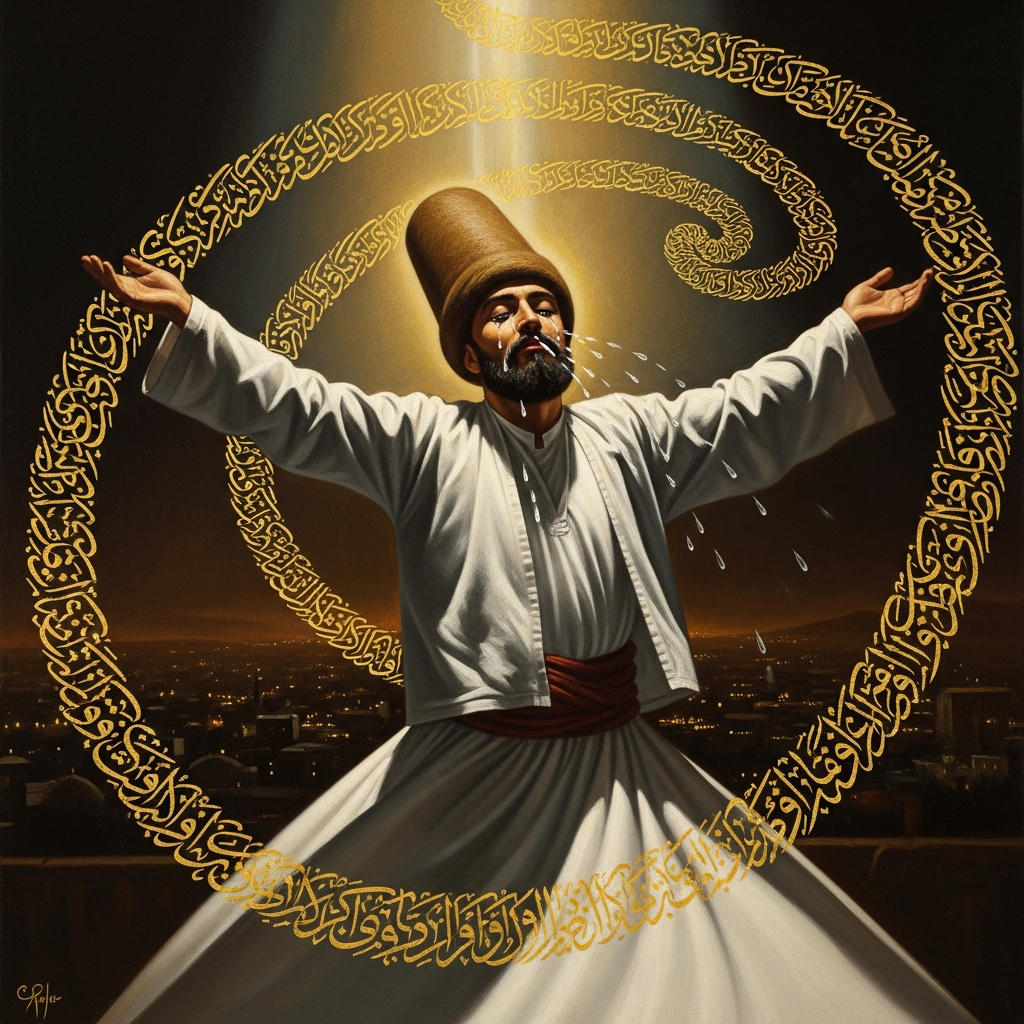
The reed plays. The reed bed is gone. The music is the distance between them, and the distance is also the sound of God.
Scenes
Echoes Across Traditions
Entities
- Rumi
- the reed flute (ney)
- Shams-i-Tabrizi
Sources
- Rumi, *Masnavi-yi Ma'navi*, Book I, opening eighteen verses (c. 1258–1273)
- Coleman Barks, *The Essential Rumi* (HarperCollins, 1995)
- Reynold Nicholson, *The Mathnawi of Jalalu'ddin Rumi* (Gibb Memorial Trust, 1925)
- Annemarie Schimmel, *The Triumphal Sun: A Study of the Works of Jalāloddin Rumi* (Fine Books, 1978)