When Shams Disappeared the Second Time
c. 1247–1248 CE — Konya, Anatolia · Konya, Anatolia — Rumi's household, from which Shams disappeared
Contents
In 1248, Shams-i-Tabrizi is called from Rumi's household in Konya and never returns. The mystic whose absence from his home in Tabriz had made Rumi, now disappears more permanently — and the disappearance is more productive than the presence was, because it converts Rumi from a student of Shams into the poet of separation itself.
- When
- c. 1247–1248 CE — Konya, Anatolia
- Where
- Konya, Anatolia — Rumi's household, from which Shams disappeared
The knock at the door comes at night.
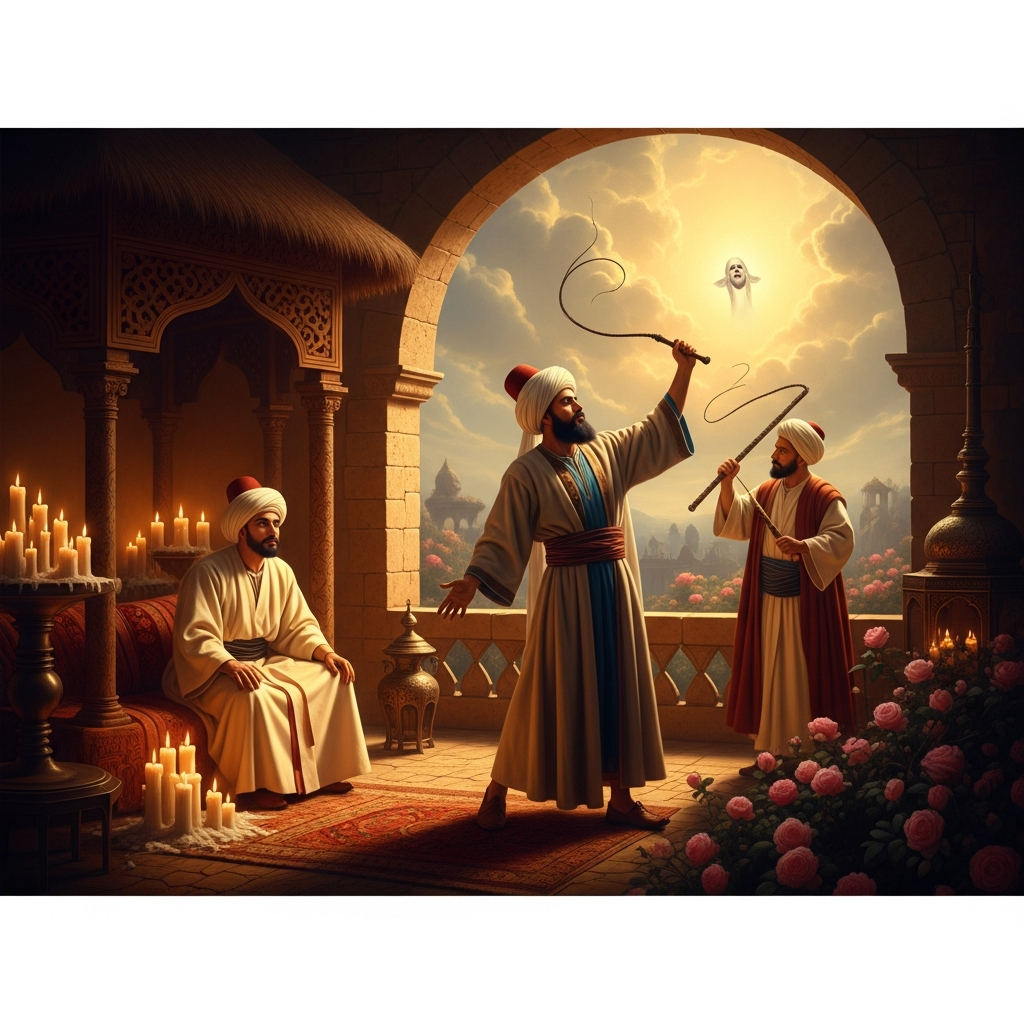
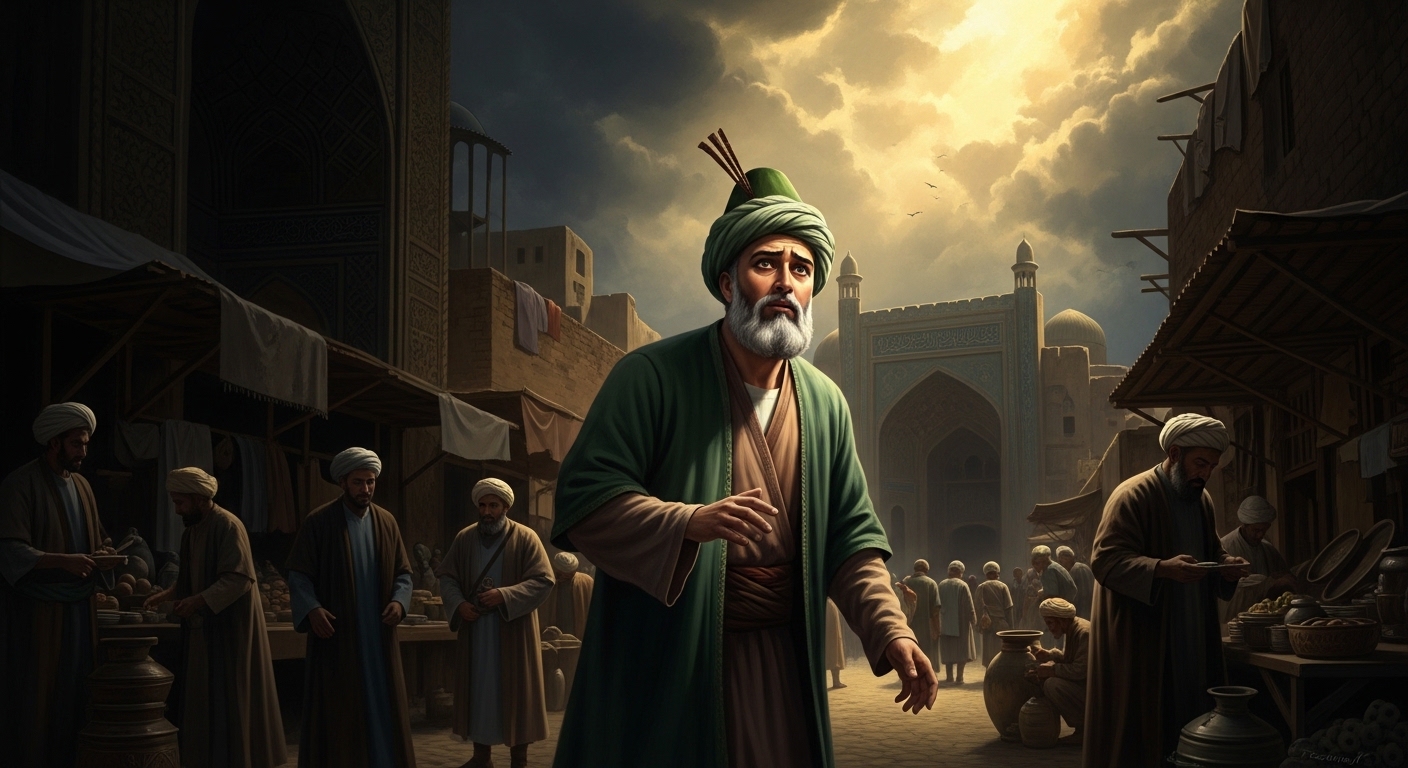
The details are disputed. The most common account says that someone called to Shams from outside Rumi’s house in the evening — possibly a messenger, possibly one of the jealous students who had previously organized Shams’s first departure from Konya and brought him back. Shams left the room. He was never seen again.
Whether he was killed — possibly by Rumi’s own son Ala ud-Din, who had been among those most hostile to Shams — or whether he chose to disappear permanently, as he had done from other cities before Konya, the tradition cannot fully determine. Rumi sends his son Sultan Walad to search for him. Sultan Walad reaches Damascus, where there are reports of someone matching Shams’s description. Whether he finds Shams and whether Shams refuses to return, or whether the man in Damascus is not Shams at all, remains uncertain.
What is certain is that Shams is gone. For good.
Rumi goes to Damascus himself.
He searches the streets. He asks everyone who might have seen the wild man from Tabriz in the black cloak. He finds nothing conclusive. And at some point — the accounts are vague on when, because what happens next is interior — he understands.
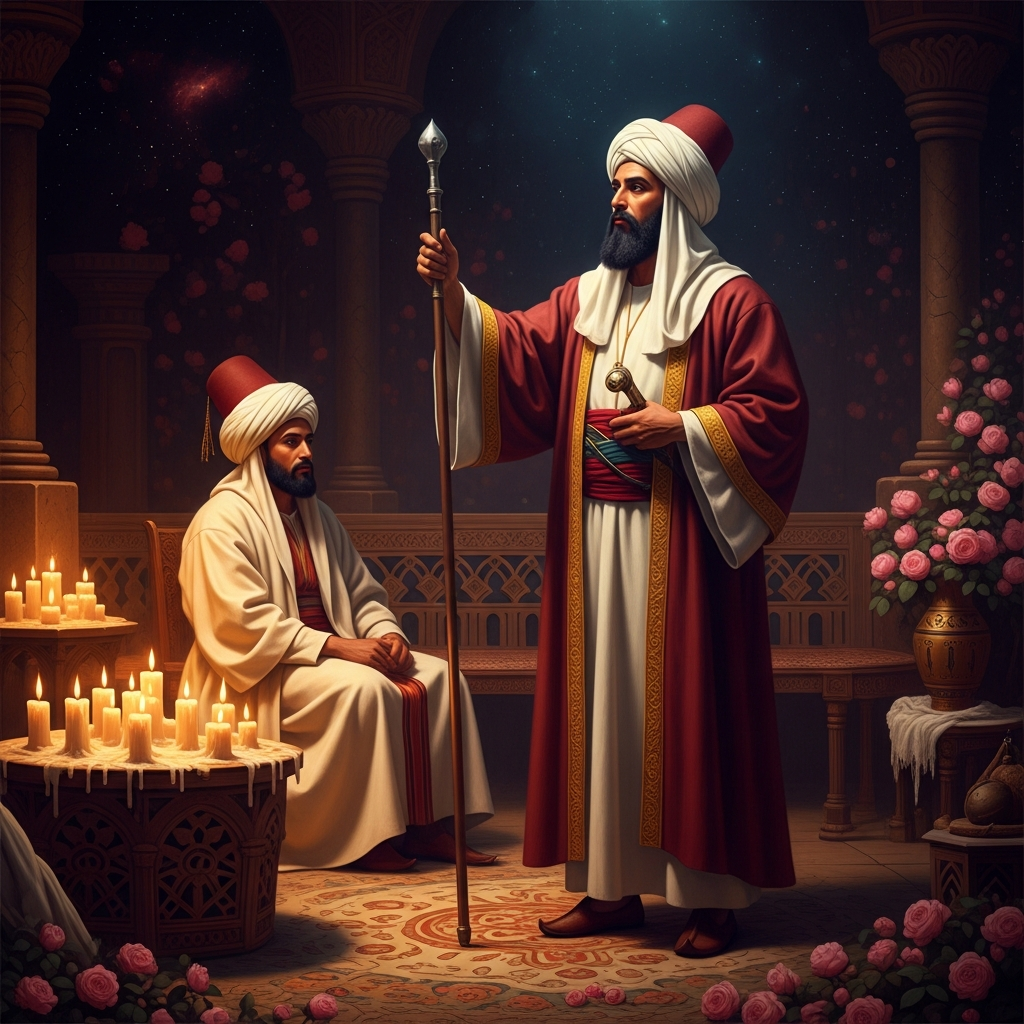
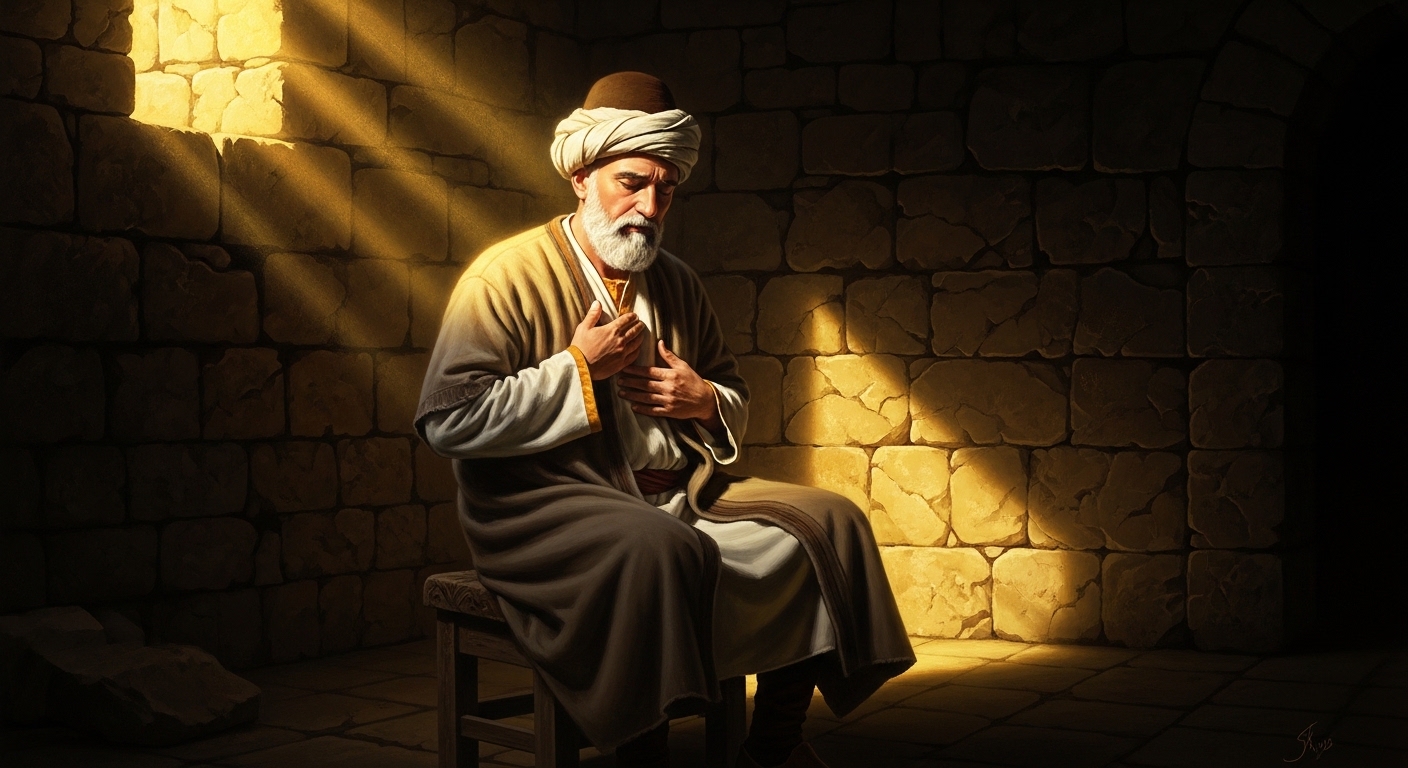
He understands that what he is looking for is not in Damascus. Shams is not in Damascus. Shams was never, finally, in Konya. Shams was — in the formulation Rumi reaches and which runs through the Divan-i Shams as its philosophical foundation — the outer form of something that was always interior. The mirror that Shams held up for four years had shown Rumi his own face. The mirror is gone. But the face is not gone.
Why should I seek? I am the same as he. His essence speaks through me.
The Divan-i Shams-i Tabrizi begins here.
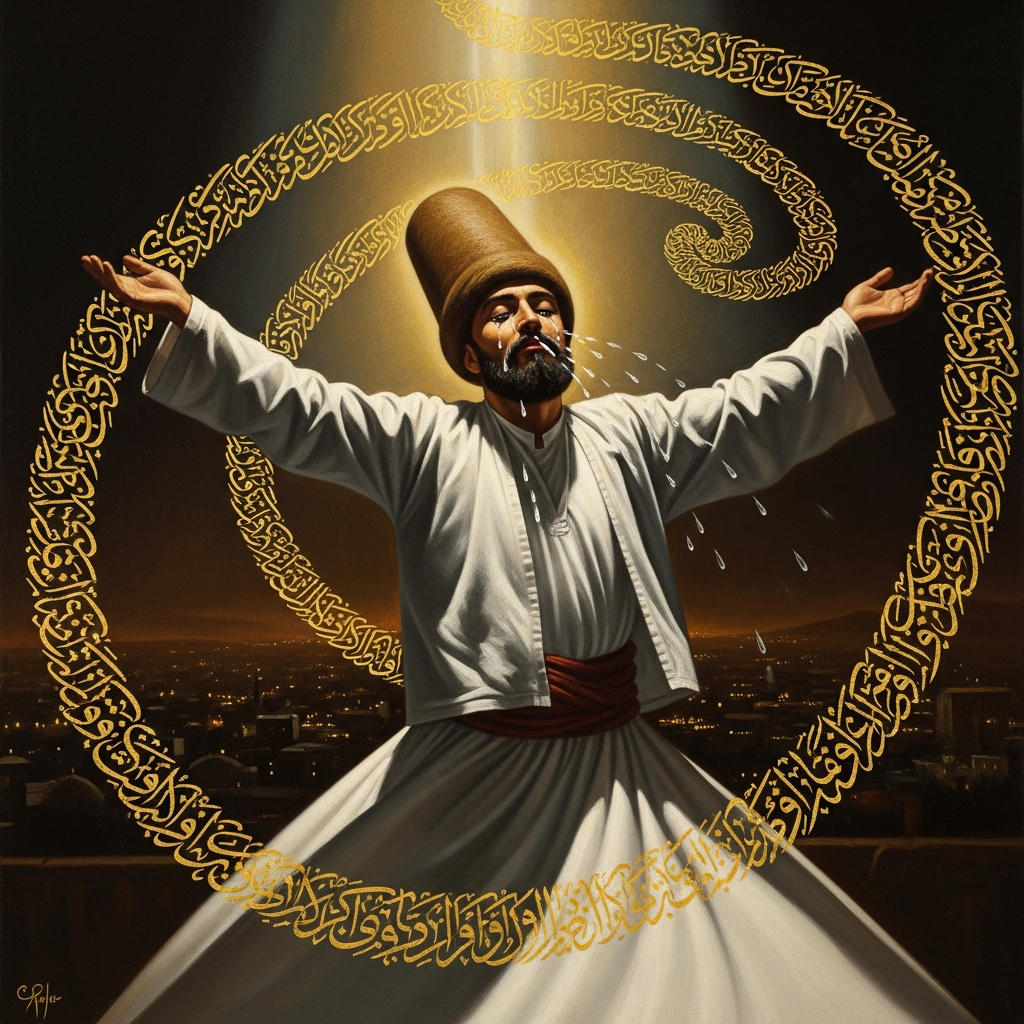
It is forty thousand verses. It is addressed to Shams — titled after him, dedicated to him, in a sense offered to him. But Shams is gone. Rumi is addressing the absence. And the poems that emerge from the addressing of absence have a quality that the poems addressed to the presence do not have: they are simultaneously love letters to an absent person and prayers to a present God, and the two readings cannot be separated.
I have lived on the lip of insanity / Wanting to know reasons, / Knocking on a door. / It opens. I’ve been knocking from the inside.
This is the insight the disappearance makes possible. As long as Shams was present, Rumi could locate the teaching outside himself. The master was over there; the student was over here; the distance was traversable by going to Shams’s room. When Shams disappears, there is no over there. The student discovers that what he has been walking toward is already where he was standing.
Every poem in the Divan-i Shams names Shams at the close — the poetic convention of the takhallus, the pen name in the closing couplet. But the pen name Rumi uses is not his own name. It is Shams’s. He gives his poems Shams’s name.
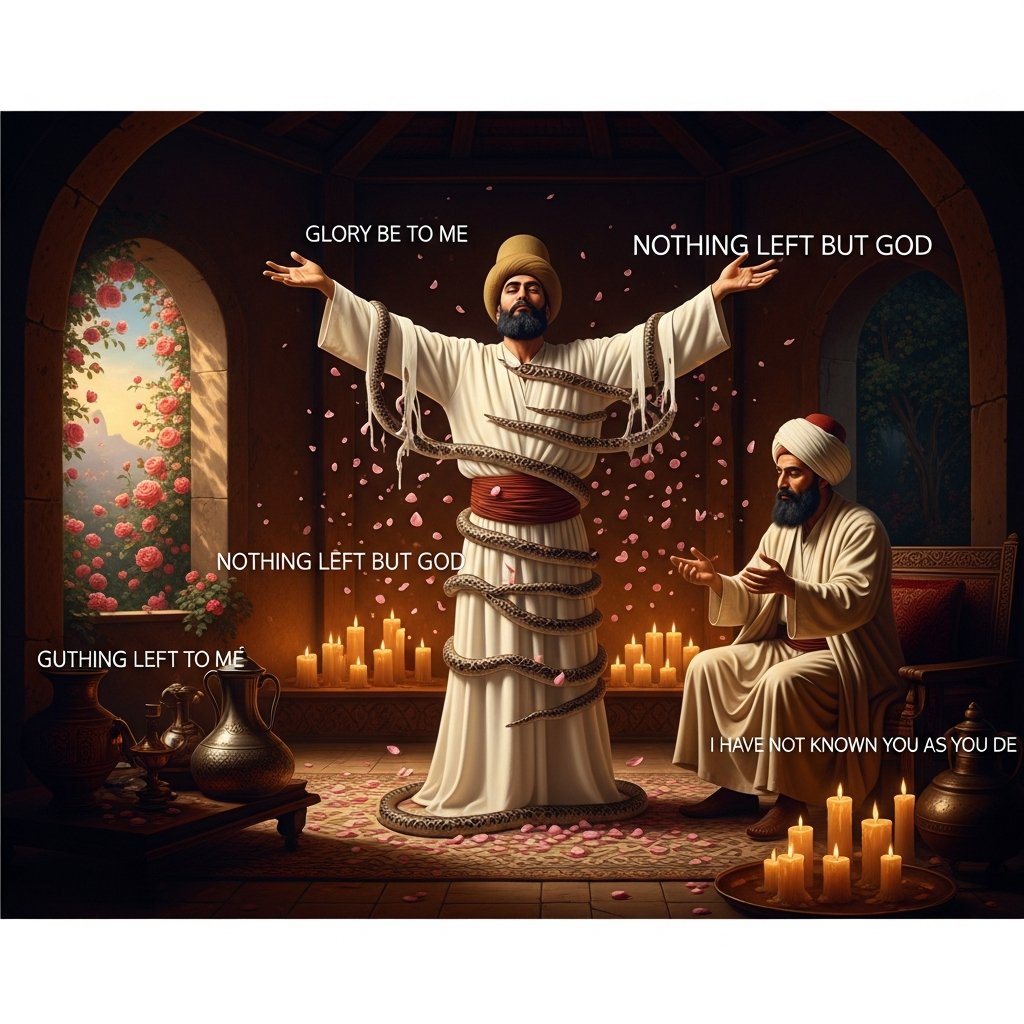
This is the most literal form of what Rumi is claiming: I am Shams. Not in the sense of identity — Rumi knows very well that he is not Shams — but in the sense that what Shams carried is now in me. The transmission is complete. The teacher can disappear because the teaching has been received, absorbed, become the student’s own. The student becomes the teacher not by replacing the teacher but by becoming transparent to what the teacher was transparent to.
I searched for myself and found only God.
I searched for God and found only myself.
Shams is in both lines.
In neither.
Scenes

Echoes Across Traditions
Entities
- Shams-i-Tabrizi
- Rumi
- Sultan Walad (who searched for Shams)
Sources
- Franklin Lewis, *Rumi: Past and Present, East and West* (Oneworld, 2000), chapter on Shams's disappearance
- Shams-i-Tabrizi, *Maqalat*, ed. Movahed (Tehran, 1990)
- Annemarie Schimmel, *The Triumphal Sun* (Fine Books, 1978)
- Rumi, *Divan-i Shams-i Tabrizi*, selected trans. R. A. Nicholson and Coleman Barks