The Sibylline Books
Traditional sale during the reign of Tarquinius Superbus, c. 534-509 BCE; books destroyed by fire in the burning of the Capitoline Temple, 83 BCE; reconstituted set burned by Stilicho c. 405 CE · The Sibyl's cave at Cumae on the Bay of Naples; later the stone chest beneath the Temple of Jupiter Optimus Maximus on the Capitoline Hill in Rome
Contents
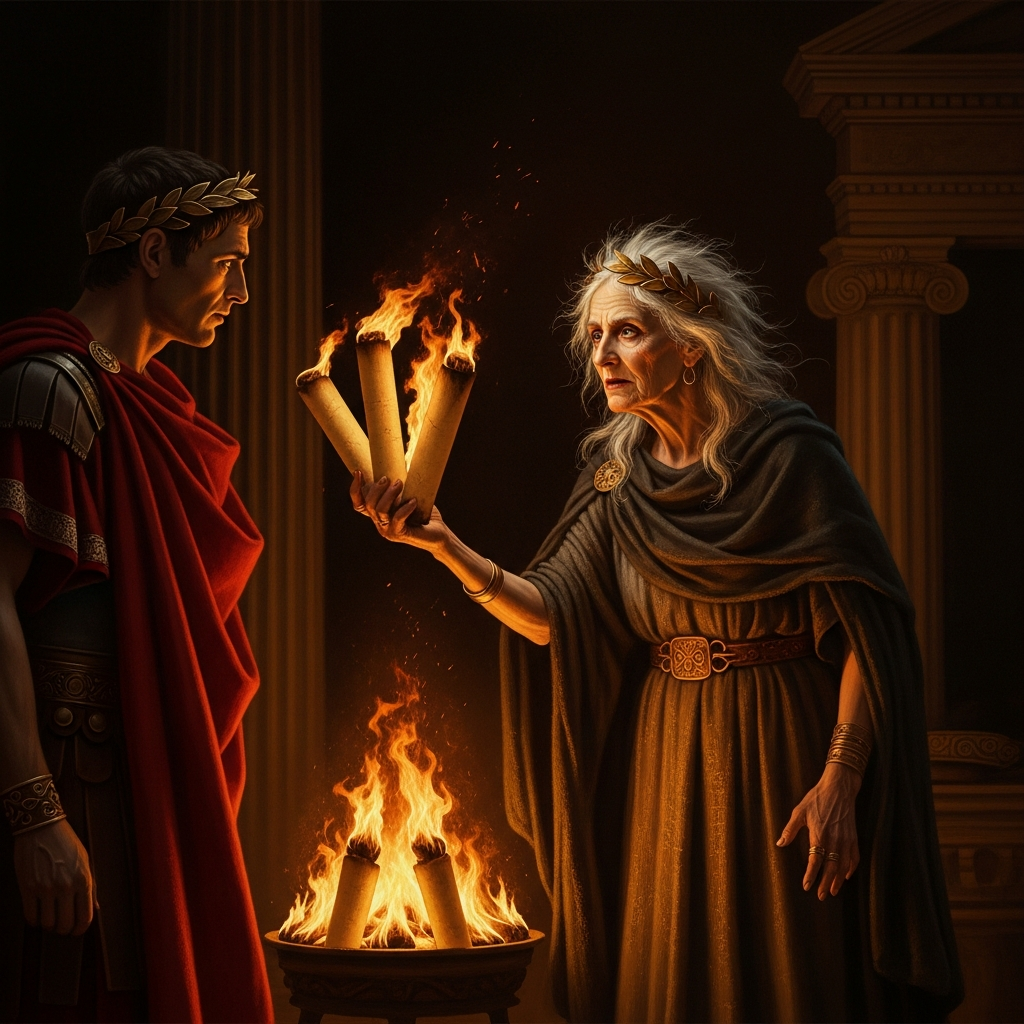
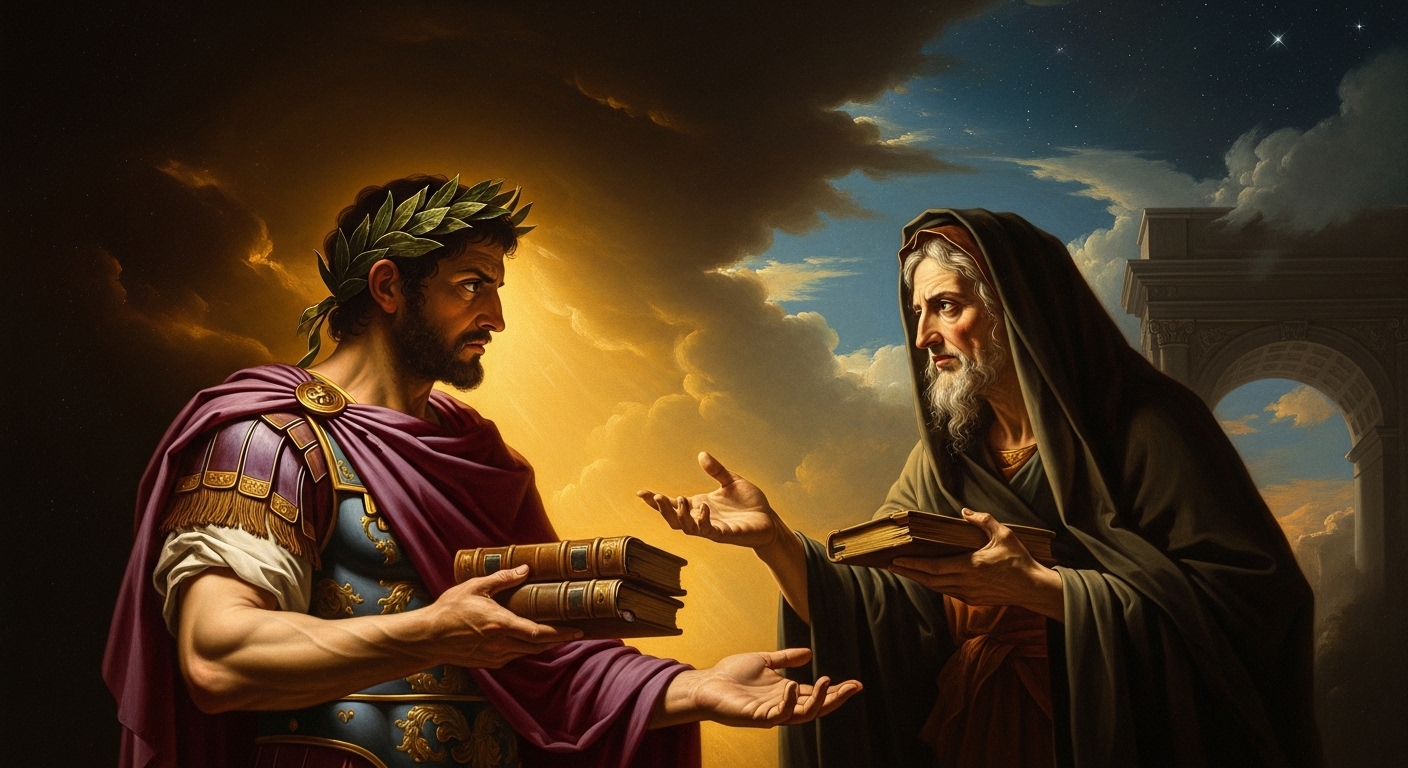
An old woman comes to King Tarquinius Superbus carrying nine scrolls and asks an enormous price. He laughs. She walks to the brazier and burns three. She asks the same price for the remaining six. He laughs again. She burns three more. He pays the original price for what is left. The three surviving books are placed in a stone chest beneath the Capitoline temple. For five hundred years, when Rome is in crisis, fifteen priests will go down and read them.
- When
- Traditional sale during the reign of Tarquinius Superbus, c. 534-509 BCE; books destroyed by fire in the burning of the Capitoline Temple, 83 BCE; reconstituted set burned by Stilicho c. 405 CE
- Where
- The Sibyl's cave at Cumae on the Bay of Naples; later the stone chest beneath the Temple of Jupiter Optimus Maximus on the Capitoline Hill in Rome
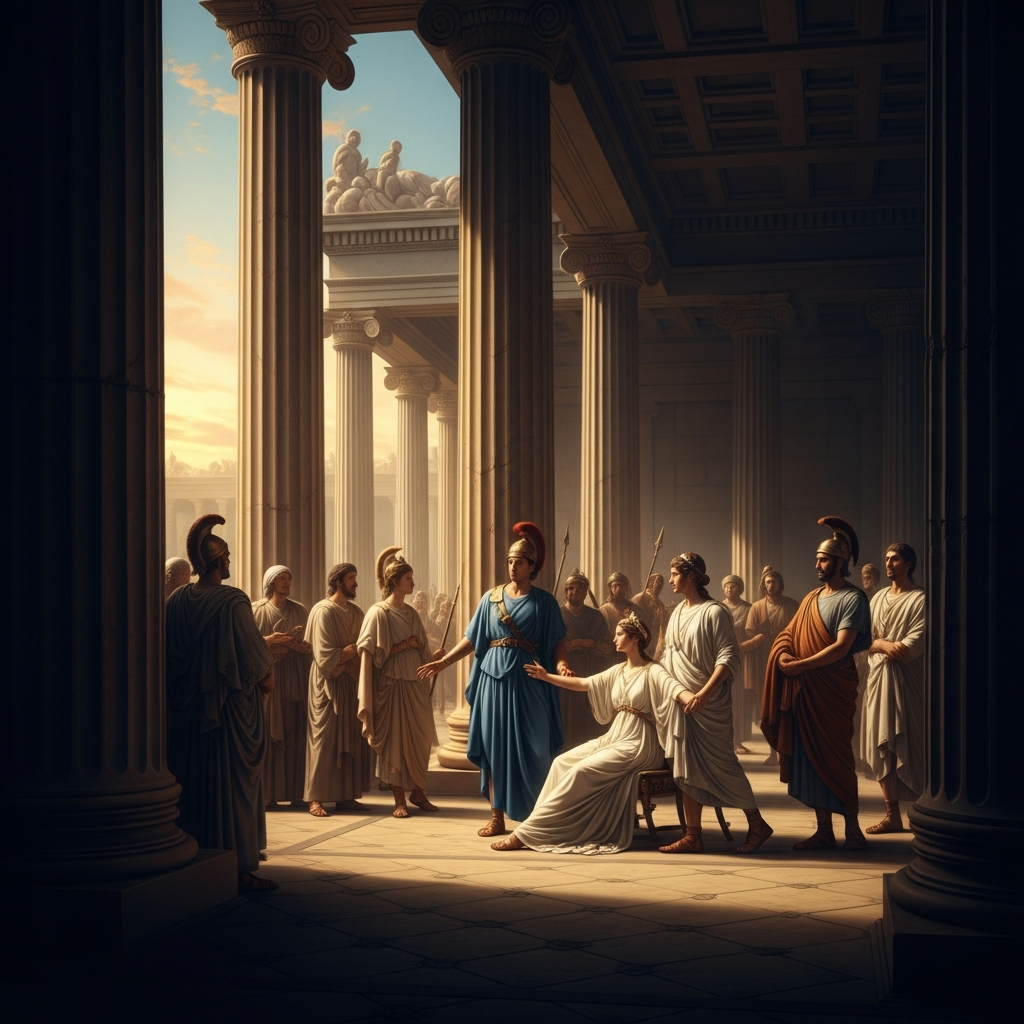
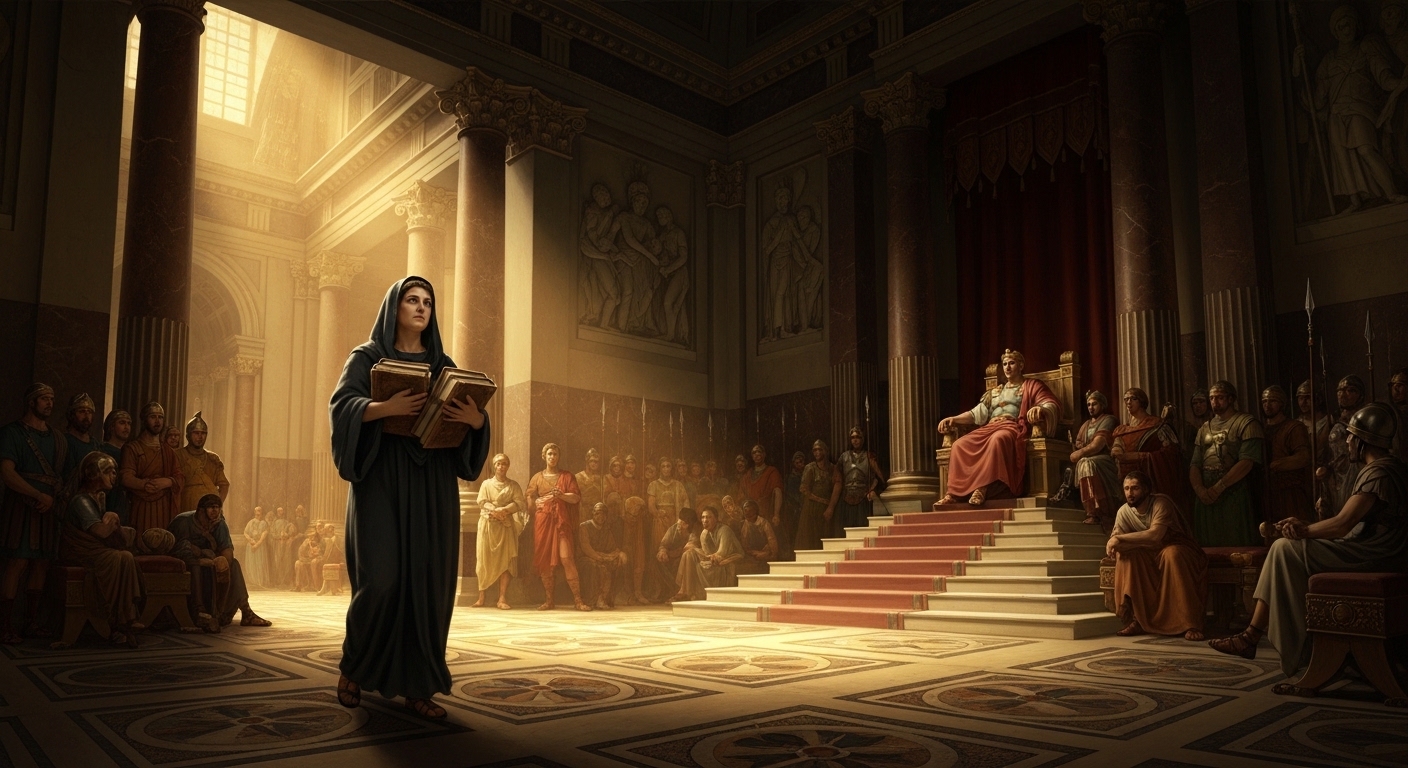
She walks into the audience hall of Tarquinius Superbus at Rome with nine books in her arms.
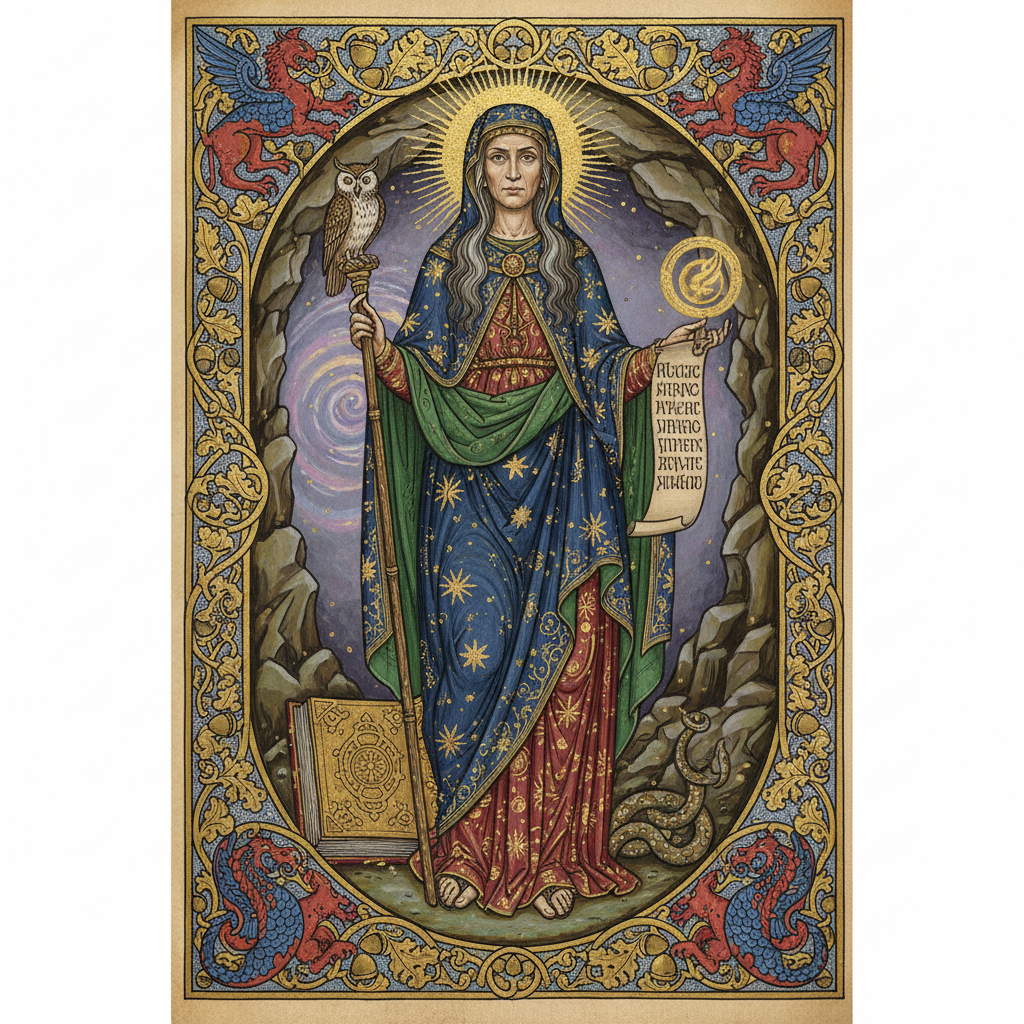
She is old — old in the way that women in these stories are old, age past counting, the skin around the mouth folded into the work of long speech — and she is dressed plainly, no priestess’s diadem, no entourage. The guards have let her through because she said she had come from Cumae and the king has heard of Cumae, of the cave on the Bay of Naples where the prophetess of Apollo writes her oracles on oak leaves and lets the wind decide the order.
She sets the nine books on the floor in front of the throne. The bindings are old. The pages are inked with figures the king cannot read at this distance. She names her price.
The price is enormous. Dionysius of Halicarnassus does not preserve the figure exactly, but the writers afterward agree it was the kind of sum that emptied the treasury of a small kingdom — an outrageous price for so few books, Aulus Gellius says, as the king understood it.
Tarquinius Superbus laughs.
He is Tarquinius Superbus, Tarquin the Proud — the seventh and last king of Rome, the king the Republic will be founded by overthrowing. He is not patient. He is not pious. He looks at the old woman on the floor of his hall and tells her to go away.
She does not argue.
She walks to the brazier in the corner of the hall — there is always a brazier; the Roman audience chamber is cold in the morning — and she takes three of the nine books and lays them on the coals.
The pages catch.
The room fills, in seconds, with the smell of burning ink and oak — a smell the king will remember for the rest of his life — and the figures on the pages, the prophecies he could not be bothered to look at, blacken and curl and disappear into smoke. The old woman watches them burn.
When they are gone, she turns back to him with the remaining six books in her arms.
She names the same price.
He laughs again.
The whole hall is laughing now. Six books at the price of nine — the math is wrong, the offer is absurd, the woman is mad. The courtiers exchange looks. The king waves her away a second time, more sharply, and tells the guards to escort her out.
She does not go.
She walks back to the brazier. She takes three more books. She lays them on the coals. The room fills again with the smell. Three more sets of prophecy go up in slow smoke against the ceiling of the king’s audience hall, and the writers afterward will all linger on this image — the old woman feeding the future of Rome into the fire, page by page, while the king of Rome watches and does not understand.
When the second three are ash, she turns again.
She has three books left.
She names the same price.
The laughter has stopped.
Tarquin is, despite the cognomen, not a stupid man. He looks at the old woman; he looks at the brazier; he looks at the three remaining scrolls in her arms, and he understands, finally, that the price has not gone up because she is mad. The price has not gone up at all. She has been quoting the same number for the same wisdom from the beginning. What has changed is how much wisdom the gold buys.
He has spent the morning watching two-thirds of the gods’ counsel for his city turn into smoke because he would not pay.
He calls the augurs.
The augurs come. The augurs look at the three remaining books — open them, read fragments aloud, look at each other, look at the king, and tell him to pay.
He pays.
The full original price for the last three books. The same gold he would have paid for nine at the beginning of the morning. The old woman accepts it. She puts the gold somewhere — on her person, into a satchel, the writers do not say — and she walks out of the hall and out of Rome and out of Roman history and is never seen again.
The smell of the burned six is in the curtains for a week.
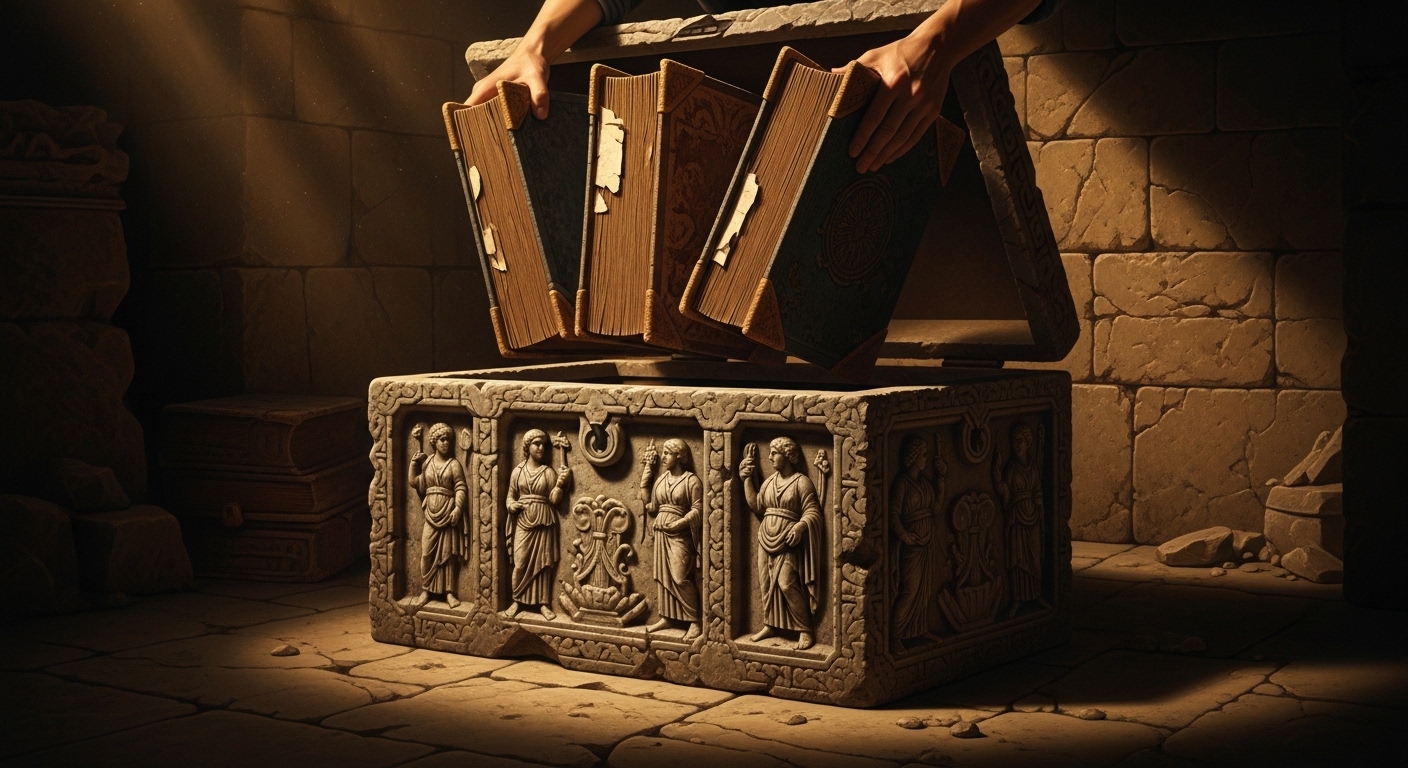
The three surviving books go into a stone chest.
They put the chest beneath the Temple of Jupiter Optimus Maximus on the Capitoline Hill — the highest temple of the city, the one Tarquin himself is in the middle of building — and they appoint, at first, two custodians (duumviri sacris faciundis) to read them. Later this becomes ten. Later still, under Sulla, it becomes fifteen — the quindecimviri, the College of Fifteen — drawn from the senatorial nobility.
The Books are not consulted casually.
They are consulted only when the Senate orders it — when there has been an unprecedented omen, a plague the doctors cannot stop, an army defeated where defeat does not happen, an earthquake, a two-headed child, a rain of stones. The quindecimviri descend into the vault under the Capitoline temple by torchlight. They open the chest. They read the three surviving books in silence. They look for the verse that fits the situation.
The Books do not predict.
This is the thing the Romans had to learn early and kept reminding themselves of. The Sibylline Books do not say what will happen. They say what to do. They prescribe — a new temple to be built, a foreign god to be brought to Rome, a sacrifice to be offered, a feast to be added to the calendar, sometimes a human sacrifice, in extreme cases, as after Cannae. The quindecimviri read the prescription and report it to the Senate, and the Senate enacts it, and the prescription is supposed to restore the broken relationship between the city and the divine.
This is how Rome ends up worshipping Aesculapius (a snake from Epidaurus, brought after a plague). This is how Rome ends up performing the Ludi Saeculares, the secular games at the turning of every saeculum. This is how, in 204 BCE in the long terror of the Hannibalic war, Rome imports the black stone of the Magna Mater from Phrygia, with a delegation and a ship, because the Books say the foreign goddess will end the war. The Books are the city’s standing prescription for crisis. They are the address the priests go to when nobody knows what to do.
They burn.
In 83 BCE, in the civil war between Sulla and the Marians, the Capitoline Temple catches fire. The whole temple goes — the gold roof, the cedar beams, the cult statue of Jupiter, and in the vault below, the stone chest with the three surviving books of the Sibyl. The pages Tarquinius had paid full price for, four hundred years earlier, finally burn after all. The smell, presumably, is the same.
Rome panics.
The Senate sends embassies — to Erythrae, to Samos, to every Sibylline shrine in the Greek-speaking world — to collect what verses can be gathered. They reconstitute a corpus. The quindecimviri are given new books to read. It is not the same. Augustus moves them, eventually, to the temple of Apollo on the Palatine, edits them, prunes the politically inconvenient verses out. The institution survives but the original is gone.
The reconstituted Books are still being consulted three hundred years later. The emperor Julian, in the fourth century, asks them about his Persian campaign. The general Stilicho, around 405 CE, finally has the surviving collection burned for good — by then the empire is Christian and the verses have become a political embarrassment.
Five centuries of consultation. The books that arrived were in the arms of an old woman.
The story is preserved by Dionysius of Halicarnassus in the first century BCE and elaborated by Aulus Gellius in the second century CE — by then it had become the standard parable Roman writers reached for whenever they wanted to talk about the cost of postponing wisdom. Pliny the Elder tells it. Lactantius, the Christian, tells it (and adds that the Sibyl of Cumae was the most respected of the ten Sibyls in ancient tradition).
Modern historians treat the sale as legendary — the Books almost certainly arrived in Rome by some less dramatic transmission from the Greek-speaking shrines of southern Italy. But the legend captures something true about how Rome thought about prophecy. The gods did not negotiate. The gods did not lower their price. What the gods did was withdraw, page by page, until the king was paying full price for fragments. The original cost was the cost. The remaining wisdom was what the king’s pride had left behind.
Virgil, three centuries after Tarquin, makes the Cumaean Sibyl Aeneas’s guide to the underworld — the same office, the same cave, the same prophetic raggedness. The leaves blowing in the wind, unread, are the same theology as the books burning in the brazier. Wisdom that is not gathered when offered is wisdom that is gone.
The chest beneath the Capitoline. The stone lid lifted by torchlight. Fifteen senators reading in silence the verses an old woman sold to a king who almost did not pay.
Most of the prophecy was already smoke before the city ever owned it.
Scenes
Echoes Across Traditions
Entities
- Sibyl of Cumae
- Tarquinius Superbus
- Apollo
- Quindecimviri sacris faciundis
Sources
- Dionysius of Halicarnassus, *Roman Antiquities* 4.62 (c. 7 BCE)
- Aulus Gellius, *Attic Nights* 1.19
- Pliny the Elder, *Natural History* 13.27
- Lactantius, *Divine Institutes* 1.6
- Varro (cited in Lactantius and Servius)
- Virgil, *Aeneid* VI (the Cumaean Sibyl)