Chandanbala: The Princess Who Became the First Nun
Life of Mahavira, c. 6th century BCE; recorded in the *Uttaradhyayana Sutra* and *Avashyaka Niryukti*; Chandanbala's ordination at the first Jain fourfold community · Vaishali region, Bihar, India — the merchant's house; the first Jain monastic assembly
Contents
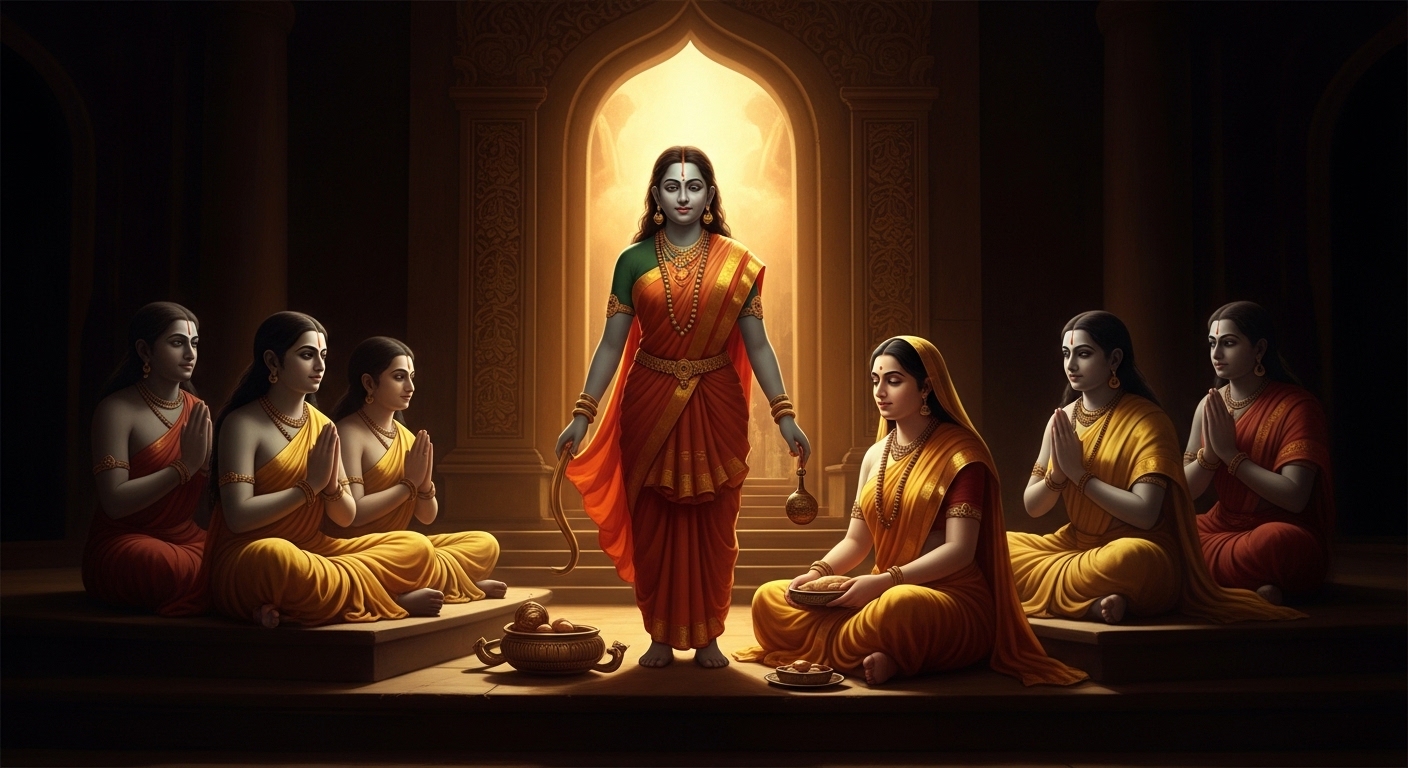
Chandanbala was a princess sold into slavery. As a slave in a merchant's house, she was falsely accused of theft, had her hair cut off, and was locked in the basement with one ankle chained. When Mahavira arrived seeking alms, she offered the only thing she had: split lentils in a winnowing basket. Mahavira had been wandering for five months waiting for the right offering — one given without hope of return. After receiving it, he broke his fast. Chandanbala is the first woman to be ordained into the Jain monastic order.
- When
- Life of Mahavira, c. 6th century BCE; recorded in the *Uttaradhyayana Sutra* and *Avashyaka Niryukti*; Chandanbala's ordination at the first Jain fourfold community
- Where
- Vaishali region, Bihar, India — the merchant's house; the first Jain monastic assembly
She is a king’s daughter who becomes a slave by a series of accidents so ordinary they read like a proof.
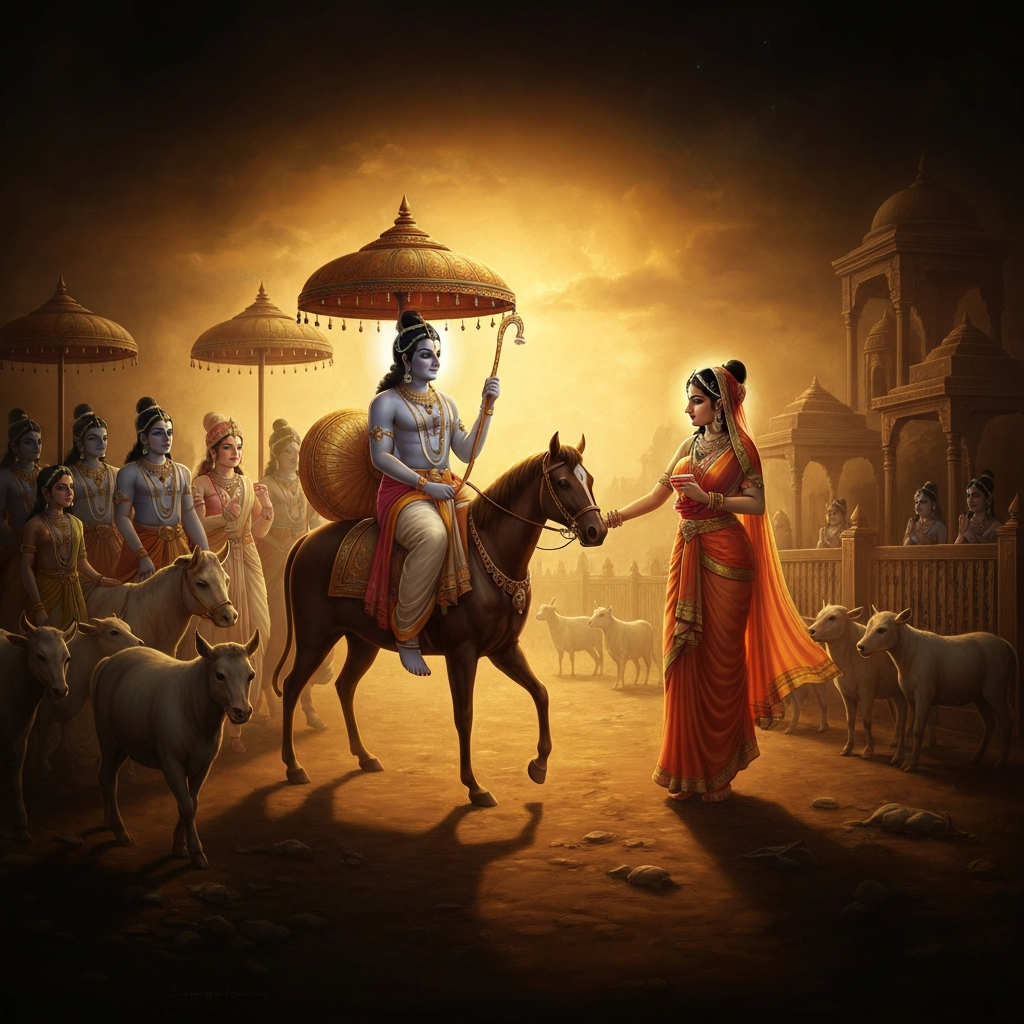
Her name at birth is Chandanbala — sometimes Chandana, sometimes Chandanbala depending on the text — and she is the daughter of Dadhivahana, king of Champa. Her mother dies. Her father remarries. The stepmother is afraid of the girl’s beauty and arranges her removal. In the version told by Hemachandra in the Trishashthishalaka-purusha-charitra, she is taken away during a war and sold. In other versions, her uncle Dhanavatsa sells her when the family’s fortunes collapse. The mechanisms of her reduction from princess to slave vary in the telling; the destination is the same in all of them.
She is purchased by a merchant in Vaishali named Dhanavah.
Dhanavah is a good man, in the world’s terms: prosperous, respected, hospitable enough to have purchased a slave girl and installed her in his household. His wife Mula is a different calculation. She watches the girl’s face, which is the kind of face that changes the temperature of rooms she walks into, and makes the decision that a woman in her position makes when she perceives a threat she cannot argue away.
The accusation is false. The Jain texts do not complicate this.
Mula tells Dhanavah that Chandanbala has stolen something. It is not true. Dhanavah, faced with a choice between believing his wife and investigating an accusation, makes the choice that men in his position have always made: he believes the wife. He orders Chandanbala’s long hair shaved off — the mark of a thief, the removal of the one quality that no owner of a beautiful girl should want destroyed, which tells you something about the depth of Mula’s calculation. He orders her chained by the ankle and locked in the cellar.
He leaves on a trading journey. He instructs that she is to be given nothing but boiled rice, poured through the floor grate, served without ceremony, eaten without utensils.
Mula gives her nothing.
She is alone in the cellar. Her hair is gone. Her ankle is chained. She has a bucket of split lentils — kodrava, inferior grain, the food you give livestock when you have nothing to give — in a winnowing basket that the servants left by accident. No water. No bowl. Nothing she was promised.
The light comes through the grate in the floor above.
Mahavira arrives in Vaishali in the fifth month of a fast he has maintained without breaking.
The Avashyaka Niryukti is specific about the conditions he has been seeking: a woman, not a man. Someone who has recently wept, so that her eyes are still swollen. Someone whose hair has been cut off. Someone who is chained. Someone holding food in a winnowing basket. Someone who is both a maiden and not a maiden — a laywoman who has taken partial vows.
The conditions seem impossibly specific until you understand what they are measuring. Each condition is an indicator of a particular quality of the giving: the woman who has wept recently has been tested by the world’s hardness and gives anyway. The woman with her hair cut off has been stripped of the thing the world uses to value her and gives from what remains. The woman in chains cannot give from a position of surplus or choice or social standing. She gives from constraint, which makes her gift unconditioned in the way that gifts from freedom almost never are.
He has been seeking, for five months, a gift that has nothing in it for the giver.
He walks past the merchant’s house.
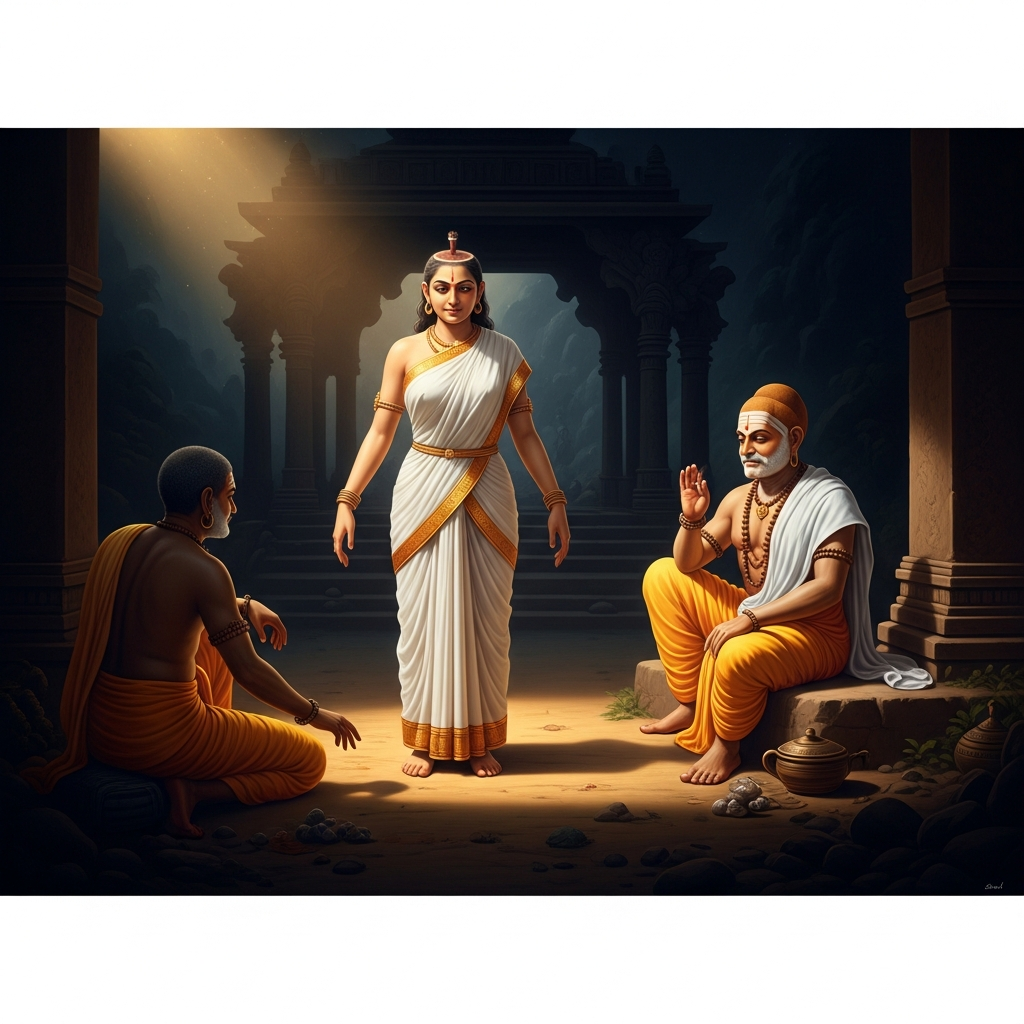
Through the grate in the floor — the grate that lets in the light, the grate through which the servants poured rice they did not pour — he sees her. She is sitting in the cellar in the only light available, shaved head, ankle in iron, holding the winnowing basket of split lentils. She looks up.
She does not know who he is. She knows what she is.
She picks up the basket. She does not calculate whether the lentils are a proper gift for an ascetic, whether split lentils qualify as alms, whether her condition makes her giving acceptable, whether the basket is the right container. She cannot reach the grate — the chain — so she holds the basket up as far as she can, through the gap in the floor, toward the face she can barely see above.
He crouches down and cups his hands.
She pours the lentils into his palms. Split lentils, inferior grain, in the cupped hands of a naked wanderer through the gap in the basement floor, given by a woman in chains who has nothing else.
The Uttaradhyayana Sutra records his response in a phrase that has been memorized by Jain monastics for twenty-five centuries: the fast is broken. Three words that end five months of wandering and begin the rest of the theology.
The rain of gifts falls with the breaking of the fast.
The Avashyaka Niryukti describes the celestial reaction to the moment: gods appear, flowers fall, the gods’ trumpets sound, the treasury of the merchant’s house — which had been diminishing through Mula’s mismanagement — fills itself back up. This is the Jain version of the cosmic registration of a morally significant act: the universe does not remain neutral when someone does the right thing against all personal interest and social expectation.
Mula, returning to the cellar, finds Chandanbala sitting in flowers. She understands what has happened. She releases the chain.
Dhanavah returns from his trading journey. He finds a changed house. The texts record his response briefly: he recognizes what Chandanbala is — not a stolen girl, not a problem, but a person who has already proved by the quality of her giving that she belongs to a different category than any category he has available. He releases her from servitude.
Chandanbala joins the Jain community.
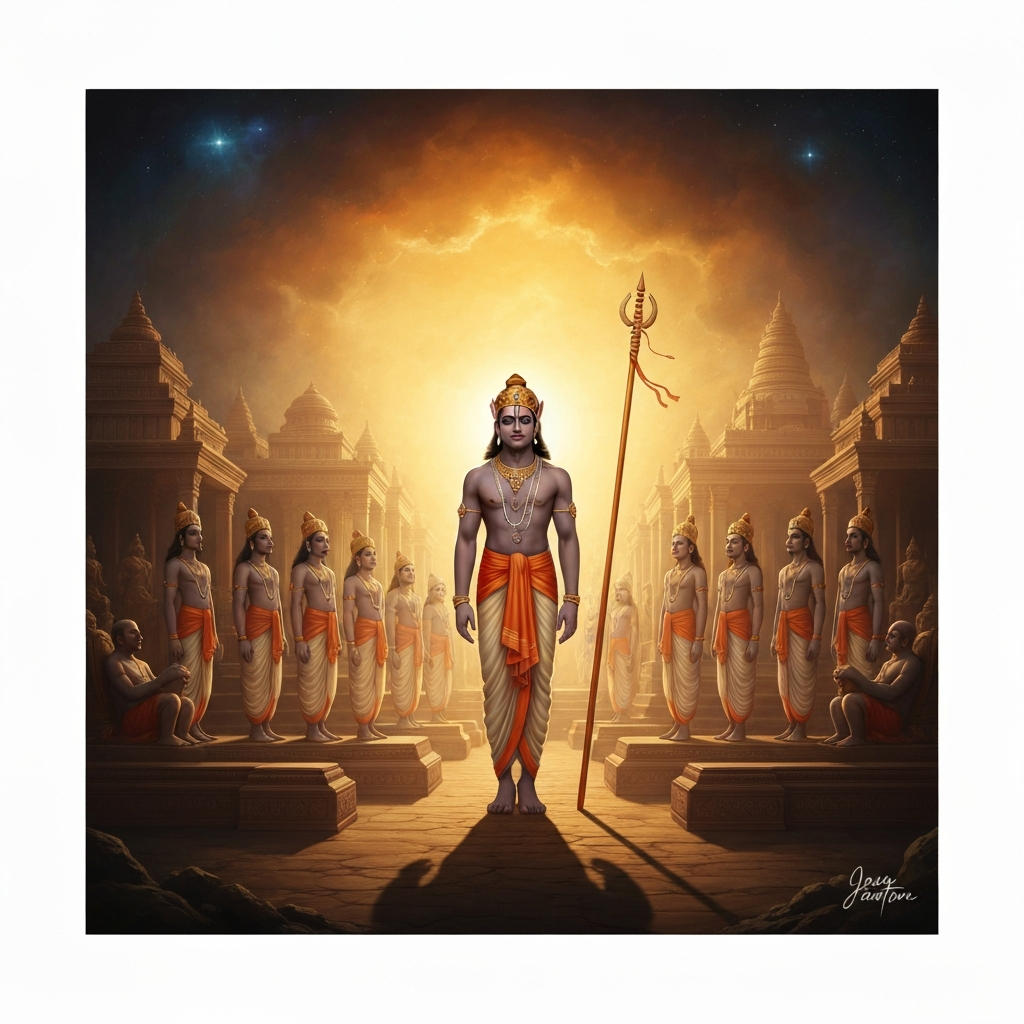
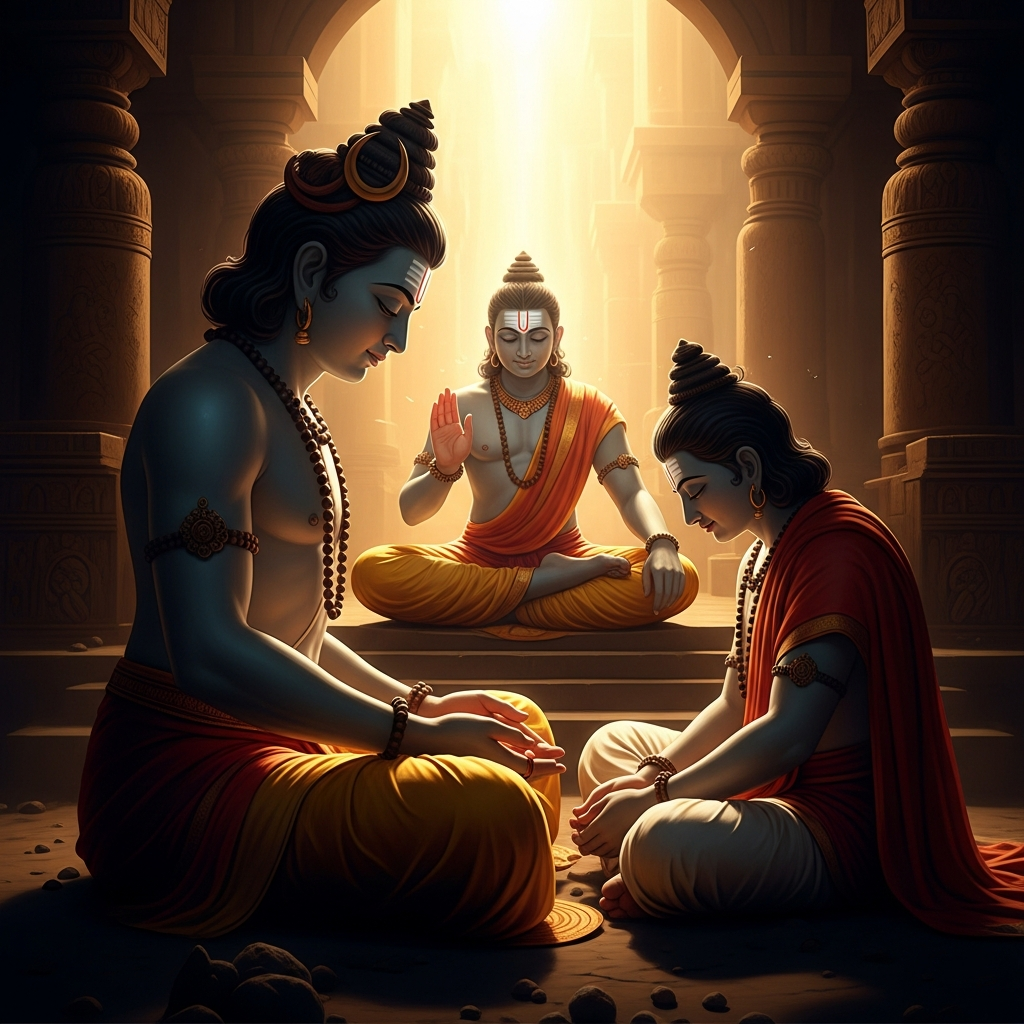
Mahavira establishes the fourfold sangha — monks, nuns, laymen, laywomen — and Chandanbala is ordained as the first nun, the head of the female monastic order. The Kalpa Sutra records the size of the first community: thirty-six thousand nuns, fourteen thousand monks, one hundred fifty-nine thousand laywomen, three hundred fifty-nine thousand laymen. The numbers are probably symbolic amplifications of real institutional founding, but the order of the listing is not arbitrary: nuns are listed first, before monks, because Chandanbala was first.
The debate about women’s liberation in Jainism does not end with Chandanbala’s ordination — the Digambara tradition argues that women cannot achieve liberation in a female body and require rebirth as men before the final achievement; the Shvetambara tradition argues that Chandanbala’s ordination is proof that female bodies are sufficient — but the debate begins with the assumption that she established, by what she did in a cellar in Vaishali, that women’s spiritual capacity is not in question.
She gave perfectly with nothing in her hands.
The theology of dana — giving — that Chandanbala’s story establishes has a precise logic. A gift given from surplus is a social transaction: the giver gives more than they need and keeps more than the recipient receives, and the giving maintains the social distance between them. A gift given from total poverty — from chains, from a locked room, from the only food available — closes that distance entirely. There is no surplus. There is no transaction. There is only the open hand and the open hands receiving and the lentils falling from one to the other.
This is why the conditions Mahavira was seeking were not arbitrary. He was not looking for a particular kind of woman. He was looking for the material conditions that make a particular kind of giving possible: the giving that has no social utility, no personal advantage, no strategic calculation, no insurance against future need. The gift that is purely itself.
Chandanbala gave it from a cellar in Vaishali with an iron cuff on her ankle and her head shaved and no reason to expect anything in return.
The fast broke. The order began.
Scenes
Echoes Across Traditions
Entities
- Chandanbala
- Mahavira
- Dhanavah (the merchant)
- the merchant's wife Mula
- King Dadhivahana (Chandanbala's father)
- Dhanavatsa (Chandanbala's uncle, who sold her)
Sources
- *Uttaradhyayana Sutra* — canonical account of Chandanbala
- *Avashyaka Niryukti* (Bhadrabahu, c. 4th century BCE) — detailed narrative of the alms encounter
- *Trishashthishalaka-purusha-charitra* (Hemachandra, c. 12th century CE) — the fullest literary account
- Paul Dundas, *The Jains* (Routledge, 2nd ed. 2002)
- Padmanabh S. Jaini, *Gender and Salvation: Jaina Debates on the Spiritual Liberation of Women* (University of California Press, 1991)
- Nalini Balbir, 'Women in Jainism,' in *Religion and Women* ed. Arvind Sharma (SUNY Press, 1994)