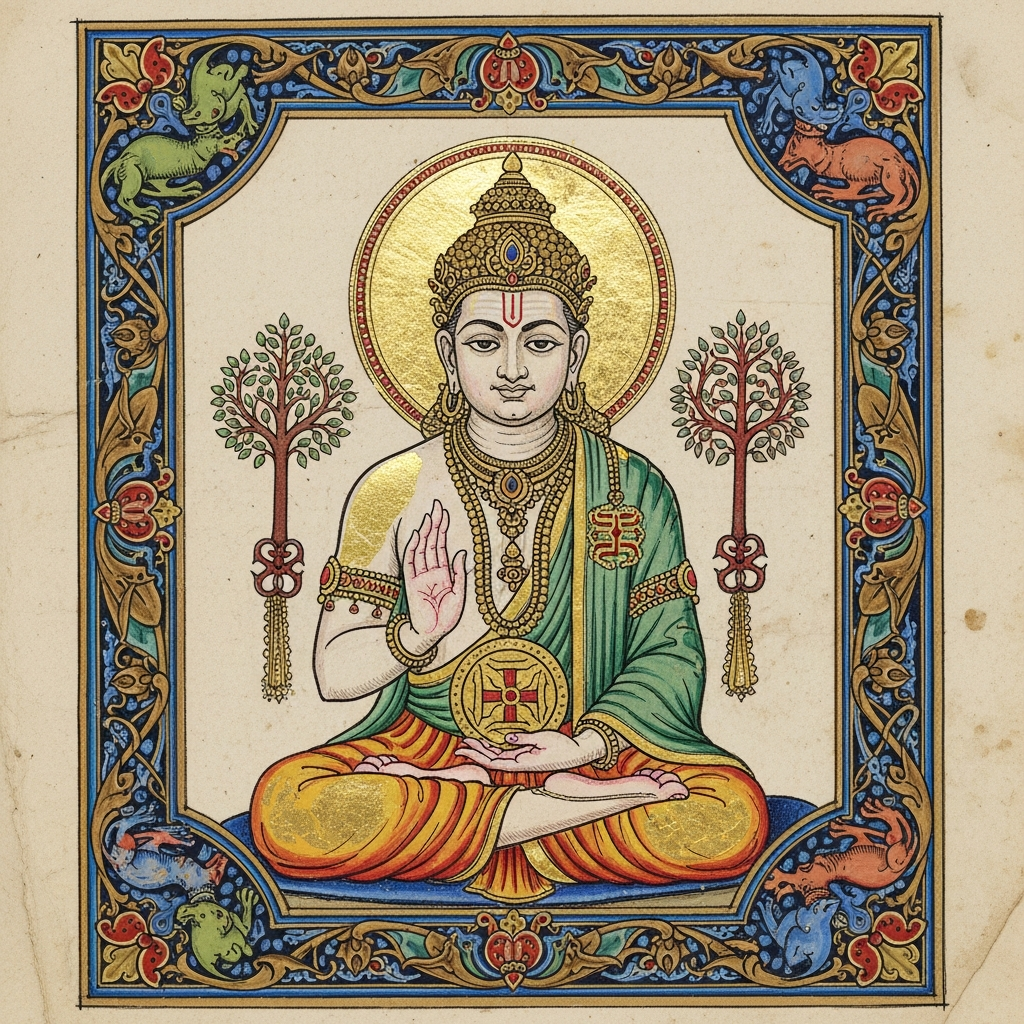
Combat Profile
Kevalajnana
Mahavira attains absolute omniscience, perceiving all souls and matter across infinite time, enabling perfect guidance toward liberation.
Ascetic Perfection
Through complete renunciation and non-violence, Mahavira cannot be harmed by aggression and inspires the cessation of violence in all who witness his presence.
None -- achieved total liberation
“All breathing, existing, living, sentient creatures should not be slain, nor treated with violence, nor abused, nor tormented, nor driven away.” — Acaranga Sutra 1.4
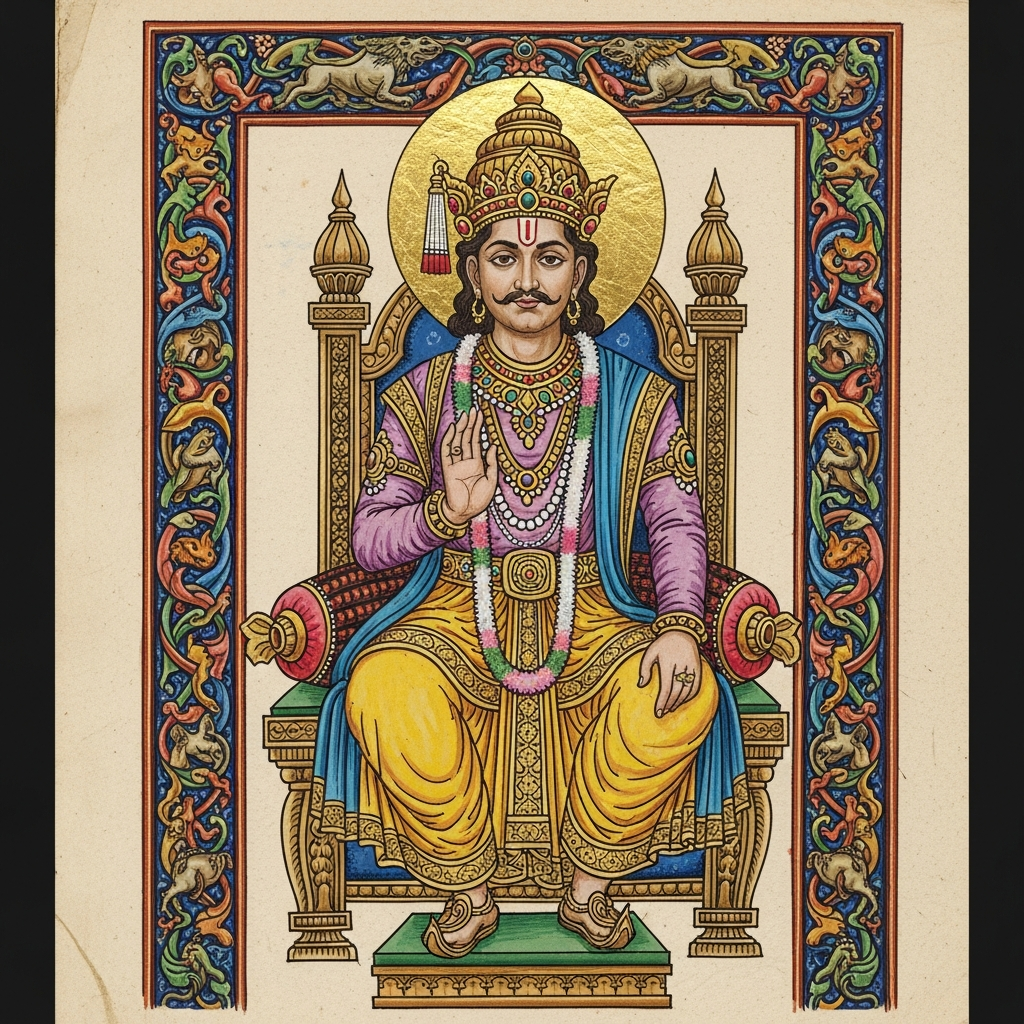
Lore: Vardhamana — who would become Mahavira, “the Great Hero” — was born in 599 BC to a royal Kshatriya family in what is now Bihar, India. By every account, his life’s work was impossible: he set out to destroy not merely sin but the physical substrate of sin itself. In Jain cosmology, karma is not metaphorical — it is actual matter, actual particles that cling to the soul in response to passion and action. Liberation requires removing every last particle. Mahavira’s method was absolute: cease all action that generates karma, endure all circumstances without reaction, maintain perfect ahimsa even under provocation.
For 12.5 years, he wandered naked across northeastern India, owning nothing, speaking rarely, eating only what was freely offered without his requesting it. He endured heat, cold, insect bites, physical attack, and deprivation without response. When villagers beat him or set dogs on him, he stood still. He pulled out his own hair by the roots rather than cut it, because cutting is violent. He was attacked, starved, mocked. He endured. The Jain texts record his austerities in relentless detail — not as masochism but as the systematic dismantling of every karmic attachment.
At age 42, sitting under an Ashoka tree near the Rijuvalika River, meditating in a squatting position, he achieved kevalajnana: omniscience. He perceived all things simultaneously — every atom, every soul, every moment of past and future. He became a jina (“victor”) — one who has conquered the passions and the karma that passions generate. The followers of the Jinas are called Jains.
He taught for 30 years. He died at Pavapuri at age 72, achieving moksha: final liberation, the soul freed from all matter, ascending to the apex of the universe where the liberated souls — the siddhas — abide in infinite knowledge and infinite bliss, beyond all contact with the world below.
Parallel: The Buddha (Siddhartha Gautama) was his contemporary — both princes, both renouncers, both teachers of liberation who rejected the Vedic sacrificial system and founded new paths to enlightenment. They may have been aware of each other; the early Jain and Buddhist texts criticize each other’s methods. But their answers diverge sharply: the Buddha taught a Middle Way between extreme asceticism and sensual indulgence. Mahavira taught that only extreme asceticism works — the karma must be burned away by austerity, not merely stopped from accumulating. St. Francis of Assisi (radical dispossession, absolute poverty, joy in renunciation) — but Francis still owned his prayer book. Mahavira owned nothing at all.
2 min read
Karma itself -- the enemy he spent a lifetime annihilating
*Kalpa Sutra* (Bhadrabahu); *Acaranga Sutra*; *Uttaradhyayana Sutra*; Paul Dundas, *The Jains*