Sohbet: The Conversation That Transmits What Cannot Be Said
medieval period — particularly 13th–15th century, formative period of the major orders · Konya and Bukhara — the twin poles of the major orders' formative period
Contents
Sohbet — the intimate conversation between master and student, or among students in the presence of the master — is the primary vehicle of Sufi transmission. What the books cannot carry, the presence transmits. The Sufi sitting in silence with the master is learning something that no curriculum can deliver.
- When
- medieval period — particularly 13th–15th century, formative period of the major orders
- Where
- Konya and Bukhara — the twin poles of the major orders' formative period
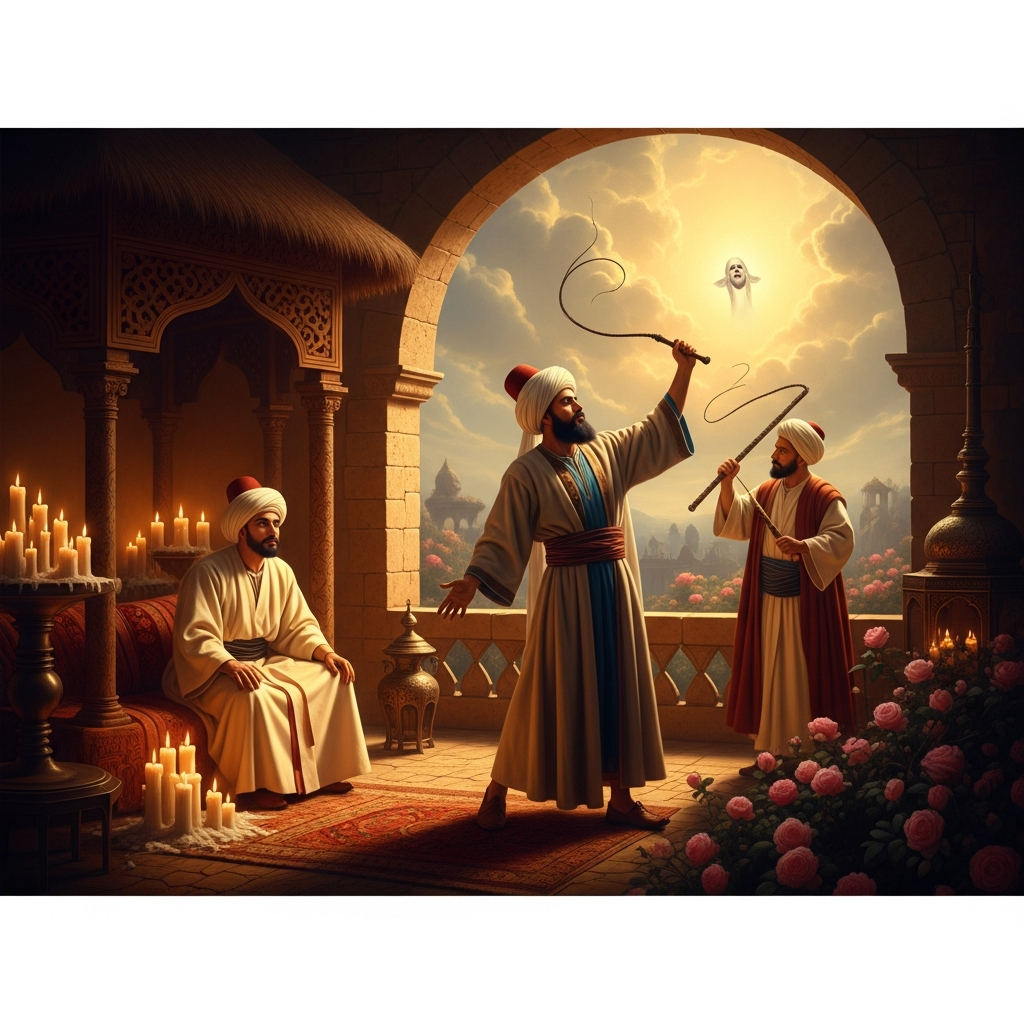
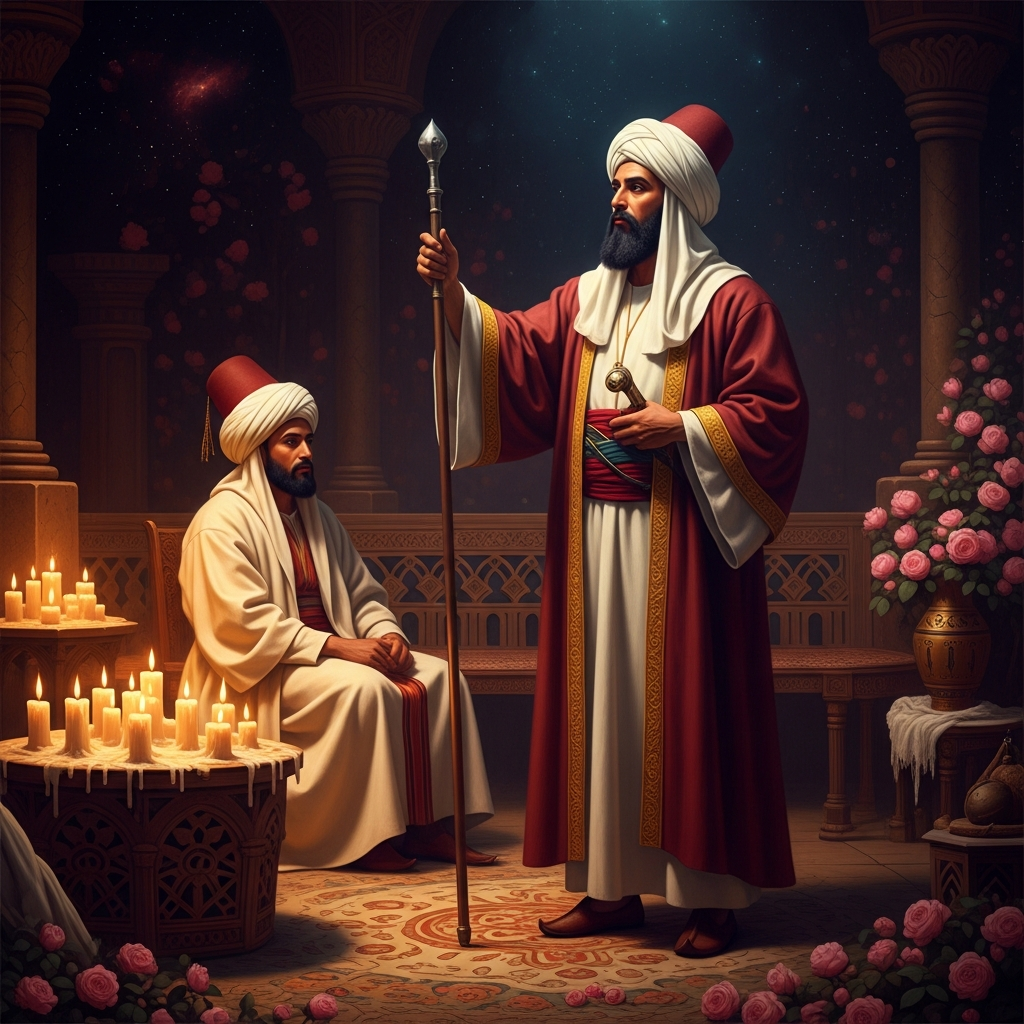
The student sits with the master.
No specific question has been asked. No text is being recited. The student has been in the master’s house for three days, helping with meals, attending the prayer times, sitting in the circle when guests arrive and say nothing when guests leave. The learning is not identifiable as learning. Nothing is happening that looks like instruction.
And yet: something is changing.
Sohbet is a Turkish word from the Arabic suhba — companionship, close association. It describes the relationship of the Sufi student to the master that is primary to all other modes of learning: not reading the master’s books (though that too), not attending lectures (though that too), not performing prescribed practices (though that too), but simply being in the master’s company. Sitting with them. Eating at their table. Observing how they move through ordinary situations. Being present when they respond to the difficult visitor, when they sit in silence, when they laugh.
The principle underlying sohbet is both precise and mysterious: the master has, through years of work on the path, developed a specific quality of presence — an orientation of the heart toward God that is stable and sustained — that the student can neither produce nor purchase but can absorb by proximity. The heart learns from the heart. The student’s heart, in the presence of the master’s heart, is gradually drawn toward the same orientation.
This is not manipulation or psychological dependency. The master’s job in sohbet is not to impress, instruct, or influence. It is simply to be what they are. If what they are is genuine — if the orientation is real — the student’s heart will move toward it the way a compass needle moves toward north. If what the master is is performed — if the orientation is theatrical — the student’s heart will eventually sense the performance and nothing will be transmitted.
The Naqshbandi tradition is the most explicit about the doctrine of sohbet.
Baha’uddin Naqshband, the fourteenth-century master from Bukhara who gave the order its name, is credited with the formulation: Our way is through companionship and through association; goodness is transmitted from heart to heart. The distinctive Naqshbandi practice of rabita — the student holding the image of the master’s heart in their own heart during meditation — is a formalization of the same principle: the student’s heart aligns with the master’s heart, and through that alignment aligns with what the master’s heart is aligned with, which is God.
The silence of Naqshbandi practice — the silent dhikr, the interior contemplation — creates the conditions in which the transmission of sohbet is most audible. The external noise of loud dhikr, in the Naqshbandi view, can actually obstruct the subtle transmission that sohbet requires. The student who is making a great deal of noise in prayer cannot hear the quiet thing being transmitted.
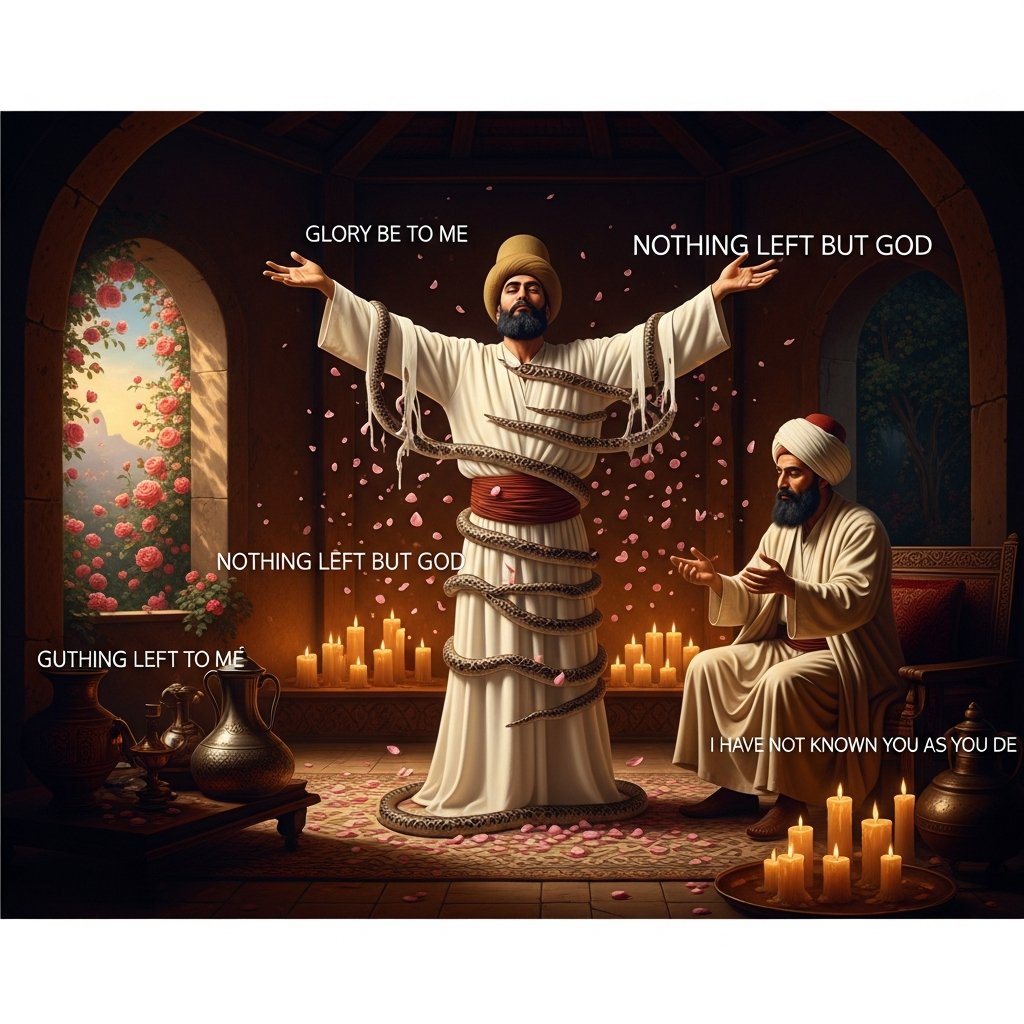
Rumi’s relationship with Shams is the most famous example of sohbet in the tradition — famous partly because its effects were so dramatic and partly because it is so well documented in retrospect, through Rumi’s poetry.
The essential sohbet between Rumi and Shams took place during the long periods of seclusion in Konya — days and weeks during which the two men were essentially alone together, and during which Rumi’s students were excluded. What happened in those rooms is not recorded. Rumi’s poetry afterward suggests that what happened was not primarily conversation in the ordinary sense but some more radical form of exposure: the student’s heart being held in the presence of something it could not accommodate within its existing structure, and being permanently enlarged by the exposure.
This is the teaching of sohbet that cannot be put into a curriculum.
The book teaches you what someone else experienced. The presence teaches you to experience.
The master sits. The student sits.
Something is transmitted.
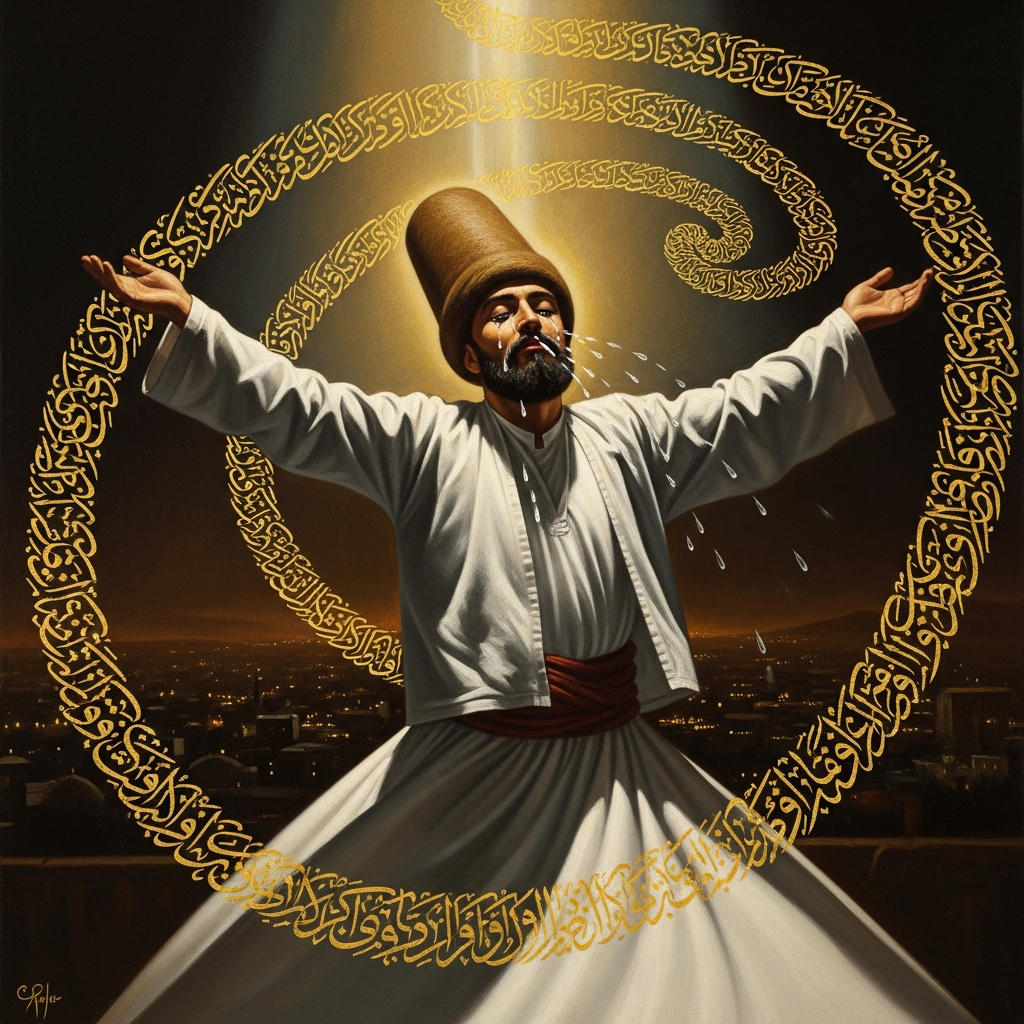
The student does not know what it is until, years later, they find themselves sitting with their own student, transmitting it.
Scenes



Echoes Across Traditions
Entities
- Rumi
- Shams-i-Tabrizi
- Naqshbandi masters
- Baha'uddin Naqshband
Sources
- Hamid Algar, *The Naqshbandi Order: A Preliminary Survey of Its History and Significance* (1976)
- Martin Lings, *A Sufi Saint of the Twentieth Century: Shaikh Ahmad al-Alawi* (Islamic Texts Society, 1993)
- James Morris, 'The Spiritual Transmission in Islam' in *Paths to the Heart*, ed. Cutsinger (World Wisdom, 2002)
- Rumi, *Fihi ma Fihi* (In It What Is In It) — collected conversations, trans. A. J. Arberry as *Discourses of Rumi*