Is Music Permitted? The Great Sufi Debate
9th–13th century CE — ongoing debate through the formative period of Islamic jurisprudence · Baghdad, Iraq — the center of both Islamic legal scholarship and Sufi practice
Contents
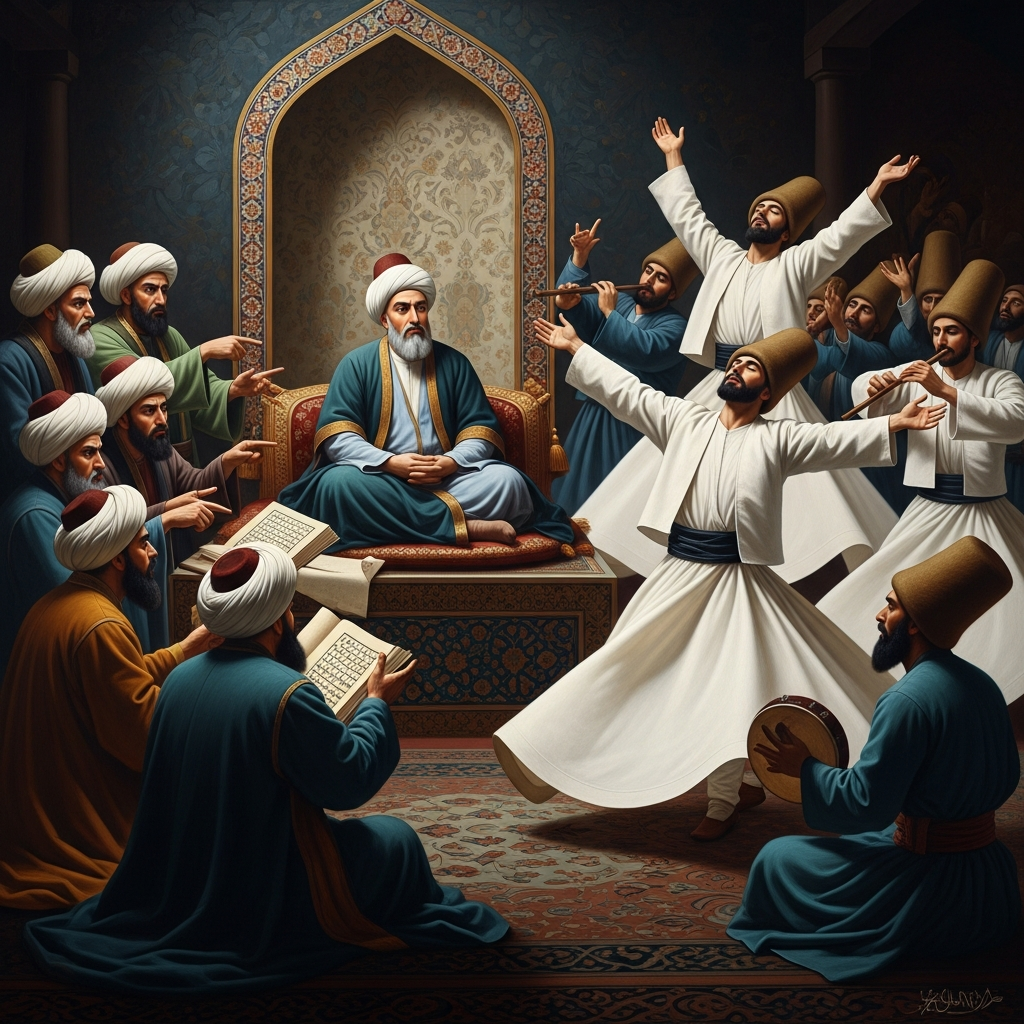
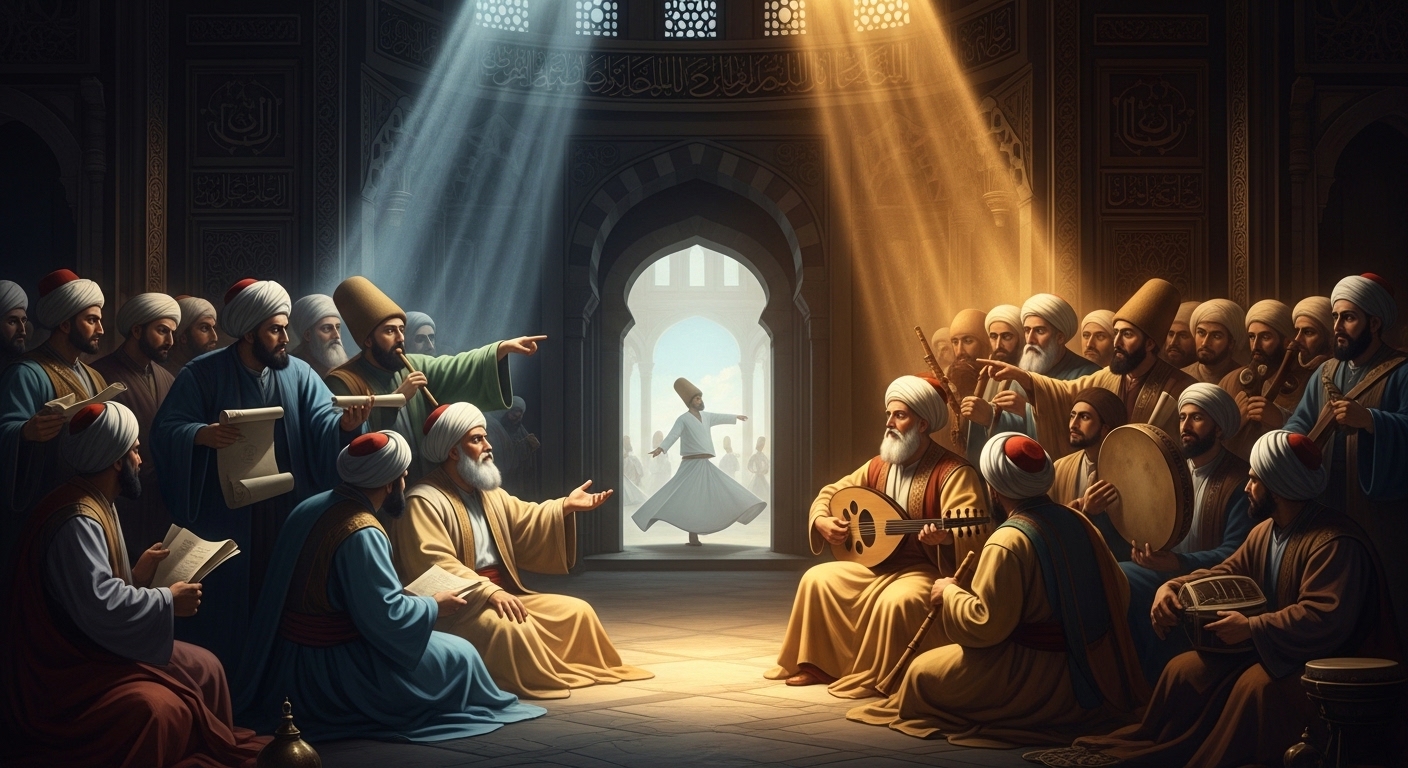
For a thousand years, the question of whether sama — sacred listening, the use of music in Sufi practice — is permitted or forbidden has divided Islamic scholars. The Sufis argue that the soul rises to God through sound. The legalists argue that the soul slides into sensuality. Both are right about someone.
- When
- 9th–13th century CE — ongoing debate through the formative period of Islamic jurisprudence
- Where
- Baghdad, Iraq — the center of both Islamic legal scholarship and Sufi practice
Al-Ghazālī devotes an entire book of the Ihya to the question.
This is itself a statement. The Ihya Ulum al-Din is the most carefully organized major work in Islamic literature. Every book is where it is for a reason. The book on sama — on sacred listening, the Sufi practice of using music to induce spiritual states — is placed in the section on acts of worship, not in the section on customary practices and not in the section on the soul’s destructive qualities. This placement is Ghazālī’s answer before a word of the argument has been stated: sama properly understood is worship.
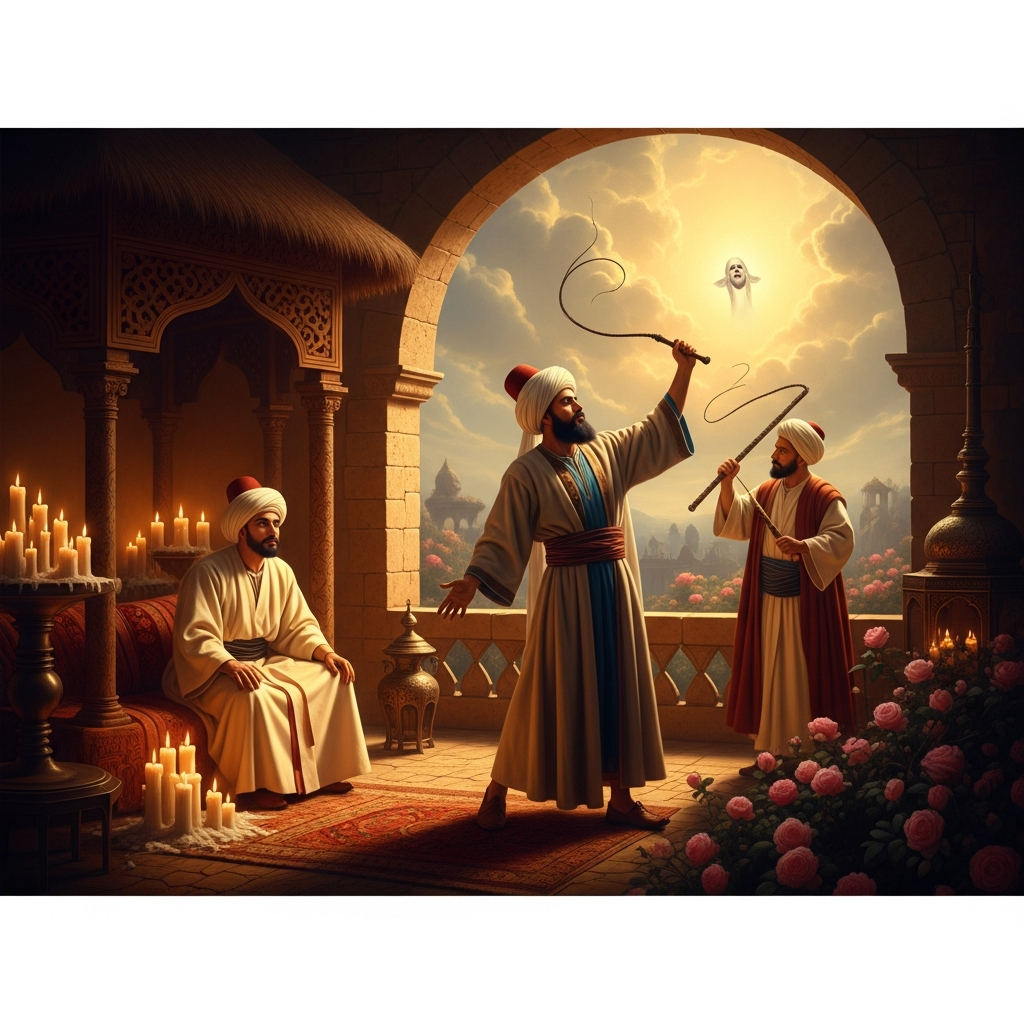
The argument he then makes is elaborate because the opposition is formidable. Ibn al-Jawzi — the great twelfth-century Hanbali scholar who would compose the devastating Talbis Iblis (Devil’s Deception) partly in response to Sufi practices — and the broader current of traditionalist Islamic jurisprudence had a strong case: the Prophet is not recorded as using music in religious practice, music is famously associated with sensual distraction, and the ecstatic states produced by sama are indistinguishable from drunkenness.
Ghazālī’s response has three parts.
First, he argues that the prohibition of music in the Hadith literature is specific: it targets music associated with profligacy, with the wine-house, with the seduction of the vulnerable. It does not target all music. The Quran is recited with elaborate melodic art (tajwid) and no scholar forbids this. The call to prayer (adhan) is sung and no scholar forbids this. The boundary the traditionalists are drawing is not where they claim it is.
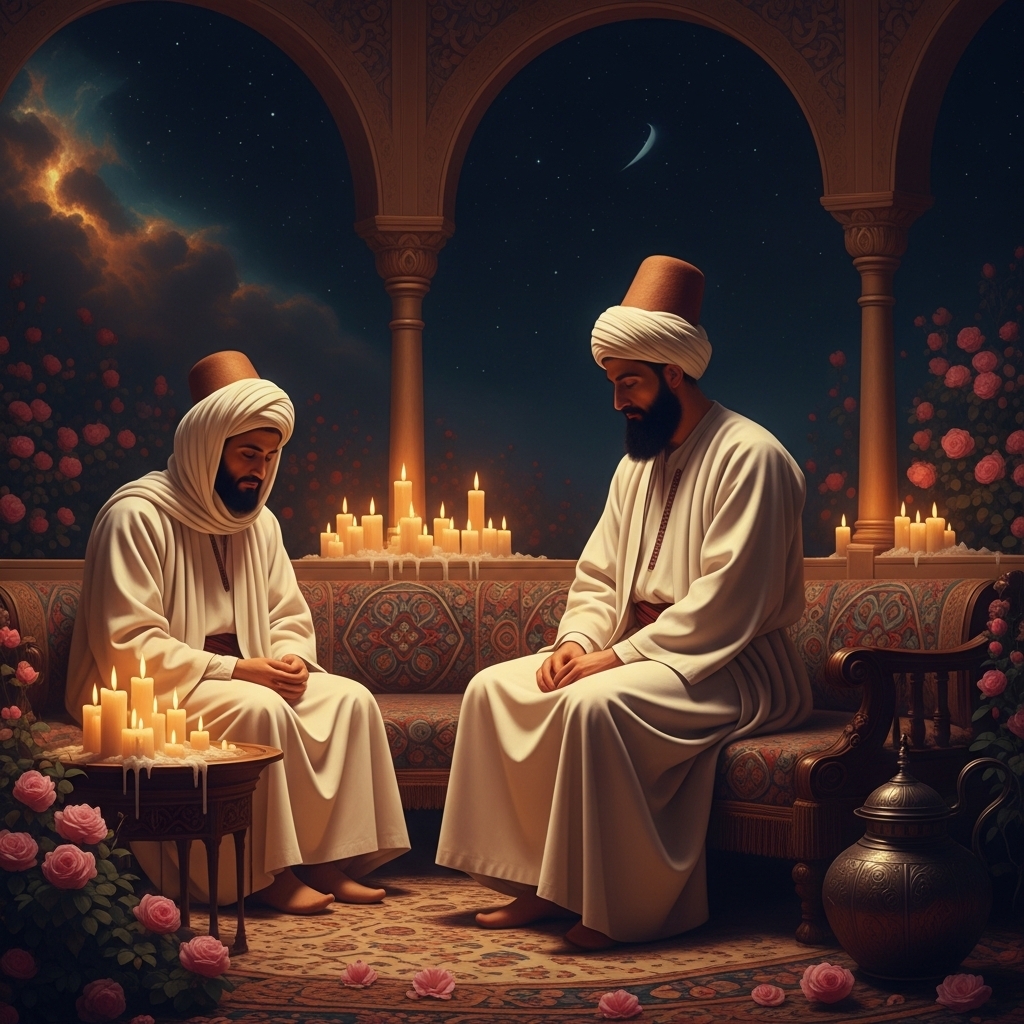
Second, he argues that the soul has a faculty — he calls it sirr, the secret, or sometimes qalb, the heart — that responds to beauty in a way that is prior to will. When the ney sounds or the voice raises in devotional poetry, something in the soul responds before the intellect has time to evaluate. This response is not caused by the music. The music merely reveals what was already there. If what was already there is love of God, the music moves it. If what was already there is lust or self-congratulation, the music moves that. The instrument does not determine the direction. The hearer’s interior state determines the direction.
Third — and this is the move that makes the book dangerous — he argues that the test of sama’s legitimacy is interior and cannot be legislated from outside. Only the practitioner knows whether what arises in the state of sama is genuine ecstasy (wajd) or performed ecstasy, genuine dissolution or pleasurable excitement. The legal scholar cannot see inside. The best the legal scholar can do is establish conditions that make the genuine more likely and the counterfeit less.
The opposition’s strongest point is the one Ghazālī actually concedes.
He agrees: sama is dangerous for most people. The person who has not undergone significant purification of the ego-self should not practice sama, because the music will move what is already dominant in them, and what is dominant in most people is not pure love of God but the mixture of desires and fears and vanities that constitute the ordinary ego. For such people, the sama is likely to increase their ego rather than dissolve it — they will feel the pleasure of being moved, congratulate themselves on their sensitivity, and return home with a more comfortable version of the self they came with.
Sama is for the advanced practitioner. For the beginner, it is a shortcut that bypasses the necessary work of purification. For the advanced practitioner — the one who has done years of the inner work that muhasaba (self-examination) requires — it is a legitimate accelerant.
This is actually an agreement with the traditionalists’ concern, clothed in different vocabulary. The traditionalists say: most people who attend sama are not advanced practitioners. Ghazālī says: yes, and those people should not be there.
The debate is never resolved. It is still ongoing.
The Naqshbandi order typically avoids musical sama. The Qadiri and Chishti orders use music extensively. The Mevlevi ceremony is built around it. Different Sufi traditions have reached different conclusions, and all can cite Ghazālī’s conditional permission — for the advanced practitioner, in the right conditions — as their authority.
The question at the bottom of the debate is the one that every religious tradition with a contemplative stream must face: what is the relationship between beauty and truth? Can beauty carry you to God, or only toward something that feels like God?
The masters say: depends who you are.
The law cannot answer for who you are.
That is why the debate continues.
Scenes

Echoes Across Traditions
Entities
- Al-Ghazālī
- Ibn al-Jawzi (opponent)
- Junayd al-Baghdadi
- ʿAbd al-Qādir al-Jīlānī
Sources
- Al-Ghazālī, *Ihya Ulum al-Din*, Book 8: 'The Etiquette of Audition and Ecstasy'
- Ibn al-Jawzi, *Talbis Iblis* (The Devil's Deception), 12th century — anti-sama polemic
- Kenneth Avery, *A Psychology of Early Sufi Sama: Listening and Altered States* (Routledge, 2004)
- Jean During, *Musique et extase: L'audition mystique dans la tradition soufie* (Albin Michel, 1988)