The Gospel of Thomas: 114 Sayings of the Living Jesus
Current text c. 2nd century CE; possibly incorporating earlier material; discovered 1945 CE · Egypt (Nag Hammadi, Upper Egypt); the Gnostic communities of early Christianity
Contents
The Gospel of Thomas contains no narrative, no miracles, no crucifixion: just 114 sayings attributed to 'the living Jesus.' 'Split a piece of wood; I am there. Lift up the stone, and you will find me there.' It was found at Nag Hammadi in 1945, buried in a jar in the Egyptian desert for sixteen hundred years. Some scholars believe its oldest layers predate the canonical Gospels. Others say it is a 2nd-century compilation. Everyone agrees that Saying 77 and Saying 3 contain some of the strangest and most direct religious language in any text.
- When
- Current text c. 2nd century CE; possibly incorporating earlier material; discovered 1945 CE
- Where
- Egypt (Nag Hammadi, Upper Egypt); the Gnostic communities of early Christianity
The text begins with a warning.
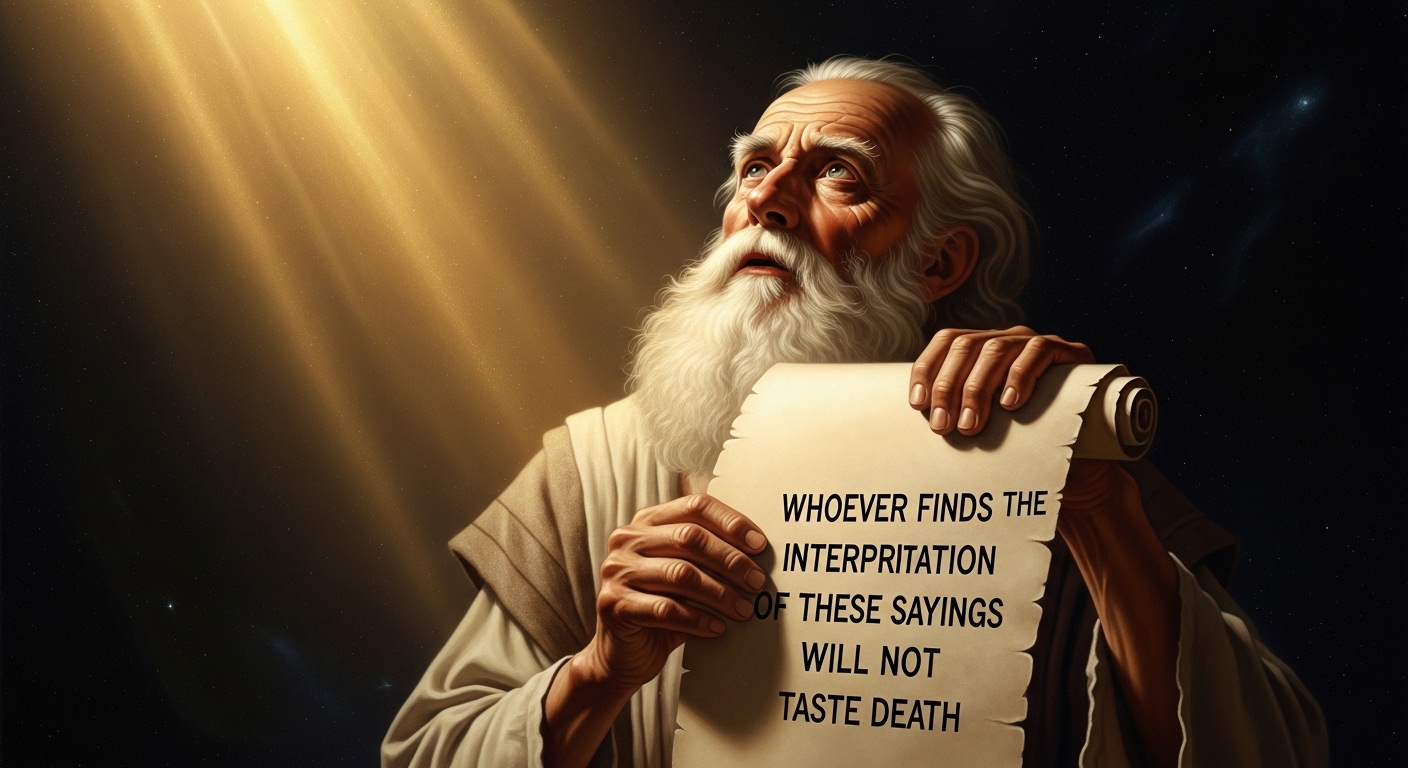
Whoever finds the interpretation of these sayings will not taste death. That is the first thing the Gospel of Thomas says, before any of the sayings themselves: that understanding it correctly is the difference between dying and not dying. It does not say the sayings are secret. It says they require interpretation — hermeneia, in the Greek original behind the Coptic translation. The act of correctly reading the text is itself the salvific act.
This is not how the canonical Gospels work. The canonical Gospels tell you a story. They describe events, make theological claims about those events, and call you to respond to them. Thomas does not tell you anything that happened. It gives you 114 short utterances and leaves you alone with them.
The manuscript was found in December 1945 by a farmer named Muhammad Ali al-Samman.
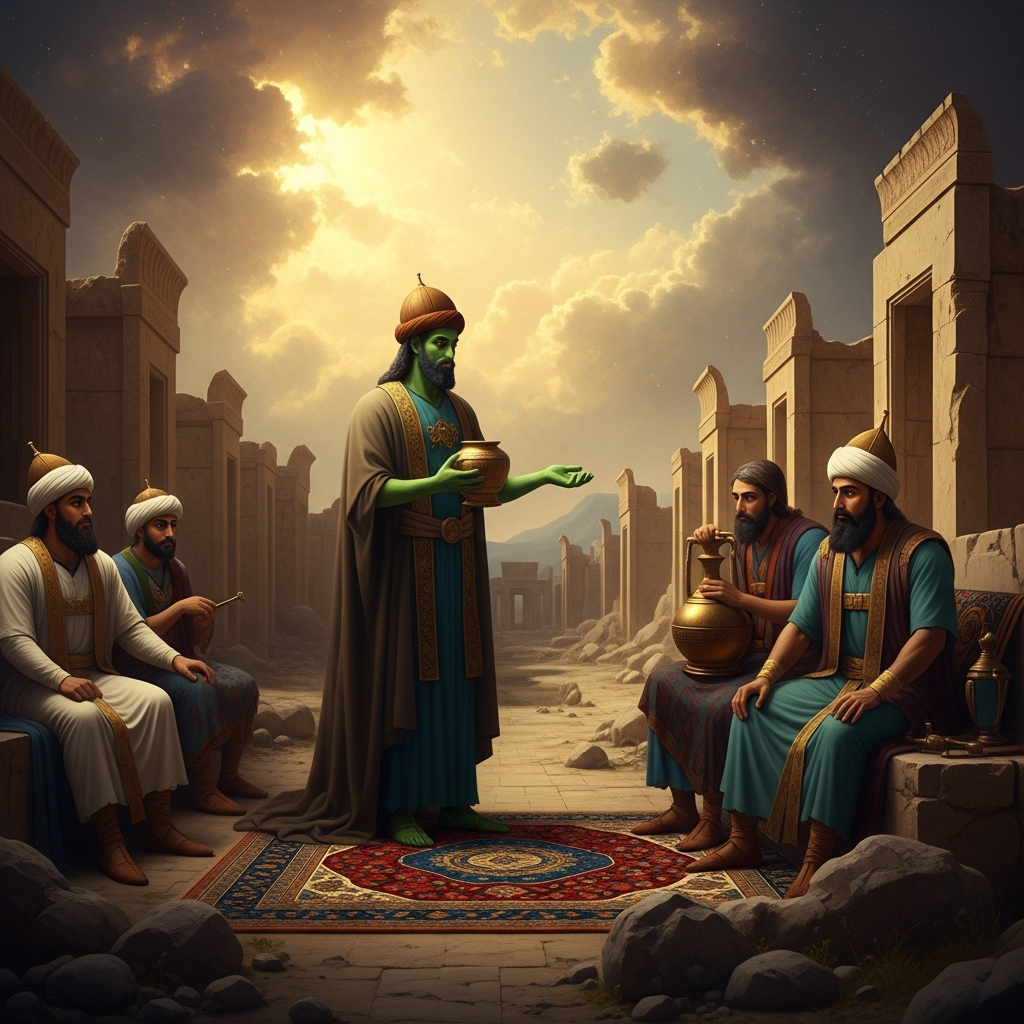
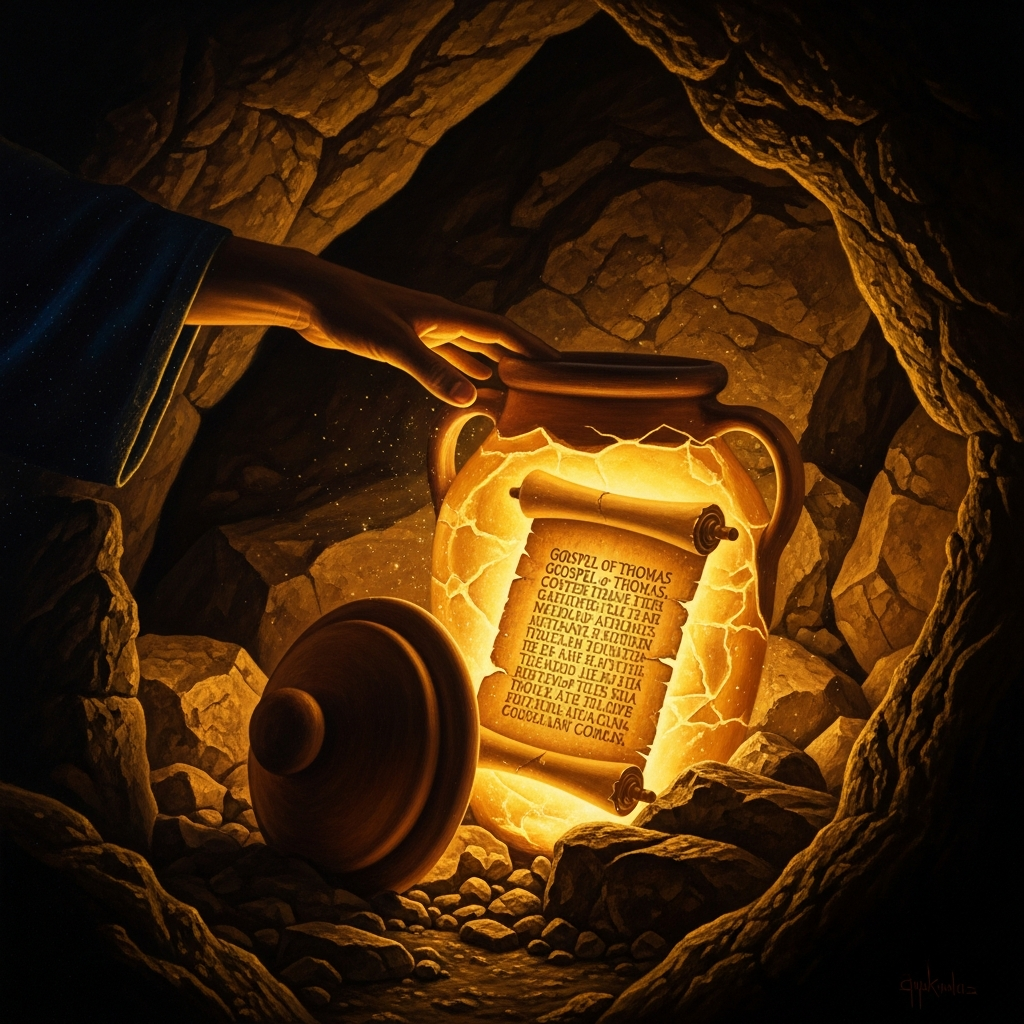
He was digging for fertilizer near the cliffs of Jabal al-Tarif, in Upper Egypt, seven miles northeast of the town of Nag Hammadi. His mattock struck a sealed earthenware jar about a meter long. He hesitated before opening it — he thought it might contain a djinn. Then he broke the jar open with his mattock, hoping for gold.
Inside were thirteen leather-bound papyrus codices wrapped in leather. Thirteen books, sealed in a jar, buried sometime in the late 4th century CE — probably by monks from the nearby Pachomian monastery of Saint Palaemon, probably in response to a letter from Bishop Athanasius of Alexandria in 367 CE, in which Athanasius issued the first canonical list of approved New Testament texts and ordered the destruction of everything else. Someone — probably a monk, probably young, probably in a hurry — took the books that were not approved and buried them in the cliff. That person’s name is not known.
The books were left undisturbed for 1,600 years.
The Gospel of Thomas has no story.
It has no birth narrative, no baptism, no transfiguration, no trial, no crucifixion, no resurrection. It has a framing sentence — These are the hidden sayings that the living Jesus spoke — and then it has sayings. Some are recognizable from the canonical Gospels, often in variant forms. Others appear nowhere else in early Christian literature.
Saying 77 is the one that most frequently stops readers cold.
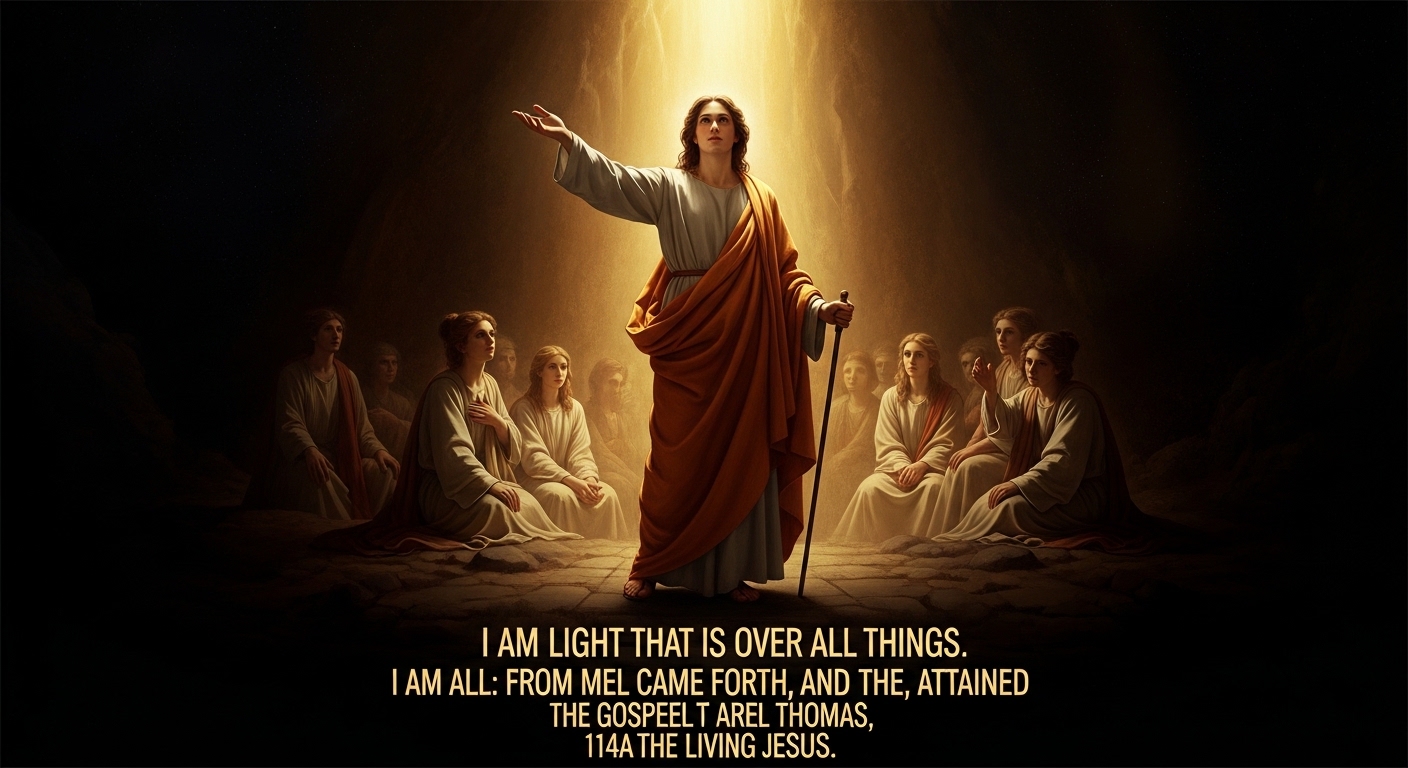
I am the light that is over all things. I am all: from me all came forth, and to me all attained. Split a piece of wood; I am there. Lift up the stone, and you will find me there.
The saying does not describe a God who is above the world or outside it. It describes a God who is in the wood, in the stone, available directly and materially to anyone who splits or lifts. There is no institutional mediation. There is no sacrament, no priest, no confession. There is wood, and you split it, and there is the presence you have been looking for.
This is one of the reasons Thomas was not included in the canon.
Saying 3 is the theological center of the gospel.
If your leaders say to you, ‘Look, the kingdom is in the sky,’ then the birds of the sky will precede you. If they say to you, ‘It is in the sea,’ then the fish will precede you. Rather, the kingdom is inside you and it is outside you.
When you know yourselves, then you will be known, and you will understand that you are children of the living Father. But if you do not know yourselves, then you live in poverty, and you are the poverty.
This is not a promise of future salvation. It is a diagnosis of present condition. The kingdom is not coming; it is here, inaccessible only because the person looking for it does not know how to look. The salvation Thomas offers is not rescue from sin but recognition of identity. You do not need to be forgiven. You need to remember who you are.
The Gnostic traditions built entire cosmological systems on this intuition — elaborate maps of the divine pleroma, the heavenly realms, the fall of Sophia, the imprisonment of the light. Thomas does not build a system. It just keeps pointing at the same thing from 114 different angles: you are the light, the light is here, the kingdom is now, and the only thing standing between you and it is your failure to recognize yourself.
The question of date is still unsettled.
Scholars who believe Thomas preserves early tradition point to the fact that it shows no awareness of the canonical Gospels and lacks their narrative developments — no passion narrative, no Pauline theology of the cross, no church structure. Helmut Koester argued in the 1980s that its core sayings layer predates Mark. April DeConick’s more recent work identifies a rolling corpus that began in the 50s CE and accumulated accretions through the 2nd century.
Scholars who argue for a later date note that Thomas shows Gnostic theological concerns that cohere with 2nd-century Alexandrian Christianity, and that the absence of narrative may be a deliberate formal choice rather than chronological evidence.
The disagreement matters because it changes what Thomas is. If it is early, it is evidence that the Christianity of the sayings-tradition — the wisdom teacher, the kingdom-now theology, the immanent divine — was prior to the Christianity of the narrative Gospels. If it is late, it is evidence that Gnostic Christians worked backward, stripping the story away to reveal the teaching underneath.
Either way, it is evidence that early Christianity was more varied, more contested, and more interesting than the canon suggests.
The text was collected by a twin.
Didymos Judas Thomas — the name means twin in both Greek and Aramaic, the repetition deliberate — is identified in the Syrian Christian tradition as the twin brother of Jesus. The tradition is ancient and geographically specific: the Thomasine Christianity of Syria and Edessa claimed to have received the original, undistorted teaching directly from the brother of the teacher.
Whether the twinship is literal or metaphorical has been debated. Elaine Pagels suggests that Thomas represents the reader who recognizes her own nature in the teaching — the one who becomes, in encountering it, the twin of the living Jesus. The saying that licenses this reading is Saying 13, in which Jesus says to Thomas: You have drunk from the bubbling spring that I have tended, and you are drunk. You are not my disciple; you are like me.
Not servant. Not student. Like me.
That is the gospel’s final claim: that the end of the path is not worship but resemblance. The kingdom is found when you discover you are made of the same thing as the teacher. When you split the wood and recognize yourself in what you find there.
The jar is still in the Egyptian Museum in Cairo. The jar that held the teaching for 1,600 years, the jar that Muhammad Ali opened with a mattock looking for gold — the jar, it turns out, did contain gold. Just not the kind he was looking for.
Scenes
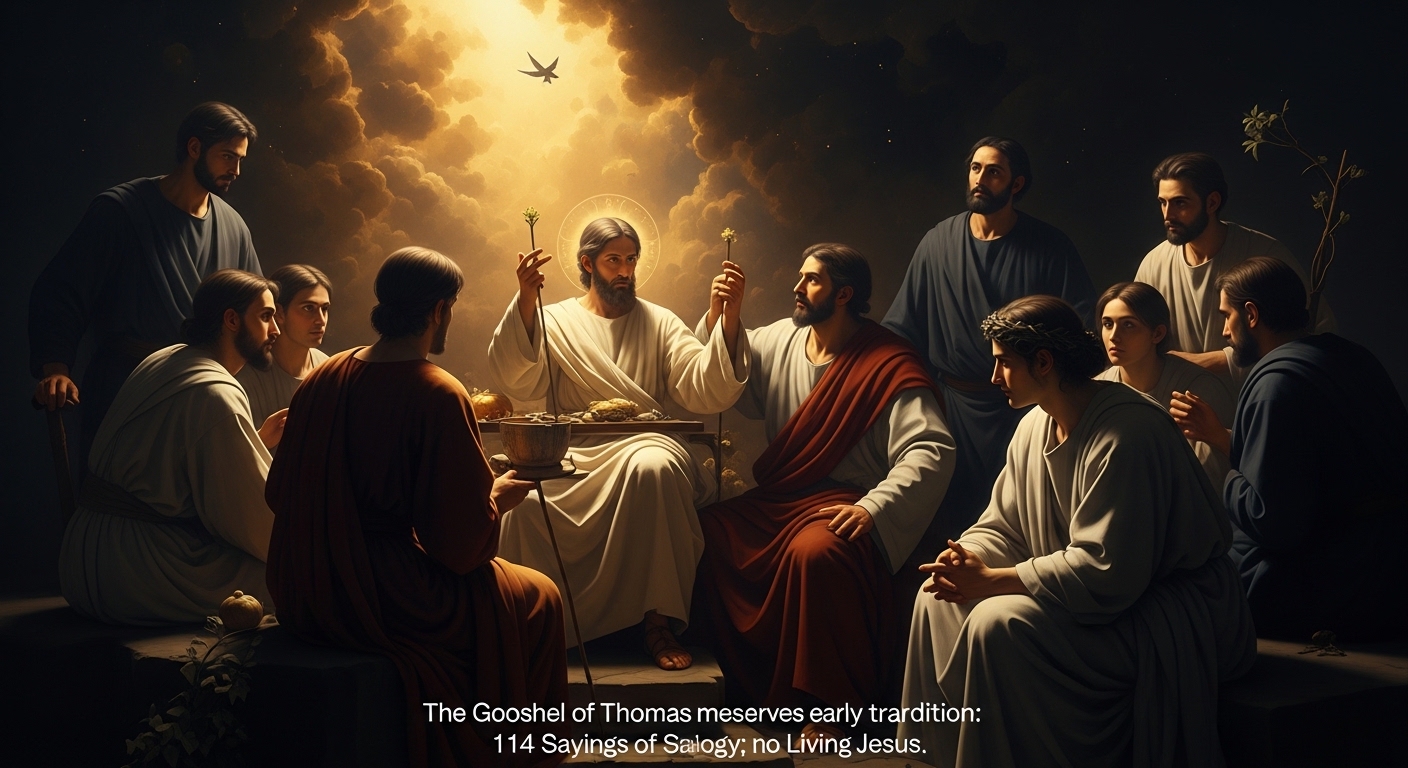
Echoes Across Traditions
Entities
- Jesus (the Living Jesus of the Thomas tradition)
- Didymos Judas Thomas (the Twin)
- The 114 sayings
- The jar at Nag Hammadi
Sources
- Gospel of Thomas, Coptic text, Nag Hammadi Codex II (c. 2nd century CE; discovered 1945)
- Marvin Meyer (trans.), *The Gospel of Thomas: The Hidden Sayings of Jesus* (1992)
- Elaine Pagels, *Beyond Belief: The Secret Gospel of Thomas* (2003)
- Stevan Davies, *The Gospel of Thomas and Christian Wisdom* (1983)
- April DeConick, *Recovering the Original Gospel of Thomas* (2005)
- Helmut Koester, *Ancient Christian Gospels* (1990)