Raising the Pole: The Family Standing in Wood
Traditional practice from pre-contact times through the present · Pacific Northwest coast — from the Tlingit of Alaska through the Haida and Tsimshian to the Kwakwaka'wakw of Vancouver Island
Contents
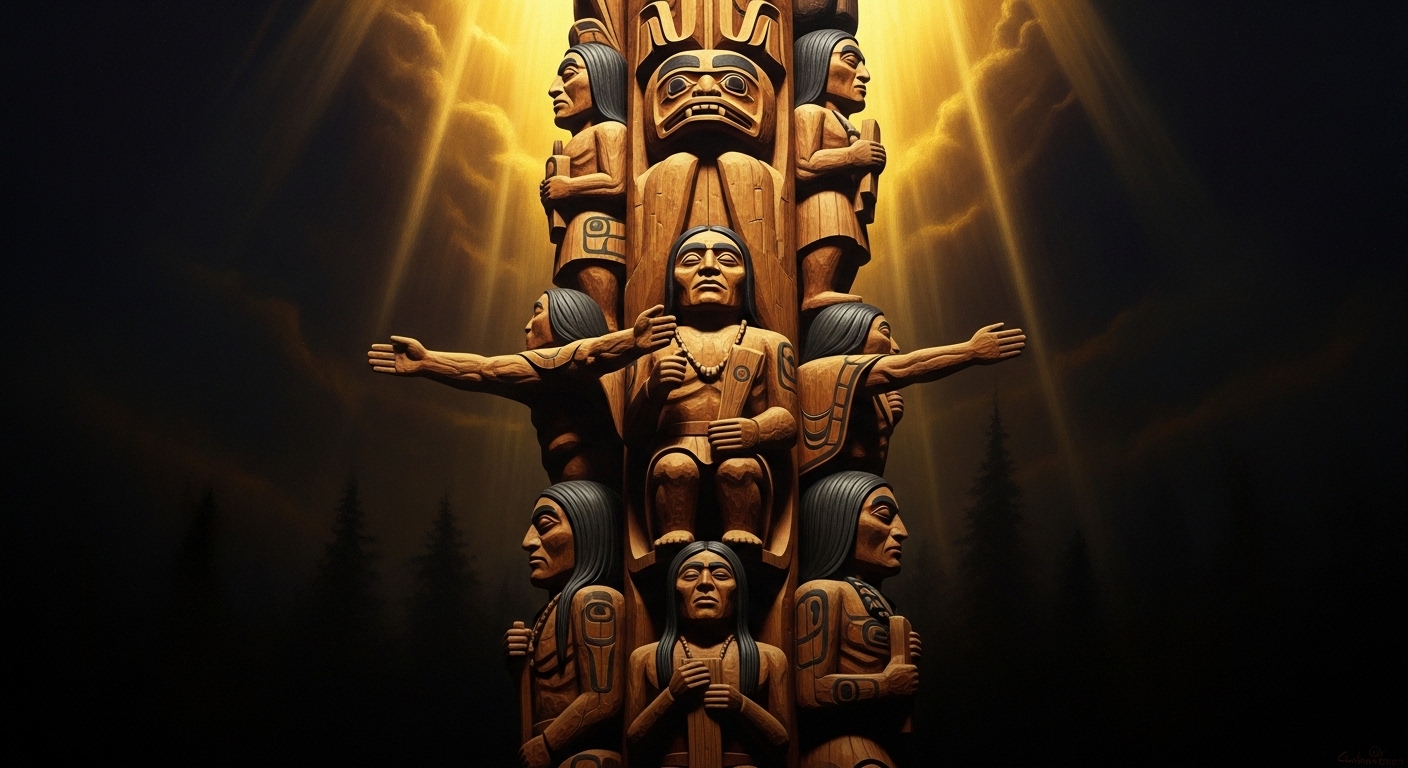
When a cedar pole carved with the family's crest figures is raised at a potlatch, the entire genealogy of a lineage is stood upright in public — the ancestors made visible in wood, the family's history planted at the center of the village.
- When
- Traditional practice from pre-contact times through the present
- Where
- Pacific Northwest coast — from the Tlingit of Alaska through the Haida and Tsimshian to the Kwakwaka'wakw of Vancouver Island
The carver begins with prayer.
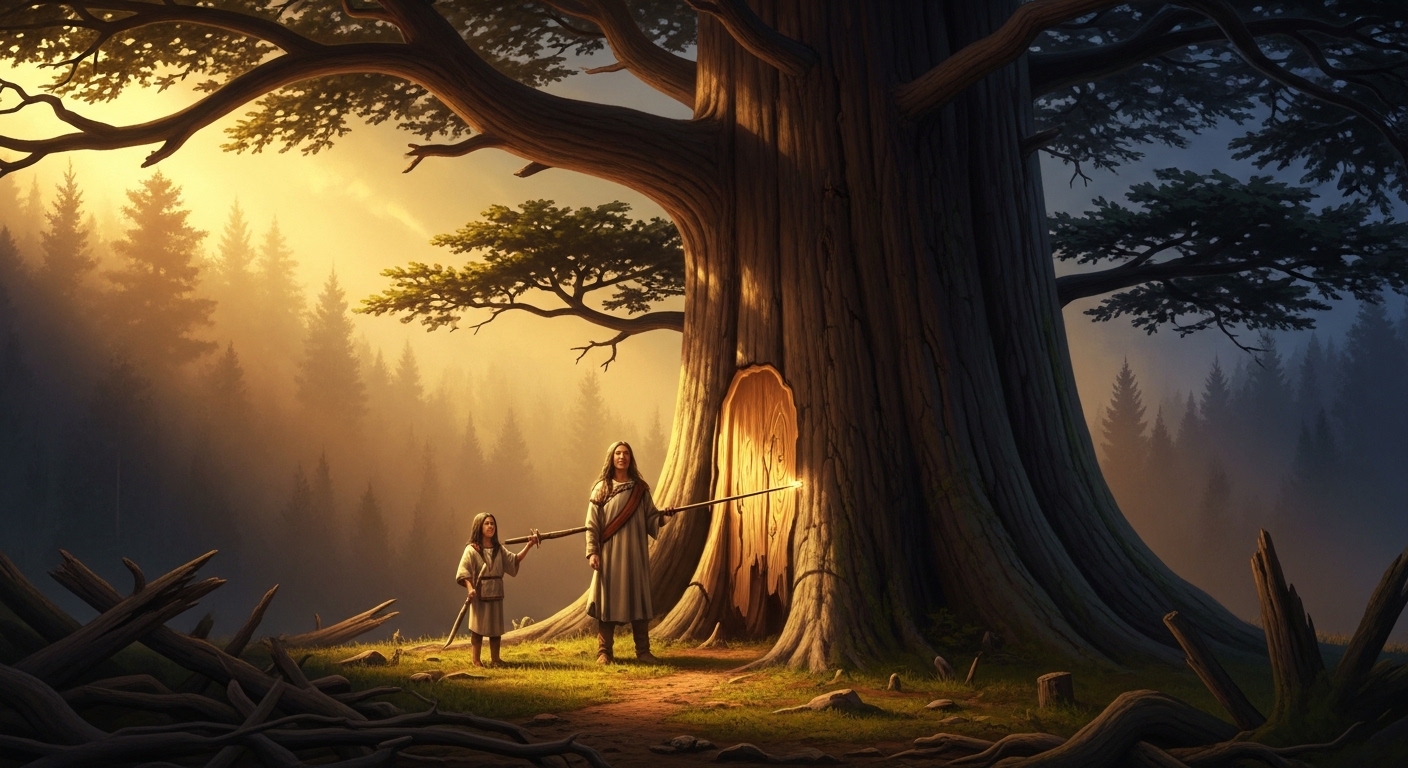
The cedar tree has been chosen months earlier — a specific tree, old enough, straight enough, with the right proportion of heartwood to sapwood. When it is felled, it is felled with ceremony, with acknowledgment to the cedar spirit, with the understanding that what is being taken from the forest is going to be given a different kind of life in the village. The log is hauled to the carver’s workshop, which in older times was the beach.
The carver knows the family’s history.
He must, because the pole is the history. The chief who has commissioned it has told him: our family descends from this encounter with the Raven, who appears at the bottom. Above him comes the Sea Bear, who was our ancestor in the time before memory. Above him comes the human figure who first received our hereditary name. At the top comes the Thunderbird, our highest crest, the one we received in the treaty with the Thunderbird family three generations ago.
The carver shapes each figure with the formal vocabulary of Northwest Coast art — the split-U forms, the ovoids, the specific way that the eye of a Raven differs from the eye of an Eagle, the way the Killer Whale’s dorsal fin is positioned to indicate its clan. Every element is a word in a language that anyone trained in the tradition can read.
He carves for months.
The raising day is the culmination of the potlatch.
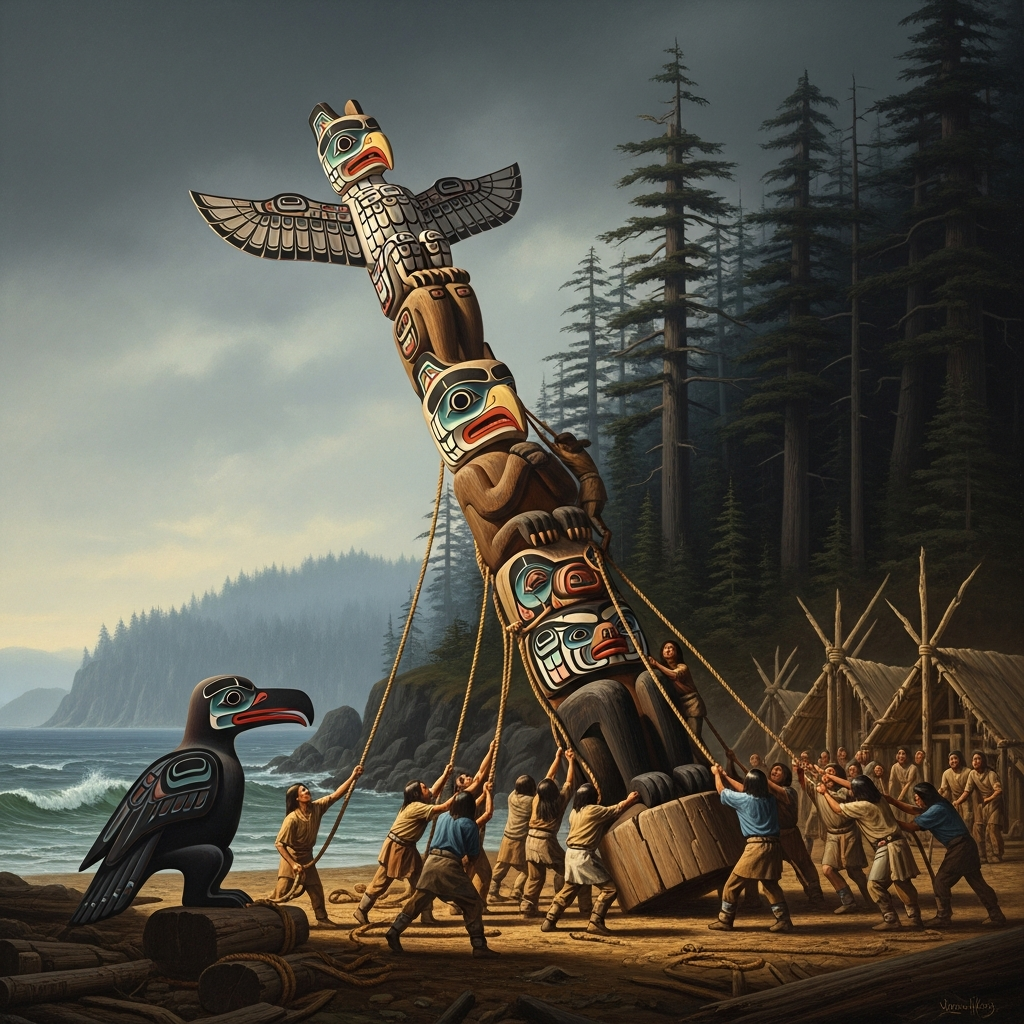
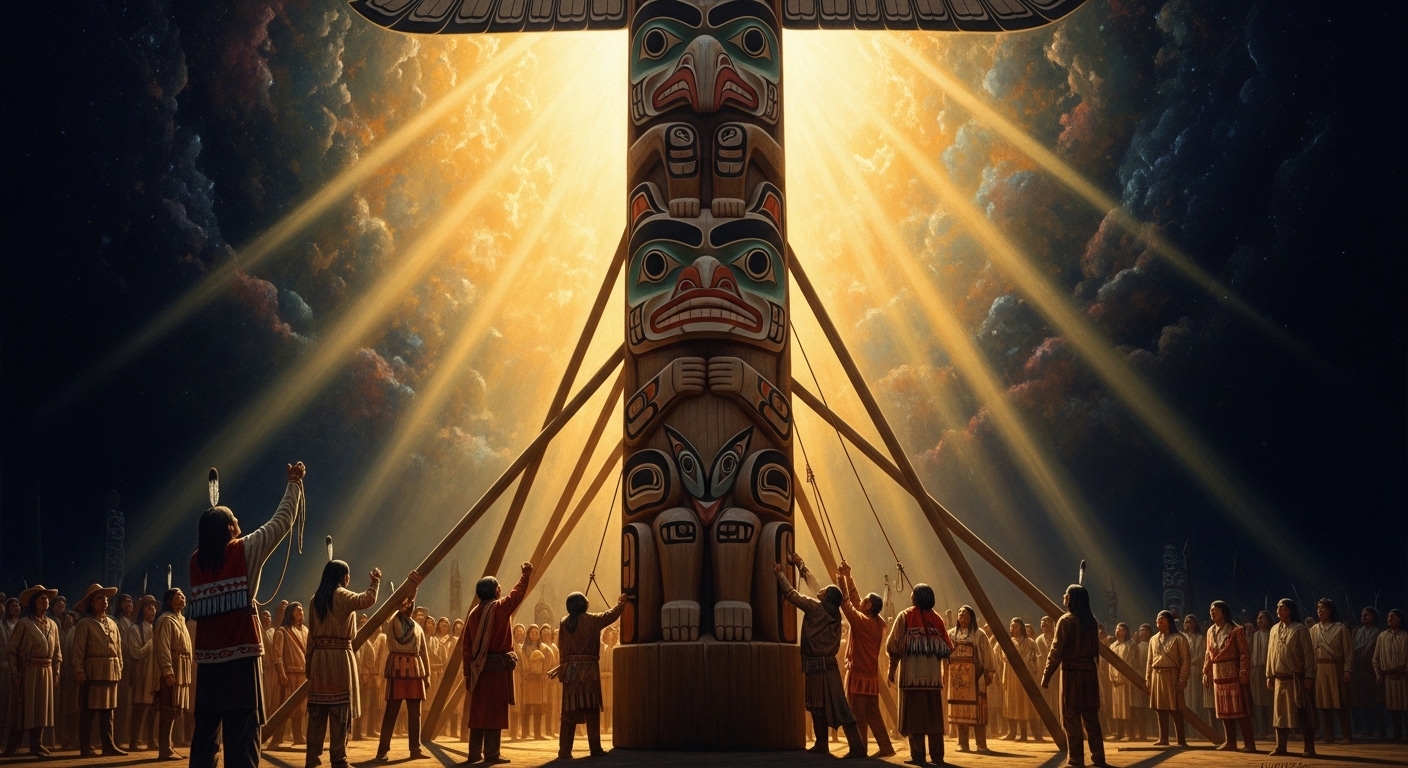
The pole is raised with ropes and wooden levers and the strength of the assembled guests — because the guests participate in the raising, which means they are witnesses to the history being stood upright. As the pole goes up, the chief speaks. He names the figures. He tells the stories that belong to each figure — the stories that are his family’s legal property, the stories that no other family may use without permission, because these stories are title documents.
When the pole stands upright in its hole — packed with stones and earth, the whole assembled weight balanced on the wide base — a shout goes up from the gathered people. The family’s history is standing. The ancestors are visible. Anyone who looks at this pole from now on knows who this family is, where they came from, what rights they hold.
The witnesses receive gifts.
The gifts acknowledge that they have seen this. Their acknowledgment is the ratification: the pole is the legal record, and the guests are the legal witnesses, and the gifts are the formal compensation for the responsibility they are assuming. To receive a gift at a potlatch is to take on the obligation of memory.
Missionaries called the poles idols.
They were wrong. The figures on a pole are ancestors, not gods. They are the beings who made the family what it is: the supernatural encounters, the transformations, the marriages and wars and founding moments that a lineage carries as its identity. To carve them in cedar and raise them in the village center is to say: we are still here, we know who we are, and we are not ashamed of it.
The old poles in the forest now — the ones rotting back into the earth, the ones with moss growing down their faces and saplings growing through their bases — those poles are fulfilling their purpose too. Cedar returns to cedar. The ancestors go back into the earth. A new pole will be raised for the next generation.
The family stands in wood while the wood lasts.
Then the family stands in the people who remember.
Scenes
Echoes Across Traditions
Entities
- the carver
- the family chief
- the witnesses
- the crest figures (Raven, Eagle, Bear, Killer Whale)
Sources
- Marius Barbeau, *Totem Poles*, 2 vols. (National Museum of Canada, 1950)
- Bill Holm, *Northwest Coast Indian Art: An Analysis of Form* (University of Washington Press, 1965)
- Nora Marks Dauenhauer and Richard Dauenhauer, *Haa Tuwunáagu Yís, for Healing Our Spirit: Tlingit Oratory* (University of Washington Press, 1990)