Contents
Xochiquetzal — 'Precious Flower Quetzal-Feather' — is the Aztec goddess of beauty, love, weaving, and all the arts that make life worth living. She is also the first transgressor: stolen from her husband Tlaloc by Tezcatlipoca, she becomes the goddess of desire that breaks rules.
- When
- Mythic time, before the present sun
- Where
- Tamoanchan, the paradise garden of origins
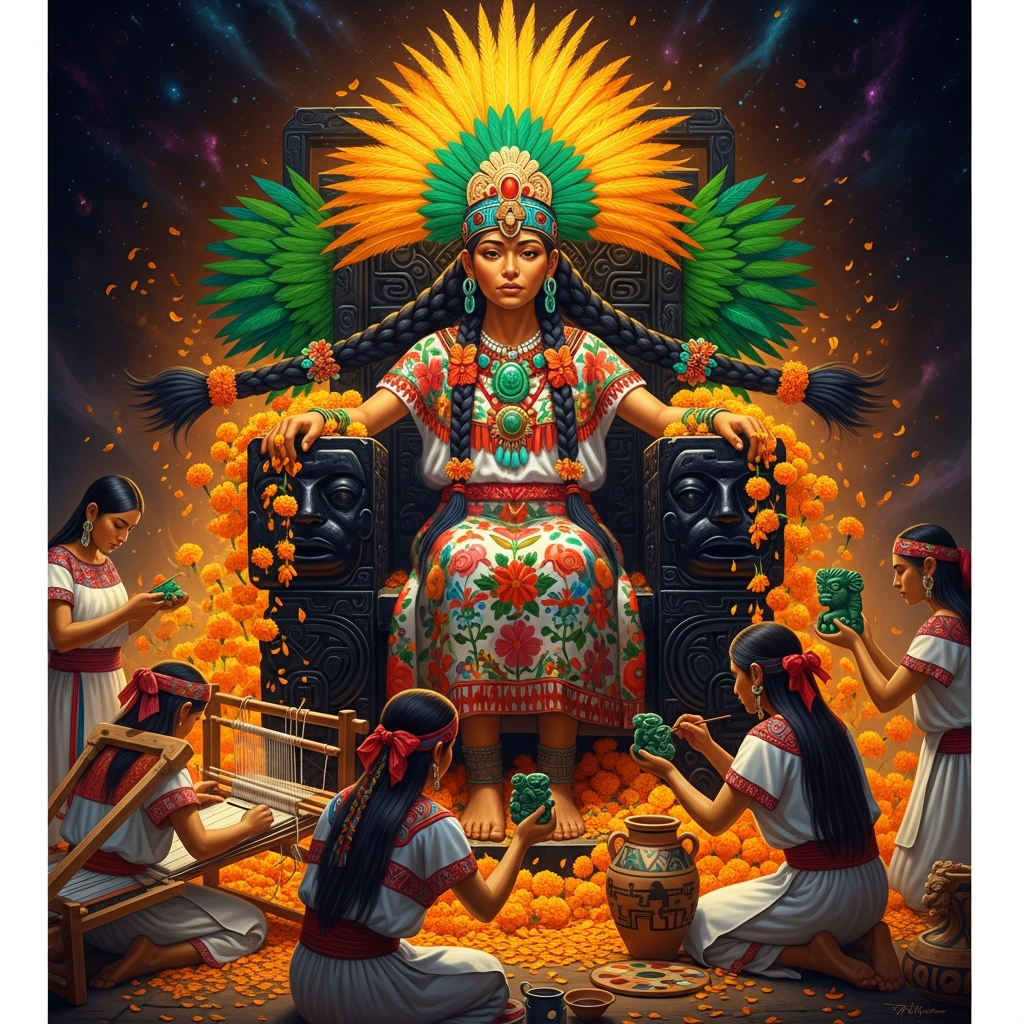
Her name is Xochiquetzal — xochitl, flower; quetzal, the long-tailed bird whose green feathers were worth more than gold to the Aztecs. Precious Flower Quetzal-Feather. She was the goddess of everything beautiful that human hands could make: the woven cloth, the painted gourd, the ceramic figure, the song. The women who sat at the loom prayed to her. The featherworkers, who built mosaics from hummingbird and quetzal and roseate spoonbill, kept her image on a small altar by their work. The pleasure-women of the marketplace — the ahuianime, “the joy-bringers” — were her daughters in a literal sense, and they wore her flowers in their hair when they walked.
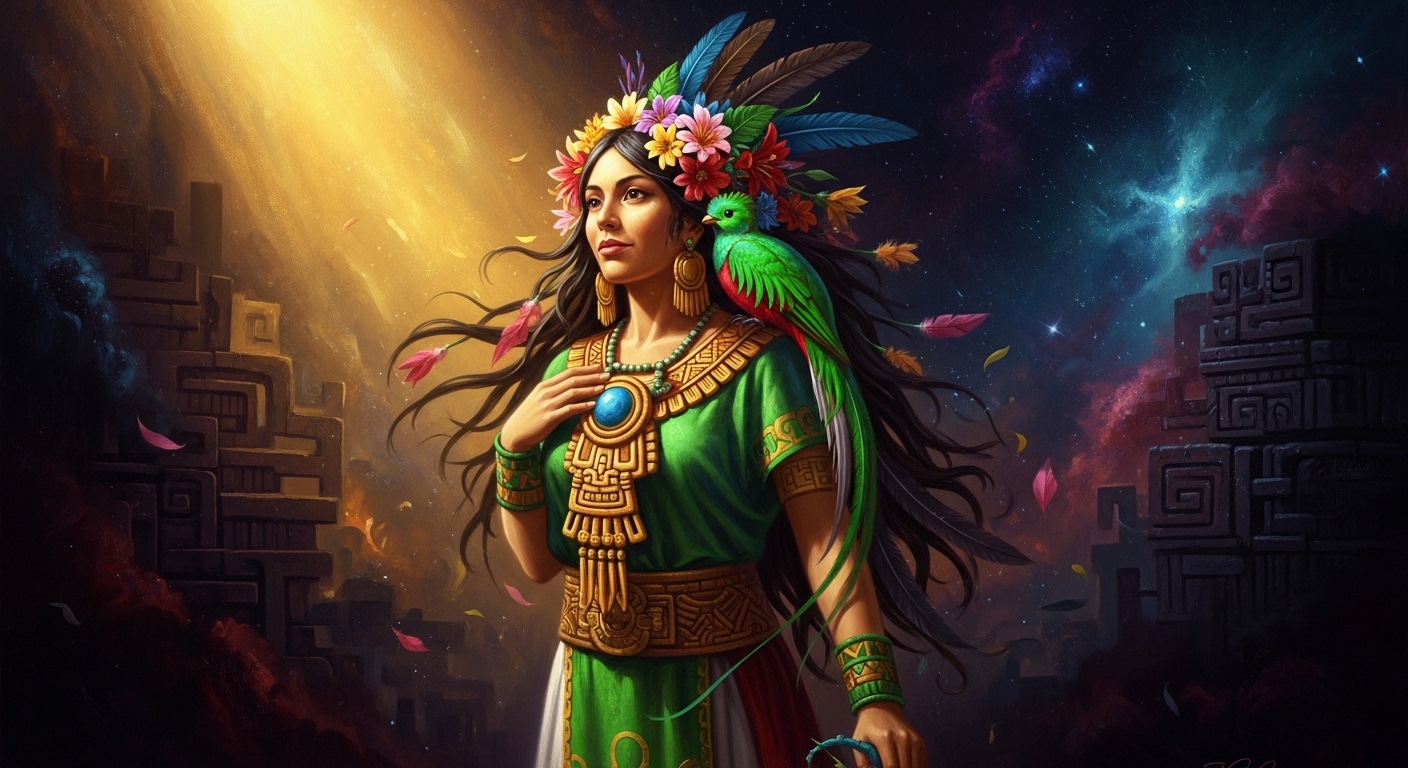
She was small. She was always young. She wore a headdress of green feathers and a skirt embroidered with butterflies; in her hands she carried a bouquet, and from her shoulders ran two long flower-stems whose blossoms were the offerings men made to her. The codices show her smiling, which is rare for an Aztec deity. Most of the gods stare; Xochiquetzal smiles like a woman who knows she is being looked at and likes it.
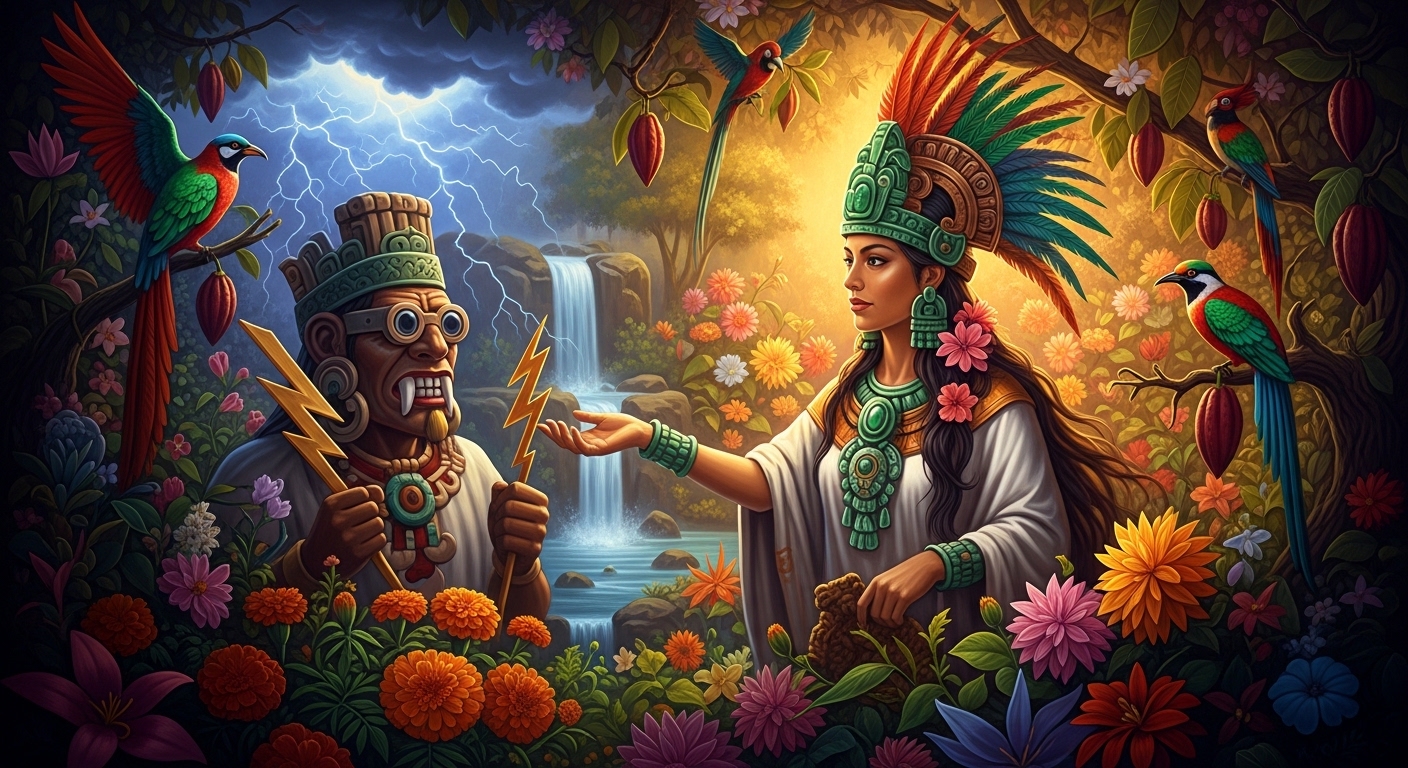
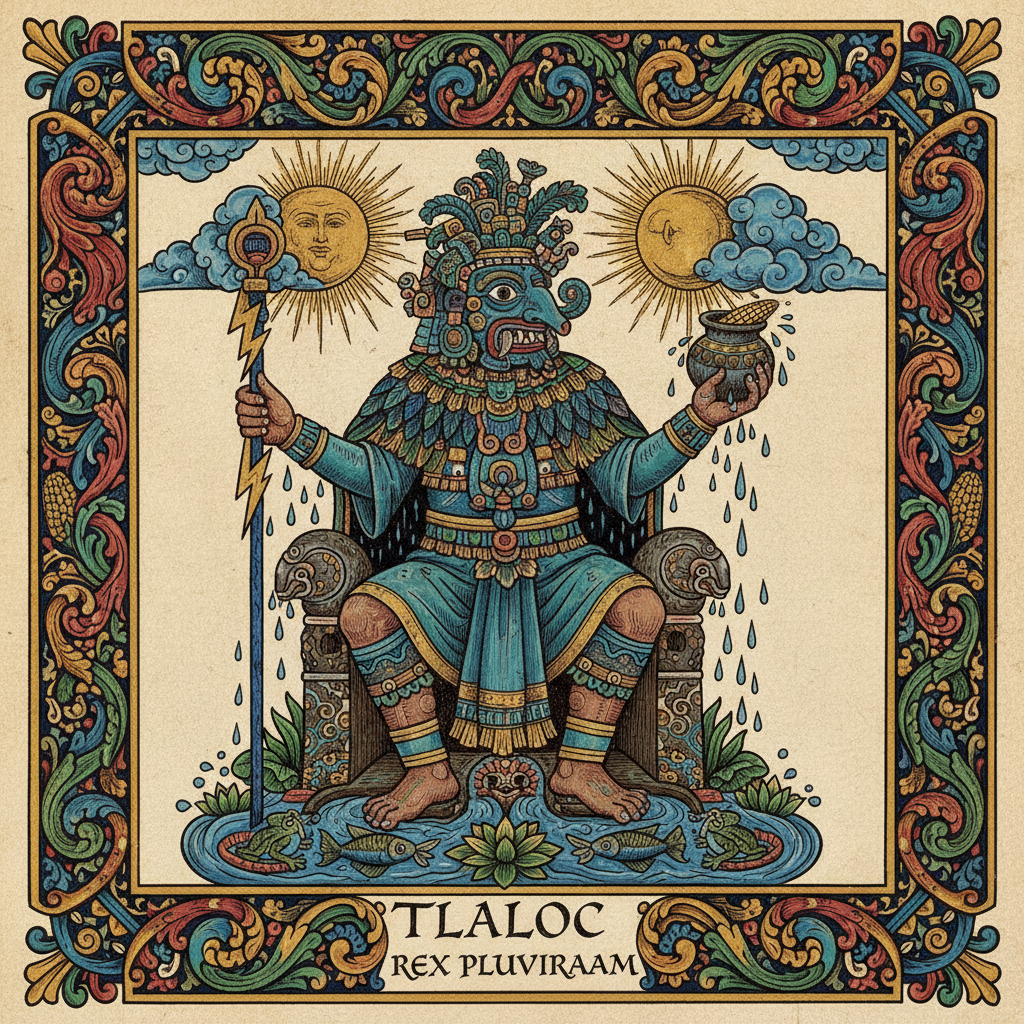
She was first married to Tlaloc, the rain-god, in the paradise garden of Tamoanchan. Tamoanchan was the place before the world — a garden of fruiting trees beside the four rivers, where the gods lived in unbroken peace. Xochiquetzal lived there with Tlaloc the storm-bringer, and she was perfectly happy. Then Tezcatlipoca came.
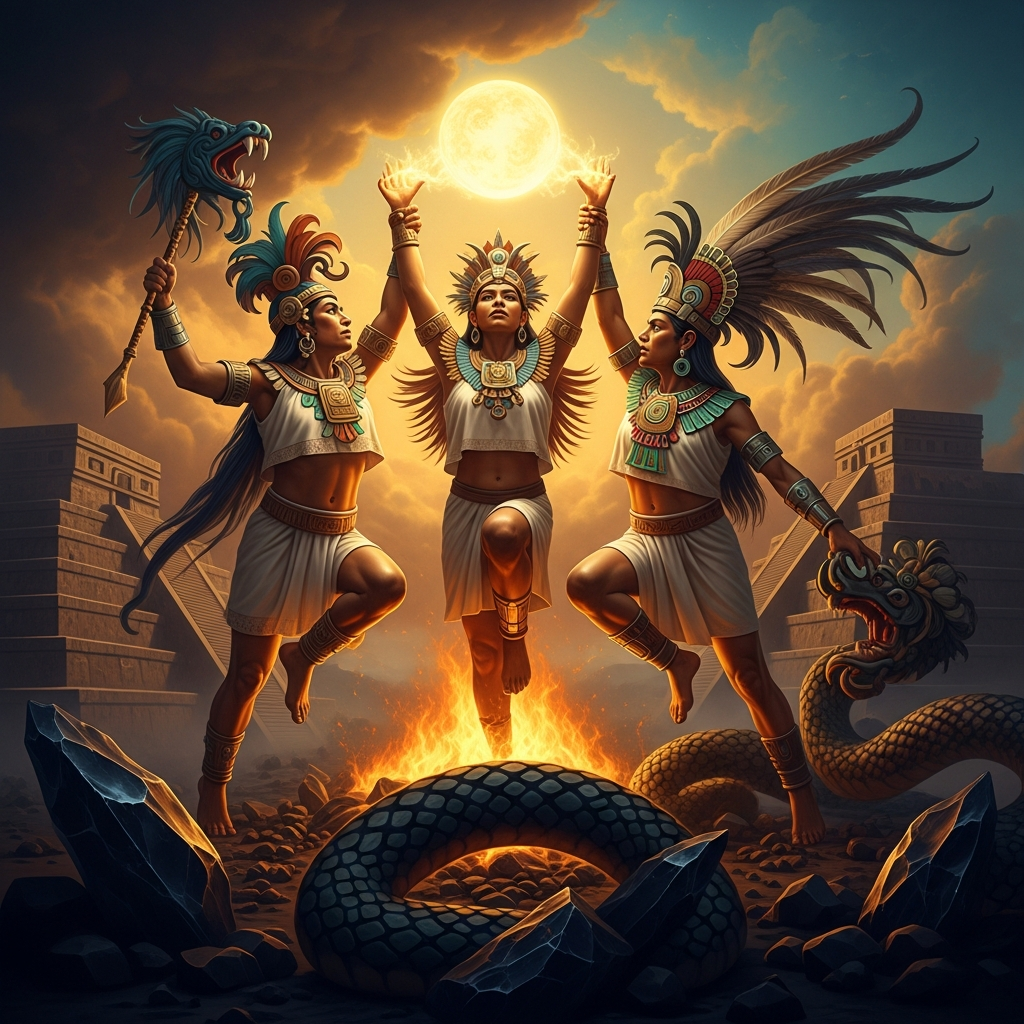
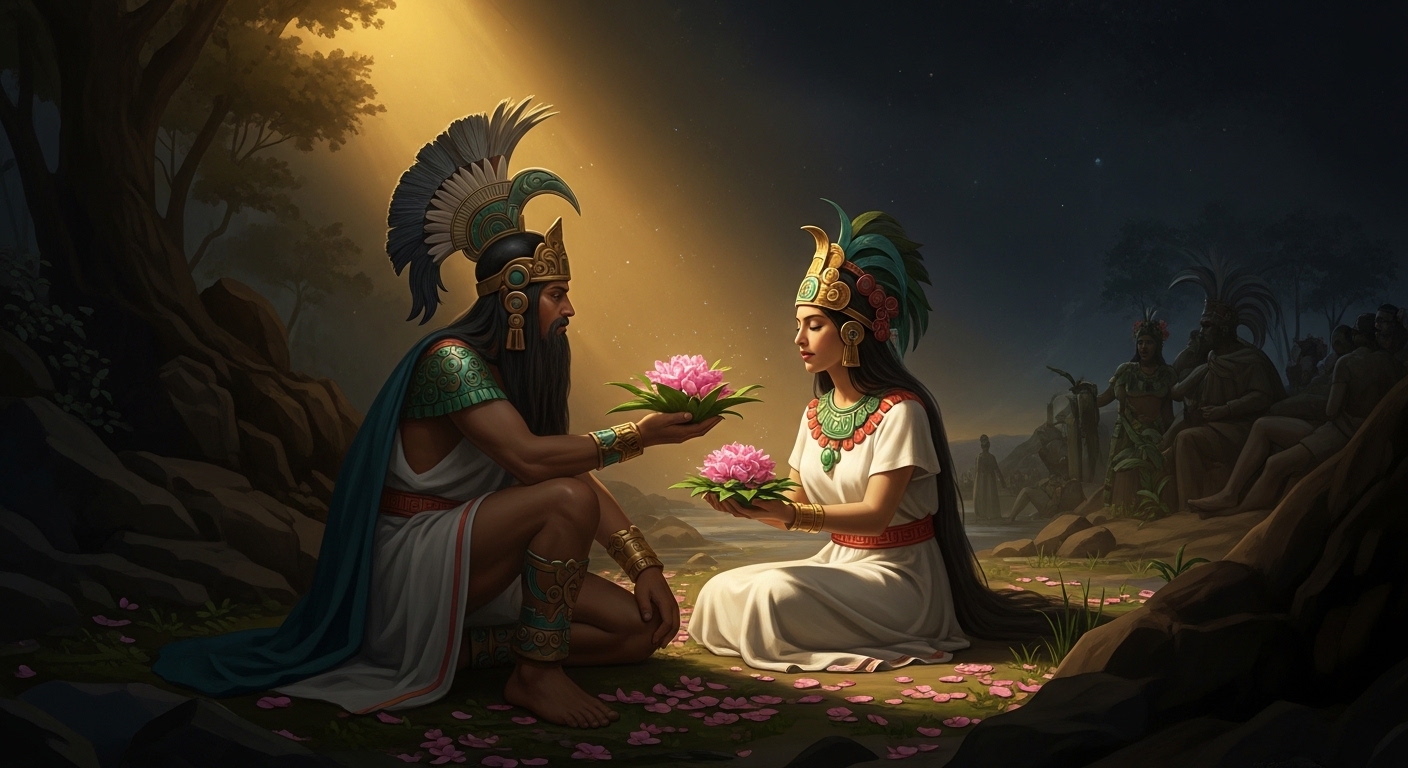
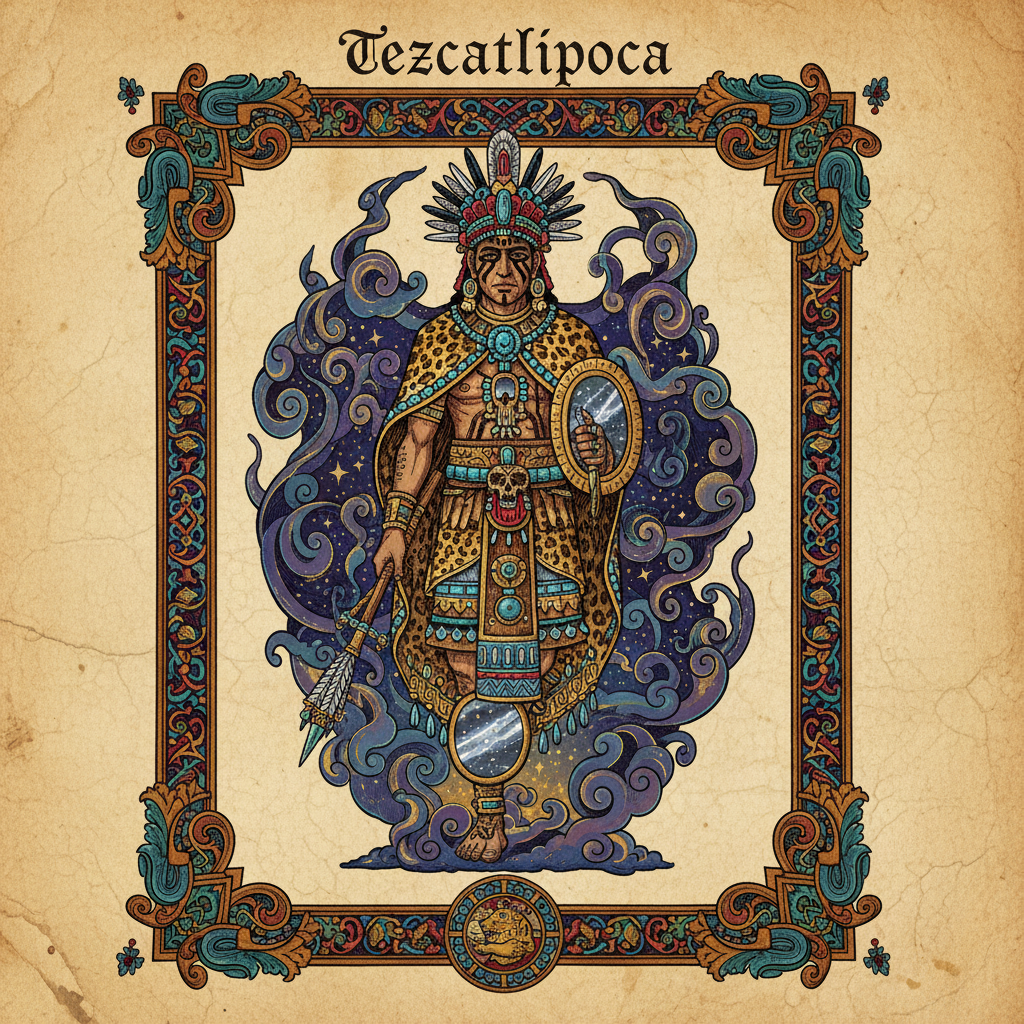
The Smoking Mirror saw her in the garden and decided he had to have her. He did not court her; he stole her. He carried her out of Tamoanchan and into the lower world, into the world we live in now, and there he kept her as his own. From that theft came the first concubine and the first betrayal, and from that theft, in many of the codices, came also the breaking of the great tree at the center of Tamoanchan — the tree that, when it broke, ended the age of innocence. The fall, in the Aztec telling, is the fall of a goddess.
Tlaloc was inconsolable. He went searching, and when he could not find her, he married Chalchiuhtlicue, the jade-skirted river-goddess, instead — but the rains he sent down afterward were never quite right. They flooded; they failed; they came at the wrong time. The world we live in is a world after Xochiquetzal was taken, and it shows.
What is strange — what is essentially Aztec — is that the Mexica did not punish her for her stolenness. They did not call her impure. She remained the patron of weavers and lovers, of mothers giving birth, of midwives and pleasure-women alike. They built her a feast every eight years called Atamalcualiztli, the “eating of water-tamales,” in which young men dressed as flowers and butterflies danced for her, and old women sang the laments of Tamoanchan. They knew that the goddess of beauty had to be the goddess who broke a marriage. They knew that to weave a perfect cloth and to break a sacred rule were closer to one another than the priests of other peoples have ever admitted. To make something beautiful is to choose: this thread, not that thread; this color, not that one. Every act of creation is an act of preference, which is to say of desire. Xochiquetzal smiles because she has understood this from the beginning.
Scenes
Echoes Across Traditions
Entities
- Xochiquetzal
- Tlaloc
- Tezcatlipoca
- Piltzintecuhtli
Sources
- Florentine Codex, Book 1 (Sahagún)
- Leyenda de los Soles (1558)
- Historia de los Mexicanos por sus Pinturas