Sacred Numbers
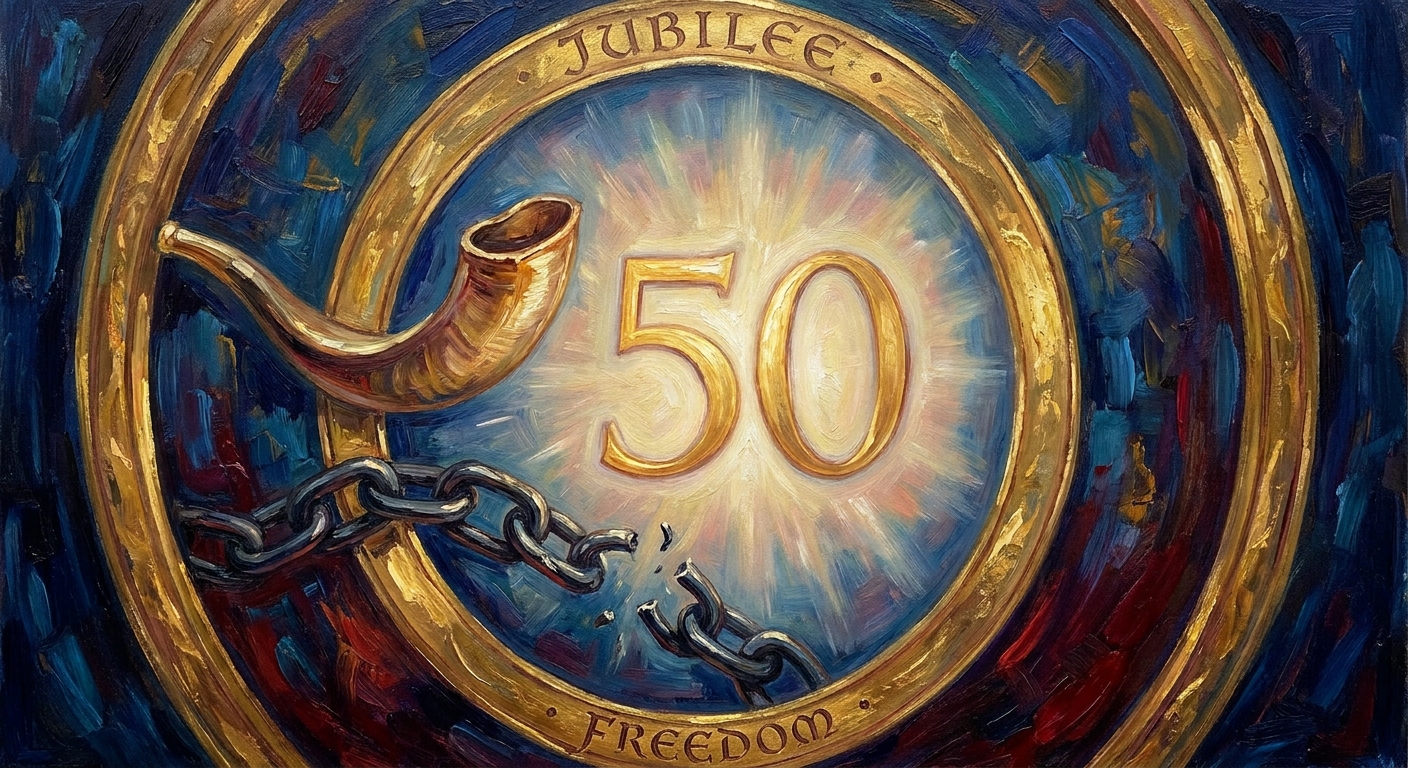
50
Jubilee / Pentecost / Freedom
Traditions
| Tradition | Meaning |
|---|---|
| Jewish | The Jubilee year: every 50th year, all debts were cancelled, all slaves freed, and all land returned to its original owners (Leviticus 25:10-13). Shavuot (Feast of Weeks) falls 50 days after Passover — the day the Torah was given at Sinai. 50 = freedom after completion |
| Christian | Pentecost = 50 days after Resurrection. The Holy Spirit fell on the 120 in the Upper Room (Acts 2:1-4). Pentecost fulfills Shavuot: where Sinai gave the Law written on stone, Pentecost wrote it on the heart. 50 = the day the Church was born |
| Catholic | Pentecost as one of the highest feasts. The 50 days of the Easter season (Easter to Pentecost) form a liturgical “week of weeks” |
| Masonic | The concept of Jubilee — restoration and return — aligns with Masonic themes of rebuilding and renewal (the Temple rebuilt, the Word recovered) |
| Black Church | 50 = liberation theology in a single number. The Jubilee was God’s economic reset — redistribution commanded by divine law. The Pentecost was the great equalizer: “your sons AND your daughters shall prophesy” (Acts 2:17). The number of freedom is not abstract; it has teeth |
The 49-50 rhythm: 49 is the preparation (7 x 7 = fullness of waiting), and 50 is the breakthrough. You cannot reach 50 without passing through the complete cycle of 49. Jubilee cannot be rushed.