The Story
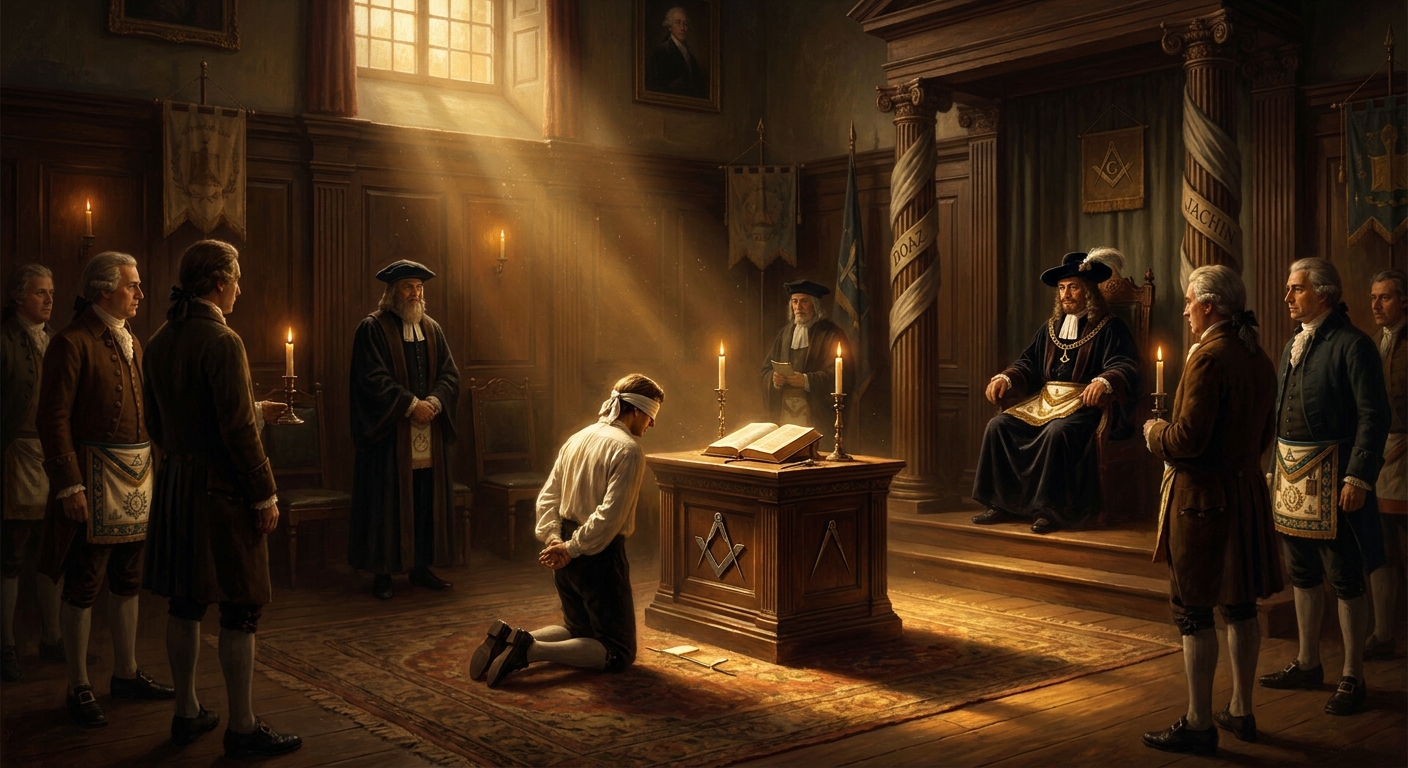
Freemasonry is the largest, oldest, and most stubbornly misunderstood fraternal order in the Western world. It calls itself “a peculiar system of morality, veiled in allegory and illustrated by symbols.” Critics see a world-shaping cabal, a satanic conspiracy, a hidden church. The truth is more interesting and far less cinematic.
The story begins in medieval operative stonemasons’ guilds—the men who built cathedrals. The Regius Poem (c. 1390), the oldest known Masonic document, reads as a craft constitution: duties, prayers, geometry traced from Euclid through King Athelstan to English working masons (Regius Manuscript, c. 1390, British Library MS Royal 17 A.I). These were tradesmen. They had lodges (temporary buildings on worksites), grips (handshakes proving you were a qualified mason, not a day-laborer), and passwords. The “secrets” were trade credentials.
By the late 1500s, the Schaw Statutes (1598-1599) regularized Scottish lodge governance (Schaw, 1598-1599, William Schaw, Master of Works to James VI). Through the 1600s, something shifted: lodges began admitting non-mason gentlemen—antiquaries, scholars, the curious. This “Period of Acceptance” seeded everything that followed. As working stonemasons faded and gentlemen-philosophers remained, operative Masonry became speculative Masonry—the lodge transformed from a worksite into a philosophical society in stone-worker costume.
24 June 1717: Four London lodges met at the Goose and Gridiron alehouse in St Paul’s Churchyard and founded the Premier Grand Lodge of England. This marks speculative Masonry’s formal birth (Anderson, Constitutions, 1723; lodge histories, St Paul’s Churchyard). Six years later, James Anderson published the Constitutions of the Free-Masons (1723), codifying ritual, inventing a mythological history (Adam as the first Mason), and establishing the rule that still stands: a Mason must believe in a Supreme Being, but the lodge specifies none (Anderson, Constitutions of the Free-Masons, 1723). Enlightenment in fraternal form—non-sectarian theism when religious wars had killed millions.
Through the 18th century, Masonry spread across Europe and the American colonies via trade routes and military regiments. Several Founding Fathers were Masons—George Washington, Benjamin Franklin, Paul Revere, John Hancock. But the claim that all 56 Declaration signers were Masons is false: only about nine held confirmed membership at the time. The Masonic fingerprint on the American founding is real (the Great Seal, Washington laying the Capitol cornerstone in full regalia, 1793) but has been inflated by proponents and conspiracists alike.
Then the Morgan Affair (1826) struck. William Morgan, a disaffected New York Mason, announced he would publish the order’s secrets. He was abducted and vanished (Batavia, NY court records, 1826). The public reacted with fury: the Anti-Masonic Party—America’s first third party—swept New York and ran a presidential candidate in 1832 (NY political records; US election returns, 1832). American Masonic membership collapsed for a generation. It rebuilt slowly through the late 1800s, reorganized under Albert Pike’s rewrite of the Scottish Rite (Pike, Morals and Dogma, 1871; Scottish Rite Southern Jurisdiction archives, 1859-1891), and peaked around 1959 with ~4 million US members (Masonic Service Association).
Since then: slow decline. Changing tastes, generational shifts, cheaper brotherhood. Today ~1 million US Masons operate; strong lodges persist in the UK, France, Latin America, the Philippines (MSA statistics, 2000s-present). Conspiracy associations linger, fueled by the real, documented P2 Lodge scandal in Italy (Italian parliamentary inquiry, 1981; see Conspiracies.md) and persistent “Illuminati” panic. Masonry itself denies being a religion—members affirm a Supreme Being, but the lodge worships none specifically, saves no souls, claims no revelation. The Catholic Church condemned it in 1738 (In Eminenti, Clement XII, papal bull) as a competing religious authority; conservative Protestants distrust it similarly; conspiracy theorists fixate on its secrecy. In practice, Masons run charities, dine, perform theatrical plays.
Pivotal Events
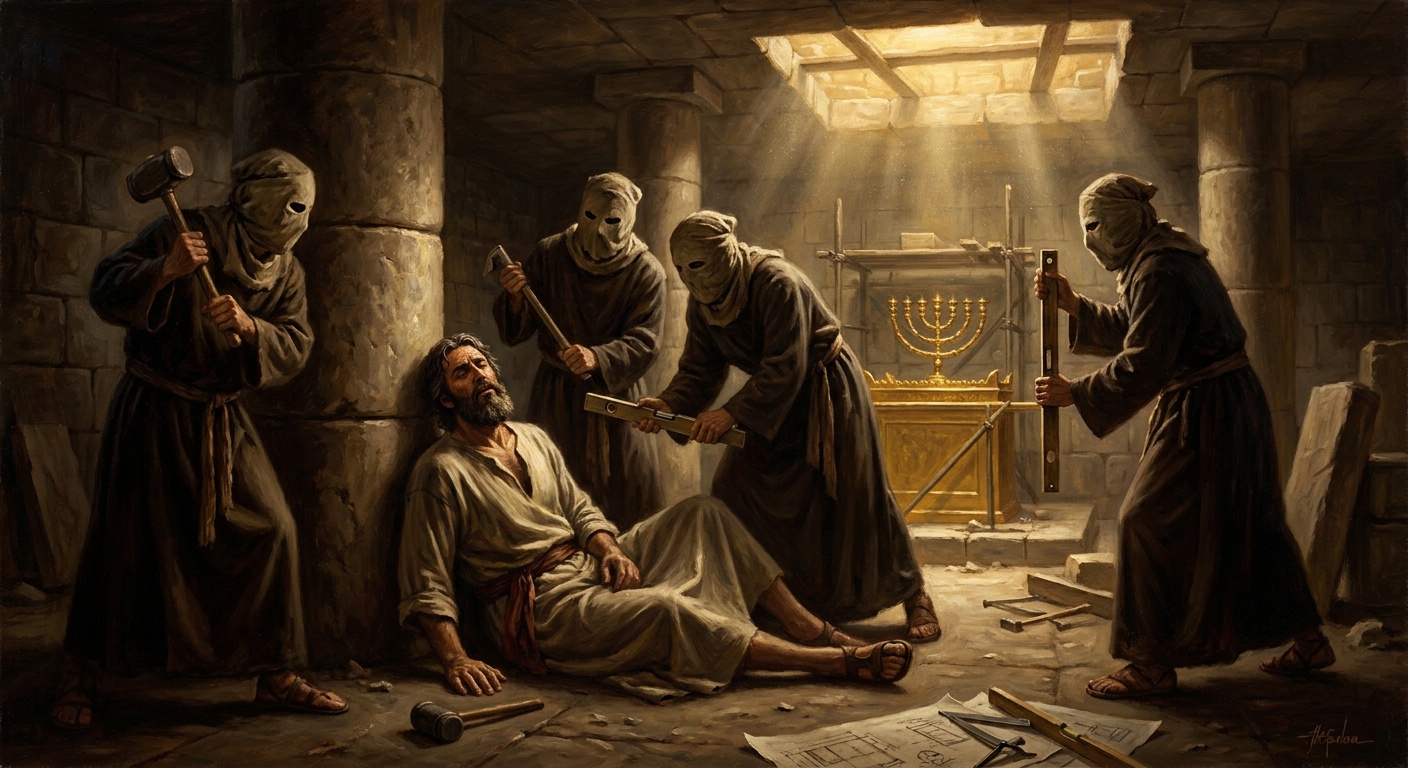
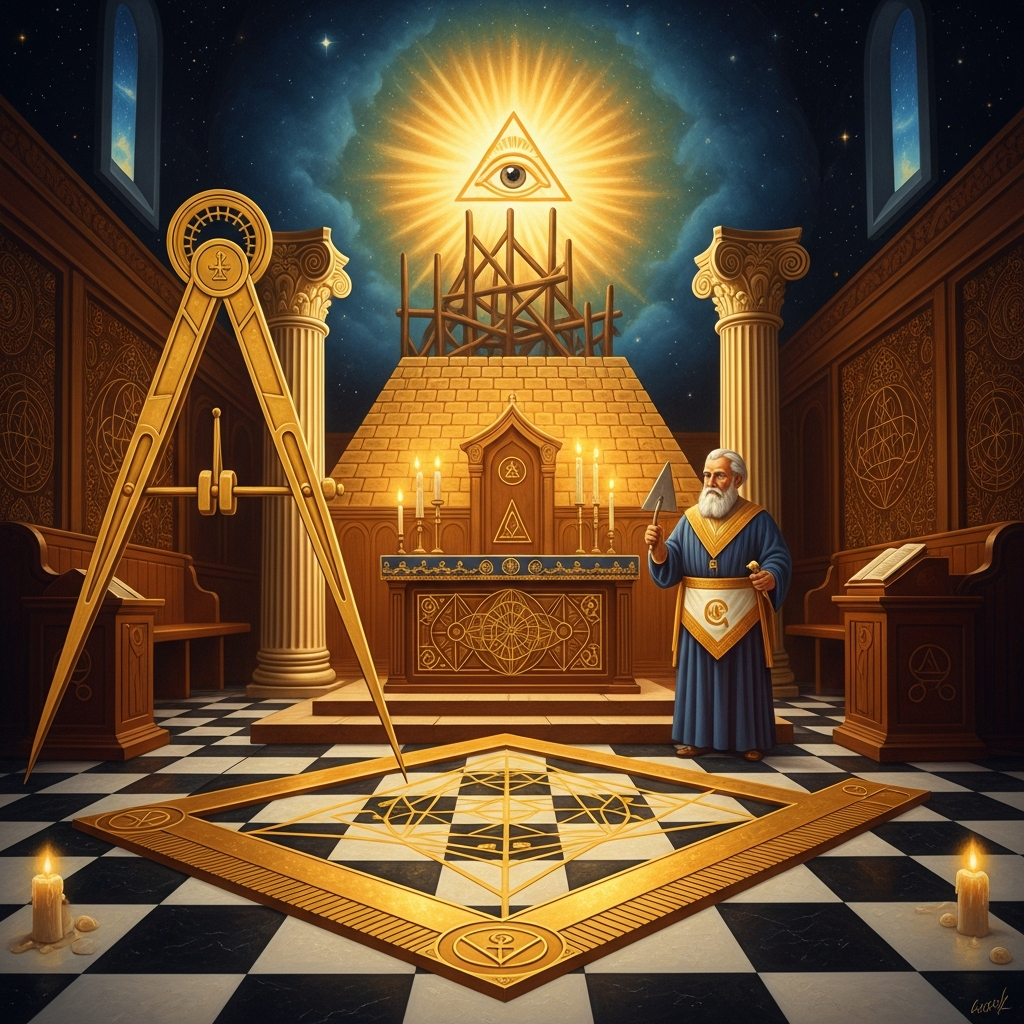
Hiram Abiff is the master architect Solomon hires to build the Temple in Jerusalem. In the Masonic legend (and it is a legend, not Hebrew Bible canon — the biblical Hiram of Tyre is a metalworker, not an architect, and is not murdered; cf. 1 Kings 7:13-14), three ruffians named Jubela, Jubelo, and Jubelum demand the Master Mason’s secret word. Hiram refuses. They kill him. He is buried, raised, and the secret is preserved through the surviving brethren (Masonic Master Mason ritual). This is the central allegory of the Master Mason degree — the candidate is symbolically slain and raised, identifying himself with Hiram. The lesson is fidelity unto death and the immortality of the soul. The acacia sprig placed on Hiram’s grave, by which the body is found, becomes the Masonic funerary symbol of resurrection.
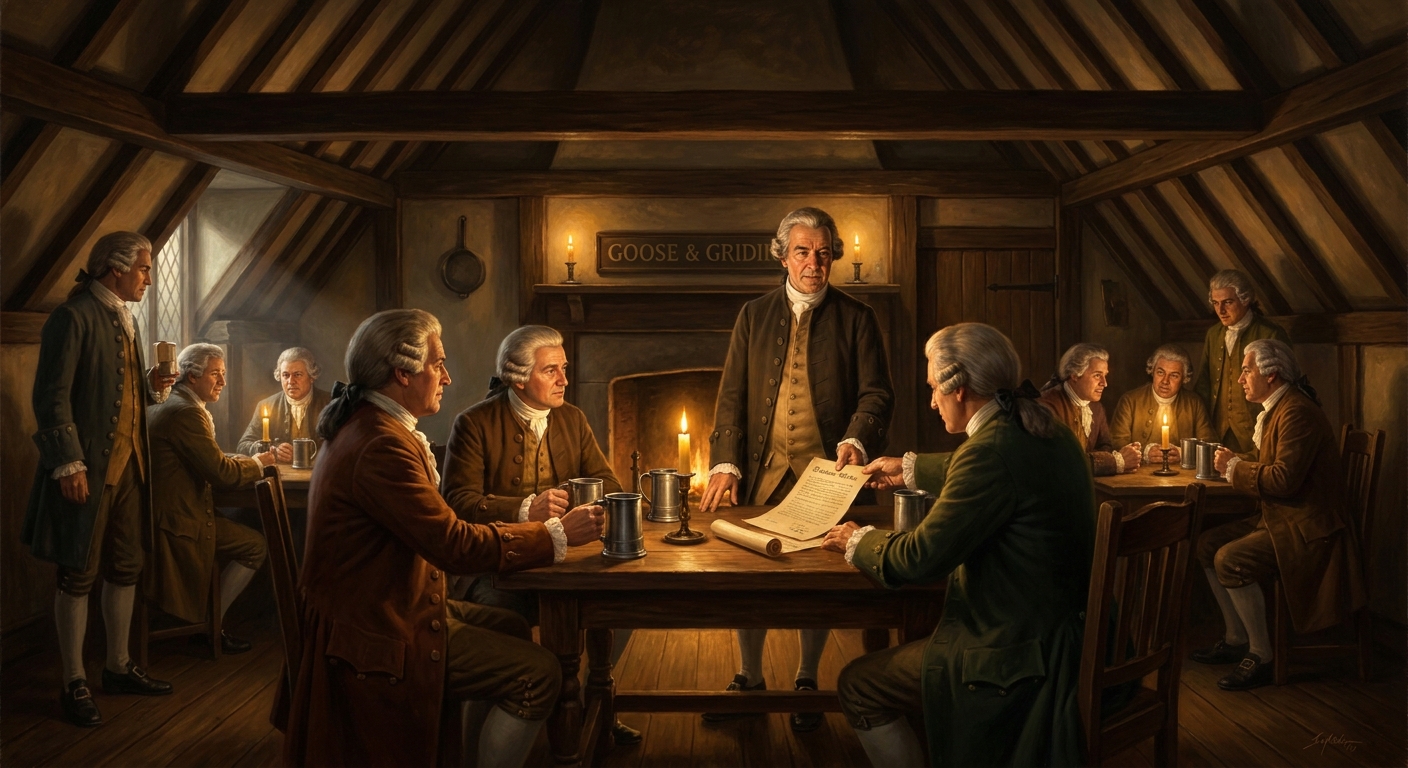
On 24 June 1717 — St John the Baptist’s Day, one of the two great Masonic feast days — four London lodges met at the Goose and Gridiron alehouse in St Paul’s Churchyard and elected Anthony Sayer as the first Grand Master (Anderson, Constitutions, 1723; lodge histories). The four founding lodges were named for the alehouses where they met: the Goose and Gridiron, the Crown, the Apple Tree, and the Rummer and Grapes. This is the formal birth of speculative Masonry as a unified institution. Within a generation, daughter Grand Lodges had appeared in Ireland (1725), Scotland (1736), France (1728), and the American colonies (Boston, 1733; Provincial Grand Lodge records). Whatever Masonry had been before, after 1717 it was something new: an Enlightenment club with a medieval costume.
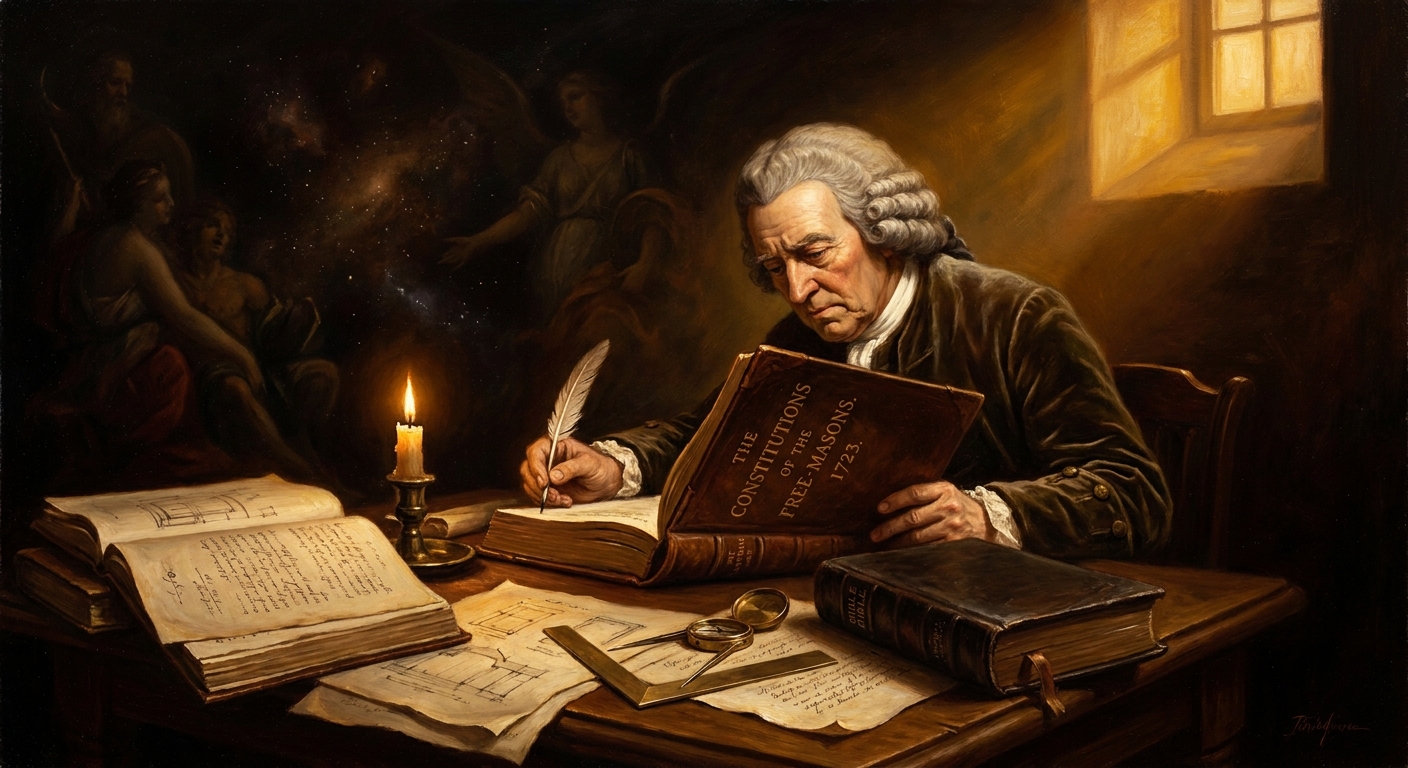
James Anderson, a Scottish Presbyterian minister, was commissioned to compile the order’s foundational text. The Constitutions of the Free-Masons (1723) gave Masonry a (largely fabricated) mythological history descending from Adam through Solomon’s Temple to the medieval guilds, codified the three-degree ritual structure, and stated the religious requirement that has defined Masonry for three centuries: a Mason must “obey the Moral Law” and “never be a stupid Atheist,” but the lodge itself is to be “that Religion in which all Men agree, leaving their particular Opinions to themselves” (Anderson, Constitutions of the Free-Masons, 1723). Belief in a Supreme Being, yes. The specific identity of that Being, no. This was radical for 1723 and has been the source of every subsequent theological objection to the Craft.
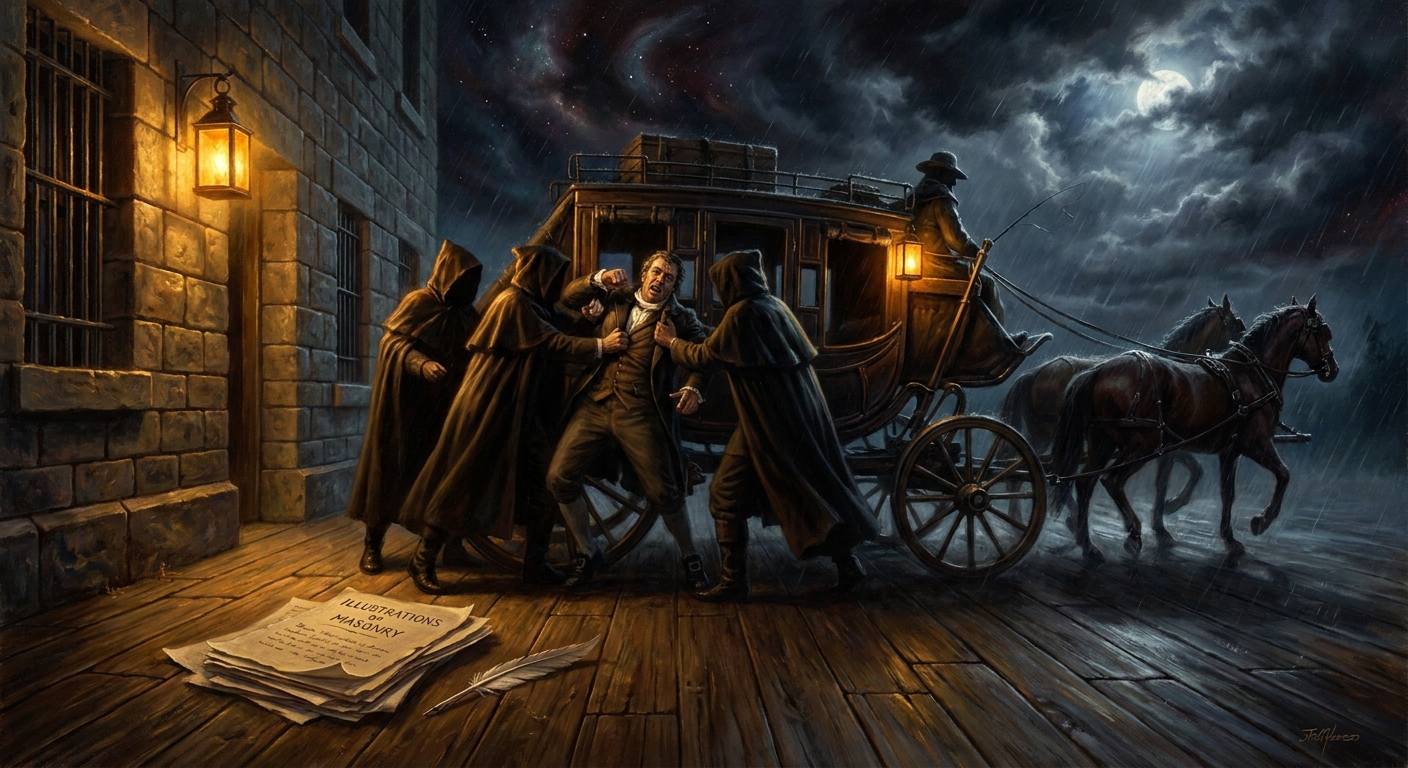
Captain William Morgan of Batavia, New York, announced in 1826 that he would publish a tell-all exposing the Masonic rituals. On 11 September 1826, he was arrested on a flimsy debt charge, bailed by men he didn’t know, and bundled into a carriage heading north (Batavia, NY court records, 1826). He was never seen again. A body washed up on the Lake Ontario shore weeks later; opinion split on whether it was Morgan. Several Masons were tried; sentences were light. The public concluded that Masonry had murdered a whistleblower and walked away. The Anti-Masonic Party was founded in 1828, became the first US third party, ran William Wirt for president in 1832 (he carried Vermont; US election returns, 1832), and forced thousands of lodges to close. American Masonic membership collapsed by perhaps 70% over the next decade. Whether the Craft actually killed Morgan or whether some local hot-heads acted alone has never been resolved.
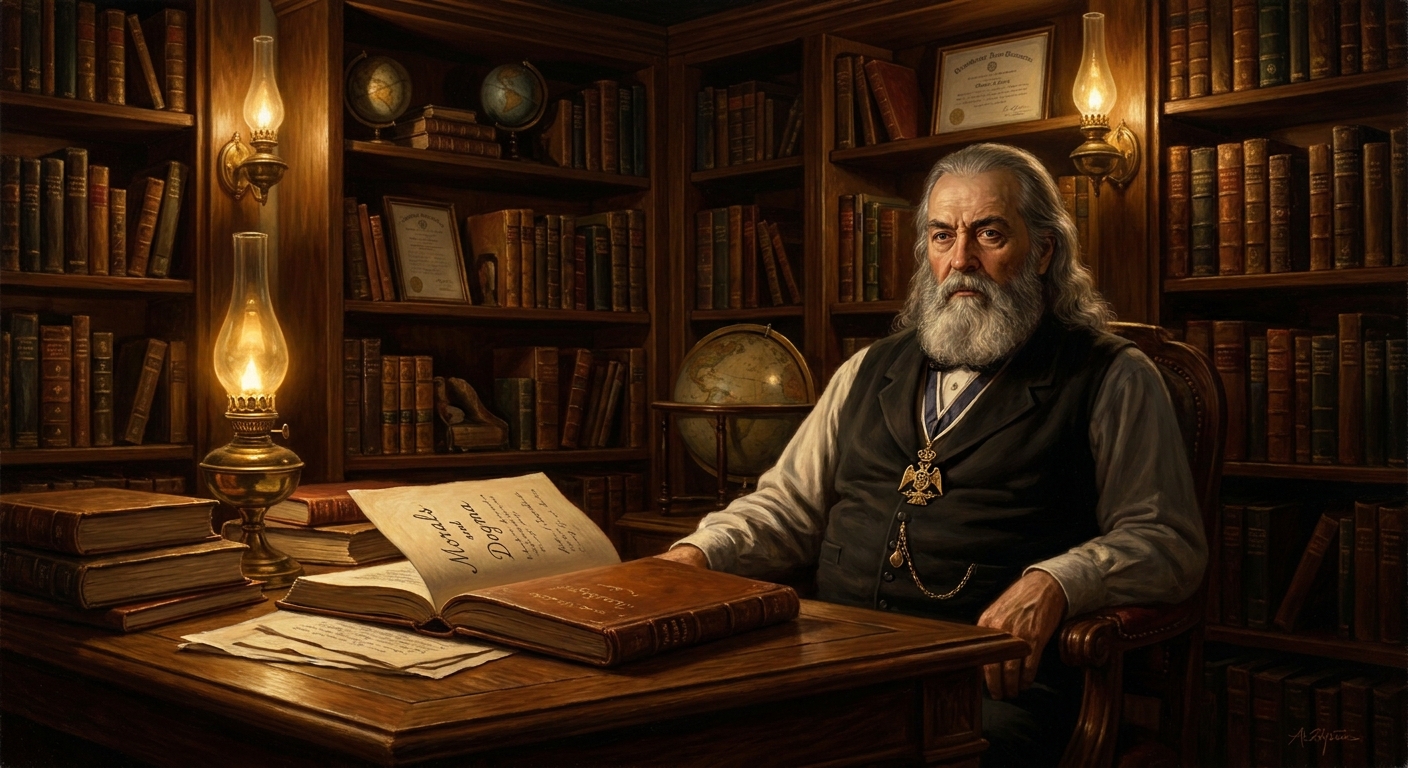
Albert Pike — Confederate general, lawyer, polymath, and Sovereign Grand Commander of the Scottish Rite Southern Jurisdiction — spent three decades rewriting the 4th-through-32nd-degree rituals and produced Morals and Dogma (1871), a sprawling 800-page exegesis of Masonic philosophy drawing on Hermeticism, Kabbalah, classical paganism, and Christian mysticism (Pike, Morals and Dogma of the Ancient and Accepted Scottish Rite, 1871; Scottish Rite SJ archives). Conspiracy theorists love to misquote it; few have read it. Pike’s actual writing is dense, philosophical, and occasionally embarrassing in its 19th-century racial views, but it is not a satanic manifesto. The infamous “Pike letter to Mazzini predicting three world wars,” cited endlessly by conspiracists, is a confirmed forgery from 1925 by the French hoaxer Leo Taxil’s posthumous imitators — the document does not exist in any archive and contradicts everything Pike actually wrote.
Timeline
| Era | Date | Event | Source |
|---|
| Late Medieval | c. 1390 | Regius Poem — earliest Masonic manuscript; craft duties + mythological geometry | British Library MS Royal 17 A.I |
| Late Medieval | c. 1425 | Cooke Manuscript — second-oldest Old Charge | British Library MS Add. 23198 |
| Renaissance | 1598-1599 | Schaw Statutes — Scottish lodge governance regularized | William Schaw, Master of Works to James VI |
| Early Modern | 1600s | Period of Acceptance — non-mason gentlemen begin joining lodges | Edinburgh, London lodge minutes |
| Early Modern | 1646 | Elias Ashmole records his Masonic initiation — earliest dated speculative initiation in England | Ashmole’s diary |
| Enlightenment | 24 June 1717 | Premier Grand Lodge of England founded at the Goose and Gridiron, London | Anderson’s Constitutions; lodge histories |
| Enlightenment | 1723 | Anderson’s Constitutions published; Supreme Being requirement codified | Constitutions of the Free-Masons |
| Enlightenment | 1725 | Grand Lodge of Ireland chartered | Irish Masonic records |
| Enlightenment | 1730s | Spread to American colonies (Boston, 1733; Philadelphia, 1730s) | Provincial Grand Lodge records |
| Enlightenment | 1736 | Grand Lodge of Scotland chartered | Scottish Masonic records |
| Enlightenment | 1738 | Pope Clement XII issues In Eminenti — first Catholic excommunication of Masons | Papal bull |
| Revolution | 1773 | Boston Tea Party — planned at the Green Dragon Tavern, the meeting place of St Andrew’s Lodge | Paul Revere’s papers |
| Revolution | 1776-1791 | American & French Revolutions — significant but not totalizing Masonic involvement | Multiple |
| Federal Era | 18 September 1793 | Washington lays the US Capitol cornerstone in full Masonic regalia | Maryland Grand Lodge records |
| Antebellum | 1826 | Morgan Affair — William Morgan disappears | Batavia, NY court records |
| Antebellum | 1828 | Anti-Masonic Party founded; first US third party | NY political records |
| Antebellum | 1832 | William Wirt runs for president on the Anti-Masonic ticket; carries Vermont | US election returns |
| Civil War | 1861-1865 | Documented incidents of Masons across both sides protecting one another | Multiple regimental accounts |
| Gilded Age | 1859-1891 | Albert Pike rewrites Scottish Rite degrees | Scottish Rite Southern Jurisdiction archives |
| Gilded Age | 1871 | Pike publishes Morals and Dogma | Scottish Rite SJ |
| 20th Century | c. 1959 | Peak US Masonic membership — ~4 million members | Masonic Service Association |
| 20th Century | 1981 | P2 Lodge scandal breaks in Italy; illegal lodge tied to Vatican Bank, Mafia, government corruption | Italian parliamentary inquiry |
| 21st Century | 2000s-present | Slow membership decline; ~1 million US members; persistent conspiracy associations | MSA statistics |
The Three Degrees + Beyond
The basic structure of Masonry is simple, even if the rituals are not. The “Blue Lodge” or “Symbolic Lodge” confers the three foundational degrees:
- Entered Apprentice — the initiate. Symbolically blindfolded, partially undressed, taught the basic working tools (24-inch gauge, common gavel) and the obligations of fraternity.
- Fellowcraft — the journeyman. Taught the seven liberal arts, the Pillars of Boaz and Jachin, the Middle Chamber lecture (geometry, proportion, the meaning of “G”).
- Master Mason — the master. Reenacts the legend of Hiram Abiff; symbolically dies and is raised. This is the highest degree in regular Freemasonry.
Everything beyond the third degree is appendant, not hierarchical. The Scottish Rite offers degrees 4 through 33; the York Rite offers Royal Arch, Cryptic, and Knights Templar degrees. These are not levels of authority over Master Masons — a 33° Mason has no more governance over a lodge than any other Master Mason. The 33° is honorary, conferred for service. The persistent conspiracy claim that the higher degrees are a hidden hierarchy of secret rulers is false. A Past Master in his local lodge has more practical authority than a 33° Sovereign Grand Inspector General visiting from another state.
The numbering of degrees has produced one of the durable sacred numbers of esoteric tradition: 3 (Blue Lodge), 7 (liberal arts of the Fellowcraft degree), 33 (top of the Scottish Rite).
What’s Distinctive
Masonry is a Lodge, not a religion or a church. This distinction is essential. The Lodge is a fraternal society where men of any theistic faith meet “on the level” (a working tool), share meals, perform ritual, conduct charity. It saves no souls, claims no revelation, does not compete with members’ existing faiths—in theory. (In practice, the Catholic Church condemned it in 1738; the objection persists.)
The Craft calls itself a “system of morality, veiled in allegory and illustrated by symbols”—that phrase is the whole game. The morality is unremarkable (be honest, charitable, temperate; don’t cheat). The allegory: the Hiramic legend and Solomon’s Temple as metaphor for building personal character. The symbols: operative masons’ working tools—gauge, gavel, square, compass, level, plumb, trowel—repurposed as moral instruments. Concrete, hands-on, ritualistic ethics. Not mystical ascent.
What makes Masonry reviled by both Catholic traditionalists and conspiracy theorists for opposite reasons is the same feature: non-sectarian theism with rituals. Catholics see a substitute religion obscuring Christ’s uniqueness. Conspiracists see stealth worship. Masons insist it is not a religion—belief in a Supreme Being required, but the lodge specifies and worships none.
The “secret”—supposedly Morgan’s death warrant—is mostly that there is no big secret. The rituals published a hundred times since 1827. Grips and passwords in any bookstore. What stays private: the personal experience of the degrees, which doesn’t translate to text. Anticlimax: the deepest Masonic mystery.
The Conspiracies — A Note
This file does not duplicate Conspiracies.md, where each claim is evidence-ranked on a 1-5 scale. Brief orientation:
Documented (5/5): P2 Lodge in Italy—this is real. Propaganda Due was an illegal Masonic lodge under Licio Gelli operating as a 1970s-80s shadow government, tied to the Vatican Bank scandal, the murder of Roberto Calvi (“God’s Banker”), decades of corruption. P2 was expelled in 1976 and subsequently outlawed. Regular jurisdictions treat P2 as a textbook rogue lodge—exactly what their mechanisms prevent.
Strong basis (4): Bavarian Illuminati was real (1776-1785), documented, with radical Enlightenment aims. Suppressed in nine years, functionally dead 240 years. Present-day Illuminati claims are speculative.
Plausible (3): Masonic influence on the US founding and the Great Seal—the eye-in-triangle and unfinished pyramid have some Masonic resonance but were designed by non-Masons and reflect Enlightenment iconography generally. Several Founding Fathers were Masons; the order was a Enlightenment vector. Falls short of “America as a Masonic project.”
Speculative (2) and Debunked (1): the New World Order, satanic ritual abuse, the Pike “three world wars” letter (confirmed 1925 forgery), the 1980s Satanic Panic. No documentary support.
Summary: Masonry has real corrupt subgroups (P2), real political influence (Enlightenment-era), zero credible evidence for supernatural-conspiracy claims. The documented story is the interesting one.
Cross-Tradition Links
- Symbols.md — Compass & Square, All-Seeing Eye, Pillars (Boaz & Jachin), Acacia, Apron
- Sacred-Numbers.md — 3 (degrees), 7 (liberal arts), 33 (Scottish Rite degrees)
- Conspiracies.md — P2 Lodge, Bavarian Illuminati, Skull and Bones, Masonic Influence on US Founding, Morgan Affair / Anti-Masonic Party
- Bestiary/Alchemical.md — significant overlap with Hermeticism, Rosicrucianism, and the broader Western esoteric tradition
- Bestiary/Biblical.md — Solomon, builder of the original Temple that the Masonic legend allegorizes; Hiram of Tyre, the historical metalworker who became the legendary architect
 RARE
RARE