Abulafia and the Letters of Fire
Mediterranean world · c. 1270–1291 CE, spanning Castile, Italy, Greece, North Africa, and Sicily · Barcelona, Rome, Sicily, Malta, Comino — the itinerary of a man the rabbinical establishment has driven out of every city he enters
Contents
Abraham Abulafia meditates on the Hebrew alphabet until the divine name reorganizes his consciousness — then attempts to convert the Pope, survives the Pope's death, and sails west claiming the messianic age has begun.
- When
- Mediterranean world · c. 1270–1291 CE, spanning Castile, Italy, Greece, North Africa, and Sicily
- Where
- Barcelona, Rome, Sicily, Malta, Comino — the itinerary of a man the rabbinical establishment has driven out of every city he enters
He is looking for the Lost Tribes.
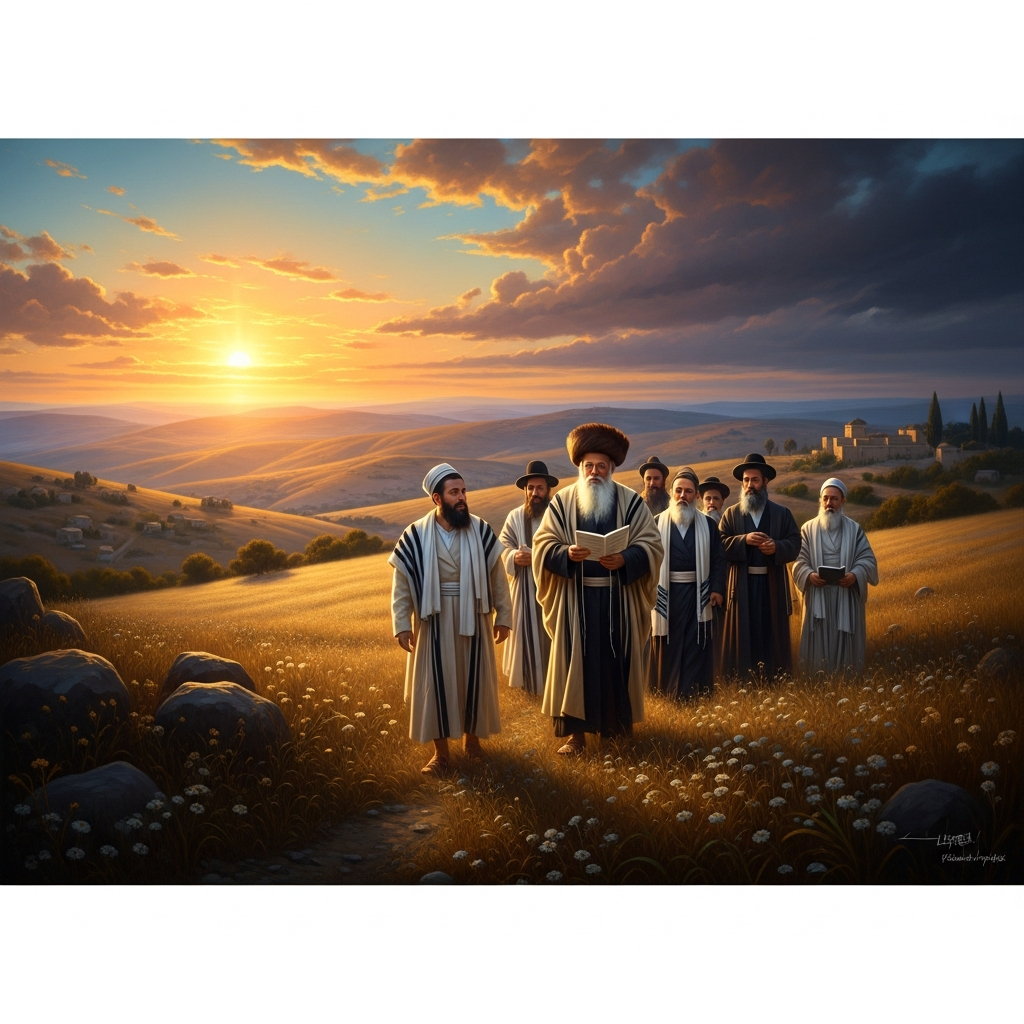
This is where the story begins, in 1260, in the city of Acre on the Crusader coast of Palestine. Abraham Abulafia, twenty years old, has traveled from his birthplace in Zaragoza to find the Sambatyon River — the legendary river that runs six days a week and rests on the Sabbath, behind which the ten lost tribes of Israel live, preserved and waiting. He has brought nothing but a copy of Maimonides and his own certainty that the river exists and can be found.
The Mongols are moving. Acre is not safe. He turns back.
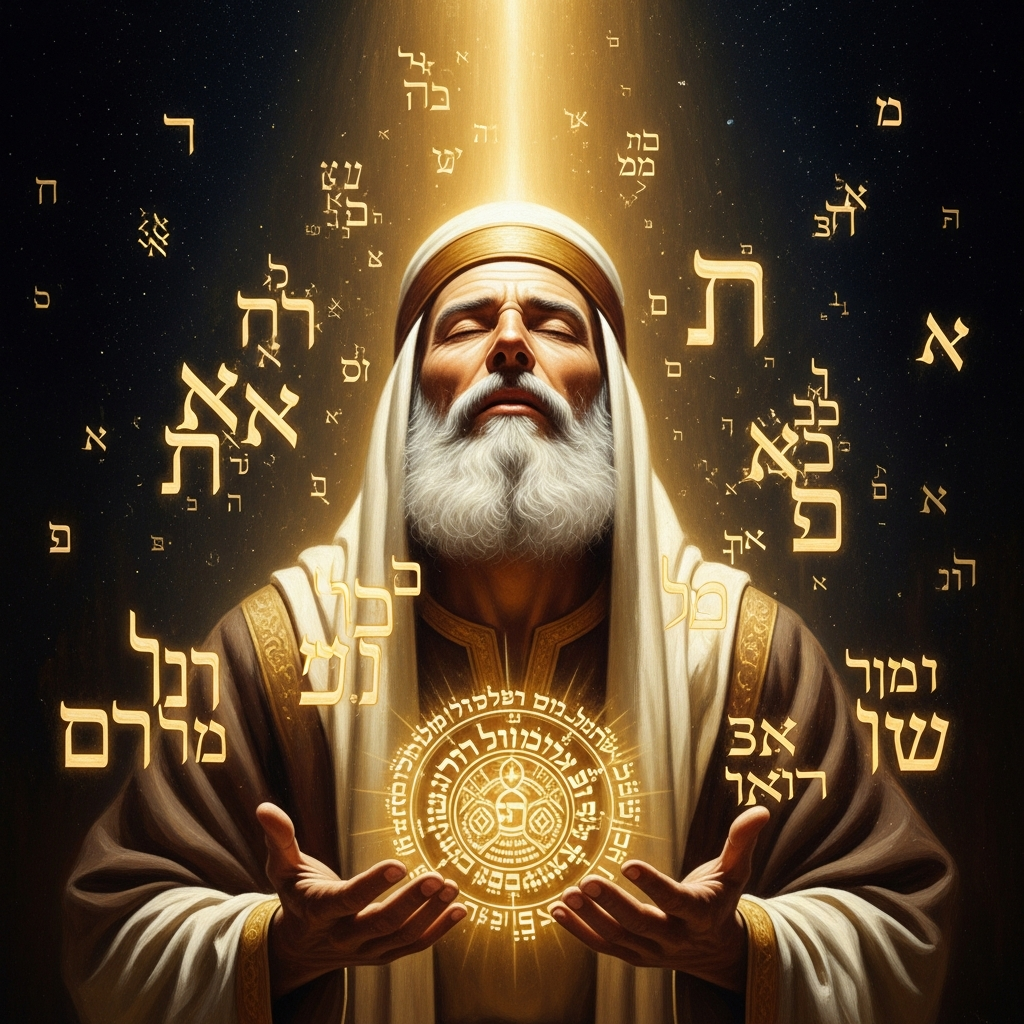
He will spend the next decade in southern Europe — Greece, Capua, Barcelona — and in this decade he discovers something that interests him more than the river: that the Hebrew letters, combined in specific sequences with specific breathing patterns and body movements, can reorganize the mind of the practitioner. He calls this system hokhmat ha-tseruf: the wisdom of letter-combination.
The system works like this.
You take the Hebrew alphabet. Twenty-two letters, each with a numerical value, each associated with a sound, a body location, a direction of breath. You begin combining them — not to produce words, but to move them through the mind the way a musician moves through a scale, until the scale is internalized and the scale begins to play itself. You add breath: specific inhalations and exhalations tied to specific letters. You add movement: the head nodded or tilted or circled according to the vowel-points. You add music: not melody exactly, but the rhythmic chant that the letters generate when combined.
After sufficient practice, something happens.
Abulafia is precise about what happens. He does not describe visions, not exactly. He describes a reorganization of consciousness that he compares — explicitly, in his manuals — to the experience of the Active Intellect, the Aristotelian-Maimonidean term for the highest level of rational emanation from God. The letters are not a code to be decoded. They are a technology to be operated. Operating them correctly produces a state he calls prophecy — the same state, he insists, without qualification or hesitation, that Moses achieved at the burning bush.
The rabbis of Barcelona hear this and ask him to stop.
He continues.
He writes thirty books.
Most of them are manuals: step-by-step instructions for the practice of letter-combination, including warnings for practitioners who advance too quickly, who experience the trembling and the weeping and the sudden heat and the dissolution of the sense of self before they are ready for these things. He writes like a man who has tested every stage personally and is now trying to produce a curriculum from the test results. He writes with the confidence of someone who has been to the place he is describing and is trying to help you get there.
He also writes prophecy. He announces, at various points in the 1270s and 1280s, that he has received communications from the divine level that make his spiritual state equivalent to Moses. This claim — equal to Moses — is not a rhetorical flourish. It is a legal-theological claim about the authority of his teachings. The rabbinical establishment, and specifically the Rashba — Rabbi Solomon ibn Adret of Barcelona, the most powerful halakhic authority in Europe — understands this perfectly. If Abulafia’s claim is valid, his teachings have prophetic authority. If his teachings have prophetic authority, they supersede the Rashba’s. This is not a situation the Rashba finds acceptable.
The condemnation Rashba issues is thorough, and drives Abulafia from every community that respects the Rashba’s authority, which is most of them.
In 1280, Abulafia decides to convert the Pope.
The decision has a logic. He believes that the letter-combination system reveals the unity behind the three Abrahamic faiths, and that a sufficiently advanced practitioner can demonstrate this unity to anyone capable of understanding it. He believes Pope Nicholas III is capable of understanding it. He also believes — and this is the messianic dimension of his project — that the conversion of the Pope would inaugurate a new age. He is not delusional, exactly. He is a man who has experienced something very powerful and drawn very large conclusions from it.
He travels to Rome. He prepares his arguments. He arrives at Soriano nel Cimino, where the Pope is in residence, and announces his intention to seek an audience.
Nicholas III, upon hearing that a Jew has arrived to convert him, orders Abulafia burned if he appears.
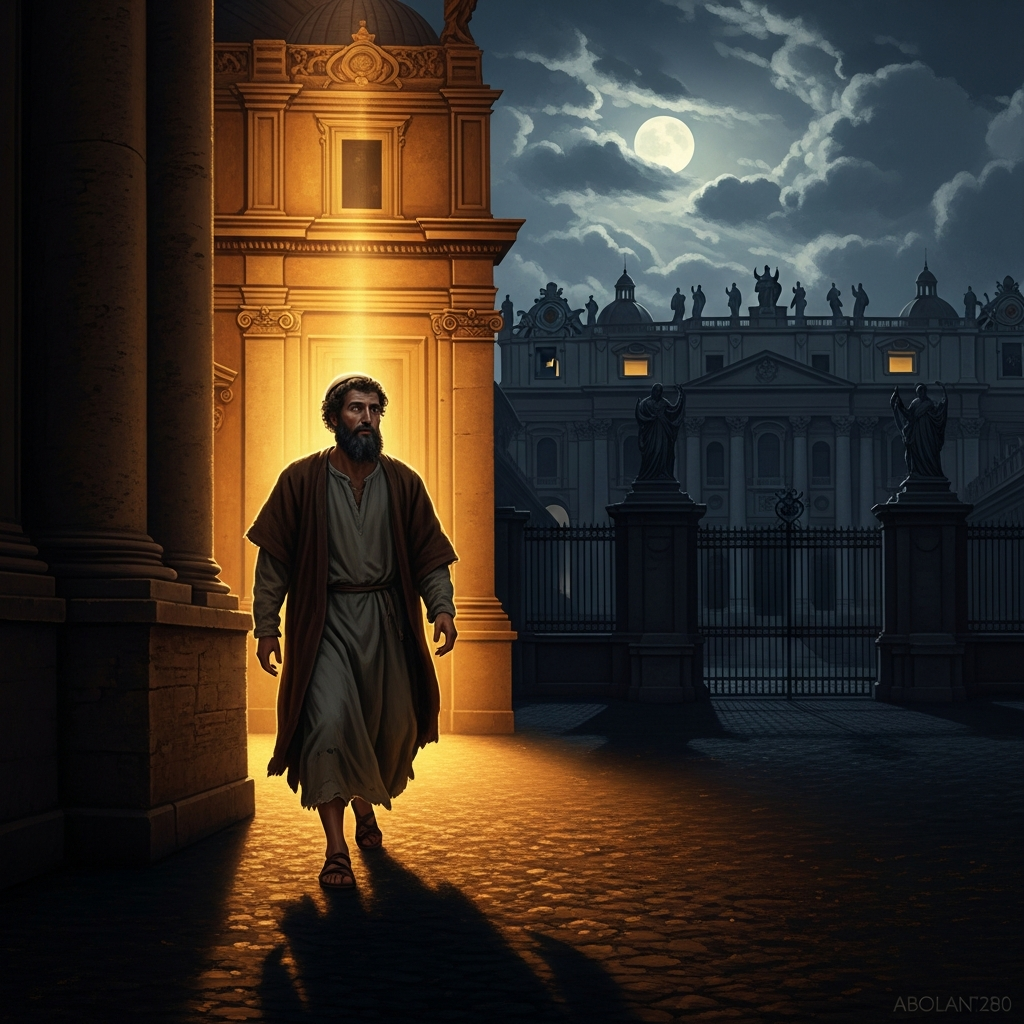
On the night of August 22, 1280, a messenger finds Abulafia at his lodgings. The Pope has died. Of a stroke, in the night. Abulafia is arrested anyway — by whom is unclear — and held for twenty-eight days. He is released without explanation.
He goes out into the Roman night and he does not burn.
He is still going when the Rashba’s letter catches up with him.
The letter — issued in 1290, when Abulafia resurfaces in Messina and begins attracting students again — instructs every Jewish community in the Mediterranean world to refuse him and to regard his messianic claims as fraudulent. This is an extraordinary document: a preemptive excommunication issued by the leading rabbi of Europe against a man on a Mediterranean island who has perhaps two dozen students.
The Rashba is not wrong to be afraid. The students are serious people. They are practicing the letter-combination. They are reporting experiences that match Abulafia’s descriptions. They are drawing the same large conclusions.
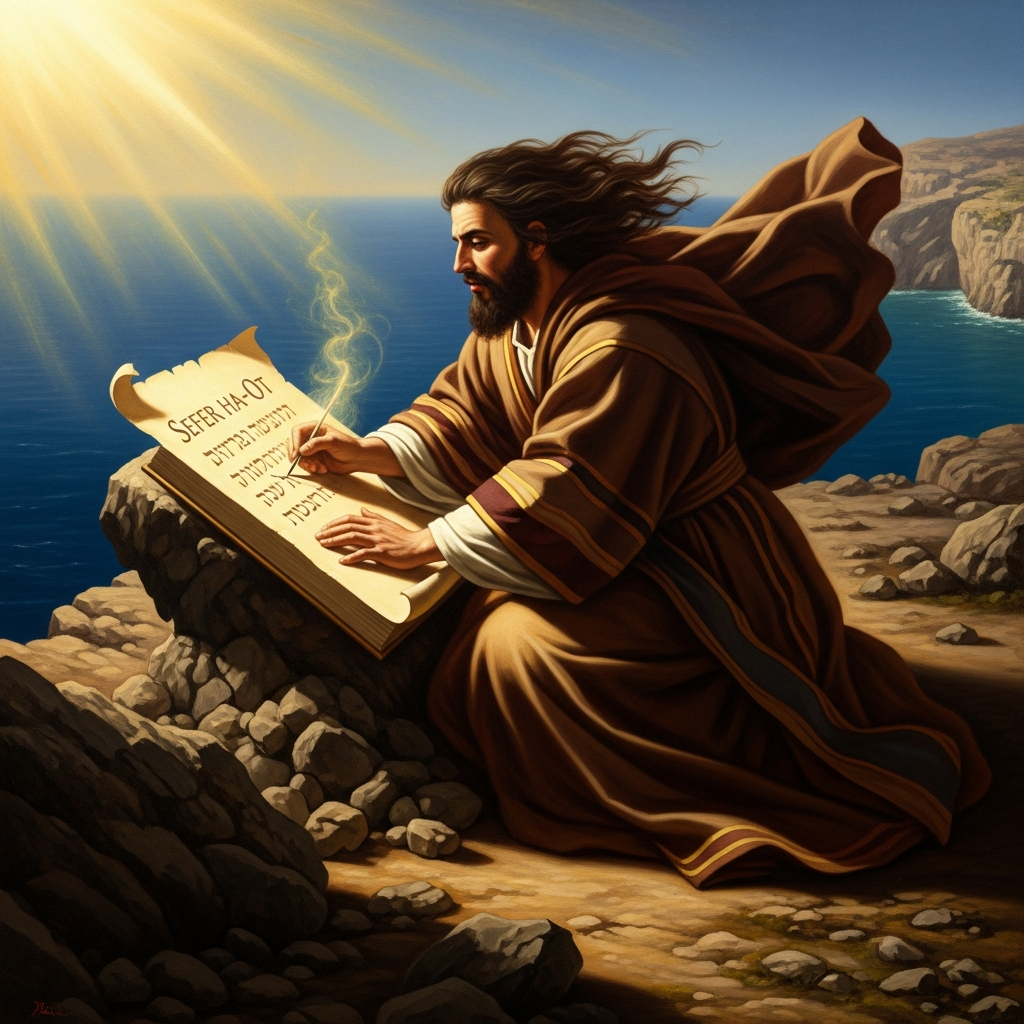
Abulafia retreats to the tiny island of Comino, between Malta and Gozo. It has almost no population. No rabbi has jurisdiction there. He writes his last books there — Or ha-Sekhel, Imre Shefer, the Sitrei Torah — and he writes them as a man who has decided that the argument is over and that the books will either find the right readers or they will not. He announces in these texts that the messianic age has begun. He is sailing west, he says, toward the sources of the tradition.
He disappears from the historical record in 1291.
His books survive in manuscript copies.
They are copied carefully, generation after generation, by people who cannot say they are copying them — the condemnation makes overt study of Abulafia’s work professionally dangerous for any rabbi who respects the Rashba. The manuals circulate without attribution, or with false attribution. Sections appear embedded in other texts. The letter-combination technique is transmitted as a practice without a name.
When the kabbalists of Safed in the sixteenth century develop the systematic Kabbalah that becomes normative Jewish mysticism, elements of Abulafia’s method are present: the emphasis on breath, the attention to the vowel-points, the systematic meditation on divine names. His name is not mentioned. His fingerprints are everywhere.
Christian humanists of the fifteenth century discover the manuscripts and call the whole tradition Cabala — they find Abulafia the most interesting part of it, the part that most resembles their own Neoplatonic philosophy, the part that claims direct access to divine truth through a learnable technique. Pico della Mirandola, Giovanni Reuchlin, and later Johannes Böhme all read material descended from Abulafia’s manuals. The prophetic Kabbalah that the rabbis condemned becomes the version of Kabbalah that Europe knows first.
He went looking for the Sambatyon River and never found it. He found something else: the proposition that the divine name, meditated upon with sufficient precision, does to consciousness what the river does to time — it separates the ordinary week from the day of rest. The letters are the river. The practice is the crossing. He believed he had crossed. The rabbis said he was standing on the wrong bank, mistaking his reflection for the shore. Both things are, in the tradition, accounts of the same river.
Scenes
In the shuttered study in Barcelona, Abulafia sits with the Hebrew alphabet before him — writing, erasing, combining, breath following the movement of the letters until the letters begin to move on their own
Generating art… On the night of the planned audience at Soriano nel Cimino, a messenger arrives at Abulafia's lodgings: the Pope has died
 Generating art…
 On the small island of Comino between Malta and Gozo, condemned by the rabbis and exiled from everywhere else, Abulafia writes his final books and waits for the messianic age he has already announced
 Generating art…
 Echoes Across Traditions
Entities
- Abraham Abulafia
- Pope Nicholas III
- Rashba (Rabbi Solomon ibn Adret)
- Moses Maimonides
- The Active Intellect
Sources
- Moshe Idel, *The Mystical Experience in Abraham Abulafia* (SUNY, 1988)
- Moshe Idel, *Language, Torah, and Hermeneutics in Abraham Abulafia* (SUNY, 1989)
- Elliot Wolfson, *Abraham Abulafia — Kabbalist and Prophet* (Cherub Press, 2000)
- Harvey Hames, *The Art of Conversion: Christianity and Kabbalah in the Thirteenth Century* (Brill, 2000)
- Abulafia, *Or ha-Sekhel* (Light of the Intellect), *Hayyei ha-Olam ha-Ba* (Life of the World to Come), and *Imre Shefer* (Words of Beauty) — his primary manuals