The Ari in Safed
Ottoman Palestine · c. 1570–1572 CE, in the flourishing mystical community of Safed under Ottoman administration · Safed, upper Galilee — a city six thousand feet above sea level, a day's walk from Tiberias and the Sea of Galilee, its air famous for clarity, its streets crowded with kabbalists who had come from Spain, Egypt, and the Levant to rebuild in the shadow of exile
Contents
Isaac Luria arrives in the mystical city of Safed, transforms the whole of Jewish mysticism in two years, and dies at thirty-eight — leaving behind teachings he never wrote, a universe he had re-explained, and a student who spent the rest of his life trying to get it all down.
- When
- Ottoman Palestine · c. 1570–1572 CE, in the flourishing mystical community of Safed under Ottoman administration
- Where
- Safed, upper Galilee — a city six thousand feet above sea level, a day's walk from Tiberias and the Sea of Galilee, its air famous for clarity, its streets crowded with kabbalists who had come from Spain, Egypt, and the Levant to rebuild in the shadow of exile
Moses Cordovero is still alive when Isaac Luria arrives.
This matters because Cordovero is the reigning master of Safed — the greatest systematizer of Kabbalah in the sixteenth century, the man who organized the accumulated centuries of kabbalistic thought into a comprehensive, logically coherent structure. His major work, the Pardes Rimmonim — the Orchard of Pomegranates — is already in circulation. He has students across the Mediterranean world. He is, at the moment Luria arrives from Egypt in 1570, the intellectual center of the most important Jewish community of the age.
Luria is thirty-six years old. He spent his twenties in Egypt studying with Cordovero’s texts, and the preceding decade on an island in the Nile — Gezira in the Delta — alone, meditating, fasting, sleeping on the ground, engaging what the tradition calls hitbonenut: sustained contemplative attention to specific religious problems.
He arrives knowing what Cordovero’s system lacks. He does not say this publicly. He enrolls as a student.
Cordovero dies three months after Luria arrives.
He dies on June 23, 1570 — the 23rd of Tammuz. Luria is present. When they carry the body out, Luria sees, or says he sees, a pillar of fire preceding the bier. This is the language of Exodus — the pillar of fire and the pillar of cloud — the language of divine accompaniment through the wilderness. He tells Chaim Vital what he saw. Vital writes it down.
After Cordovero’s death, Luria does not take his chair. He does not claim the succession. He teaches in his own way, which is to say: in conversation, walking, in small groups, sometimes individually. He does not write treatises. He does not give formal lectures. He gives instructions, responds to questions, and describes what he has seen.
He has seen a great deal.
The central vision has three parts.
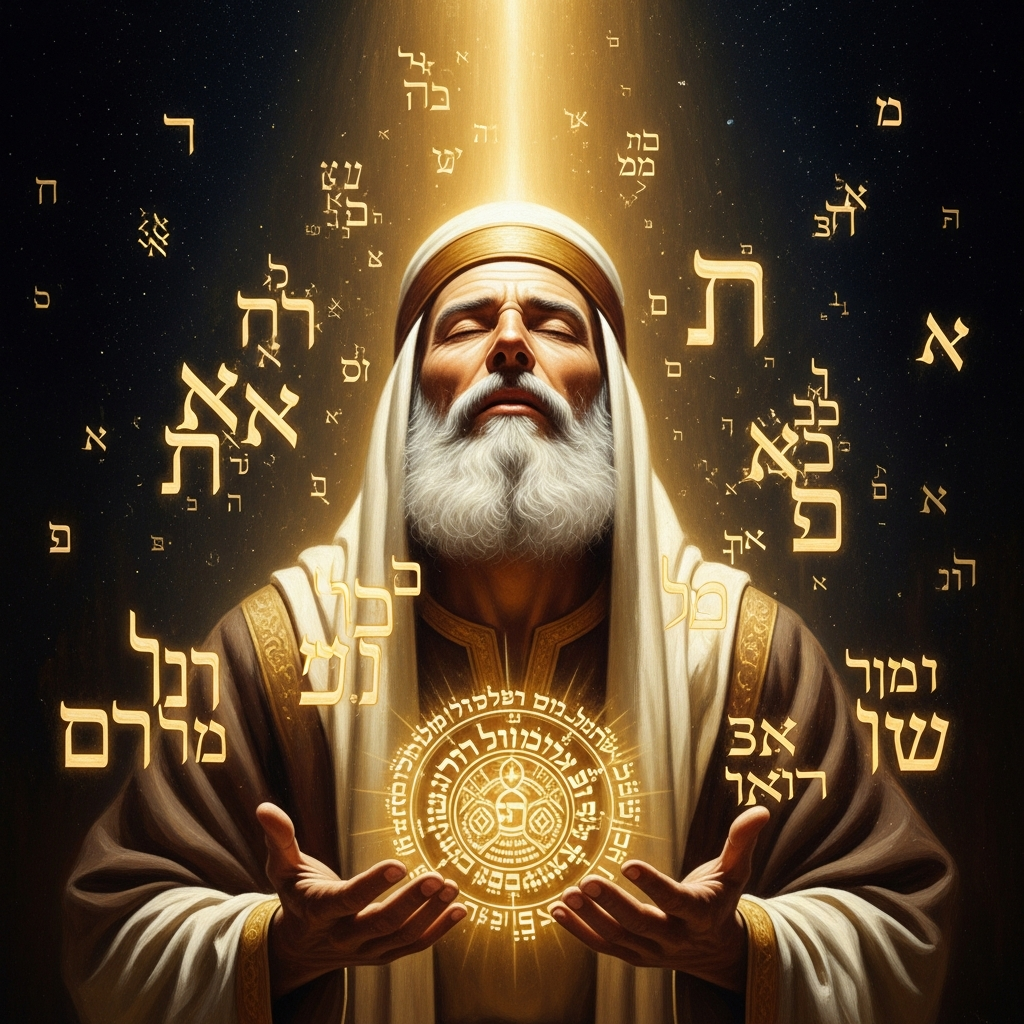
The first: tzimtzum. Before creation, the divine being — Ein Sof, the Infinite, the Without-End — filled everything. Not metaphorically: literally. There was no space for anything that was not God. Creation requires space. Space requires the Infinite to withdraw into itself — to contract, to concentrate, to make a hollow in its own substance within which something other than God can exist. This contraction is tzimtzum. It is the first act, the act before all acts: God making room.
The second: shevirat ha-kelim — the shattering of the vessels. Into the contracted space, divine light pours in ten streams — the ten sefirot, the divine attributes that are the architecture of creation. These streams require vessels to hold them. The vessels shatter. The light scatters. The shards of the vessels fall through the primordial space, and the divine sparks attach to the shards, and both fall into the domain of matter and darkness. This is why the world is the way it is: not because God made it this way on purpose, but because an early catastrophe scattered the divine light into the places where it now hides.
The third: tikkun olam — repair of the world. The scattered sparks can be gathered. The shards can be raised. Every human act performed with consciousness and intention — every prayer, every Torah study, every ethical action, every piece of honest work done with full attention to its sacred dimension — gathers a spark back toward its source. When enough sparks are gathered, the process completes. The vessels are remade. The Messianic age arrives. The work is cosmological. The worker is every Jew, in every moment, for every lifetime.
Chaim Vital follows him like a shadow.
Vital is extraordinary in his own right — a physician, a kabbalist, already a serious scholar before he becomes the Ari’s primary student. But his relationship to the Ari has something desperate in it, something the documents show and that Vital himself records in his dream diary: the fear of missing it. He knows, from the beginning, that the Ari will not write these things himself. He knows that what the Ari says in conversation, in the walk down the hill toward Meron, in the small upstairs room above the street, is the thing that matters and that will vanish if not caught.
He catches everything. He keeps a dream diary — Sefer ha-Hezyonot — that records his own dreams alongside the Ari’s teachings alongside accounts of the Ari’s visionary experiences. He records what the Ari tells him about his previous incarnations. He records the assignments the Ari gives each of his students, based on the Ari’s ability to read the history of each person’s soul. He records arguments. He records the tone of particular evenings.
The Ari, meanwhile, gives his students specific liturgical innovations: a new order of prayer for midnight, a new way of observing the Shabbat that treats each of Shabbat’s three meals as a mystical encounter with the divine presence, a practice of walking in white robes to meet the Shabbat as a bride at the edge of the fields. Solomon Alkabetz has already written Lecha Dodi — the great hymn of Shabbat welcome — and the Ari adopts it and fills it with his cosmology. The Shabbat bride becomes the divine feminine aspect, the Shekhinah returning from exile. The walk to the fields becomes the gathering of the scattered sparks. Every practice becomes a participation in the cosmic repair.
He dies on July 15, 1572 — the fifth of Av.
He is thirty-eight years old. He has been in Safed for twenty-six months. The cause is a plague that kills several people in the city that summer. He dies quickly — no deathbed scene, no final teaching, no last words the tradition preserves as such. He is buried on the hillside above the city, in the same cemetery as Cordovero, in the same cemetery where Joseph Karo and Solomon Alkabetz will eventually join them, the whole mystical circle of Safed assembled underground on the hill above the city they transformed.
Vital spends the next forty years trying to get the system down correctly.
He writes the Etz Chaim — the Tree of Life — a vast, systematized account of Lurianic cosmology. He writes eight gates of the Pri Etz Chaim — the Fruit of the Tree of Life — covering prayer, Torah study, Shabbat observance, the festivals, the commandments, all the territories of Jewish life refracted through the Lurianic system. He guards the manuscripts jealously, because he believes the teachings were given specifically to him and that premature circulation will distort them. Other students of the Ari smuggle copies. When Vital falls ill in 1587 and is unconscious for three days, a group of his fellow students bribe his brother for access to the manuscripts and spend the three days copying as fast as they can.
The manuscripts circulate anyway. They are printed. They become the Kabbalah — definitive, systematic, the framework that every subsequent tradition of Jewish mysticism engages, argues with, or extends.
The Shabbat liturgy the Ari designed is still prayed every Friday night in synagogues that have never heard the word Lurianic.
Lecha Dodi is sung, its words about the Shabbat bride mapping onto a cosmology most of the singers do not know. The midnight prayer service — Tikkun Chatzot — is still recited by the most observant Jews, sitting on the floor in the posture of mourning for the exile of the divine presence. The phrase tikkun olam — repair of the world — has entered secular political language in multiple countries, meaning something like social justice or care for the vulnerable, stripped of its Lurianic context, carrying only the imperative: there is something broken, and it is our job to fix it.*
He was in one city for two years. He died at thirty-eight. He wrote nothing.
The tradition gives the name Ari to Isaac Luria: Aryeh, the lion, but also an acronym: Elohi Rabbi Yitzchak — the divine Rabbi Isaac. The acronym came after the death. During his life, the Ari was a man walking the streets of Safed in white robes, going to meet the Shabbat in the fields, talking. His student followed behind him and caught what he could. The universe had been shattered before the beginning of time, and here was a man in the Galilee explaining exactly how — and, more important, exactly what the shards were for.
Scenes
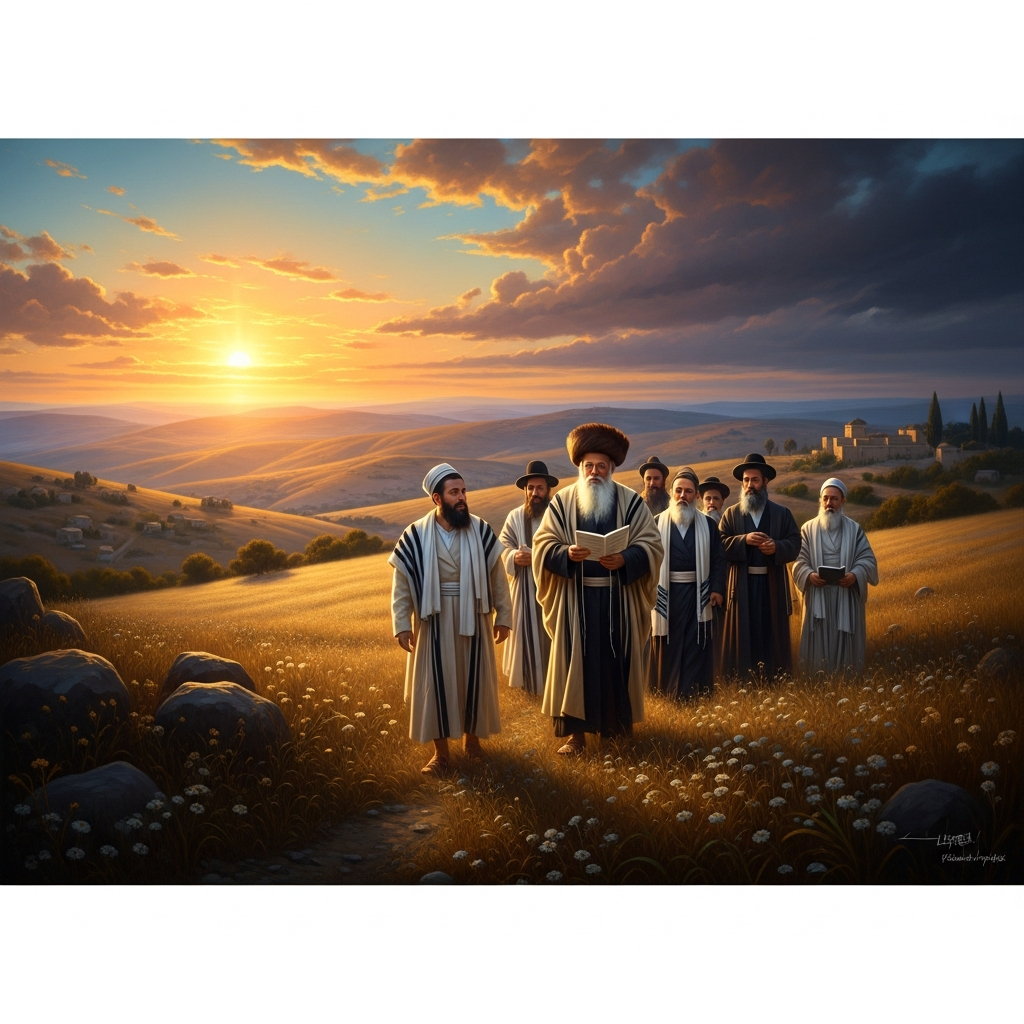
On the slopes above Safed, the Ari walks with his disciples in white Shabbat robes toward the fields, singing Solomon Alkabetz's *Lecha Dodi* — the hymn that greets the Shabbat bride at the moment the sun sets over the Galilee
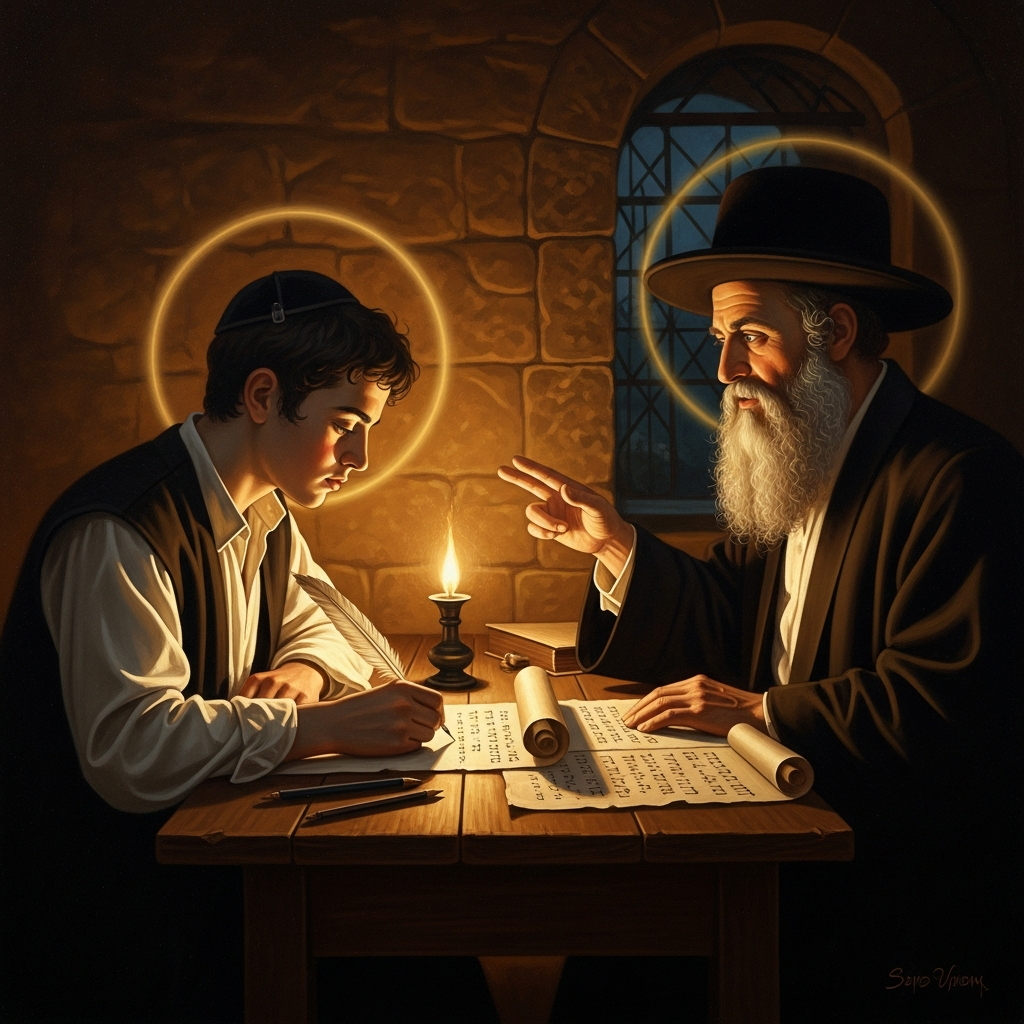
Generating art… In the Ari's upstairs room in Safed, Chaim Vital writes by lamplight as his teacher describes the vessels — the ten sefirot that could not hold the divine light — and the catastrophe of their shattering
 Generating art…
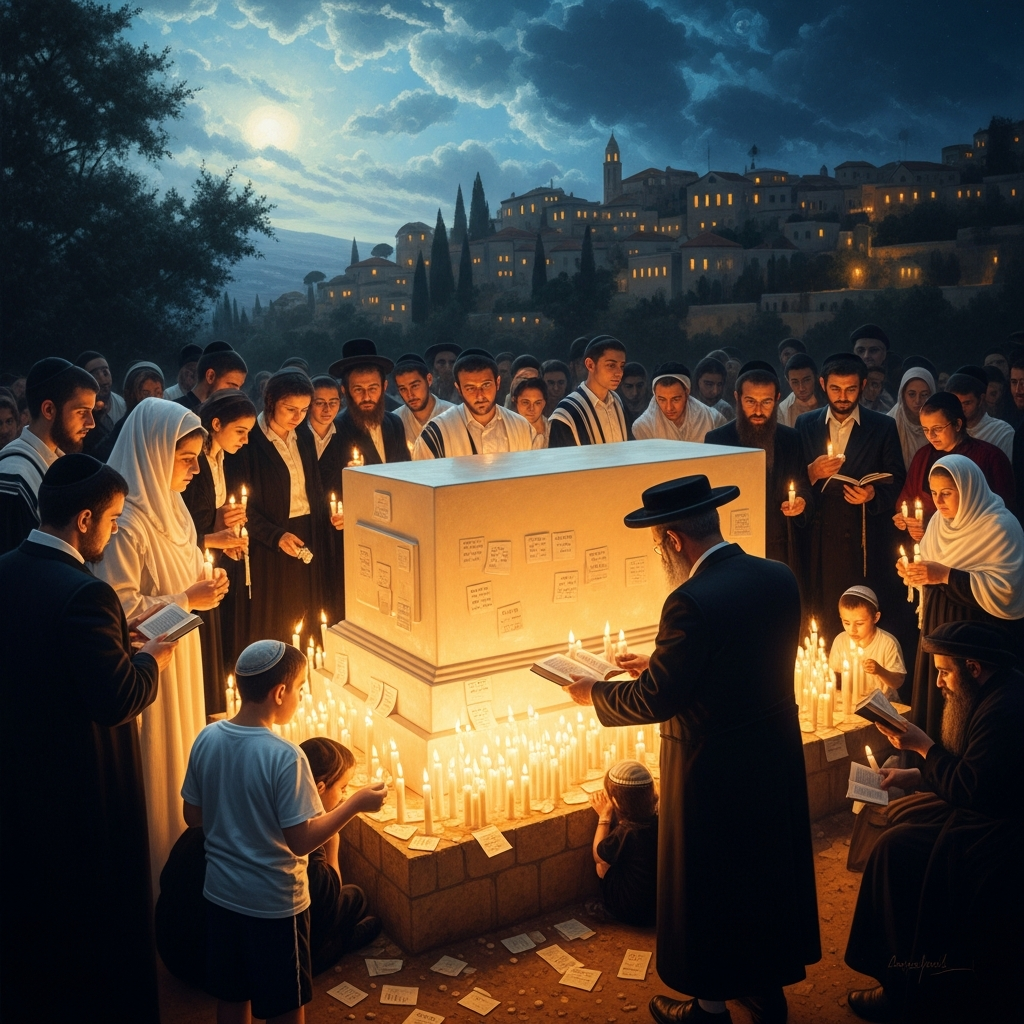
 At the white tomb on the hillside of Safed, pilgrims come in every generation — candles and prayers and small folded notes — to a man who transformed the world in two years and then was gone
 Generating art…
 Echoes Across Traditions
Entities
- Isaac Luria (the Ari)
- Chaim Vital
- Moses Cordovero
- Joseph Karo
- Solomon Alkabetz
Sources
- Gershom Scholem, *Major Trends in Jewish Mysticism* (Schocken, 1941), Lecture 7 — the essential introduction
- Gershom Scholem, *Kabbalah* (Keter, 1974), pp. 128-144
- Lawrence Fine, *Physician of the Soul, Healer of the Cosmos: Isaac Luria and His Kabbalistic Fellowship* (Stanford, 2003) — the definitive biography
- Chaim Vital, *Etz Chaim* (Tree of Life), ed. Jerusalem, 1782 — the primary record of Lurianic Kabbalah
- Chaim Vital, *Sefer ha-Hezyonot* (Book of Visions) — Vital's dream diary, a remarkable document of sixteenth-century Jewish interior life