The Contraction: Isaac Luria and the Space God Made
Safed, c. 1570 CE · Safed, Ottoman Galilee (present-day Israel)
Contents
In Safed in 1570, the Ari — Isaac Luria — teaches his disciples a cosmology so radical it reverses every prior assumption: God did not expand to fill the universe. God contracted. The infinite pulled back into itself to make room for something other than itself. A student tries to understand why the infinite would need to hide from itself, and what it means that the vessels shattered.
- When
- Safed, c. 1570 CE
- Where
- Safed, Ottoman Galilee (present-day Israel)
The student’s name is Hayyim Vital, and he is twenty-eight years old, and he has been in Safed for three months, and he has not yet understood a single thing the Ari has told him.
This is not unusual. Luria teaches by displacement — he gives you a word and then takes it back, gives you an image and then corrects it, leads you to the edge of an idea and then explains why the edge is wrong. The teaching is the confusion. You are supposed to arrive at the limit of what can be said and then sit there, uncomfortable, until the discomfort becomes a different kind of understanding. Vital is not patient by nature. He writes everything down. He suspects the writing is already a mistake.
Tonight Luria has said: before creation, there was only the Ein Sof. Infinite. Without limit, without form, without inside or outside, without before or after. And then God contracted.
Vital has heard the word before. Tzimtzum. Contraction. But he has not understood what it requires you to believe. He asks: contracted into what? There was nothing outside God for God to contract into. If God is infinite, there is no direction in which a contraction could proceed.
Luria looks at him with the particular attention of a man who has been waiting for exactly this question. He says: you have located the difficulty precisely. Now sit with it.
The cosmology Luria is teaching has no precedent in the tradition at the scale he is working.
Earlier Kabbalists — the authors of the Zohar, Moses de Leon, Nahmanides — had described creation as emanation: God radiating outward, light flowing from the infinite source through ten Sefirot, ten divine attributes or vessels, downward into the material world. The metaphor was solar. God at the center, creation at the periphery, everything illuminated by proximity to the source.
Luria inverts it. Before there can be emanation, before there can be vessels, before there can be a world that is other than God, God must first make room. The infinite cannot simply pour itself into a finite world — there is no finite world, there is only God, and God cannot be added to or subtracted from. The precondition of creation is contraction. God must withdraw into itself, pull back from some region of the infinite, leave what the Ari calls the tehiru — the empty space, the primordial void — in which a world can exist without being dissolved back into the infinite from which it came.
The contraction is voluntary. This is the theological weight of the concept. The infinite does not contract because something compels it. Nothing can compel the infinite. The infinite contracts because it chooses to make room for something that is not itself. The tzimtzum is an act of divine self-limitation undertaken for the sake of relationship — so that creation can exist as something genuinely other, not merely as a projection of God onto God.
Vital, writing this down by lamplight, pauses. If God contracted voluntarily, then the empty space is not truly empty — it still contains a residue, a reshimu, a trace of the divine presence that was there before. The void is not absence. It is memory.
Into the tehiru, Luria teaches, God sends a ray of light.
A single thread of the Ein Sof descending through the empty space like a needle through dark cloth. This is the kav, the line, and it is the origin of structure — the first differentiation, the first direction, the first hint of something that is more here than there. Around this line the divine light begins to organize itself into the ten Sefirot, the vessels: Keter, Hokhmah, Binah, and the seven below. Each vessel is meant to contain a portion of the divine light flowing downward from the Ein Sof through the kav.
But the vessels cannot hold what is poured into them.
The upper three — the vessels of the intellect — hold. But the lower seven shatter.
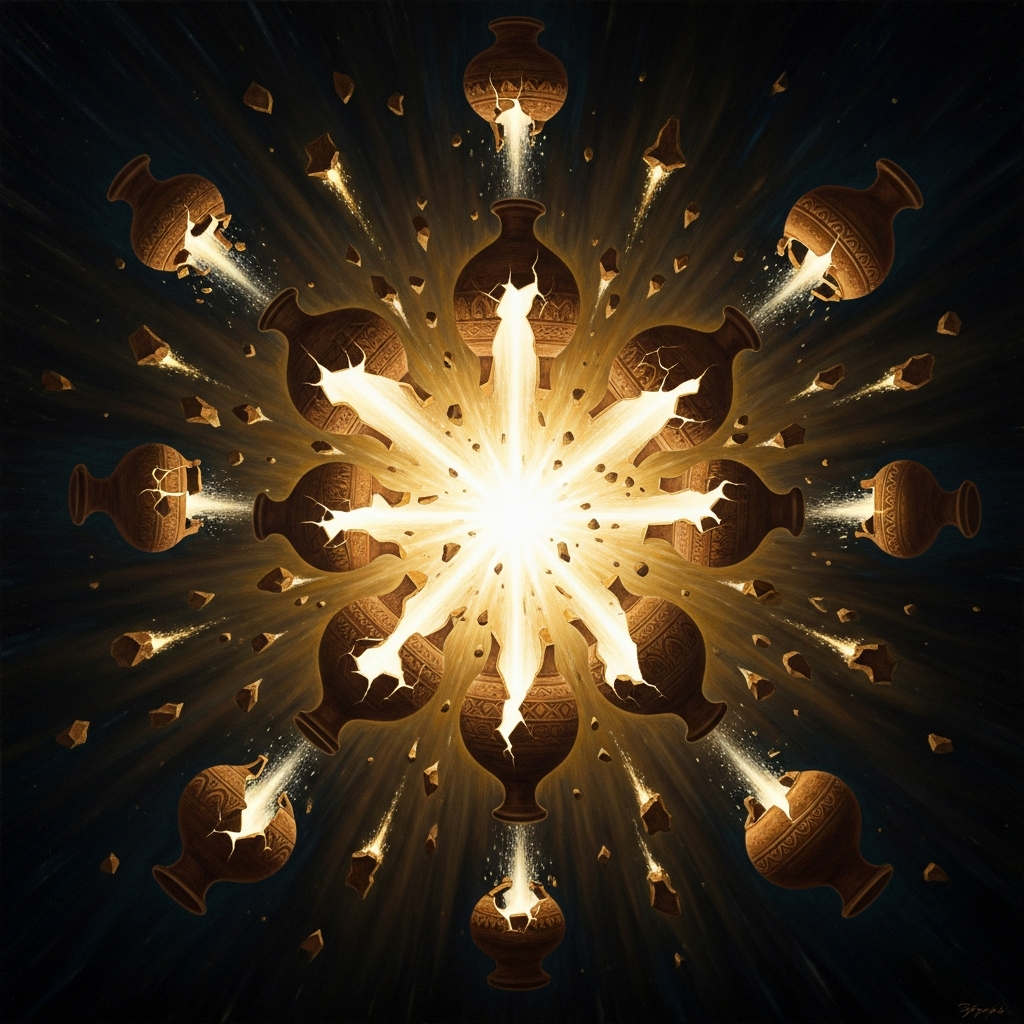
The shevirat ha-kelim. The breaking of the vessels. It is the central catastrophe of Lurianic cosmology, and Luria teaches it not as a mistake but as a necessity. The vessels were not strong enough because they were not designed to be strong enough. The rupture was built into the plan. When the vessels shatter, the divine light they contained does not disappear — some of it returns to the Ein Sof, but some of it, the sparks, the nitzotzot, clings to the shards. The broken pieces fall into the lower worlds and scatter. The world as we know it — material, flawed, shot through with suffering — is constituted by the fallen shards and the trapped sparks they carry.
Vital writes: so evil is not the absence of God. Evil is the fragments of the vessels that shattered because they could not contain God. Evil is what happens when the divine light is imprisoned in forms too small and too broken to hold it.
Luria says: you are beginning to understand.
The question that has been pressing against Vital’s chest since the first lesson is the one he asks now, finally, on a cold night in the courtyard of the Ari’s house, the stars over Galilee very bright and very far: why?
Why would the infinite contract? Why would the vessels be made too fragile to hold the light? Why would the rupture be necessary? The answer cannot be that God miscalculated — the Ein Sof is infinite intelligence, there is no miscalculation. The answer cannot be that God was compelled — the infinite is compelled by nothing. So what is the tzimtzum for? What is the shevirat for?
Luria’s answer is tikkun. Repair.
The world is broken because it was made to be repaired, and the repair is not God’s task but humanity’s. The sparks of divine light scattered in the fallen shards are waiting to be raised. Every act of prayer, of Torah study, of righteous action, of human love conducted with awareness of its divine dimension — each of these lifts a spark from its husk, its kelipah, and returns it to the Ein Sof. The entire history of human life is the history of this retrieval. The Messiah will come not when God decides to send redemption down but when humanity has completed the task of raising the sparks up.
The cosmos is not God’s finished product. It is God’s invitation to participate in completion.
Vital does not sleep much that night.
He lies on his mat and looks at the ceiling and thinks about what it would mean for the infinite to have chosen smallness. To have pulled back. To have made a space — an absence — in the middle of itself, so that something genuinely other could exist. The tzimtzum is not God hiding from the world. It is God hiding from itself, making a room inside the infinite where finitude can breathe.
He thinks about the shards. About the sparks caught in the broken clay. He thinks about the drunk he passed in the market yesterday, shouting at no one, and whether there is a spark in there, and whether ignoring the drunk is a failure of tikkun. He thinks about the corrupt tax collector who cheated his neighbor last month, and whether the spark in that man is more imprisoned than most, and whether prayer on behalf of the corrupt tax collector counts as lifting a spark or merely as naivety.
He gets up before dawn and begins writing. He will spend the rest of his life writing down everything Luria taught, in notes and treatises and commentaries, because the Ari refuses to write anything himself — because the Ari believes that every written version of this teaching will be misunderstood, and that the misunderstanding is also, somehow, part of the plan.
The stars are still out when Vital’s lamp comes on. In the east, the first suggestion of the Galilean dawn. In Vital’s notebook: the word tzimtzum, written at the top of a new page, with space below for everything he does not yet understand.
The Lurianic system Vital preserved became the dominant form of Kabbalah within a generation of Luria’s death in 1572. Its influence on Hasidism, on Sabbateanism, and eventually on modern Jewish theology of the Holocaust is total. When Elie Wiesel and Emil Fackenheim and Hans Jonas tried to think about Auschwitz in theological terms — about how God could be present in that place, or absent, or whether the categories of presence and absence still applied — they were working, consciously or not, within a framework Luria built in Safed in the decade before his death at thirty-eight.
The tzimtzum does not explain suffering. It does something more honest: it makes suffering the site of the divine, and repair the only adequate response. The sparks are there. The question is whether you will look for them.
Scenes
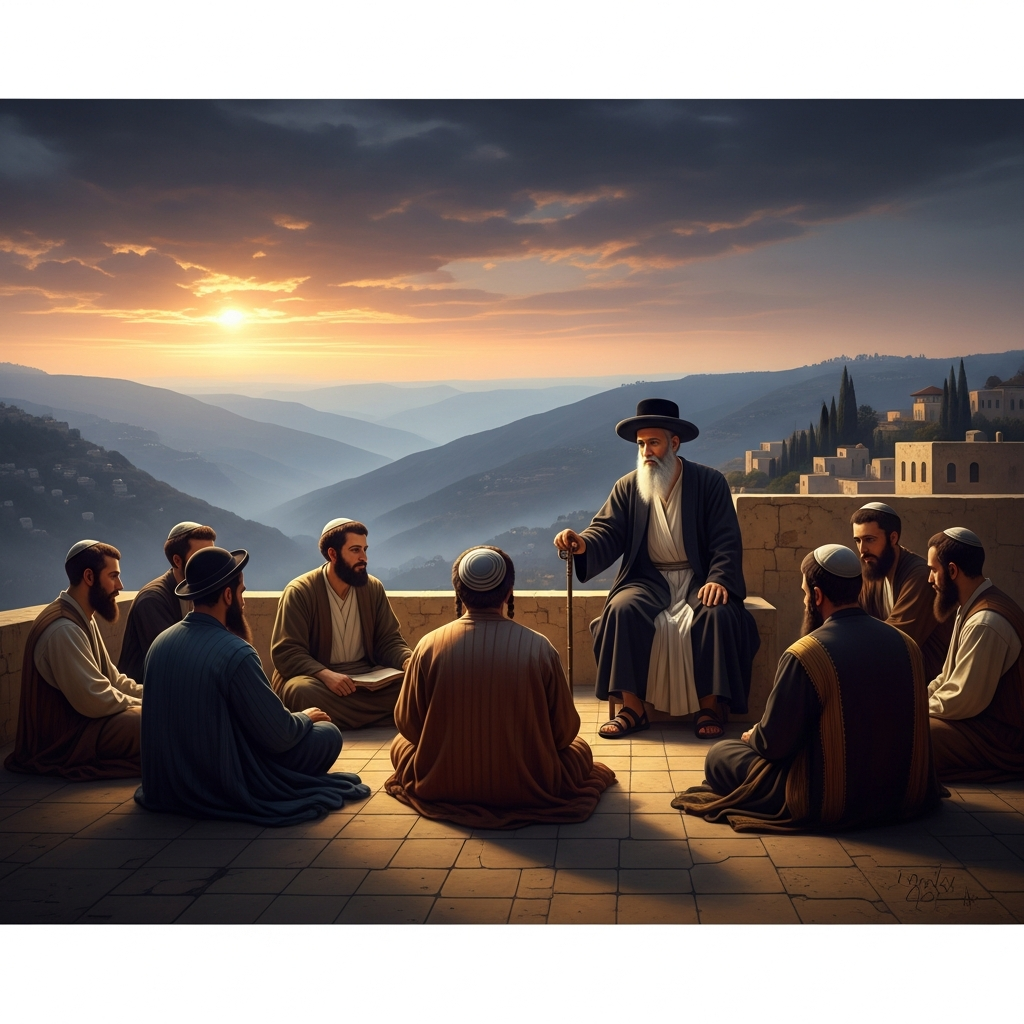
Isaac Luria on a rooftop in Safed at dusk, the Galilean hills behind him fading into haze, his disciples seated in a half-circle
 Generating art…
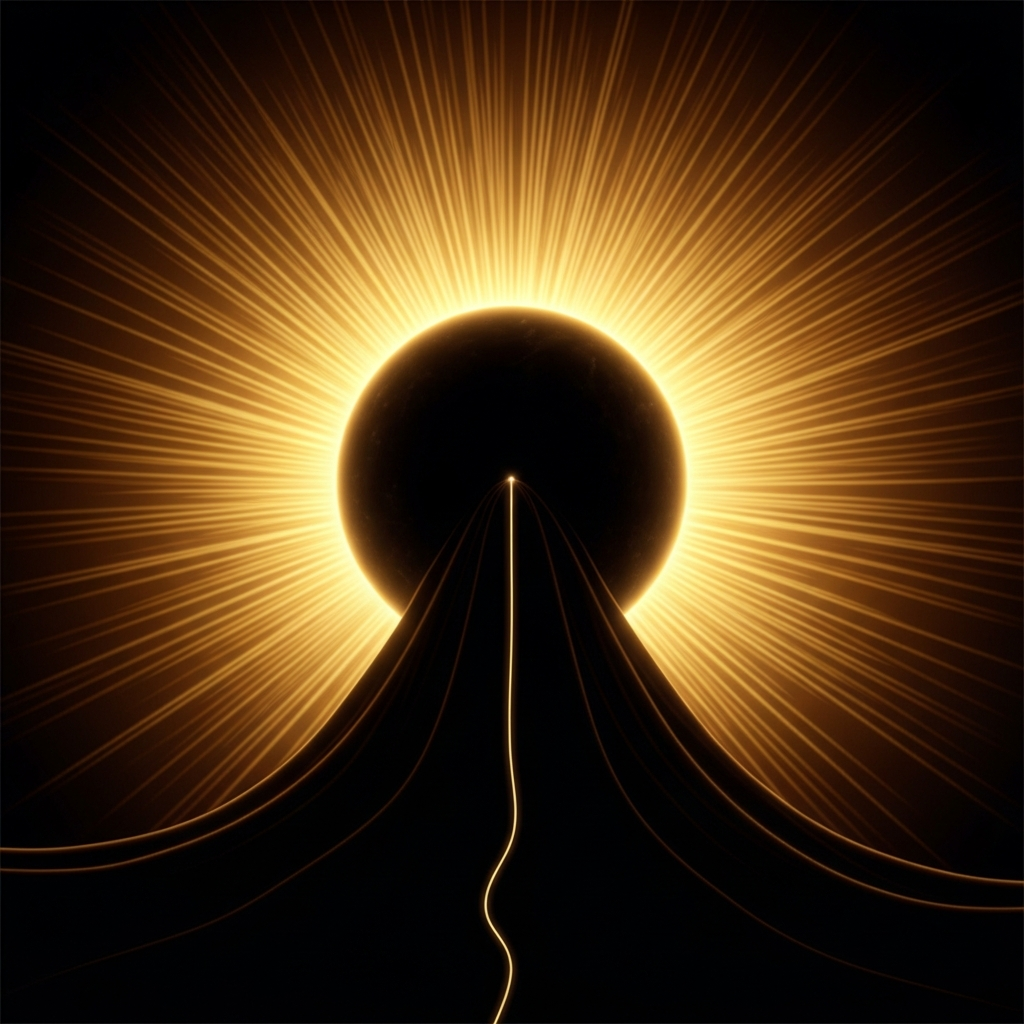
 A visualization of the tzimtzum: infinite golden light drawing inward from every direction, leaving at its center a dark sphere — the tehiru, the empty space — within which a single thread of divine light descends like a needle through black cloth
 Generating art…
 The ten vessels of the Sefirot at the moment of rupture — light blazing through cracked clay, shards suspended in darkness, each fragment trailing a spark that does not go out
 Generating art…
 Echoes Across Traditions
Entities
- Isaac Luria
- the Ein Sof
- the Sefirot
- the Shevirat Ha-Kelim
- the Nitzotzot
Sources
- Gershom Scholem, *Major Trends in Jewish Mysticism* (Schocken Books, 1941)
- Lawrence Fine, *Physician of the Soul, Healer of the Cosmos: Isaac Luria and His Kabbalistic Fellowship* (Stanford University Press, 2003)
- Moshe Idel, *Kabbalah: New Perspectives* (Yale University Press, 1988)
- Isaiah Tishby, *The Wisdom of the Zohar*, trans. David Goldstein (Oxford University Press, 1989)
- Elliot Wolfson, *Through a Speculum That Shines: Vision and Imagination in Medieval Jewish Mysticism* (Princeton University Press, 1994)