Marinette Bois-Chêche and the Night of August 22
August 14–22, 1791 CE · Bois Caïman, northern Saint-Domingue (now Haiti)
Contents
Marinette Bois-Chêche, the fierce Haitian Petro lwa of bone and fire, is present at the ceremony at Bois Caïman on August 14, 1791, that precedes the Haitian Revolution. A pig is sacrificed. Blood is drunk. The fire is lit that will not go out for thirteen years. What Vodou asked of those who drank, and what it gave.
- When
- August 14–22, 1791 CE
- Where
- Bois Caïman, northern Saint-Domingue (now Haiti)
The night before it begins, they gather in the forest.
The date the historians argue over — August 14 in most accounts, the night of August 22 in others; the discrepancy matters less than the fact — is 1791, in the colony of Saint-Domingue, which is the western third of the island of Hispaniola and which produces, with roughly 500,000 enslaved people in conditions of extraordinary violence, approximately forty percent of Europe’s sugar and fifty percent of its coffee. The colony is the most profitable in the Atlantic world. It is also the most brutal. Life expectancy for an enslaved person newly arrived from Africa is seven years.
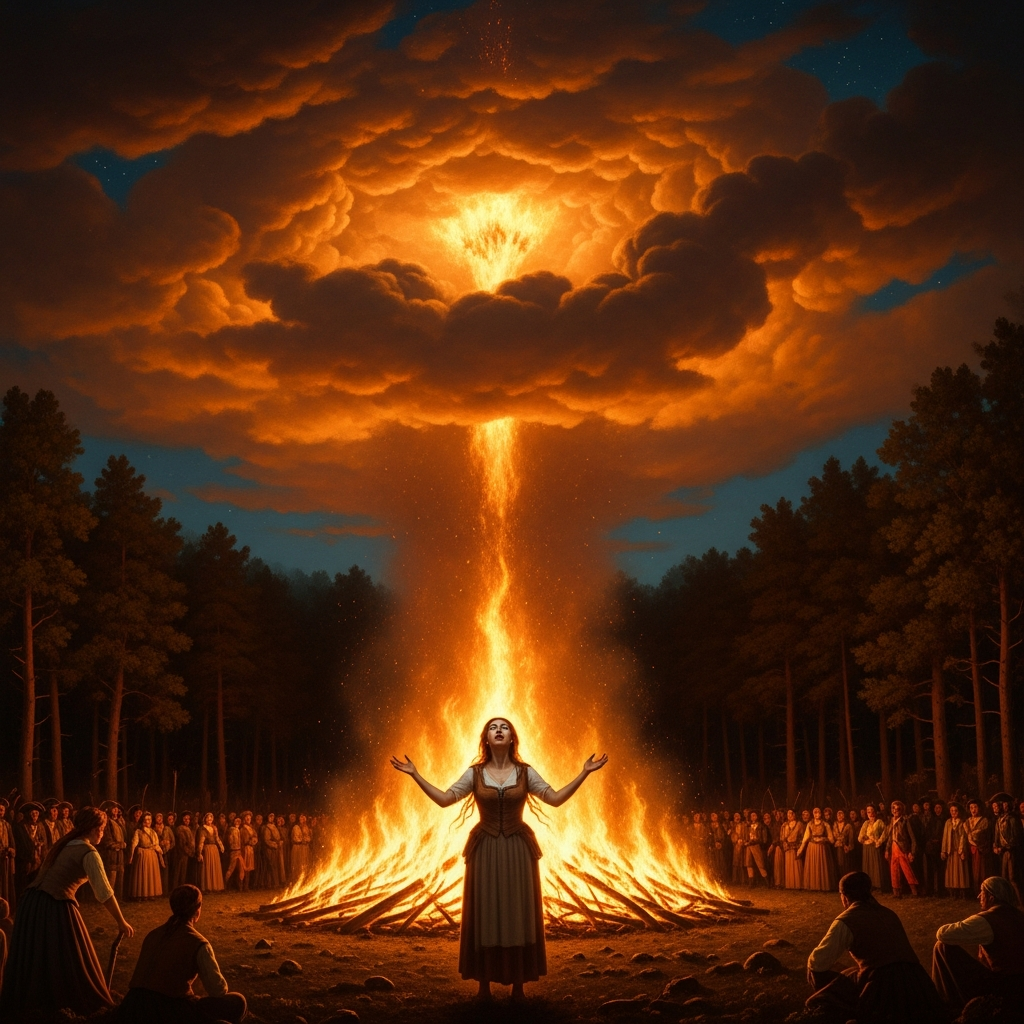
They gather in the forest at a place called Bois Caïman — alligator wood, the name given to a stretch of the Morne Rouge mountains where the trees grow dense and the plantation owners do not go at night. Hundreds of people. The accounts written afterward — by people who were not there, who heard accounts from people who heard accounts — disagree on the details. They agree on the fire. They agree on the pig. They agree on the woman at the center of it, possessed, speaking in a voice that is not hers.
The lwa who speaks through her is Marinette Bois-Chêche.
Marinette is a Petro lwa. This requires explanation.
Vodou divides the lwa into nations — families of spirits with different temperaments, different colors, different relationships to the living. The Rada lwa came from Dahomey and Yorubaland, the older nations, and they are generally benevolent, cool, blue and white, the water spirits and the ancestor spirits and the great protectors. The Petro lwa are different. They are fire spirits. They are the spirits of the New World — born, the tradition holds, from the specific violence of the colony, from the heat of the sugar mills and the cruelty of the whip and the extraordinary psychic pressure of people who have survived conditions designed to destroy them. They are red and black. They are rum and gunpowder. They are invoked for things the Rada cannot help with, the things that require a force that has nothing gentle left in it.
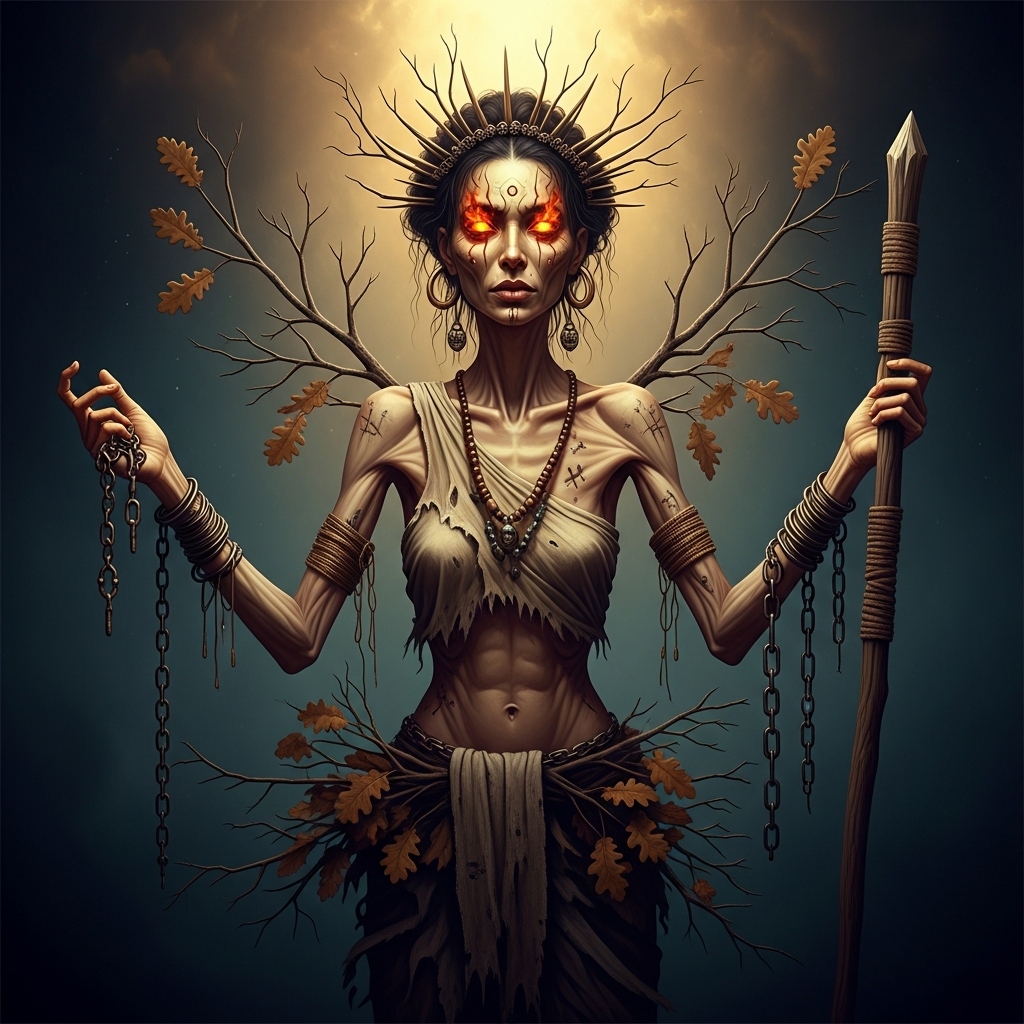
Marinette is among the most fierce. Her name — Bois Chêche, dry wood — describes her: stripped of all moisture and softness, reduced to the essential, the thing that burns hottest and longest because it has been dried by everything that has happened to it. She is associated with chains — she is sometimes depicted wearing them — because she is the lwa of people who are in chains and who have decided, despite the chains, to do the one thing the chains cannot prevent: to act.
She does not appear often in the Vodou liturgy. She appears when the situation requires what she is, which is: the bottom of something, the last remaining thing, the force that has survived after everything that could be taken has been taken. The enslaved people of Saint-Domingue, in August 1791, are in exactly that situation.
The ceremony at Bois Caïman is not a spontaneous uprising. It is a planned meeting. Boukman Dutty, who is a Vodou houngan — a priest — and also a slave overseer at the Clément plantation and also a man with a network of contacts across the northern plantations that has been building for months, has convened this meeting. Cecile Fatiman, who is a mambo — a Vodou priestess — is there. The leaders of the revolt that will begin on the night of August 22 are there. They are there because a revolution requires a beginning, and a beginning requires a ceremony, and the ceremony is not decoration.
The pig is killed. The blood is caught in a vessel. People drink. This is not a metaphor for commitment. It is commitment made physically real, made into something that lives in the body rather than only in the mind, something you cannot simply revise later because you felt differently in the morning. You have put the blood of the ceremony inside you. The ceremony is now inside you. When you act, you act as someone who has made this covenant physically.
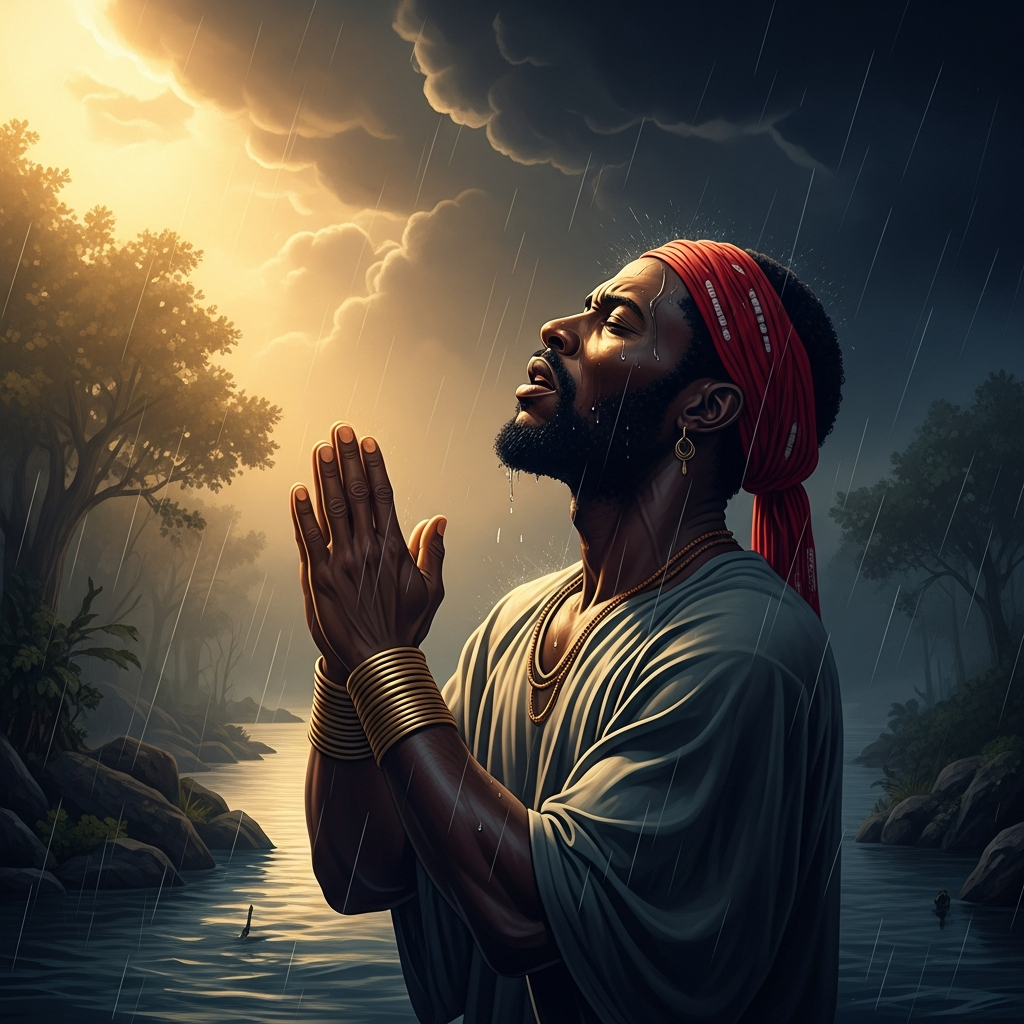
Boukman’s prayer, as it is remembered and reconstructed — remembered imperfectly, from testimony given years later, some of it to people who wanted to suppress it — addresses not the Christian God of the plantation owners but a different god: Listen to the voice of liberty that speaks in the heart of all of us. Some versions include: The god who created the sun that gives us light, who rouses the waves and rules the storm, though he is hidden in the clouds, he watches us. He sees all that the white does. The god of the white man inspires him with crime, but our god calls upon us to do good works. Our god who is good to us orders us to revenge our wrongs. He will direct our arms and aid us.
The storm breaks. The rain comes down. The fire remains.
Marinette Bois-Chêche does not appear in the European accounts of what happens next. The European accounts of what happens next are interested in military movements, in the sequence of plantation fires, in the progress of Boukman’s army and then of Toussaint’s army and then of the French and British and Spanish armies and then of Toussaint again. They are not interested in the theological infrastructure of the revolution because they do not understand Vodou and because acknowledging that an enslaved population conducted a successful revolution partly on the basis of a coherent theological system would require acknowledging that the enslaved population had a coherent theological system, which would require acknowledging a great deal else.
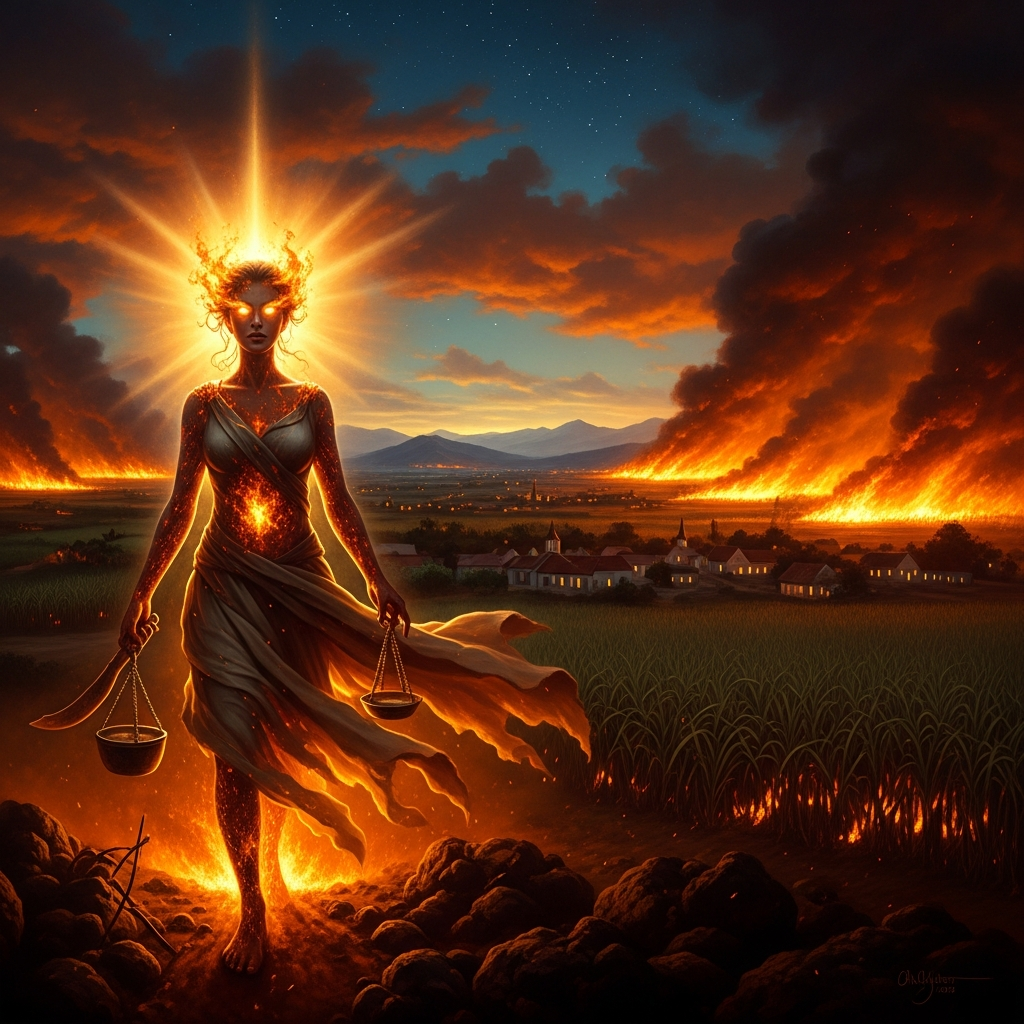
Marinette is present in the fires. This is what the Haitian tradition says. Every plantation fire that burns in the night of August 22, 1791 — the fires that are visible from the harbor at Cap-Français, that turn the sky orange in eight directions, that the plantation owners can see from their windows and that tell them before any report arrives that something has happened that will not be stoppable — every one of those fires is also the fire at Bois Caïman, still burning. She is the fire that does not go out.
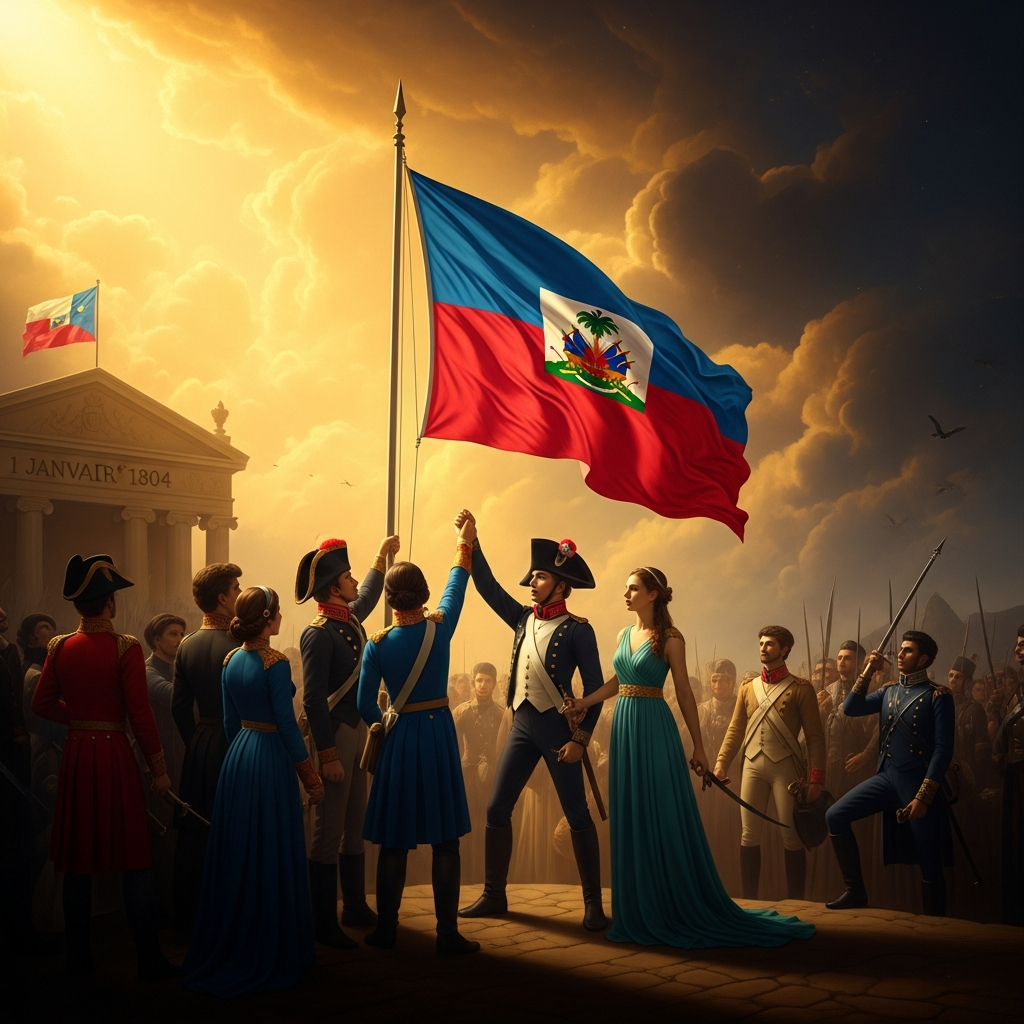
The revolution takes thirteen years. It requires defeating the armies of France, Britain, and Spain. It requires surviving the reimposition of slavery by Napoleon’s forces and surviving it again. It requires the death of Toussaint L’Ouverture in a French prison in 1803 and the continuation of the revolution without him. It requires the final battle of Vertières and the declaration of January 1, 1804, when the new nation takes the Taino name for the island: Haiti.
The ceremony at Bois Caïman is what the revolution asked before it asked anything else. It asked for a covenant. It asked for something that you put in your body and therefore could not separate from yourself — the blood of the sacrifice, the fire of Marinette, the commitment made before the lwa who has been stripped of everything and is therefore incapable of pretense.
What it gave in return was not victory. Thirteen years of war does not feel like a gift. What it gave was the thing that makes collective action possible: the sense that you are not alone in this, that the action is not only yours, that the lwa are present and have accepted the blood and are therefore party to the covenant and will not abandon those who keep it. Marinette, invoked in fire, stays in the fire. The people who drank the blood carry the ceremony in their bodies for the duration.
Whether this is theology or psychology or both simultaneously is a question that Haitian Vodou finds uninteresting, because the question presupposes that theology and psychology are different things. In Vodou, the lwa live in the body. The ceremony changes the body. The changed body acts. The action changes the world. The division between spiritual and material is not a Vodou division.
The ceremony at Bois Caïman is remembered in Haiti as the founding moment — not the declaration of independence, not the battle of Vertières, but the night in the forest before the fires, the pig, the blood, the storm, the woman speaking in a voice that was not hers. This is what Haitian theology knows that European historiography still argues about: the revolution was possible because the people who made it believed they were not making it alone. Marinette was in the fire. The fire did not go out. The names of those who drank are not all recorded. They are recorded in the fact of the country that exists.
Scenes
The ceremony at Bois Caïman, August 14, 1791: a clearing in the forest, hundreds of people, a fire so large it illuminates the clouds from below
 Generating art…
 Marinette Bois-Chêche in her spiritual form: thin to the point of bones visible beneath skin, wearing rags and chains and branches of dry oak, her eyes burning with something that is not human fire
 Generating art…
 Boukman Dutty in the storm, his face upturned, the rain beginning, leading the prayer that calls on the god of the enslaved who lives in the forest and on the water — the prayer that will be remembered as the beginning
 Generating art…
 The night of August 22, 1791: the plantation fires visible for miles, the sky orange in eight directions
 Generating art…
 January 1, 1804: the flag raised in Gonaïves, the independence declared, the new nation named for the indigenous Taino word for the island
 Generating art…
 Echoes Across Traditions
Entities
- Marinette Bois-Chêche
- Boukman Dutty
- Cecile Fatiman
- the Petro lwa
Sources
- C.L.R. James, *The Black Jacobins: Toussaint L'Ouverture and the San Domingo Revolution* (Secker & Warburg, 1938)
- Joan Dayan, *Haiti, History, and the Gods* (University of California Press, 1995)
- Karen McCarthy Brown, *Mama Lola: A Vodou Priestess in Brooklyn* (University of California Press, 1991)
- Laurent Dubois, *Avengers of the New World: The Story of the Haitian Revolution* (Harvard University Press, 2004)
- Leslie G. Desmangles, *The Faces of the Gods: Vodou and Roman Catholicism in Haiti* (University of North Carolina Press, 1992)