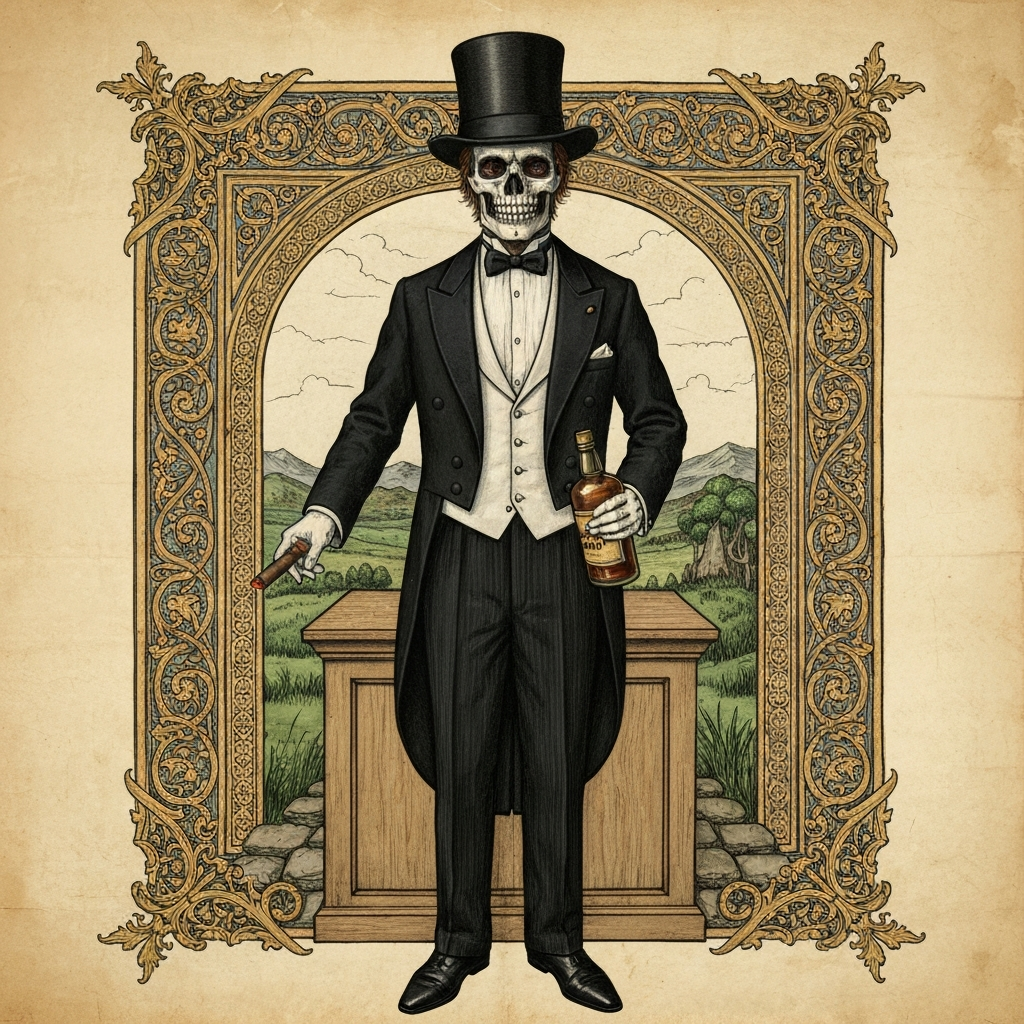
Baron Samedi at the Cemetery Gate
c. 1750 CE–present (Vodou lwa, active) · Port-au-Prince, Haiti; the crossroads between the cemetery and the market
Contents
Baron Samedi, the Haitian Vodou lwa of death, resurrection, and obscene humor, stands at the gate between the cemetery and the market in Port-au-Prince. A gravedigger who has buried three children in a single month encounters him there. The theology of death as a clown who is also absolutely final.
- When
- c. 1750 CE–present (Vodou lwa, active)
- Where
- Port-au-Prince, Haiti; the crossroads between the cemetery and the market
The gravedigger’s name is Jean-Baptiste Moreau, and he has buried three children in a single month.
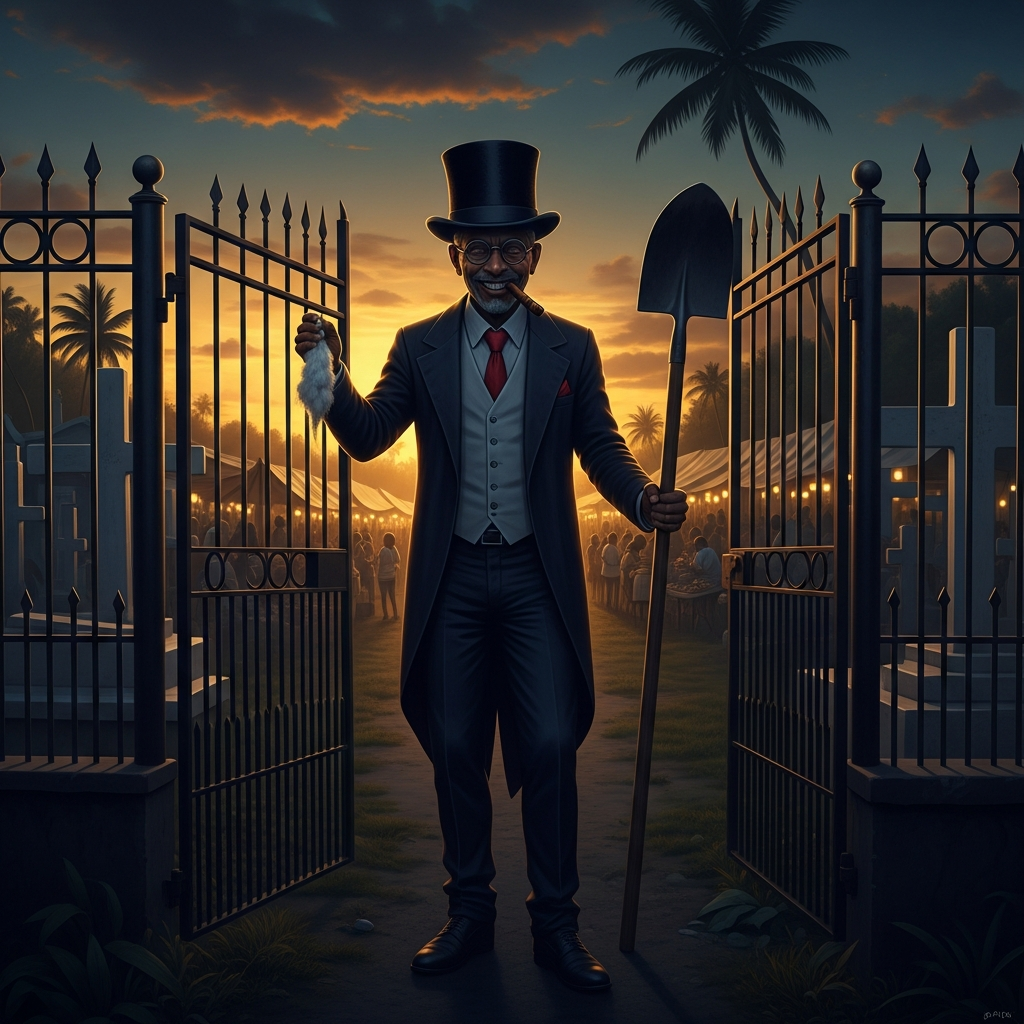
He does not say this to the man at the gate. He does not say anything yet. He is standing at the iron gate of the cemetery on the Route de Delmas, which is also the edge of the market, which is also a crossroads, and the man at the gate has a top hat and dark glasses and a cigar and the particular stillness of something that does not need to perform impatience because it has no relationship to time at all.
The hat is a section of the skull. The glasses are the sunken sockets of no eyes. The gravedigger knows this. He has been a gravedigger for thirty-one years. He has had this conversation before, or conversations adjacent to it. What he has not had, before, is the weight of three children in the red clay of the same month, which is different from knowing intellectually that the Baron is lord of the dead. Knowing it and being it are different things.
The Baron exhales smoke and watches him with the dark glasses and says nothing. He is waiting for the gravedigger to speak first.
In Vodou theology, Baron Samedi is the lwa who planted the first cross in the first cemetery. Before him, there was only death as a fact. After him, there is death as a domain — organized, addressed, capable of receiving ceremony. He is what makes the difference between a body in the ground and a burial. His cross is not the Christian cross, or not only — it is the Vodou crossroads sign, the vertical axis of heaven and earth intersected by the horizontal axis of the living and the dead, which in Vodou are not opposites but neighbors whose fence requires maintenance.
He arrived in Haiti the same way everything in Vodou arrived: across the Atlantic, in pieces, in the memories of enslaved people from Dahomey and Yorubaland and the Congo basin, reassembled in the colony of Saint-Domingue under conditions of extraordinary violence into something that was West African and also Haitian and also entirely its own thing. He absorbed elements of the Catholic saint Gérard, the patron of good deaths, and the day of the dead, and the colony’s intimate familiarity with mass dying — epidemic, torture, overwork, execution — and from all of this he made himself into the lwa who stands at the gate.
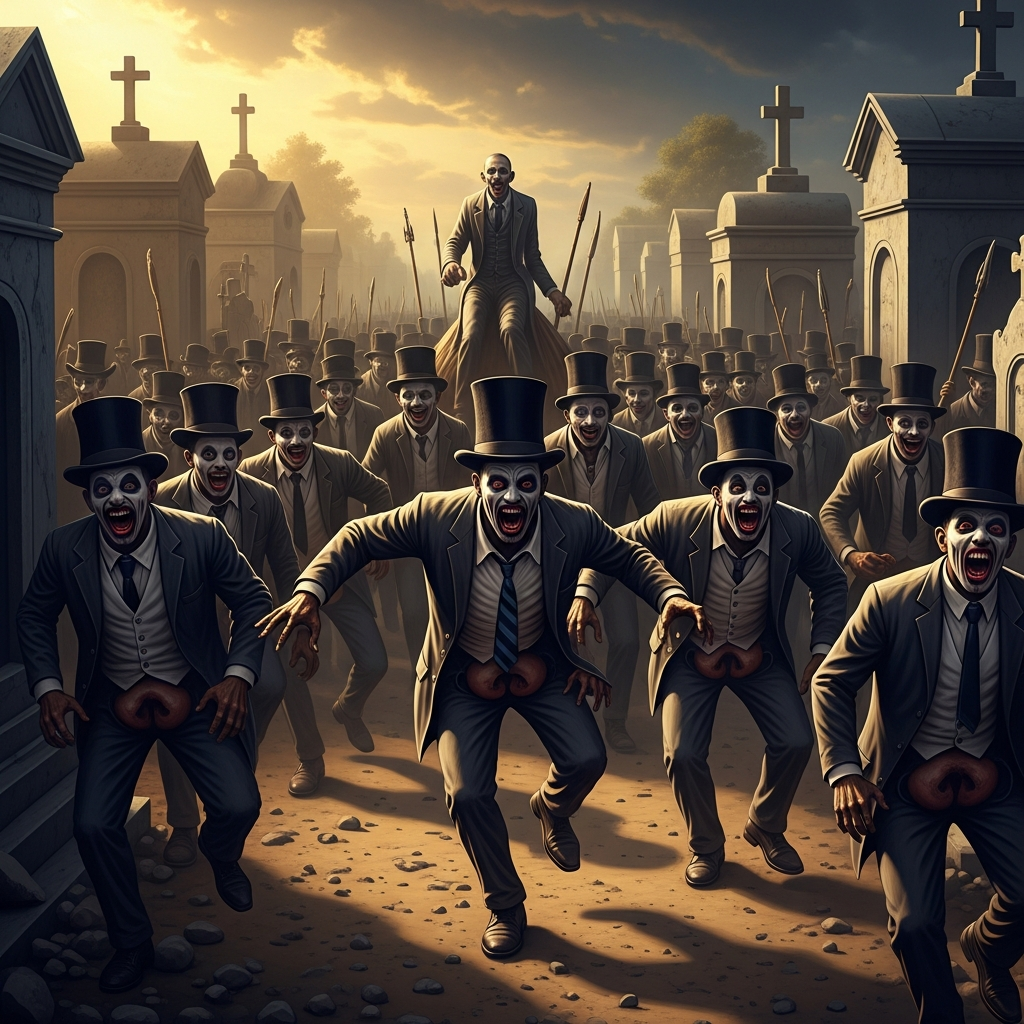
He is the most powerful lwa in the Gede nation, which is the nation of the dead. His wife is Maman Brigitte, who is also death, who is also Irish — or perhaps she absorbed the Irish spirit Brigid in a different Atlantic crossing, or perhaps she was always there and Brigid was her European mirror. Their children are the Gede, an enormous, rowdy, irreverent family of spirits who are the dead in aggregate: dancing the banda, making obscene gestures, shrieking profanity at the living, eating habanero peppers from the ritual plate and rubbing rum into their eyes because they are dead and it does not hurt them, and making the living laugh and shriek and cry simultaneously at the fact of what they are watching.
The banda is the theological point. The obscene pelvic dance of the dead is not a mistake or a corruption or an indulgence. It is the doctrine: the same body that died is the same body that lived, and the same body that lived made love and ate peppers and drank rum and found things funny, and none of that is less sacred than prayer. The Gede’s obscenity is the refusal of false dignity. The Baron’s cigar is the refusal of false solemnity.
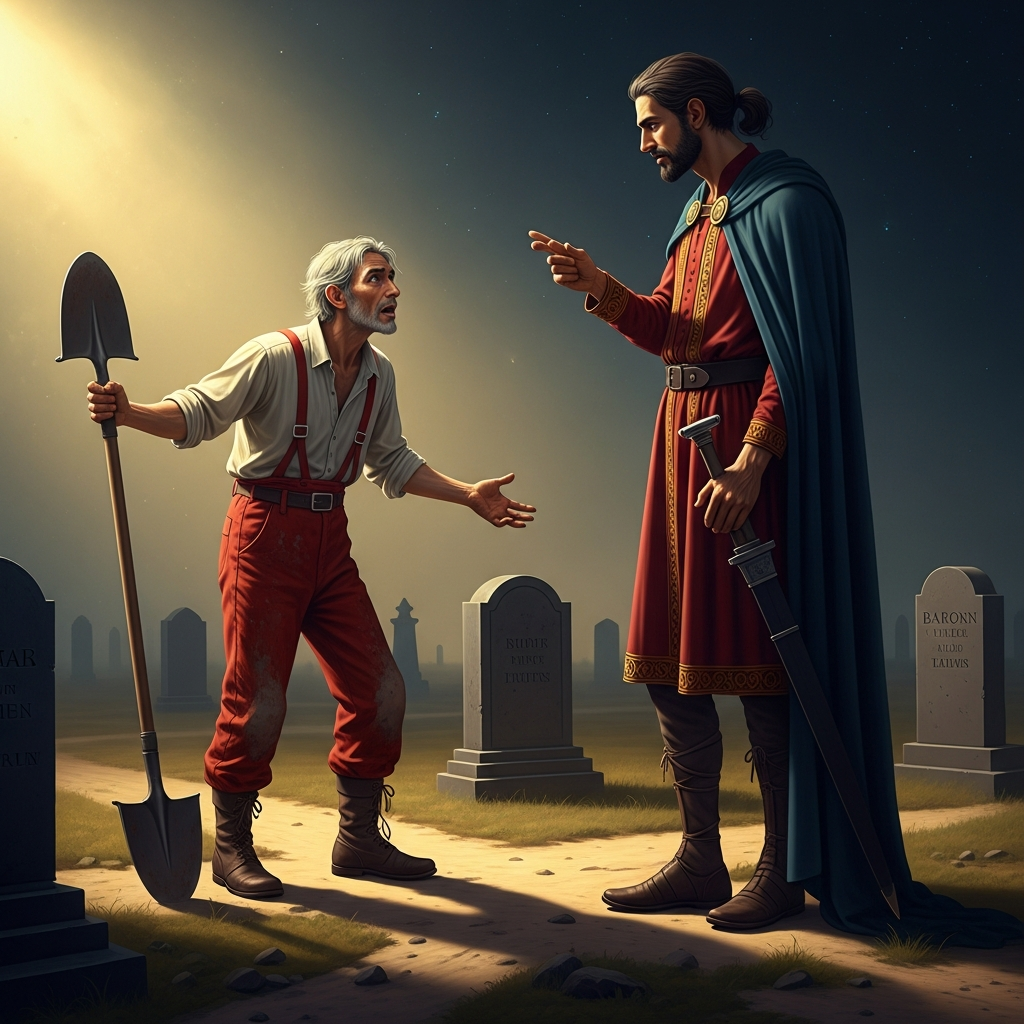
The gravedigger speaks.
He says: three in one month. He says: Roseline, who was seven, with the fever. He says: Thimoleon, who was two, with the water in the lungs. He says: Marie-Ange, who was twelve and who he loved most and is not supposed to say so and says it anyway to the man at the gate because what is the point of decorum here.
The Baron listens. This is unusual — the Gede are not, as a family, known for listening. They are known for talking, for interrupting, for the shrieked joke at the edge of the funeral ceremony that makes people gasp and then laugh before they can stop themselves. But the Baron, when he is actually encountered and not merely invoked, listens.
He says, when the gravedigger is finished: I know them. He says: they came through the gate.
The gravedigger says: can I have them back.
There is a pause that is not theatrical. It is the pause of something considering whether to be kind in the way that is actually kind rather than the way that only feels kind.
The Baron says: no.
He does not say it with cruelty. He does not say it with ceremony. He says it the way you tell someone the weather, which is: this is how things are, and I am not going to lie to you about how things are, and you asked me directly so I am answering you directly, and I know this is not what you want to hear and I am still saying it because lying to you about death would be worse.
This is the Baron’s theology in one word. No.
Not no because he cannot, though perhaps he cannot — the texts are ambiguous on what the lwa can and cannot do in cases of ordinary death rather than unjust death. Not no because he does not care. Not no because the dead are not worth having back. No because the boundary is real, and the boundary being real is not a punishment. It is the structure of existence. The Baron planted the cross at the crossroads because the crossroads needs a marker. Without the marker, without the ceremony, without the lwa who stands at the gate and says here is where living ends and something else begins, the dead would not be dead and the living would not be living and there would only be a gray fog in which nothing mattered because nothing was distinguishable from anything else.
He is the clown because the clown is the one who says true things that the court cannot hear from anyone else. He is obscene because the body is a fact before it is anything else, and the body’s death is a fact before it is a tragedy. He drinks rum spiked with twenty-one habanero peppers because he is what is left when everything that can be burned away has been burned away, and he is still there, grinning, indestructible, absolutely comfortable in the domain where nothing is comfortable.
He tells the gravedigger: go home. He tells him: make the ceremony. He tells him: they are here. He taps the gate with one finger, and the gate swings open slightly, and the darkness behind it is not the darkness of absence but of something that contains more than light can show.
The gravedigger cannot go through. He knows this. He has known this for thirty-one years. He goes home.
The Baron remains at the gate. He is always at the gate. This is what it means to be the lord of the cemetery — not that you roam, not that you travel, not that you make pilgrimages. You stay. The market is behind you and the dead are in front of you and you stand at the line between them with your cigar and your hat and your dark glasses and you receive whoever comes.
Some come to beg. Some come to argue. Some come because they are drunk and curious. Some come because they have buried three children in a month and need to look at the gate and know that someone is tending it.
He receives them all with the same face: the skull-grin, the dark glasses, the cigar. The face says: yes, I know. Yes, this is real. Yes, I am here. Yes, I find it funny, which is not the same as finding it unimportant. The funniest thing, in Baron Samedi’s cosmology, is also the truest thing, and he stands at the gate between them smoking his cigar and watching the market and the cemetery with equal attention, because they are the same thing from two different angles, and he is the angle from which you can see both.
He will not let you through unless it is time. He will not lie to you about when that is. He will laugh at you and with you and the laughter will be terrible and honest and it will contain something that grief alone cannot hold: the recognition that what you are grieving is real, that it mattered, that it is gone, and that he has it, and it is not nothing to be had by Baron Samedi, lord of the dead, who plants crosses and drinks pepper rum and dances the banda and has never once pretended that any of this is easy, which is the closest thing to comfort that the gate can offer.
Scenes
Baron Samedi at the iron gate of a Port-au-Prince cemetery at dusk: top hat, dark glasses, cigar, rum-soaked cotton in one hand and a grave-digging spade in the other
 Generating art…
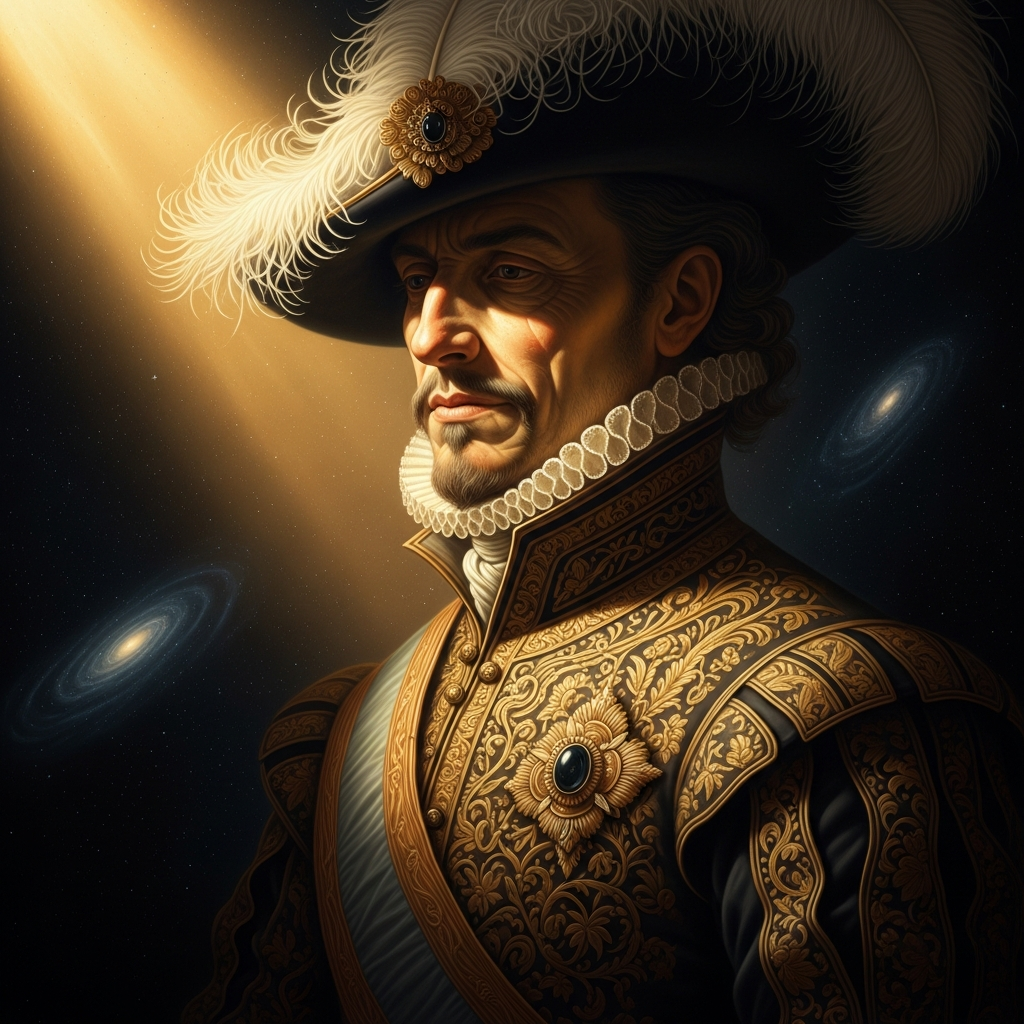
 The Baron's ritual table: a bottle of Barbancourt rum spiked with twenty-one habanero peppers, black coffee, a cigar burning in an ashtray, dried chili peppers, a skull painted in violet and gold
 Generating art…
 The gravedigger and the Baron at the crossroads
 Generating art…
 The Gede procession: hundreds of lwa in blackface and top hats, moving through the cemetery in a lurching, comic, terrifying parade
 Generating art…
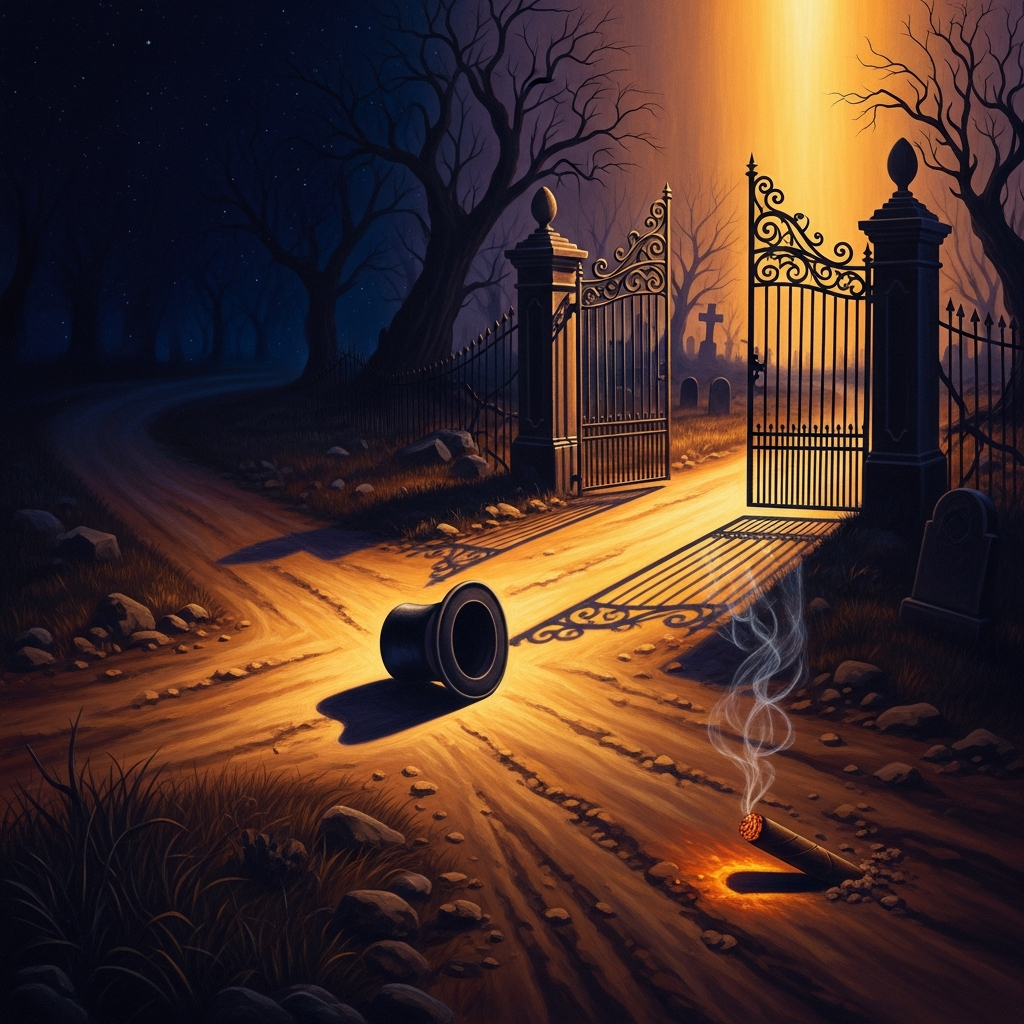
 The crossroads at midnight, no one on either road
 Generating art…
 Echoes Across Traditions
Entities
- Baron Samedi
- Maman Brigitte
- the Gede
- the gravedigger


Sources
- Karen McCarthy Brown, *Mama Lola: A Vodou Priestess in Brooklyn* (University of California Press, 1991)
- Leslie G. Desmangles, *The Faces of the Gods: Vodou and Roman Catholicism in Haiti* (University of North Carolina Press, 1992)
- Donald J. Cosentino (ed.), *Sacred Arts of Haitian Vodou* (UCLA Fowler Museum, 1995)
- Elizabeth McAlister, *Rara! Vodou, Power, and Performance in Haiti and Its Diaspora* (University of California Press, 2002)
- Patrick Bellegarde-Smith and Claudine Michel (eds.), *Haitian Vodou: Spirit, Myth, and Reality* (Indiana University Press, 2006)