Wovoka and the Ghost Dance
January 1, 1889 (the vision); December 29, 1890 (Wounded Knee) · Mason Valley near Walker Lake, Nevada (Northern Paiute country); Pine Ridge, South Dakota
Contents
On New Year's Day 1889, during a total solar eclipse over Walker Lake, a Northern Paiute prophet falls unconscious cutting wood, ascends to heaven, and returns with a vision that will sweep the Plains for two years and end in the snow at Wounded Knee.
- When
- January 1, 1889 (the vision); December 29, 1890 (Wounded Knee)
- Where
- Mason Valley near Walker Lake, Nevada (Northern Paiute country); Pine Ridge, South Dakota
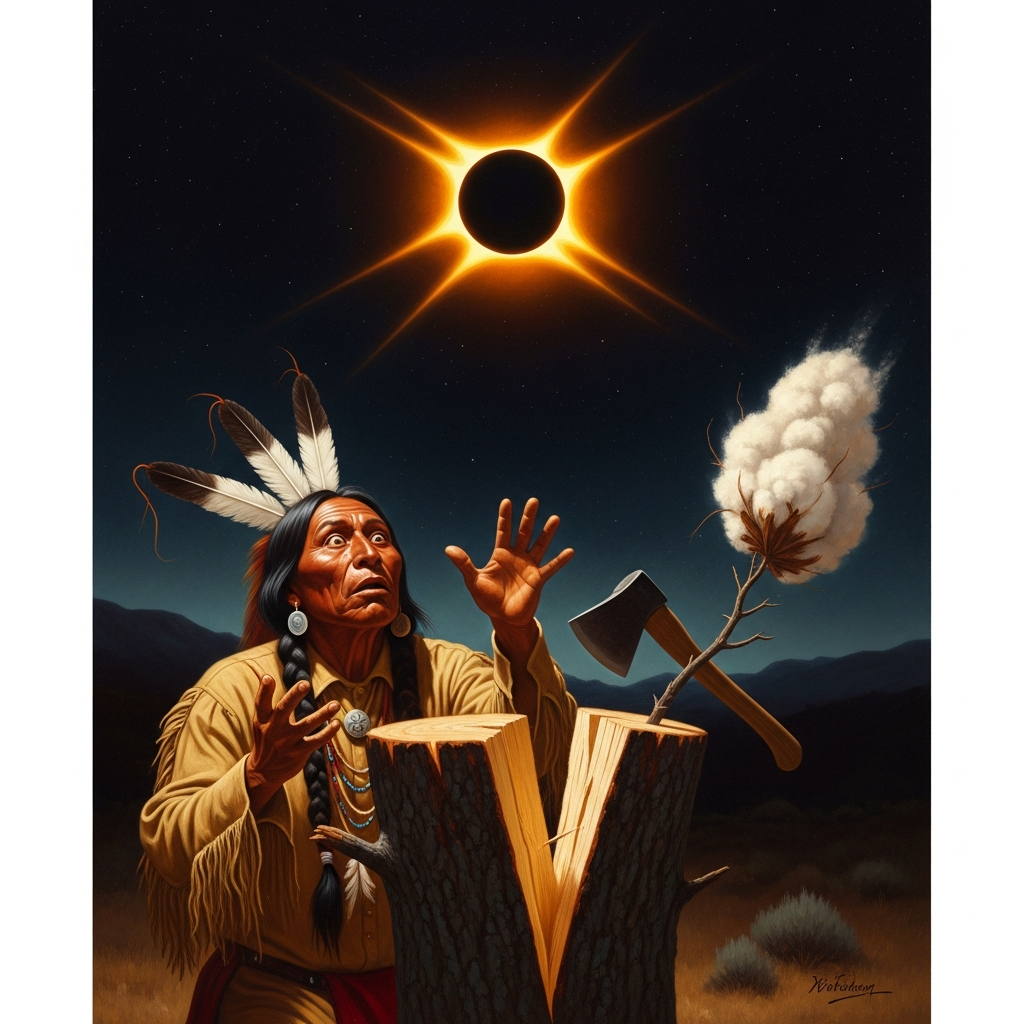
He is splitting cottonwood when the sun goes out.
It is noon on New Year’s Day, 1889. Wovoka — born Quoitze Ow, called Jack Wilson by the white ranchers who employ him — is thirty-three years old. He is working in the Mason Valley, Nevada, where his people the Northern Paiute have lived since before there was a Nevada. He is an ordinary man. He has a wife, two children, a small reputation as a weather doctor. He is not yet a prophet.
The axe is in his hand and the sun is high and then the sun is wrong.
A bite is missing from the side of it. The bite grows. The light goes thin and yellow, like old butter. The sagebrush turns the color of bruised iron. The dogs in the valley begin to whine. A wind he cannot place crosses the Walker River and lifts the hair on his arms, and the eclipse — he does not know the English word, none of the people around him do — slides shut over the sun like an eye closing.
The axe falls from his hand.
He falls beside it.
He is taken up.
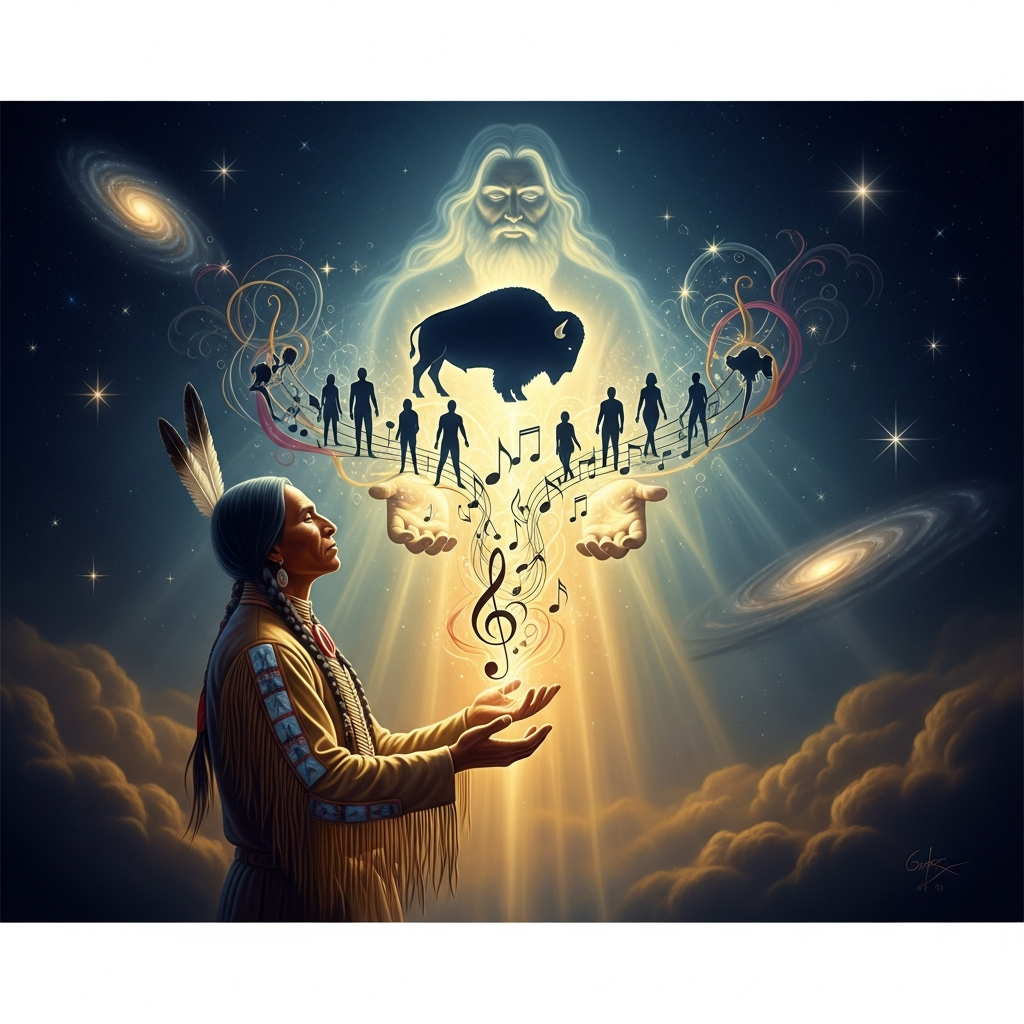
There is a cord, or there is a wind, or there is no mechanism at all — he never quite remembers. He is standing in the white country above the sky, and God is there. God looks like an old man. God shakes his hand. God shows him all the people who have died.
His father is there. His grandfather is there. The old men of his band who died of measles in ‘67. The Paiute women who starved in the bad winter of ‘74. They are not ghosts. They are eating. They are laughing. They are young. The land around them is the land before — sagebrush plains, antelope, water in the dry creeks, and the buffalo, even the buffalo, herd after herd, the dust of them rising like prayer-smoke from horizon to horizon.
God says: Go back. Tell my people to love one another. Do not lie. Do not steal. Do not fight, not the white men, not each other. Work for the white men when they ask you. Live as good people. And teach them this dance — five days and five nights, in a circle, hand in hand, the round dance, the songs I will give you. Do not stop. If they dance, the dead will come back, the buffalo will come back, the earth will be made new, and the white men — the white men will go away. Not in war. In the renewal. They will simply be gone.
God gives him a song. God gives him red ochre paint to put on the dancers’ faces. God says: Tell them. Wait. The world is coming.
He wakes in the snow.
The eclipse is over. The sun is back. His axe is in the snow beside him. The cottonwood is half-split. His brother-in-law, who has been calling his name, finds him sitting up, shivering, his eyes pale and far away.
Where were you?
Wovoka tells him.
By spring, the Mason Valley is dancing. By summer, the Bannock are dancing. The Shoshone come down from the mountains to dance. The Arapaho send delegates. The Cheyenne send delegates. The Lakota send Kicking Bear and Short Bull on a pilgrimage of a thousand miles, by railroad and on foot, to meet the Paiute messiah.
He receives them sitting on a blanket in the Mason Valley. He is not impressive. He wears a Stetson hat. He smiles too much. He does not look like a man who has been to heaven.
He gives them the song. He gives them the dance. He gives them red ochre. He says again what God told him: do not fight. Wait. The world is coming.
The Lakota ride home with the dance.
By the time the dance reaches Pine Ridge, it is no longer Wovoka’s dance.
The Lakota are starving. The treaty rations have been cut again. The buffalo have been gone for a decade. Their children are in boarding schools that cut their hair and beat them for speaking Lakota. The Black Hills, which the Grandfathers had given them, have been taken. Crazy Horse is dead. Sitting Bull is on the Standing Rock reservation, watched by police. The hoop is broken.
They take Wovoka’s dance and add to it. They sew shirts of muslin painted with eagles and stars and call them ghost shirts. The shirts, the holy men say, will turn back the bullets of the soldiers. Wovoka had said no such thing. He had said: do not fight. But the message has crossed a thousand miles of grief, and grief edits prophecy.
The dancers go up to the high country. They dance for days without food. They fall into trances. They see their dead. They come back saying the dead are at the edge of the camp, just out of sight, waiting.
The Indian agents at Pine Ridge send panicked telegrams to Washington. The Sioux are dancing. The Sioux are arming. The Messiah Craze is upon us.
Washington sends the Seventh Cavalry. Custer’s old regiment. They have a debt to collect.
December 15, 1890. The Indian police arrive at Sitting Bull’s cabin to arrest him. There is shouting, a shot, a dozen shots, and the old chief who had won the Greasy Grass dies in the doorway of his own house with a bullet in his head. His horse, which had been a circus horse and had been trained to dance at the sound of gunfire, begins to dance in the dust. The witnesses say it looked like the horse was performing the Ghost Dance.
Big Foot’s band, hearing of Sitting Bull’s death, flees south. They are hungry. Big Foot has pneumonia. They mean to surrender at Pine Ridge and ask for protection. The Seventh Cavalry intercepts them at a creek called Chankpe Opi Wakpala, Wounded Knee.
December 28. The cavalry rings the camp with Hotchkiss guns on the high ground.
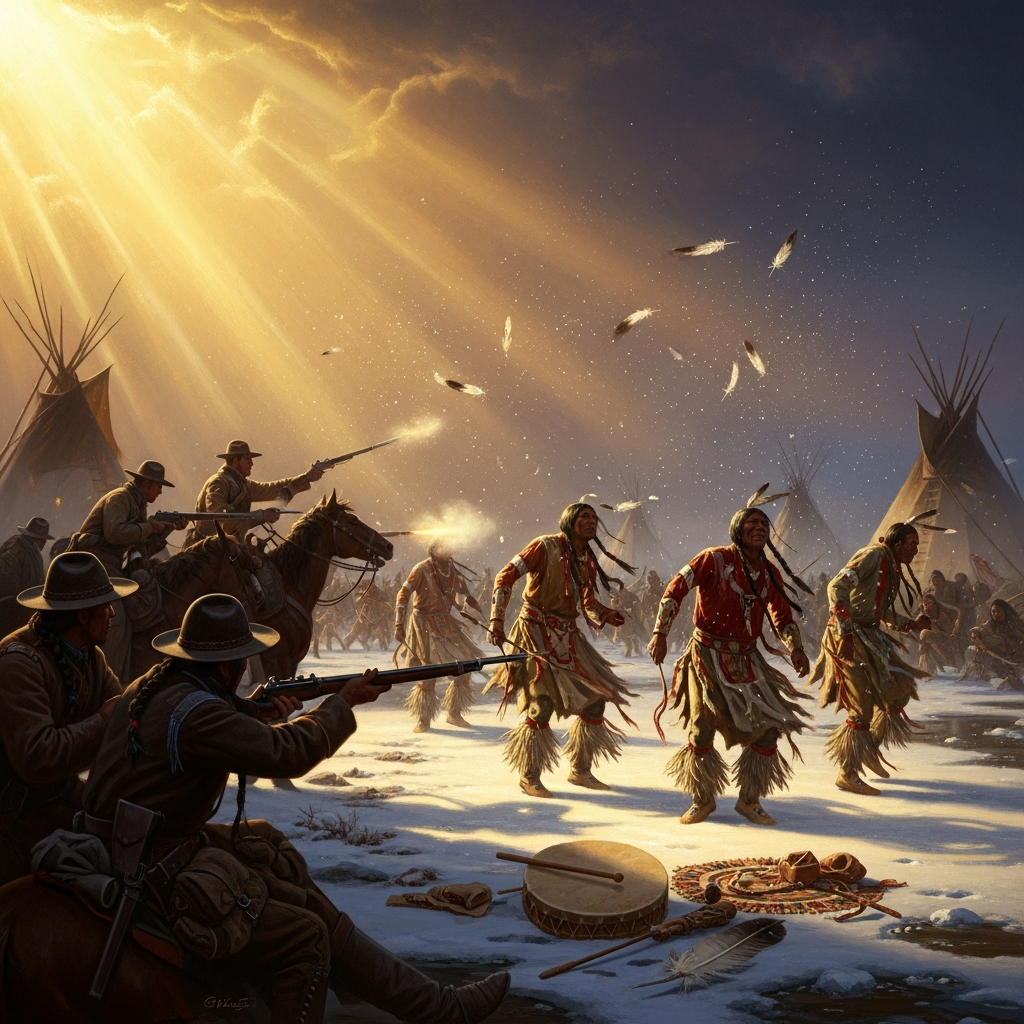
December 29. The disarmament begins. A deaf man named Black Coyote does not understand the order. His rifle goes off. The Hotchkiss guns open up.
It takes about an hour.
When it is over, two hundred fifty Lakota are dead in the snow — men, women, infants, the very old. The bodies are left for three days while a blizzard rolls through. Then they are dumped into a long pit on the hill above the creek. Some of the dead are still wearing the ghost shirts. The shirts did not turn the bullets.
In the Mason Valley, Wovoka hears the news.
He is quiet for a long time. He does not stop teaching the dance. He continues to receive visitors. White anthropologists like James Mooney come to his ranch and sit with him and write down what he says, and what he says, until he dies in 1932, is what God told him on the day the sun went out:
Do not fight. Love one another. Wait. The world is coming.
He believed it. He believed it after Wounded Knee. He believed it on his deathbed. The dance went underground. It is still danced, in places, by people who do not advertise that they are dancing.
Wovoka’s vision was not the vision the Plains needed in 1890. The Plains needed deliverance, and Wovoka offered patience. The terrible arithmetic of prophecy is that it arrives in the form it arrives in, not the form the desperate would have chosen.
And yet: the dance is still danced. The promise is still held. The hoop, broken at Wounded Knee, has been the work of every Indigenous generation since to mend. Wovoka was wrong about the timeline, the way prophets are wrong about timelines. He may not have been wrong about the world that is coming.
The sun went out at noon on January 1, 1889. The man who fell down stood up with a vision. That much, at least, is documented.
Scenes
Wovoka splits cottonwood in the Mason Valley as the sun goes black at noon and his axe falls from his hand
 Generating art…
 He stands before God in heaven and is given the dance, the song, and the promise — ancestors restored, buffalo returned, the white men gone
 Generating art…
 Two years later, on December 29, 1890, the Seventh Cavalry opens fire at Wounded Knee Creek and the dance ends
 Generating art…
 Echoes Across Traditions
Entities
- Wovoka (Jack Wilson)
- Tävibo (his father)
- Sitting Bull
- Big Foot
- Kicking Bear
- Short Bull
Sources
- James Mooney, *The Ghost-Dance Religion and the Sioux Outbreak of 1890* (Bureau of American Ethnology, 1896)
- Michael Hittman, *Wovoka and the Ghost Dance* (1990, expanded 1997)
- Dee Brown, *Bury My Heart at Wounded Knee* (1970)
- Louis S. Warren, *God's Red Son: The Ghost Dance Religion and the Making of Modern America* (2017)