Category: Omens Origin: Medieval Europe, ancient Egypt Traditions: Egyptian, Christian, Wicca, Celtic, Japanese Risk: Varies
No creature carries more contradictory symbolic weight than the black cat:
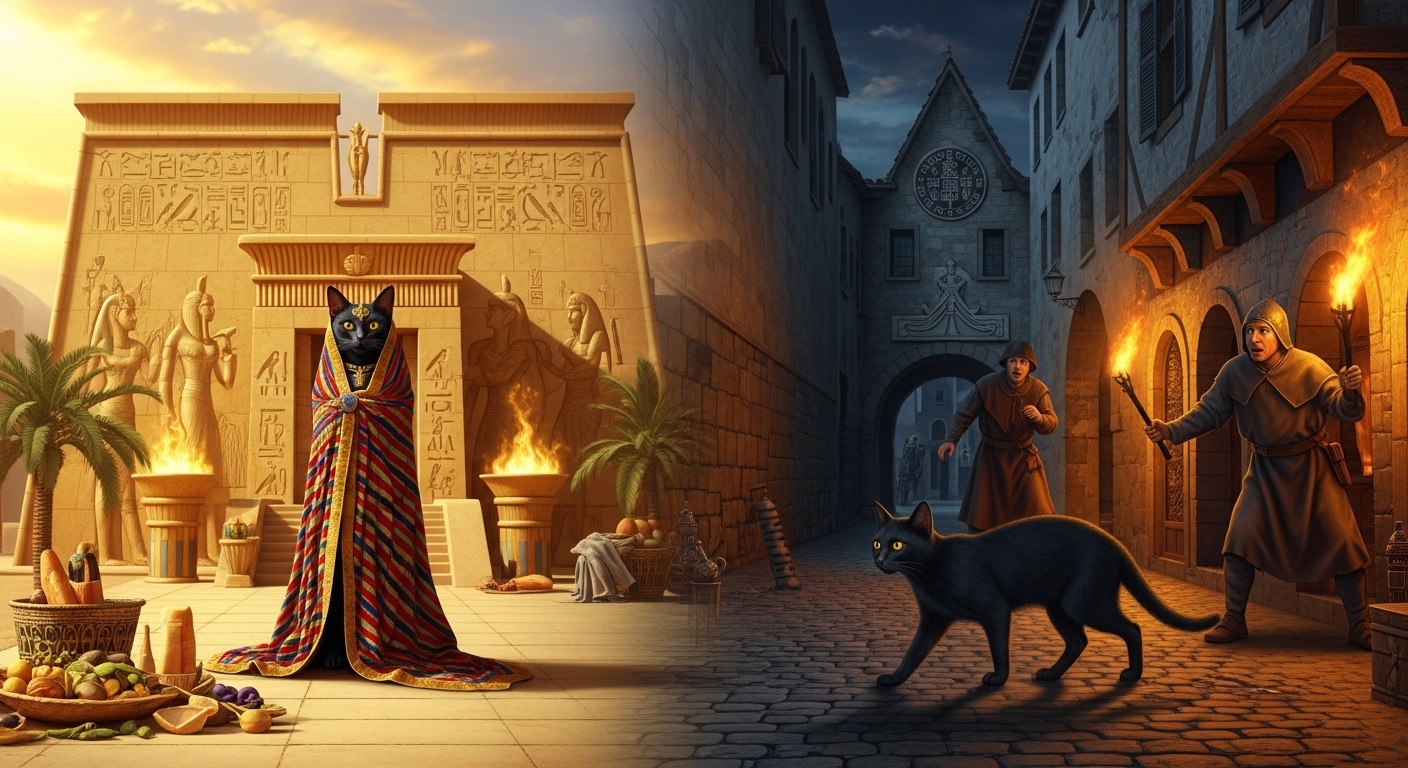
In ancient Egypt, all cats were sacred to Bastet — the goddess of home, fertility, and protection. Black cats were not feared but revered; harming one was a capital offense. The entire category of domestic cat entered the Mediterranean world through Egyptian trade as a sacred import.
In medieval Christian Europe, black cats became familiars of witches — creatures through which the devil operated. Pope Gregory IX’s 1233 papal bull Vox in Rama explicitly condemned black cats as Satanic instruments, triggering mass cullings across Europe. Some historians argue this contributed to the Black Death by removing the population of rodent predators. The bad luck association in Western tradition dates to this period.
In Japanese tradition (kuro neko), black cats are good omens. A black cat crossing your path signals incoming prosperity. The maneki-neko (beckoning cat) — the porcelain cat with a raised paw — is often depicted in black to ward off evil and invite wealth.
In Celtic/Scottish tradition, a black cat arriving at your home is a good omen of prosperity. In the English county of Yorkshire, keeping a black cat ensures good luck at sea.
The split: Western (Christian-influenced) cultures inherited the witch-familiar association; Eastern (Buddhist/Shinto-influenced) cultures retained older associations with protection and luck.