Category: Thresholds & Home Origin: Universal Traditions: Jewish, Roman, Hindu, Chinese, Islamic, Celtic Risk: Protective
The doorway is the most universally superstition-laden space in human architecture — the boundary between inside (safe, known, controlled) and outside (dangerous, unknown, uncontrolled).
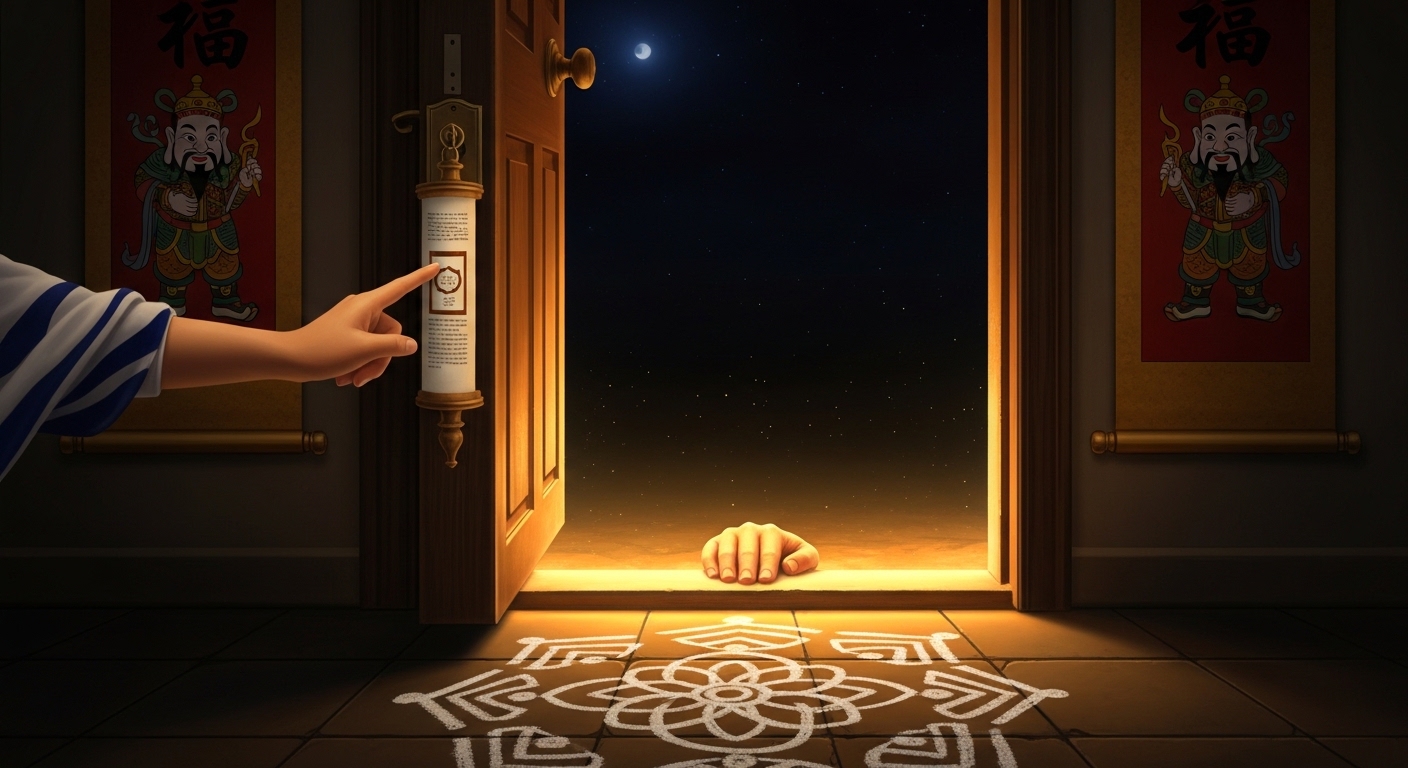
Jewish mezuzah: A scroll containing Deuteronomy 6:4-9 and 11:13-21, in a case, affixed to the right doorpost of every room. “You shall write them on the doorposts of your house and on your gates.” The mezuzah marks the home as Jewish sacred space and the name of God (Shaddai) repels evil.
Roman Lares: Household gods were physically located at the threshold. Returning home required greeting them. A guest entering without acknowledgment brought danger to the household — not from malice but from carelessness.
Hindu tradition: The threshold (dehali) is where Lakshmi (prosperity) enters or departs. Salt, turmeric, and rice flour patterns (kolam / rangoli) are drawn at doorways to attract prosperity and repel misfortune. Stepping on the threshold — rather than over it — is extremely inauspicious.
Chinese tradition: The doorsill must never be stepped on — it contains the spirit of the home’s protection. Door gods (men shen) appear on painted scrolls flanking Chinese doorways; their gaze repels evil approaching from outside.
Islamic tradition: Entering with the right foot and invoking Bismillah (In the name of God) protects the home. Leaving with the left foot keeps evil outside. The broom should not cross the threshold at night — it sweeps out blessing.
Celtic/Irish tradition: No one should sweep dust out over the threshold — it removes the home’s luck. Salt on the threshold repels faeries. A horseshoe above the door collects good luck before it can escape.