Category: Numbers & Time Origin: Norse mythology, Christian tradition Traditions: Christian, Norse, Babylonian, Jewish Risk: Bad Luck
Thirteen’s malevolent reputation arrives from two independent sources that reinforced each other in Christian Europe:
The Norse table of twelve: At a divine banquet of twelve gods, the thirteenth guest — Loki, the trickster — arrived uninvited and orchestrated the death of Baldr. Thirteen became the number of disruption, the one that breaks a perfect set.
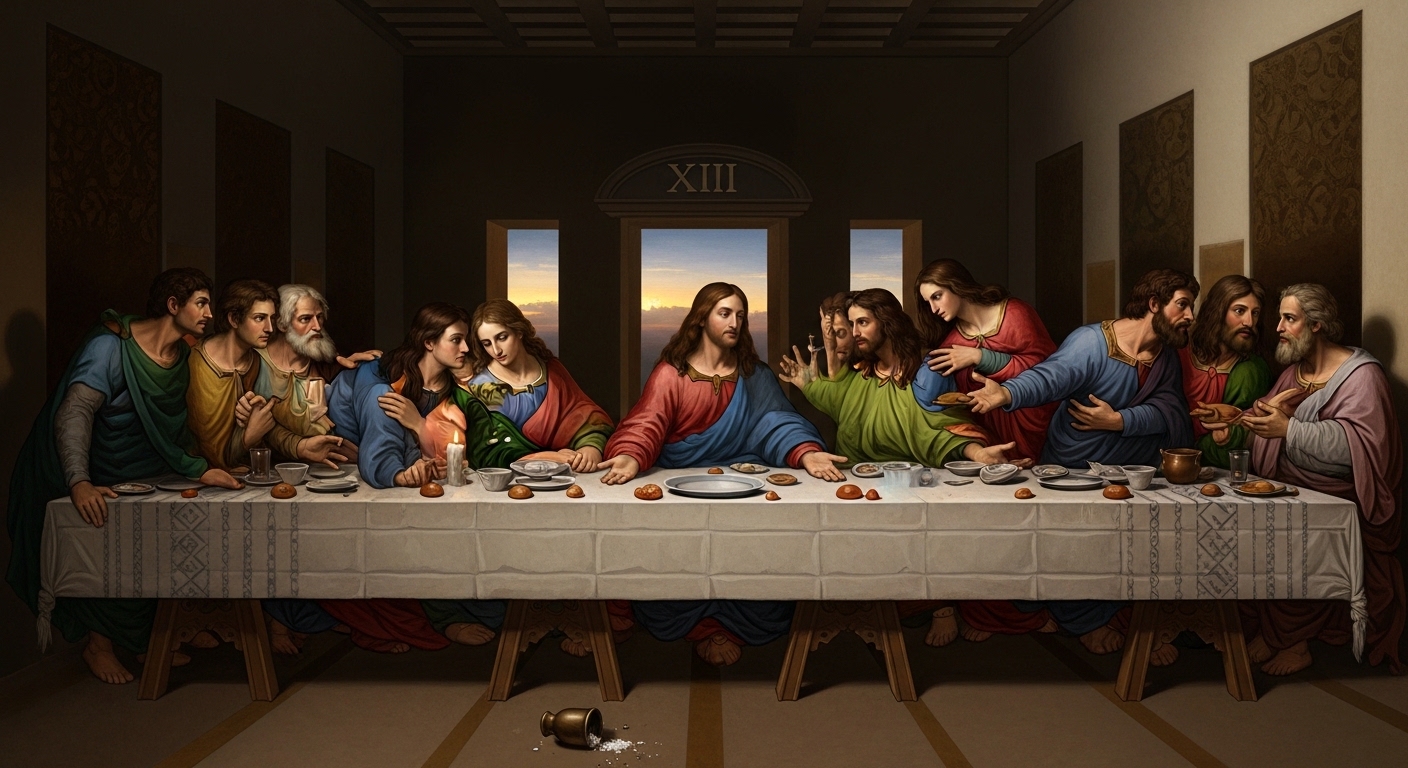
The Last Supper: Thirteen at the table; Judas was the thirteenth to sit. Jesus was crucified the next day. Medieval Christians formalized this into a taboo: thirteen at a dinner table predicts the death of one guest within a year.
Babylonian law codes often skipped the number 13 in lists — suggesting older taboos predating Greek and Norse traditions. Some scholars trace this to astronomical observation: twelve is the number of lunar months; thirteen was the “extra” that disrupted the lunar year.
Friday amplification: In Norse tradition, Friday is Frigg’s day (goddess of fate) — already loaded with supernatural significance. In Christian tradition, Friday was the day of the Crucifixion. The combination of the two unlucky elements magnified both.
Jewish counter-tradition: In Kabbalah, 13 is one beyond 12 — the unity that contains all twelve. The Hebrew word for love (ahava) and the word for God (echad) both equal 13 by gematria. Thirteen is not feared but celebrated — Bar and Bat Mitzvah occurs at 13.