Category: Nature & Animals Origin: Celtic, Norse, Native American Traditions: Celtic, Norse, Native American, Roman, Slavic Risk: Omen
The corvid family — crows and ravens — occupies a unique prophetic role across cultures. Their intelligence, their all-black appearance, their scavenging of battlefields, and their ability to learn and mimic human speech made them natural candidates for divine messenger status.
Celtic tradition: Two ravens sat on the shoulders of the Morrígan, goddess of fate and war, who could transform into a crow. A crow landing on your roof presaged death. A crow following you was the Morrígan taking notice. However, a crow on a scarecrow — unable to frighten away its own kind — was a sign that your land had divine favor.
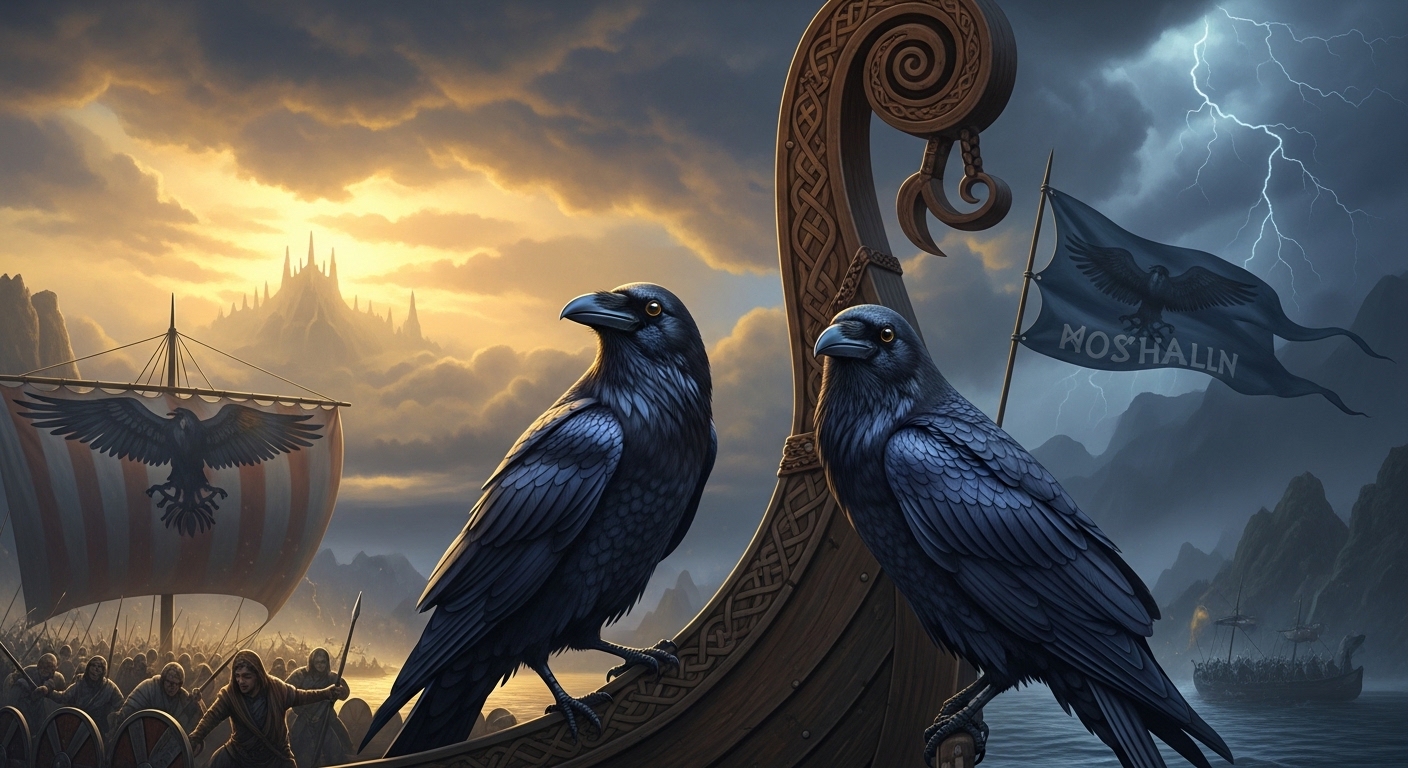
Norse tradition: Odin’s ravens Huginn (thought) and Muninn (memory) flew the nine worlds daily and returned to report. A raven sighting before battle was Odin watching. Norse warriors took raven banners into battle as a sign of Odin’s favor.
Native American traditions (varied): Raven is the Trickster-Creator in Pacific Northwest traditions — the being who brought light to the world. Among some Plains nations, crows are protectors; among others, they signal enemy presence nearby. Context and tradition determine whether the crow is sacred or ominous.
Roman augury: Official Roman religion formalized bird omens (auspicia) into a governmental institution. Augurs watched the flight patterns of birds — including crows and ravens — before any major state decision. Crows calling from left to right: favorable. Right to left: unfavorable. The entire Roman state apparatus consulted bird omens before war, treaties, and elections.
One for sorrow, two for joy (British counting rhyme): A solitary magpie (a corvid) is bad luck; two are good; three announce a funeral; four, a birth. The rhyme has been traced to the 18th century but reflects much older corvid-counting traditions.