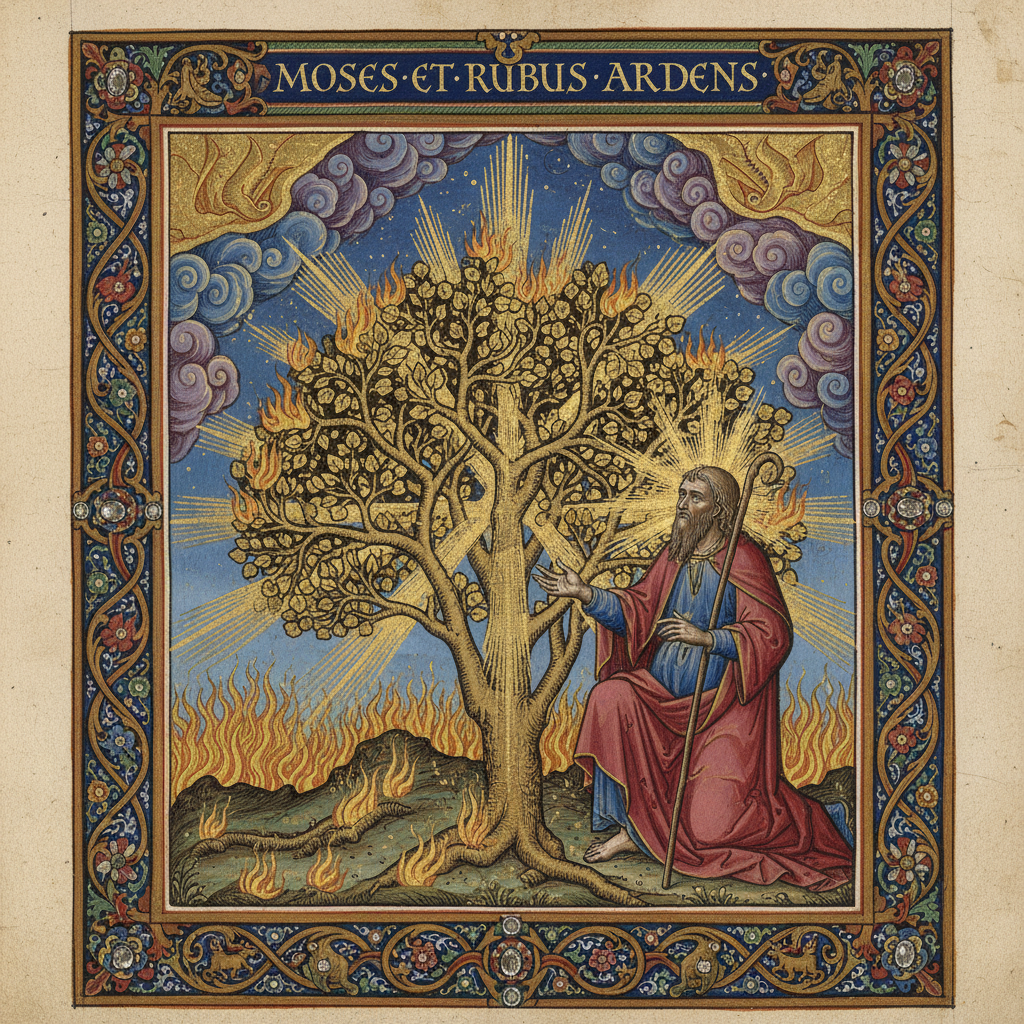
Part of the Bestiary Compendium
Every tradition has them: moments where reality bends. Where the rules stop applying. Where something happens that cannot happen, and then it does anyway, and everyone who witnesses it spends the rest of their life trying to describe it.
We usually call these miracles. But that word flattens them. A miracle isn’t just something unusual. It’s a category violation — an event that proves the category of “possible” was smaller than we thought. Or that someone on the other side of reality just decided the rules didn’t apply today.
This section ranks them by severity. Not by believability (none of them are credible by materialist standards — that’s the whole point), but by how drastically they break the underlying physics of their tradition’s universe.
Art style:
hyper-realistic divine miracle scene, the moment of impossible made visible, dramatic chiaroscuro lighting, awe and terror at reality bending, cinematic composition, oil painting rendering, 8kThe Miracles — Ranked by Impossibility
Tier 1: Bending Nature (Difficult but Local)
These miracles violate physical law but stay small. They happen in a specific place at a specific time, affecting a limited number of people. The universe is bent, not broken.
| Miracle | Who | What Happened | Tradition |
|---|---|---|---|
| Water → Wine | Jesus | Transformed water into wine at a wedding | Christian |
| Burning bush | YHWH | Fire that doesn’t consume | Biblical |
| Balaam’s donkey speaks | God | An animal speaks human language | Biblical |
| Floating axe head | Elisha | Iron floats on water | Biblical |
| Walking on water | Jesus, Peter | Walked on the surface of a lake | Christian |
What makes Tier 1 remarkable: The miracles here don’t require much to break. A small override of natural law — combustion stops consuming fuel, surface tension holds a man, molecular structure of water shifts. The violation is real, but it’s local. You have to be there to see it. The rest of the world keeps going.
The donkey is the outlier. Not because talking is harder than walking on water, but because the miracle is witnessed by someone who doesn’t realize how impossible it is. Balaam is annoyed at his donkey for stopping. He argues with it. He only recognizes the angel after the talking has already happened. The miracle unfolds inside a mundane argument.
Tier 2: Commanding Nature (Impressive Scale)
These miracles involve the large-scale manipulation of natural systems — weather, celestial mechanics, geography. One person’s word moves things that take continental forces to move.
| Miracle | Who | What Happened | Tradition |
|---|---|---|---|
| Parting the Red Sea | Moses/YHWH | Divided an ocean, held it, released it on an army | Biblical |
| Stopping the sun | Joshua/YHWH | The sun and moon stood still for a full day | Biblical |
| Krishna lifts Govardhan | Krishna | Held a mountain on one finger for 7 days. He was 7 years old. | Hindu |
| Hanuman carries a mountain | Hanuman | Couldn’t identify the herb, carried the ENTIRE mountain to Lanka | Hindu |
| Maui lassoes the sun | Maui | Physically roped the sun and beat it into slowing down | Polynesian |
What makes Tier 2 different: You can’t not notice these. The Red Sea parts for a nation of people crossing on dry ground. The sun stops — which means the planet stops rotating, or the sun reverses direction, depending on how you read it. Every astronomer in the world would have noticed. Every shadow froze. Every sundial was wrong.
Maui earns special recognition for methodology. Other traditions have gods command the sun. Maui lassoes it and beats it up. He physically assaults a celestial body until it agrees to slow down. This is not reverence. This is negotiation by force with a star.
Tier 3: Power Over Death (Category Break)
Death is the most fundamental category in physical reality. Everything alive dies. Everything dead stays dead. Tier 3 miracles don’t just slow death or delay it — they reverse it. They reach across the line and pull someone back.
| Miracle | Who | What Happened | Tradition |
|---|---|---|---|
| Lazarus raised (4 days dead) | Jesus | Called a decomposing corpse back to life. The 4-day detail matters: Jewish belief said the soul left after 3. | Christian |
| Osiris reassembled | Isis | Gathered 13 of 14 dismembered pieces and resurrected her husband. He rules the dead. | Egyptian |
| Elisha’s bones raise a dead man | Elisha’s bones | A body thrown onto Elisha’s grave touched his bones and came back to life. Elisha was ALREADY DEAD. | Biblical |
| Lemminkäinen’s mother | Lemminkäinen’s mother | Fished his dismembered body from the river of the dead and reassembled him piece by piece | Finnish |
| Durga created from pooled divine power | All the gods | The gods couldn’t defeat Mahishasura. They POOLED their power and created an entirely new being. | Hindu |
The Lazarus detail: John 11 is careful about timing. Four days. Martha even says “Lord, by this time there is a stench, for he has been dead four days.” John includes the smell of death. The text wants you to know this isn’t someone waking from a coma. The soul, per first-century Jewish belief, departed after three days. Lazarus is completely dead. The miracle is undeniable not just by its happening but by the deliberate choice to wait until it was too late.
Elisha’s bones is the strangest entry in all of Biblical miracle literature. Elisha is already dead and buried. Raiders arrive mid-funeral and the mourners throw the body of a newly dead man into Elisha’s open grave in a panic. The corpse touches Elisha’s bones. The dead man stands up alive. The living prophet could work miracles. The dead prophet’s remains work miracles. The power outlasted the man.
Durga doesn’t fit neatly in this tier but earns her place: she isn’t raised from death — she is the solution to death’s problem in another form. Mahishasura couldn’t be killed by any god or man. So the gods pooled their divine radiance and created someone new. A being made entirely of concentrated divine power, called forth to do what none of them could do alone.
Tier 4: Reality Breaks (Cosmic Scale)
These aren’t miracles in the local sense. They are events where the structure of reality itself is altered, revealed as something different from what it appeared, or brought into existence from nothing.
| Miracle | Who | What Happened | Tradition |
|---|---|---|---|
| Krishna’s universal form | Krishna | Showed Arjuna that he contains ALL OF REALITY — every god, every star, every being. Arjuna nearly died from seeing it. | Hindu |
| Creation ex nihilo | God | Made everything from nothing by SPEAKING | Biblical |
| Om | Brahman | The universe vibrated into existence from a single sound | Hindu |
| Songlines | Ancestor beings | SANG the landscape into physical existence | Aboriginal |
| Buddha’s enlightenment | Siddhartha | Transcended the cycle of existence itself. Stepped OUTSIDE of reality while remaining inside it. | Buddhist |
The Vishvarupa (Krishna’s universal form) in the Bhagavad Gita is one of the most staggering moments in world literature. Arjuna asks to see Krishna’s true form. Krishna grants him divine sight because human eyes cannot survive it. What Arjuna sees: thousands of faces, thousands of arms, every god contained within one body, galaxies visible in Krishna’s torso, armies of soldiers being consumed by his mouths. Arjuna begs him to stop. Krishna complies. The miracle here isn’t a visible violation of physics — it’s the revelation that physical reality is a subset of what Krishna actually is.
The Songlines deserve more attention than they usually receive in comparative religion. The Aboriginal Dreaming isn’t mythology describing a past event. It’s an ongoing structure: the ancestor beings sang the world into existence by walking its contours and naming everything they passed. The songs are the landscape. The land exists because it was sung. This means you can navigate across Australia by knowing the right song. The land and the song are the same thing expressed differently.
Tier 5: The Paradoxes (Logically Impossible)
These are not miracles that violate physics. They violate logic. They require holding two contradictory things as simultaneously true. Traditions that contain these aren’t just claiming power — they’re claiming to operate outside the rules of non-contradiction.
| Miracle | Why It’s a Paradox | Tradition |
|---|---|---|
| The Incarnation | The infinite becomes finite. The creator enters creation. The timeless enters time. | Christian |
| Enoch → Metatron | A human becomes the most powerful angel, called “Lesser YHWH.” A creature becomes nearly the Creator. | Jewish |
| The Crucifixion as victory | Death is defeated BY dying. Weakness conquers power. The king triumphs by being executed. | Christian |
| Nirvana | Liberation from existence while still existing. Being nothing while being something. | Buddhist |
| ”I AM WHO I AM” | God names himself with a tautology. The name IS the being. Self-reference as identity. | Biblical |
The Incarnation paradox has kept theologians arguing for two thousand years. The Chalcedonian formula (451 CE) declares Jesus “fully divine and fully human” — two complete natures in one person, not mixed, not reduced. This isn’t a compromise. It’s the claim that two things that cannot coexist do coexist. The infinite taking on spatial location. The eternal experiencing childhood. The council chose paradox over resolution because resolving it would require abandoning one half.
“I AM WHO I AM” (Exodus 3:14) is the only moment in the Biblical text where God gives his name — and the name is a philosophical trap. EHYEH ASHER EHYEH. It can be translated “I AM WHO I AM,” “I WILL BE WHAT I WILL BE,” or “I CAUSE TO BE WHAT I CAUSE TO BE.” The name has no reference outside itself. It defines itself by pointing back to itself. God’s identity is his existence. His existence is his identity. You cannot ask what God is, because the answer is the question. This is not evasion. It is the most precise theological statement imaginable.
The Profiles
Tier 1 — Water to Wine
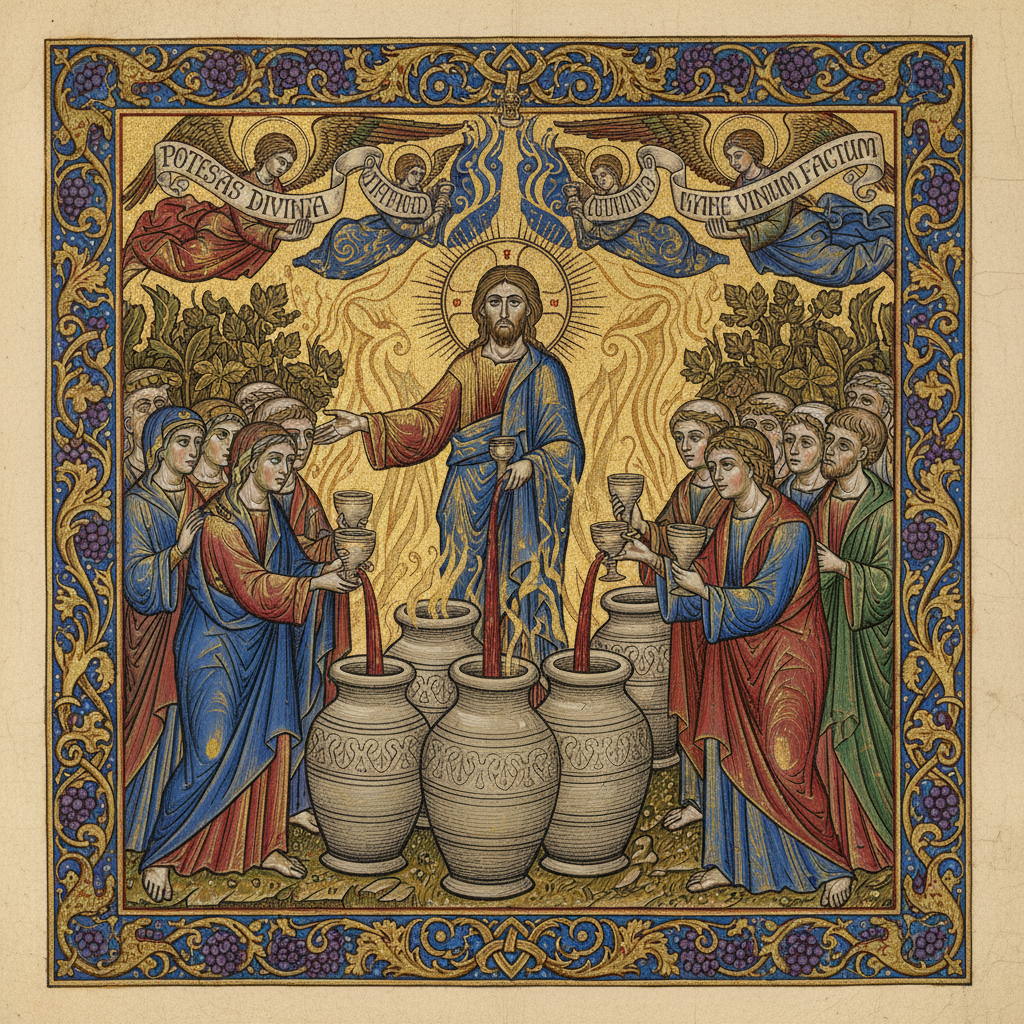
John 2:1-11. A wedding in Cana. The wine runs out. This is a social catastrophe in first-century Palestinian culture — a host’s shame before his whole community. Mary tells Jesus. Jesus, somewhat reluctantly by the text’s tone, tells the servants to fill six stone water jars — the kind used for Jewish purification rites — with water.
They fill them to the brim. Then he tells them to draw some out and take it to the master of the feast.
The master doesn’t know where it came from. He calls the bridegroom over and says, essentially: everyone serves the good wine first, and then the cheap wine when the guests are drunk. But you’ve kept the good wine until now.
The servants know. Mary knows. The disciples begin to believe. Everyone else is just drinking the best wine of the evening.
This is the quietest miracle in the Gospels. No crowd of thousands. No dead raised. No demon cast out. Just very good wine where there was water, and a host whose wedding isn’t ruined, and a few people standing near stone jars who will spend the rest of their lives knowing what they saw.
John calls it the first of Jesus’ signs. The beginning of something.
Tier 1 — The Burning Bush
Exodus 3:2. Moses is keeping his father-in-law’s flock in the wilderness near Horeb. He sees a bush burning. He notices — and this is the detail Exodus emphasizes — that the bush is not being consumed.
He turns aside to look. The turning aside is what matters. Millions of people had walked past their burning moment and kept going. Moses turns.
The text then says “When the Lord saw that he turned aside to see, God called to him out of the bush.” The divine communication is contingent on Moses’ curiosity. God waited to see if he’d stop. He stopped. — first mention only per entity per file
What follows is one of the strangest divine conversations in recorded religion. Moses argues with God. He has four objections. Each one gets answered. He still tries to back out. And the fire that started it all is still burning, still not consuming, a flame sustaining itself against all combustion physics for the length of a theological negotiation.
The miracle is not just the fire. The miracle is the patience of the fire.
Tier 1 — Walking on Water
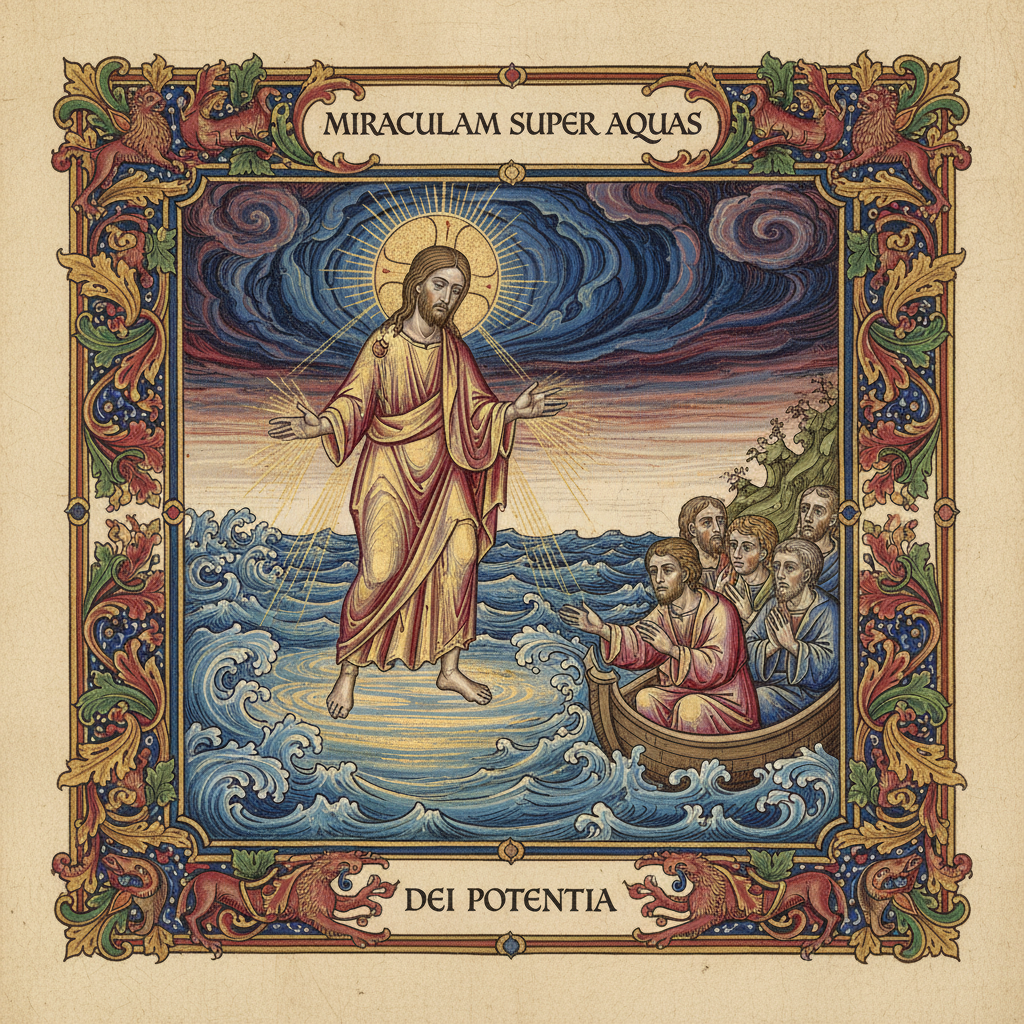
Matthew 14:22-33. After feeding five thousand people with five loaves and two fish, Jesus sends his disciples ahead by boat and goes up a mountain alone to pray. Sometime between 3 and 6 AM, the disciples are in the middle of the Sea of Galilee, fighting a headwind, and they see a figure walking toward them on the water.
They are terrified. They think it’s a ghost.
Jesus calls out: “Take heart; it is I. Do not be afraid.”
Peter — impulsive, reckless, faithful Peter — shouts back: “Lord, if it is you, command me to come to you on the water.”
And Jesus says: “Come.”
Peter gets out of the boat. He walks on water. He is actually doing it, a human being defying surface tension and density and gravity, until he looks at the wind and waves and remembers what is normally true, and he sinks.
Jesus catches him immediately. “O you of little faith, why did you doubt?”
Notice the sequence: Peter does the impossible, then stops because he remembers it’s impossible. The miracle works until the rational assessment kicks in. This is either profound theology about the relationship between faith and reality, or it’s a story about how Peter needed better focus. Probably both.
Tier 2 — The Parting of the Red Sea
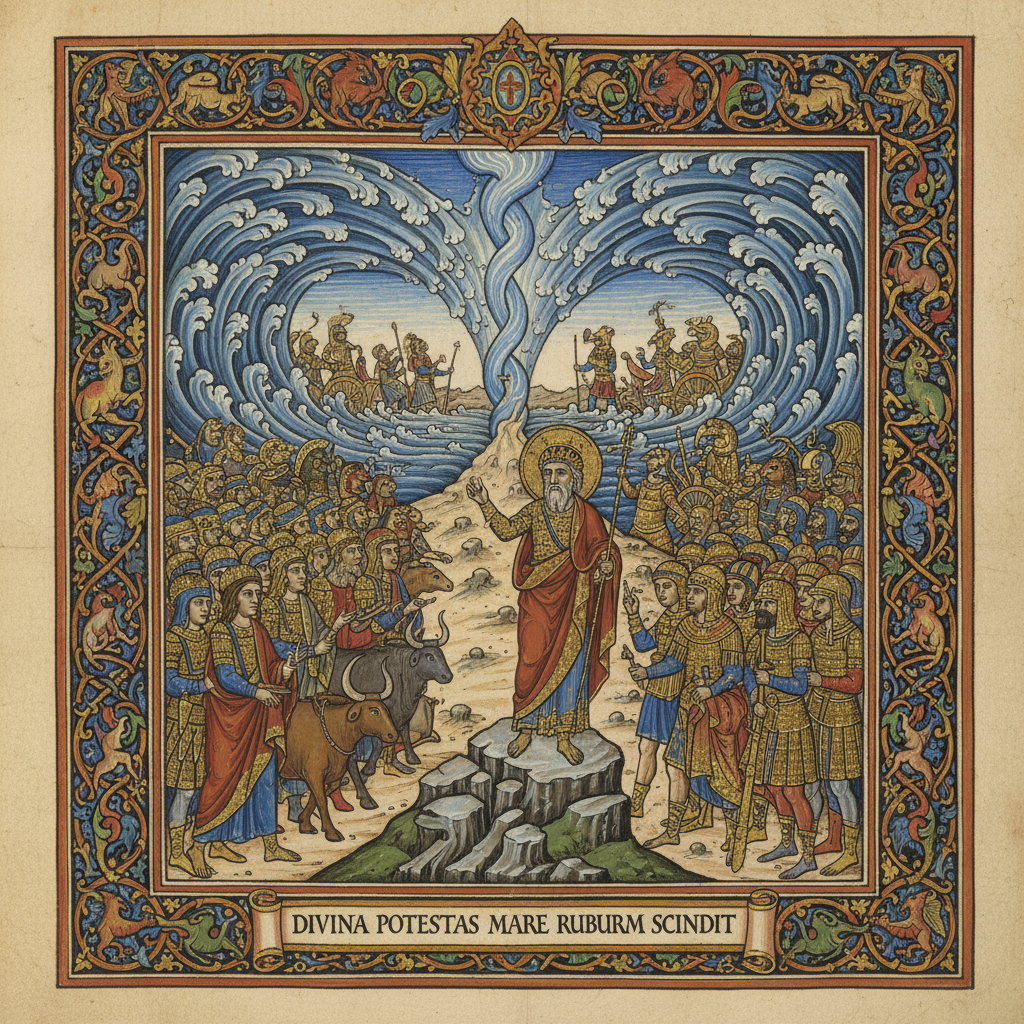
Exodus 14. The entire Exodus narrative builds to this moment. Six hundred thousand people (the Biblical number, which scholars debate) are camped at the sea’s edge with Pharaoh’s army closing behind them. Moses raises his staff. God sends a strong east wind that blows all night.
By morning, the sea is divided. Walls of water on both sides. The ground between them is dry.
The Israelites cross. The Egyptians follow. Moses raises his hand again. The walls collapse. The army is gone.
The miracle has layers. The crossing is impressive. But the return of the water — the timing of it, the precision of it, the complete destruction of the pursuing force — is what Exodus lingers on. It’s not just that Israel escaped. It’s that the threat was permanently ended. The army that enslaved them for four hundred years is at the bottom of the sea.
Miriam the prophetess takes a tambourine and leads the women in dancing and singing on the other shore. The oldest piece of Hebrew poetry in the Bible may be her song: “Sing to the Lord, for he has triumphed gloriously; the horse and his rider he has thrown into the sea.”
The miracle isn’t just physics. It’s the beginning of a people.
Tier 2 — Krishna Lifts Govardhan
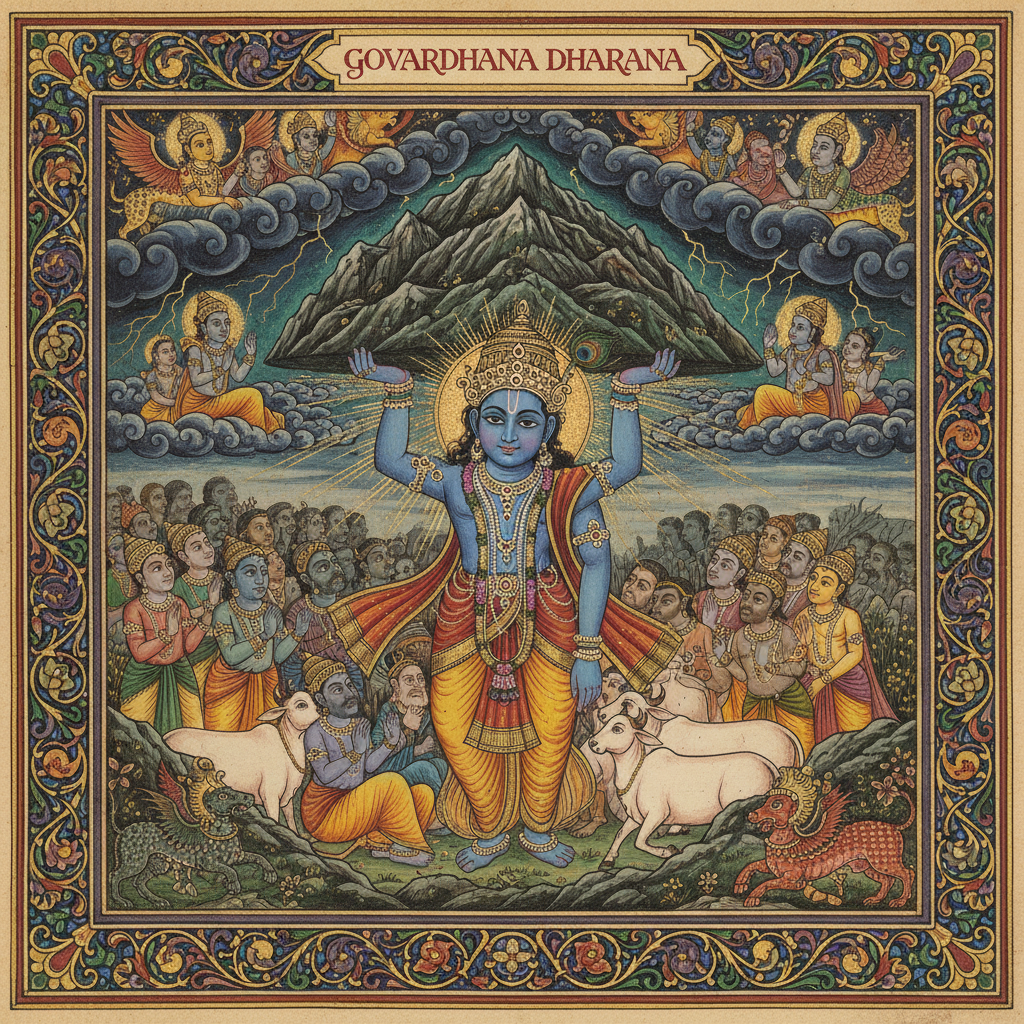
The Bhagavata Purana. The village of Vrindavan is preparing its annual sacrifice to Indra, king of the gods and lord of rain. Seven-year-old Krishna persuades them to stop — to worship the mountain Govardhan instead, which feeds their cattle and protects their home.
Indra is furious. He sends nine days of torrential storm — clouds that flood the earth, rain that could drown livestock and collapse houses. His rage is the rage of a god who has been disrespected by a child.
Krishna lifts Mount Govardhan with one hand. He holds it up like an umbrella over the entire village for seven days. Every person, every cow, every dwelling shelters beneath it. The rain cannot touch them.
On the seventh day, Indra appears. He has understood what he is dealing with. He bows his head. He acknowledges that he attacked a village protected by God himself.
Krishna lowers the mountain back into place and tells everyone to go home.
The miracle is not just the physical impossibility of a child holding a mountain. It’s the casualness of it. He’s seven years old. He holds the weight of a mountain for a week. He does not strain. He does not grow tired. When it’s over he just puts it down, as if setting down a dish.
The Gopis (cowherd girls) watching would later say they saw him eating yogurt at the same time.
Tier 2 — Maui Lassoes the Sun
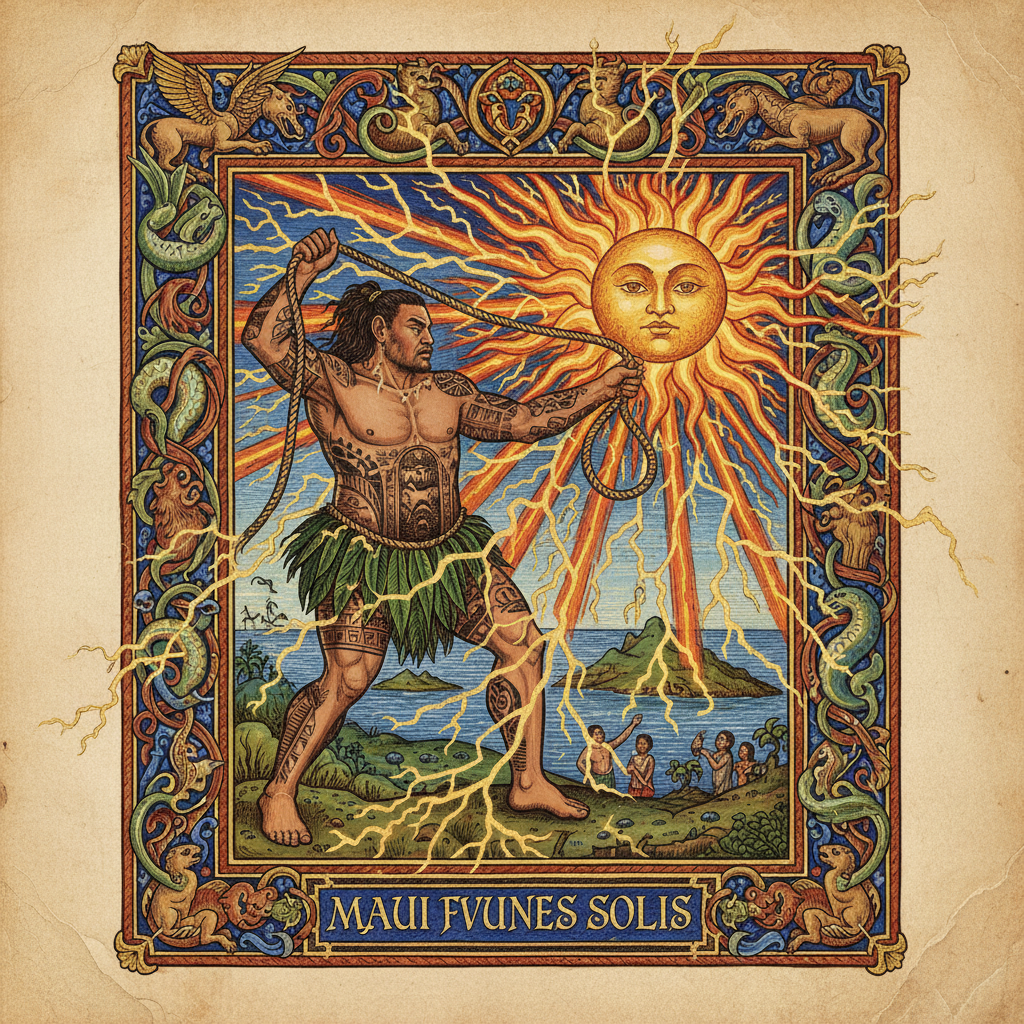
Māori and Polynesian tradition. The sun used to move too fast. Days were too short. Crops couldn’t grow. People didn’t have enough light to finish their work, to dry their fishnets, to live properly. Maui’s mother wept because her barkcloth never dried.
Maui had enough. He braided a rope from his sister Hina’s magical hair — some versions say from his own power — and went to the place where the sun rises from its hole in the earth. He and his brothers waited in darkness with their ropes and clubs.
The sun rose. Maui threw his rope. He caught the sun by its rays.
The sun begged. Maui beat it anyway — clubs, ropes, beating the sun until it agreed to travel more slowly across the sky. Some versions say he knocked out some of the sun’s teeth, which became shooting stars.
The days got longer. The crops could grow. The fishnets dried.
What makes Maui’s miracle different from Moses commanding the sea or Joshua stopping the sun is the method. There’s no prayer, no divine authority, no word of command. Maui makes a rope from magical hair and hits a star with sticks until it cooperates. It is, in the most technical sense, a mugging. A successful one.
Tier 3 — Lazarus Raised
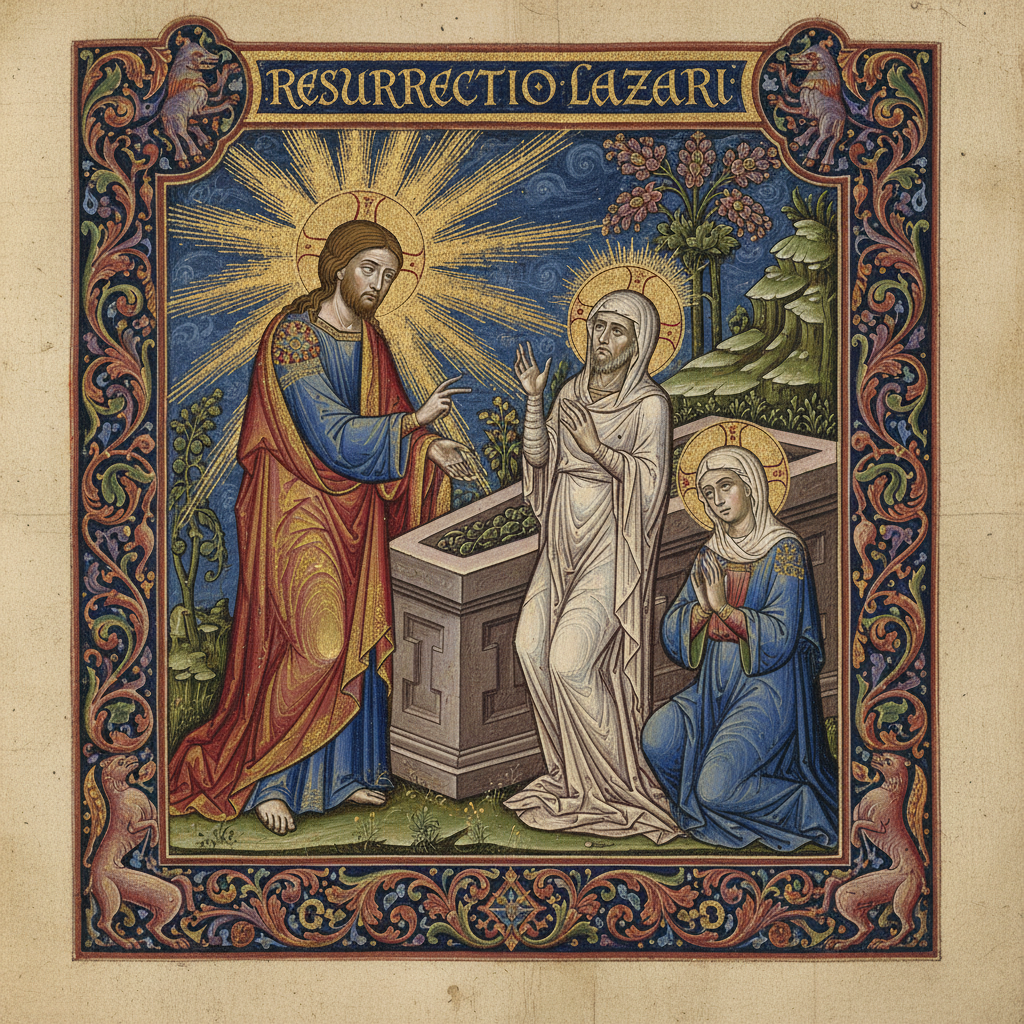
John 11. Lazarus of Bethany is sick. His sisters Mary and Martha send word to Jesus: “Lord, he whom you love is ill.” Jesus waits two more days. By the time he begins traveling, Lazarus is already dead.
When Jesus arrives, Martha comes out to meet him and says: “Lord, if you had been here, my brother would not have died.”
Jesus weeps. This is the shortest verse in the Bible — “Jesus wept” (John 11:35) — and one of the most debated. He knows what he’s about to do. He wept anyway. The grief is real even when the ending is different.
At the tomb, Jesus prays loudly — John notes he is praying for the benefit of the witnesses, not because God needs to be persuaded. Then he calls out: “Lazarus, come out.”
A man who has been dead for four days, who is wrapped in linen burial cloths and beginning to decompose, walks out of a cave tomb.
The crowd is told to unwrap him. They do.
The Pharisees hold an emergency council. This miracle, specifically, is what triggers the formal decision to kill Jesus. Not the healings, not the feeding of multitudes, not the exorcisms — Lazarus. A public resurrection in a suburb of Jerusalem, four days after death, witnessed by a crowd of mourners. They cannot deny it happened. They decide that if they don’t stop him, Rome will come and destroy them all.
The miracle that is most undeniable is also the miracle that ends in a cross.
Tier 3 — Osiris Reassembled
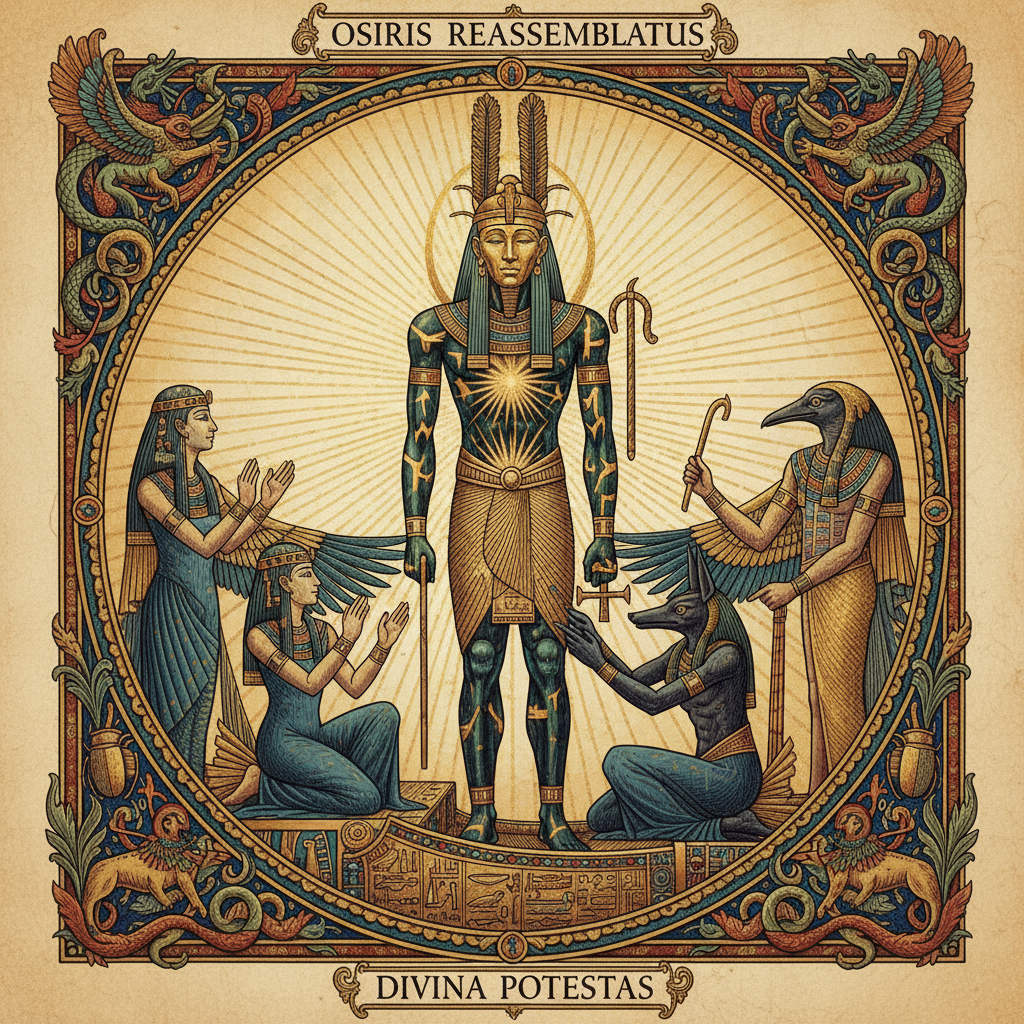
The murder is political. Set, Osiris’s brother and rival, kills him and scatters his body. Different texts give different numbers and locations for the pieces — the most common count is fourteen. Isis, Osiris’s wife, gathers them.
She finds thirteen of the fourteen pieces. The fourteenth — his phallus — was swallowed by a fish of the Nile. She fashions a replacement from gold.
Then she performs the resurrection. She transforms herself into a bird (a kite, in most versions) and beats her wings over the assembled body with such power that she breathes life back into him. She conceives Horus. Then Osiris descends to rule the kingdom of the dead, because he has crossed its threshold and cannot fully return to the living.
This resurrection matters differently than the others. Lazarus comes back to life in the world of the living, fully restored. Osiris comes back, but not to this life — he becomes Lord of the Dead. His resurrection is a partial crossing: he lives again, but in the other realm. He rules from the other side.
The miracle here is also a love story. Isis doesn’t petition a higher power. She doesn’t pray. She uses every form of divine magic she possesses and refuses to accept that her husband is gone. The resurrection of Osiris is the direct consequence of Isis’s will.
In the Pyramid Texts — among the oldest religious writings in the world — the dead pharaoh is identified with Osiris and the living heir with Horus. Every Egyptian king’s funeral reenacted this resurrection. For thousands of years, one of the most important rituals in the ancient world was a woman gathering the pieces of her murdered husband and breathing him back to life.
Tier 3 — Elisha’s Bones
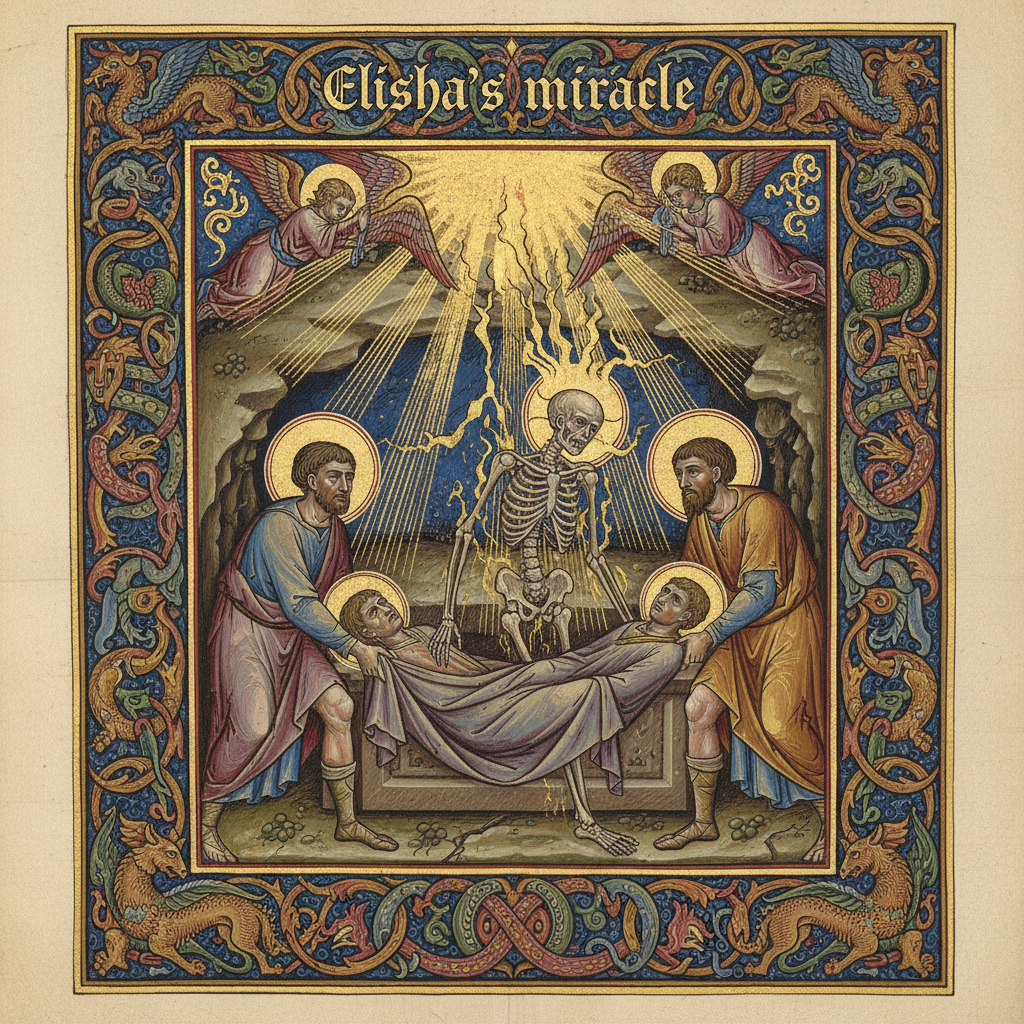
2 Kings 13:20-21. One of the strangest two verses in the Bible.
Elisha has died and been buried. His tomb is in the ground. A different man has died — a man we are told nothing about, not his name, not who he was, not why he died. His mourners are carrying his body to bury it when they see a band of Moabite raiders.
They panic. They throw the body into the nearest open grave — which happens to be Elisha’s — and run.
“As soon as the man touched the bones of Elisha, he revived and stood on his feet.”
That’s it. No prayer. No command. No prophet present. No divine speech. A dead man accidentally touches a dead prophet’s bones and stands up alive.
The Prophet has been dead long enough to be bones. The power somehow outlasted the man. The miracle is passive — it happens not because anyone tried to do it, not because anyone had faith, not because anyone performed a ritual. A dead body happens to touch holy remains and cannot stay dead.
This raises questions that the text declines to answer. How much divine power is stored in the remains of a prophet? Can holiness be absorbed? Is this the mechanism behind the veneration of saints’ relics across Catholic and Orthodox Christianity? The text just gives you the two verses and moves on.
The man who stood up in that grave has the most interesting resurrection in the Bible that nobody knows about.
Tier 4 — Krishna’s Universal Form
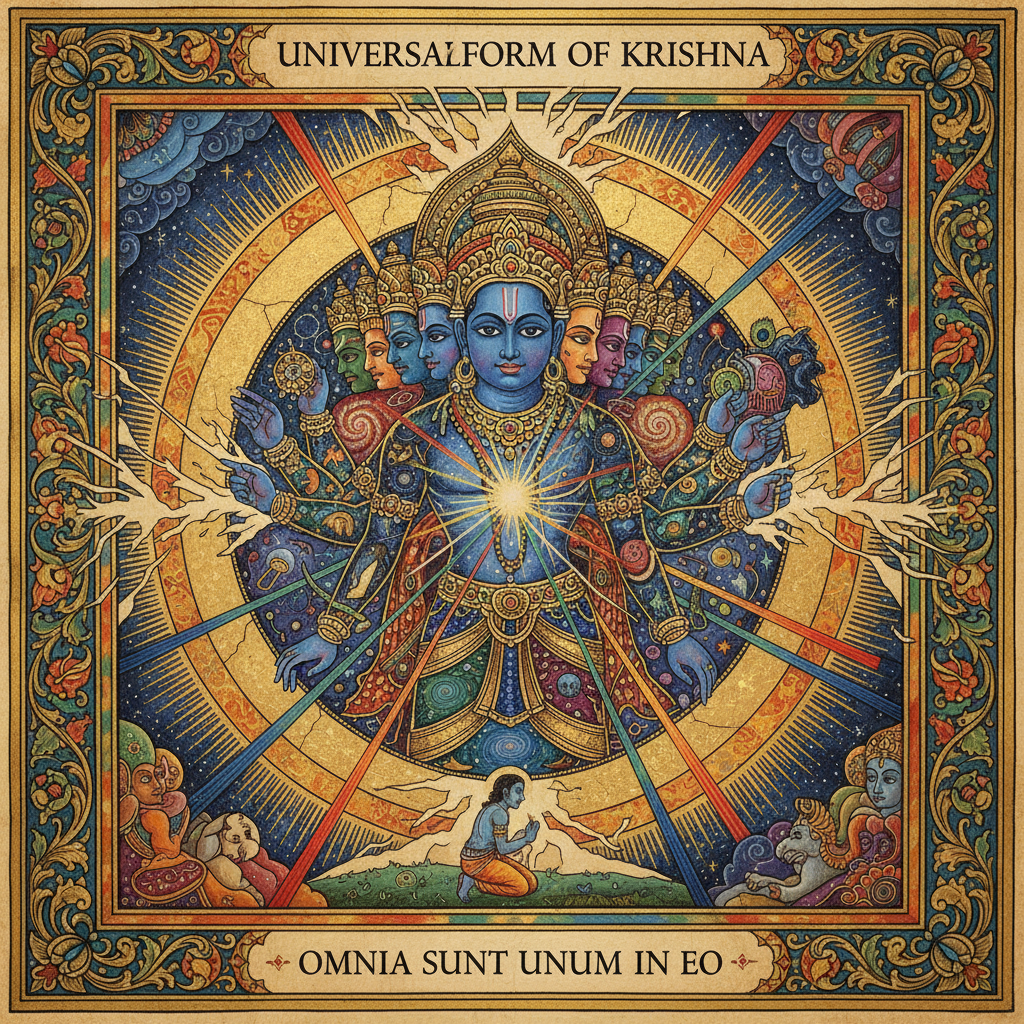
Bhagavad Gita, Chapter 11. Arjuna has just asked to see Krishna’s true divine form. Krishna grants him “divine sight” — because human eyes cannot survive what he’s about to see.
What Arjuna sees:
Thousands of faces and arms. Every deity of the Hindu tradition present within Krishna’s body. The stars and suns and galaxies visible in his torso. Entire armies being consumed by his mouths — including Arjuna’s own cousins, already dead before the battle begins, being drawn into the teeth of time. Every being that has ever existed or will exist is present, simultaneously, in one form.
Arjuna shakes. He begs Krishna to stop. “I have seen what no one should see,” he says, or something like it. “Show me again your gentle form. I am overwhelmed.”
Krishna shows mercy and returns to the familiar two-armed form.
The miracle here isn’t that Krishna can do something impossible. It’s that reality as we experience it is a reduction. What we interact with — the world of separate objects and separate people and separate events — is a subset of what actually is. Krishna’s four-armed form is the reduction of the reduction. The smiling cowherd who plays flute and steals butter is the reduction of that.
The Vishvarupa reveals not a power but a structure. The universe is inside the deity. The deity is not inside the universe.
Tier 4 — Creation Ex Nihilo
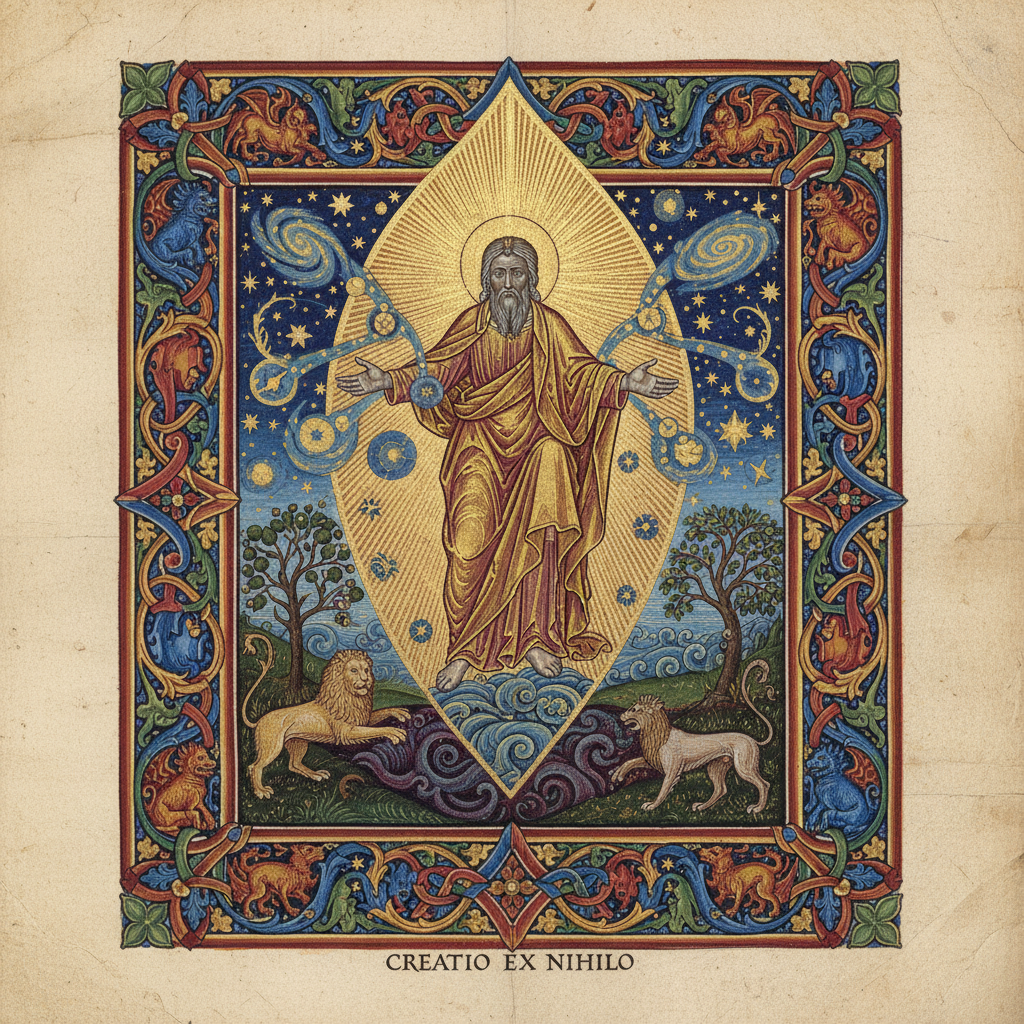
Genesis 1:1. “In the beginning, God created the heavens and the earth.”
The miracle of creation ex nihilo — creation from nothing — is philosophically unlike anything else on this list. Every other miracle takes something and changes it. Water becomes wine. A dead man becomes alive. A mountain is lifted. But creation from nothing means the raw material does not exist before the act. There is nothing to work with. There is no “before.”
The mechanism in Genesis is speech. “God said: Let there be light.” And there was light. Not “God reached down and formed light from existing material.” Not “God converted dark energy into photons.” God spoke, and the thing the words described came into existence.
Islamic theology uses the phrase “Kun fayakun” — “Be, and it is.” The Qur’an presents creation as a divine command that cannot fail because the speaker is the one who defines what is possible.
The Gospel of John opens differently from Genesis but mirrors it exactly: “In the beginning was the Word, and the Word was with God, and the Word was God.” The creative act of Genesis and the person of Jesus are identified as the same thing. The universe was spoken into being by the same Word that later spoke to disciples on a shoreline.
The impossibility here is total. Nothing becomes everything. Silence becomes the Big Bang. The Speaker precedes the speaking. And the speaking is the universe.
Tier 4 — The Songlines
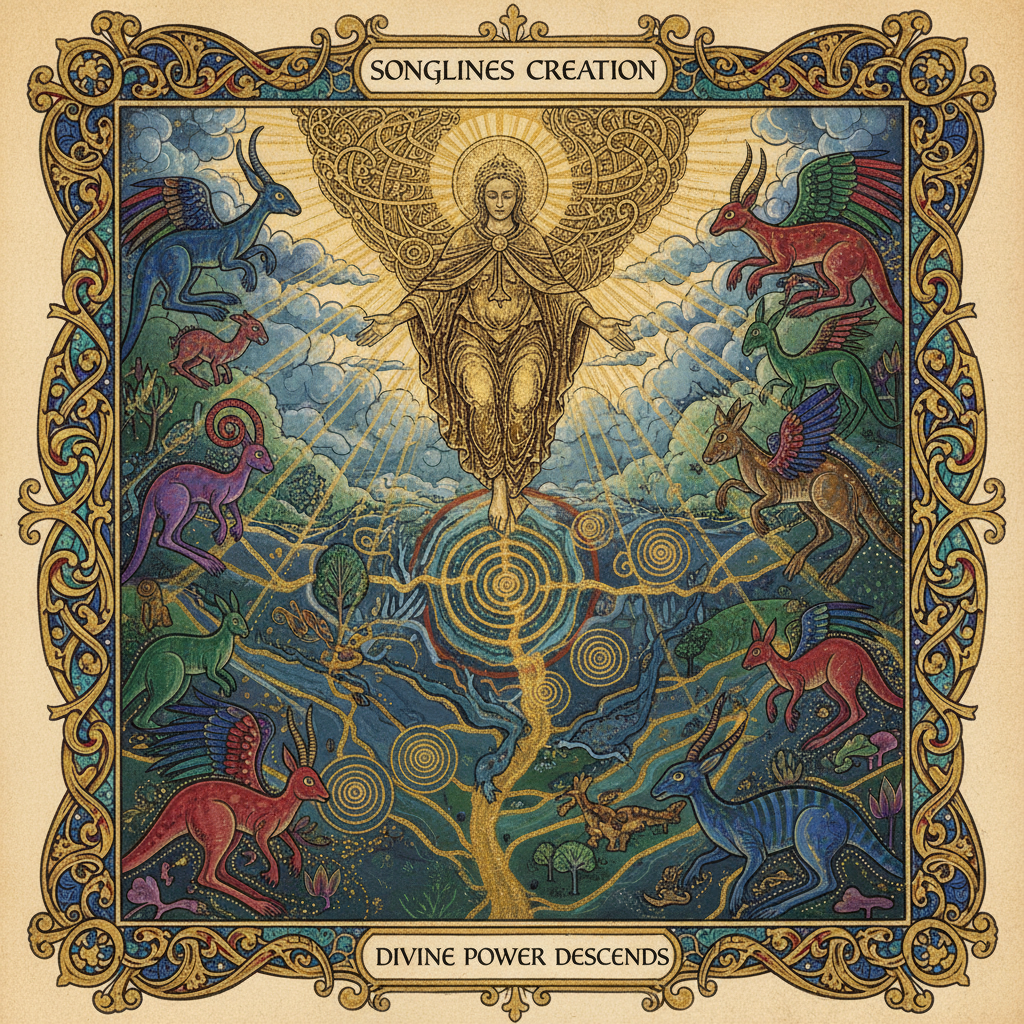
In the beginning, the Aboriginal Dreaming, the ancestor beings moved across a featureless world and sang it into shape. Where they walked and sang, the land took form. Hills, rivers, rocks, desert, coastline — all of it the physical residue of songs that have been sung continuously since the world began.
This is not metaphor. The Songlines are literal navigational paths that crisscross the Australian continent. A person who knows the right songs can travel thousands of kilometers without a map, because the song is the map. The landscape and the narrative are a single thing.
When a person sings a section of their Songline, they are not describing the creation. They are continuing it. The song does not just recall that the ancestor beings made this waterhole — the song participates in keeping the waterhole existing in its proper form. To stop singing is to let that part of the world become, in some sense, undone.
This is the most radical creation theology on this list. Genesis says God created the world once, in the past, and it continues on its own. The Dreaming says creation is ongoing, performed continuously by the people who know the songs. The ancestors created it. The descendants maintain it. The landscape is a conversation that started at the beginning of time and cannot stop.
Silence is not peace. Silence is a world forgetting how to exist. — first mention only per entity per file
Tier 5 — The Incarnation
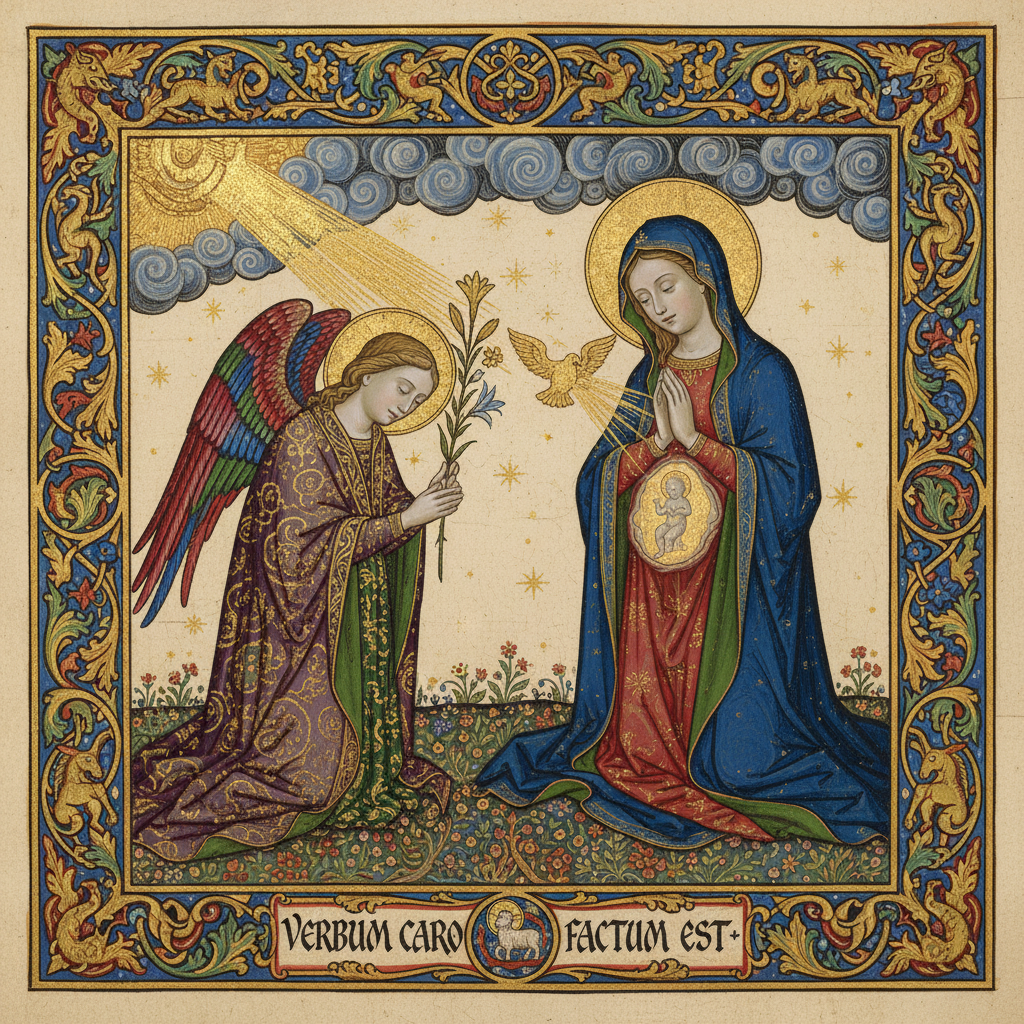
The Nicene Creed, 325 CE. “God of God, Light of Light, Very God of Very God, begotten, not made, being of one substance with the Father; by whom all things were made: who for us men and for our salvation came down from heaven, and was incarnate by the Holy Ghost of the Virgin Mary, and was made man.”
The Incarnation is the paradox at the center of Christian theology. The infinite becomes finite. The eternal enters time. The source of all existence takes on a body that can be hungry and cold and tired and afraid. The one who created matter becomes subject to matter’s rules.
This creates immediate logical problems that the early church spent four centuries arguing about. Was Jesus really human? (Docetism said no — he only appeared human. Condemned.) Was Jesus really divine? (Arianism said only sort of. Condemned.) Is there one will or two? (Monothelitism said one. Condemned.) Every attempt to resolve the paradox was declared heresy. The official position — Chalcedon, 451 CE — is that the paradox must remain a paradox. Fully divine and fully human, two complete natures in one person, without mixture or confusion.
The stakes matter. If Jesus is not fully human, his death does not cover human death. If he is not fully divine, his death doesn’t have enough weight to mean anything. The entire mechanism of Christian salvation depends on holding the paradox without resolving it.
This is the only item on this list where the impossibility itself is theologically load-bearing.
Tier 5 — The Crucifixion as Victory
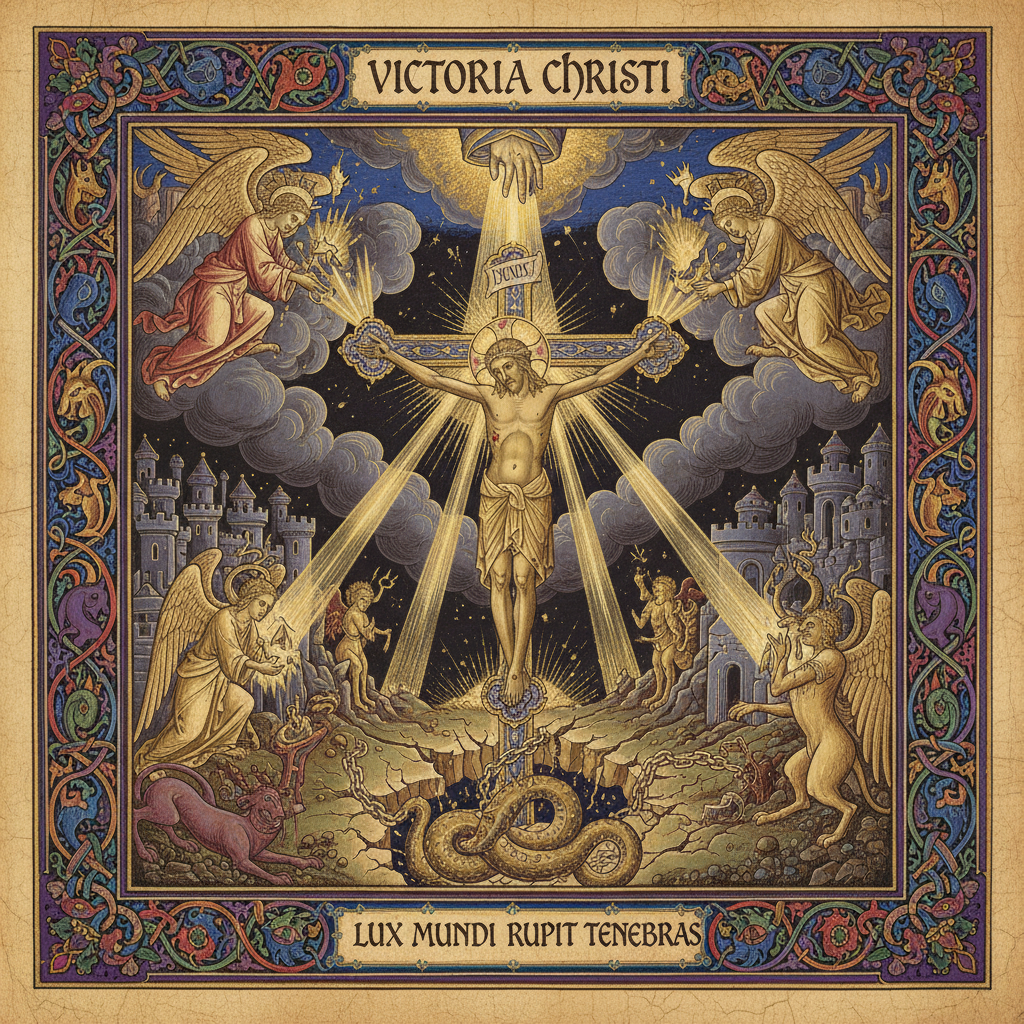
The execution of Jesus of Nazareth by crucifixion in approximately 30-33 CE is the most documented and least disputed event in the New Testament. He was tried, condemned, and killed under Roman authority. Crucifixion was designed to be maximally humiliating — reserved for rebels and criminals and slaves. He died in public, on a hill, watched by soldiers and enemies and a handful of followers.
Every political and military logic of the ancient world would classify this as a complete and total defeat.
The Christian claim: this is the victory.
1 Corinthians 15:55: “O death, where is your victory? O death, where is your sting?” Death is mocked as a defeated enemy. But the mocking is possible only because the one mocking was himself killed.
Colossians 2:15 describes the cross as the moment where Christ “disarmed the rulers and authorities and put them to open shame, by triumphing over them.” He triumphs by being killed. He disarms power by being powerless. He defeats death by dying.
This is not metaphor for the tradition. It’s described as the operative mechanism. The means of defeat was the defeat itself. The weapon that killed him is the weapon he used to win.
There is no parallel in world religion where the central saving act and the central catastrophe are the same event. The Crucifixion doesn’t produce the victory. It is the victory. Weakness conquers power by being weak. The king reigns from an execution device.
The logic requires you to hold both realities simultaneously. Every Christian liturgy since the first century has done exactly that.
Tier 5 — I AM WHO I AM
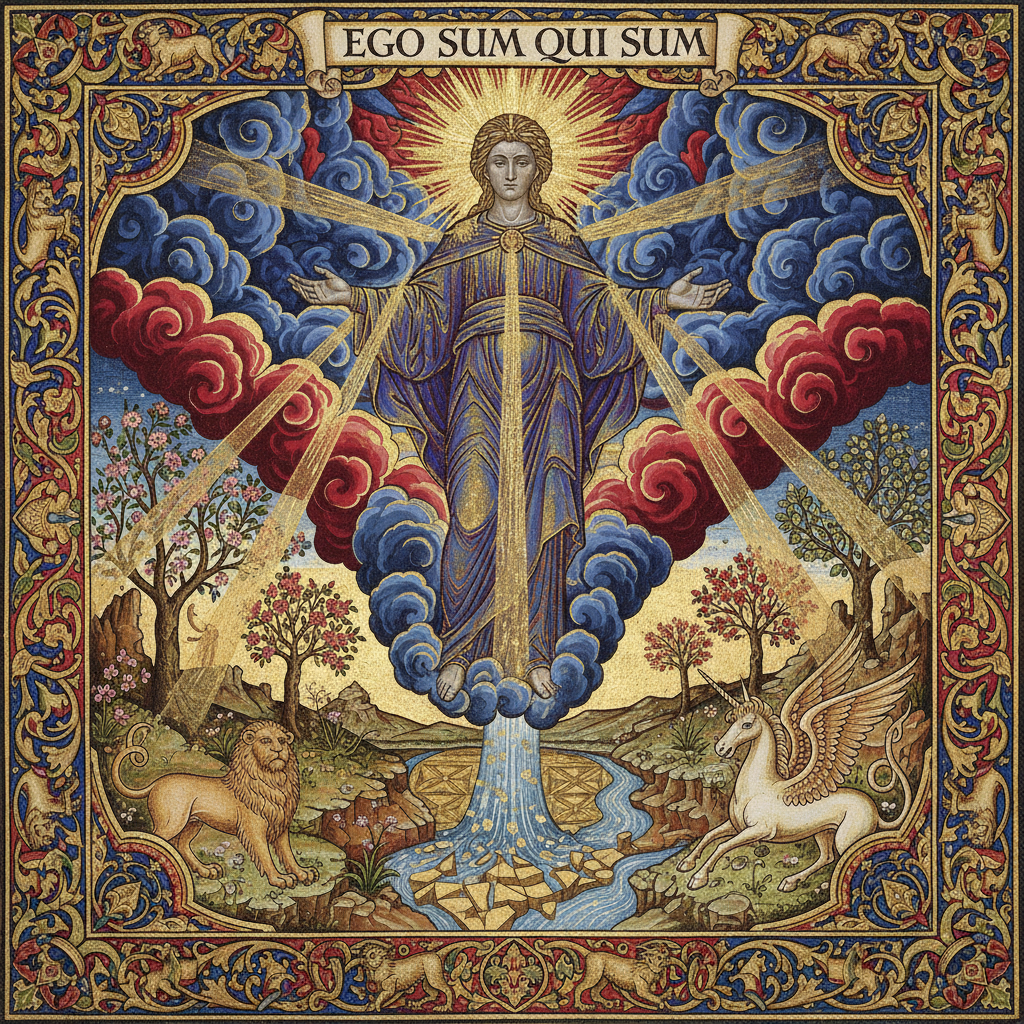
Exodus 3:14. Moses at the burning bush asks a practical question: if the enslaved people ask me who sent me, what name do I give?
The answer is EHYEH ASHER EHYEH. Scholars have filled libraries arguing about this. It is built from the Hebrew verb hayah — “to be” or “to become.” The most literal rendering might be “I AM WHAT I AM” or “I WILL BE WHAT I WILL BE” or “I CAUSE TO EXIST WHAT I CAUSE TO EXIST.”
What makes it a paradox is not mystery. It’s structure.
Most names point outward — they connect a being to something external. A mountain, a role, a quality. Zeus may relate to “sky.” Shiva means “auspicious.” Apollo is unknown but external. God names himself with a statement that points only at itself. The name contains its own definition. The definition IS the name. There is no outside reference from which to triangulate.
Thomas Aquinas would later build his entire ontology on this moment: God is the only being whose essence is existence. Everything else exists contingently — it might not exist, it was caused to exist. Only God exists necessarily, because his name is the verb “to be” applied to himself.
The miracle here is logical rather than physical. The name is not a label. It is a claim that identity and existence are identical. To be God is to be. There is nothing outside the statement to verify it by, and nothing is needed, because the statement verifies itself.
The bush kept burning through the whole conversation. The fire that doesn’t consume was always beside the point. This is what Moses carried back to Egypt.
See also: The Resurrections | The Tests | The Metamorphoses