Part of the Bestiary Compendium
The mother figure is the single most universal deity-type in human religion. Before there were sky gods and thunder lords, there was She — the one who creates, who feeds, who destroys to protect. Every culture on earth, without exception, has looked at the mystery of life entering the world and said: this is divine.
This section honors her in every form.
Art Style
Target aesthetic: Warm, powerful, luminous — not dark mythology but the fierce tenderness of the cosmic mother. Rembrandt lighting, oil painting rendering, divine femininity that radiates both beauty and authority.
hyper-realistic divine feminine portrait, warm golden lighting, the power and tenderness of the cosmic mother, not dark mythology but luminous and fierce, beauty and authority combined, cinematic composition, oil painting rendering, Rembrandt lighting, 8kThe Mothers
| Mother | Tradition | Domain | Her Signature Moment | Source |
|---|---|---|---|---|
| Mary | Christian | Theotokos, Queen of Heaven | ”Let it be to me according to your word” — accepting the impossible | Luke 1:38 |
| Isis | Egyptian | Magic, motherhood, resurrection | Reassembling murdered Osiris, conceiving Horus, raising him in hiding | Plutarch |
| Kali | Hindu | Time, death, liberation | Standing on Shiva’s body, tongue out, destroying evil to protect creation | Devi Mahatmya |
| Parvati | Hindu | Fertility, love, devotion | Performing such fierce penance that she won Shiva’s love through sheer will | Shiva Purana |
| Durga | Hindu | Invincible warrior-mother | Created by all the gods because no MALE could defeat the demon | Devi Mahatmya |
| Guanyin | Chinese/Buddhist | Mercy, compassion | Hears every cry of suffering in the world; delays her own nirvana to help | Lotus Sutra |
| Yemoja | Yoruba | Ocean, motherhood, protection | Mother of all waters, protector of women and children, vast as the sea | Yoruba tradition |
| Frigg | Norse | Motherhood, foreknowledge | Knew Baldur would die, asked every substance in creation to swear not to harm him — forgot the mistletoe | Prose Edda |
| Brigid | Celtic | Poetry, healing, smithcraft | The triple goddess who became a saint, her flame never extinguished | Celtic/Christian |
| Spider Woman | Native American | Creation, weaving | Wove the world into existence from thought, taught humans to weave | Hopi/Navajo |
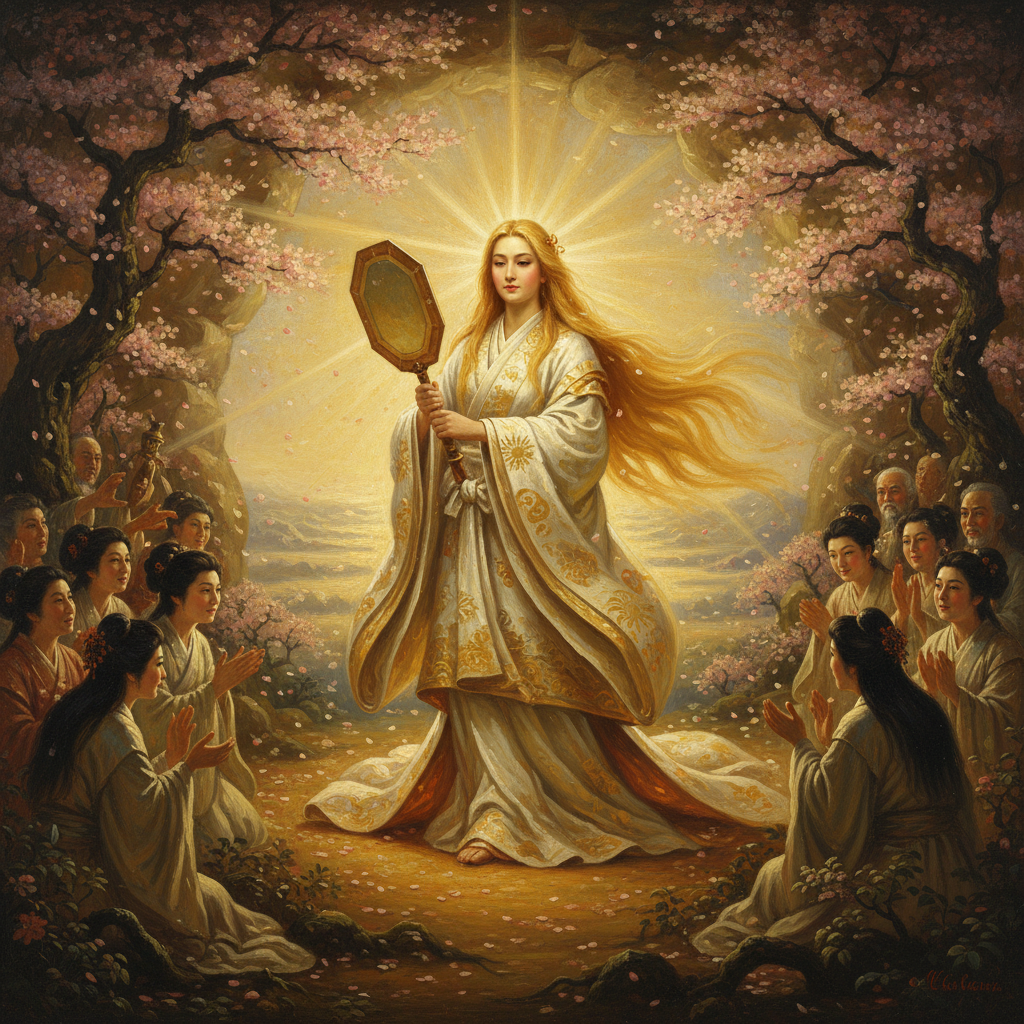
| Amaterasu | Shinto | The sun itself | Retreated into a cave, plunging the world into darkness; lured out by laughter | Kojiki |
| Sophia | Gnostic/Jewish | Wisdom personified | ”I was there when he set the heavens in place” (Proverbs 8:27) — present at creation | Proverbs 8 |
| Eve | Biblical | Mother of all living | The first woman, the first to seek knowledge, mother of every human who ever lived | Genesis 2-4 |
| Danu | Celtic | The source | So ancient that almost nothing is known — she IS the Tuatha De Danann’s ancestor | Irish tradition |
| Pachamama | Andean | The living earth | Not just “earth goddess” but the earth IS her body; you walk on her, eat from her | Andean tradition |
Portraits
1. Mary — Theotokos, Queen of Heaven
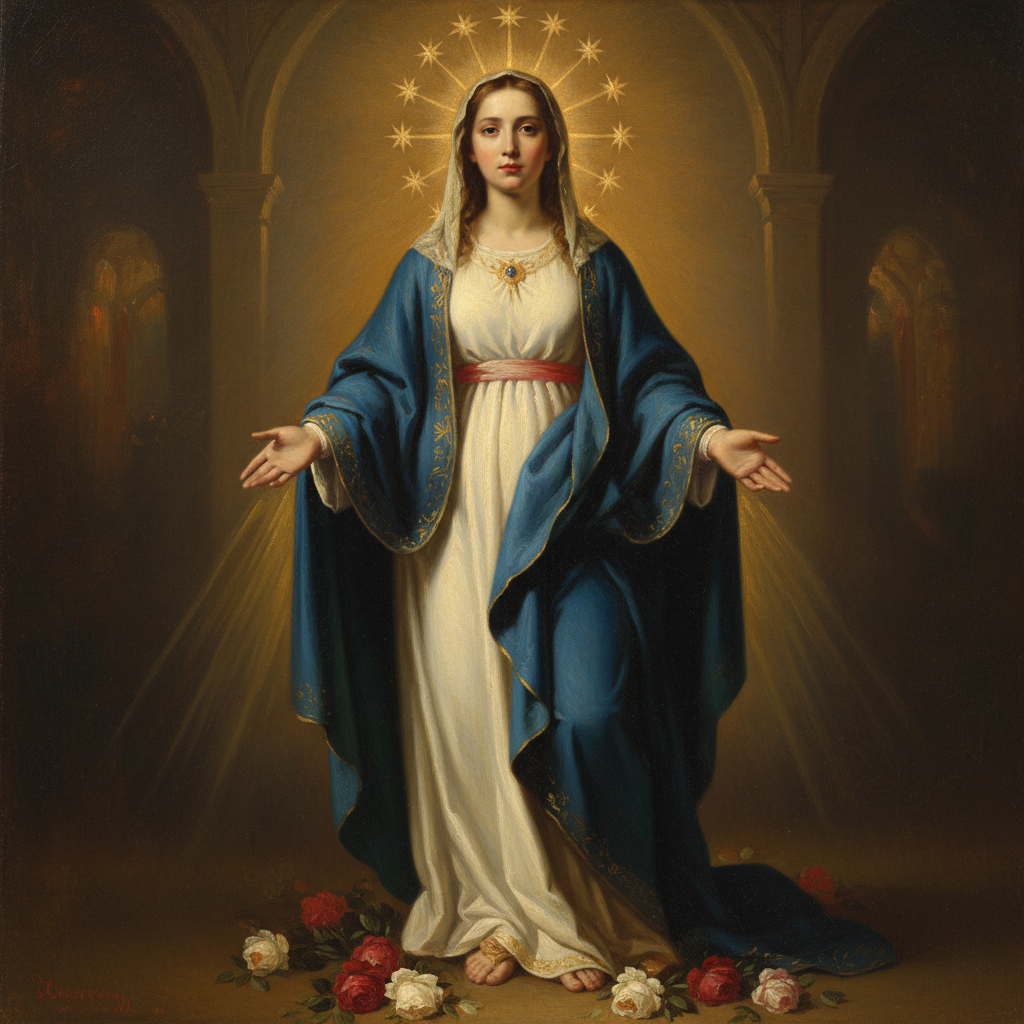
A teenage girl in occupied Palestine says yes to the impossible. She doesn’t understand, she doesn’t need to. “Let it be to me according to your word.” In that single act of acceptance, she becomes the vessel through which God enters the world as a helpless infant. She will watch him die. She will not break. The Church would later call her Theotokos — God-Bearer — and crown her Queen of Heaven. But she started as a girl who said yes when every rational instinct said run.
The Virgin Mary as Theotokos Queen of Heaven, deep blue mantle over white robes, golden halo radiating twelve stars, hands open in acceptance, serene face of a young woman bearing impossible weight with grace, soft candlelight illuminating her from within, roses at her feet, hyper-realistic divine feminine portrait, warm golden lighting, the power and tenderness of the cosmic mother, not dark mythology but luminous and fierce, beauty and authority combined, cinematic composition, oil painting rendering, Rembrandt lighting, 8k2. Isis — She Who Reassembles the Dead
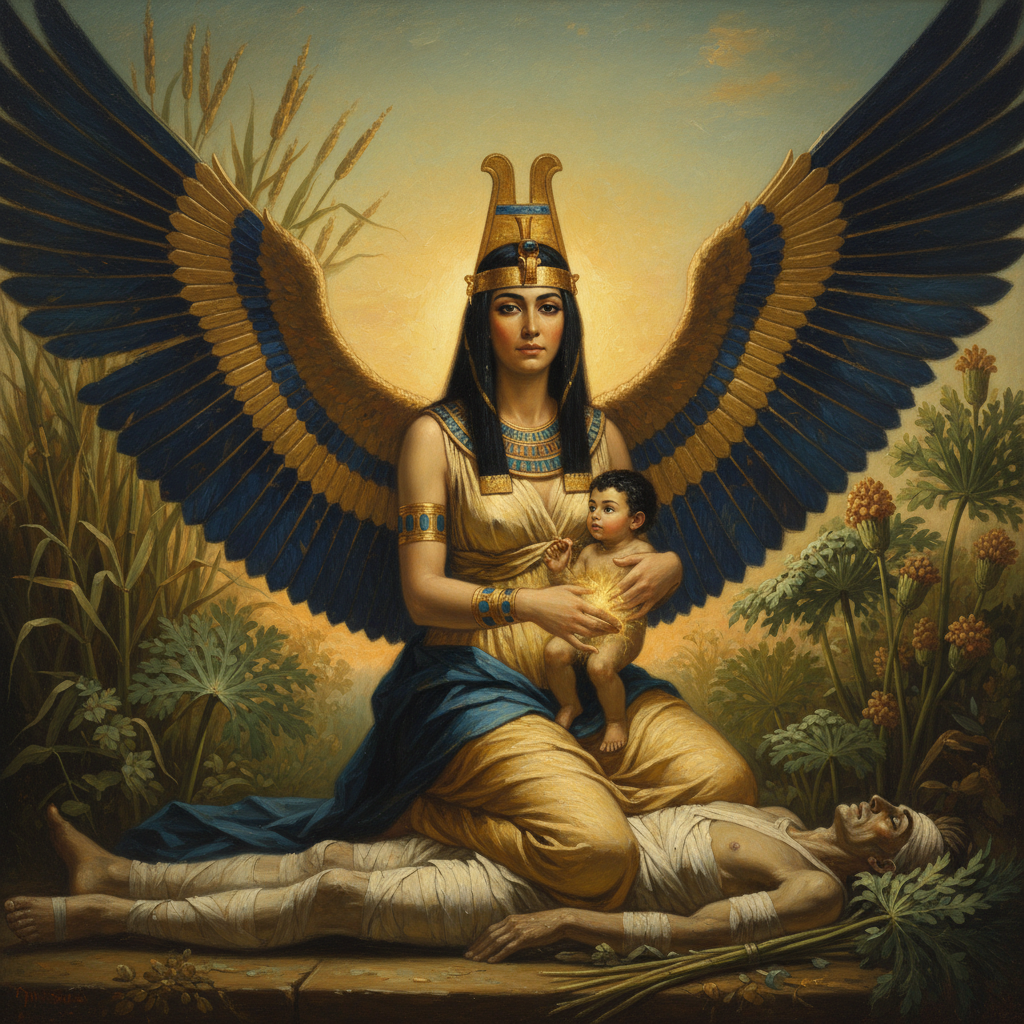
Set murdered Osiris and scattered his body across Egypt. Isis found every piece. She reassembled her husband with magic, conceived Horus from his resurrected body, then hid in the papyrus marshes of the Nile Delta to raise her son in secret — because Set would have killed the child too. She is the prototype of every mother who rebuilds what was broken, who protects what is vulnerable, who refuses to let death have the last word.
Egyptian goddess Isis with vast wings of lapis lazuli and gold, kneeling over the reassembled body of Osiris, her hands glowing with resurrection magic, the infant Horus cradled against her, a throne crown on her head, Nile reeds and papyrus surrounding her, fierce protective maternal love, hyper-realistic divine feminine portrait, warm golden lighting, the power and tenderness of the cosmic mother, not dark mythology but luminous and fierce, beauty and authority combined, cinematic composition, oil painting rendering, Rembrandt lighting, 8k3. Kali — The Mother Who Destroys to Save
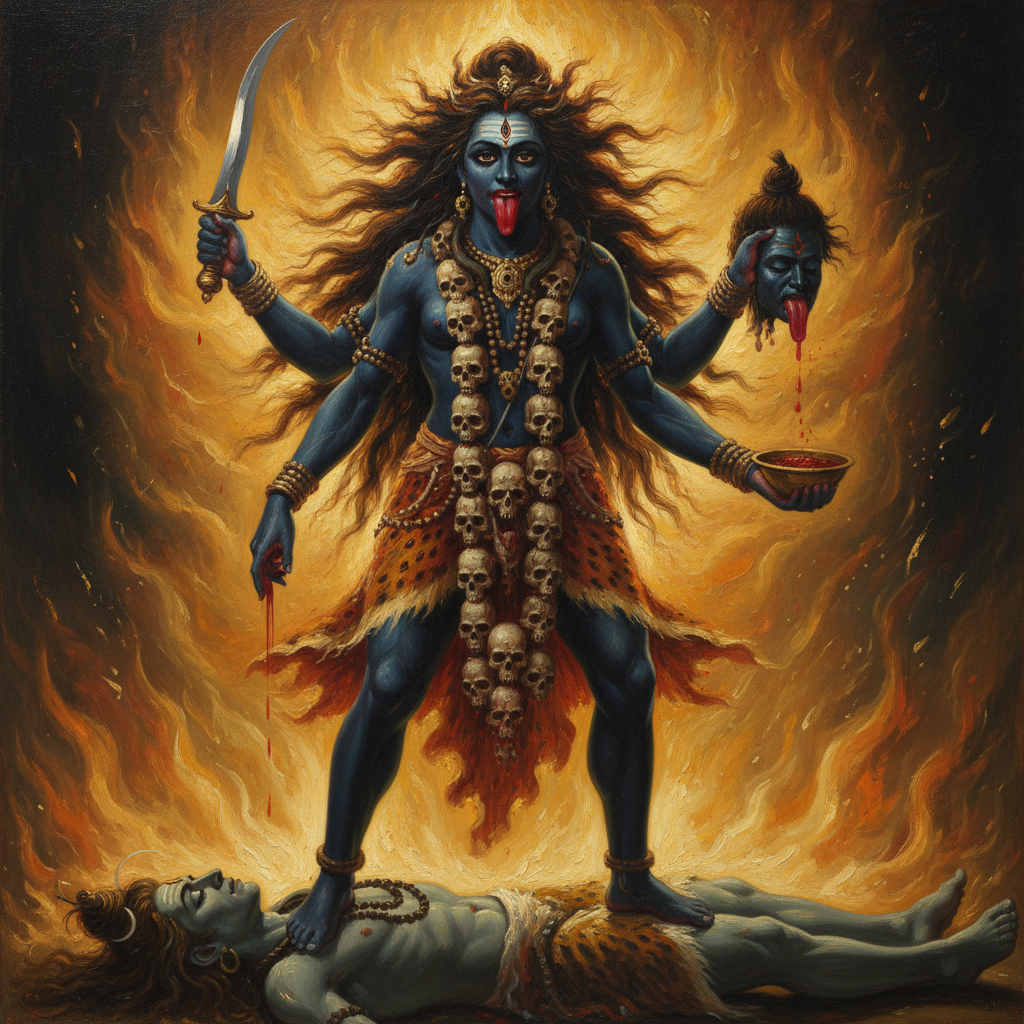
The West sees Kali and sees horror: the skull garland, the severed head, the tongue dripping blood. Hinduism sees a mother so fierce in her protection that she will destroy the entire universe to save her children. She stands on Shiva’s body because even her husband must submit to time. Her blackness is not evil — it is the void before creation, the darkness that contains all light. She is terrifying because real love is terrifying.
Hindu goddess Kali standing triumphant on the body of Shiva, dark blue-black skin, four arms holding sword and severed head and blessing mudra and bowl, garland of skulls, tongue extended, wild hair flowing, but her eyes showing fierce maternal protection not malice, cosmic fire behind her, hyper-realistic divine feminine portrait, warm golden lighting, the power and tenderness of the cosmic mother, not dark mythology but luminous and fierce, beauty and authority combined, cinematic composition, oil painting rendering, Rembrandt lighting, 8k4. Parvati — She Who Won God Through Will
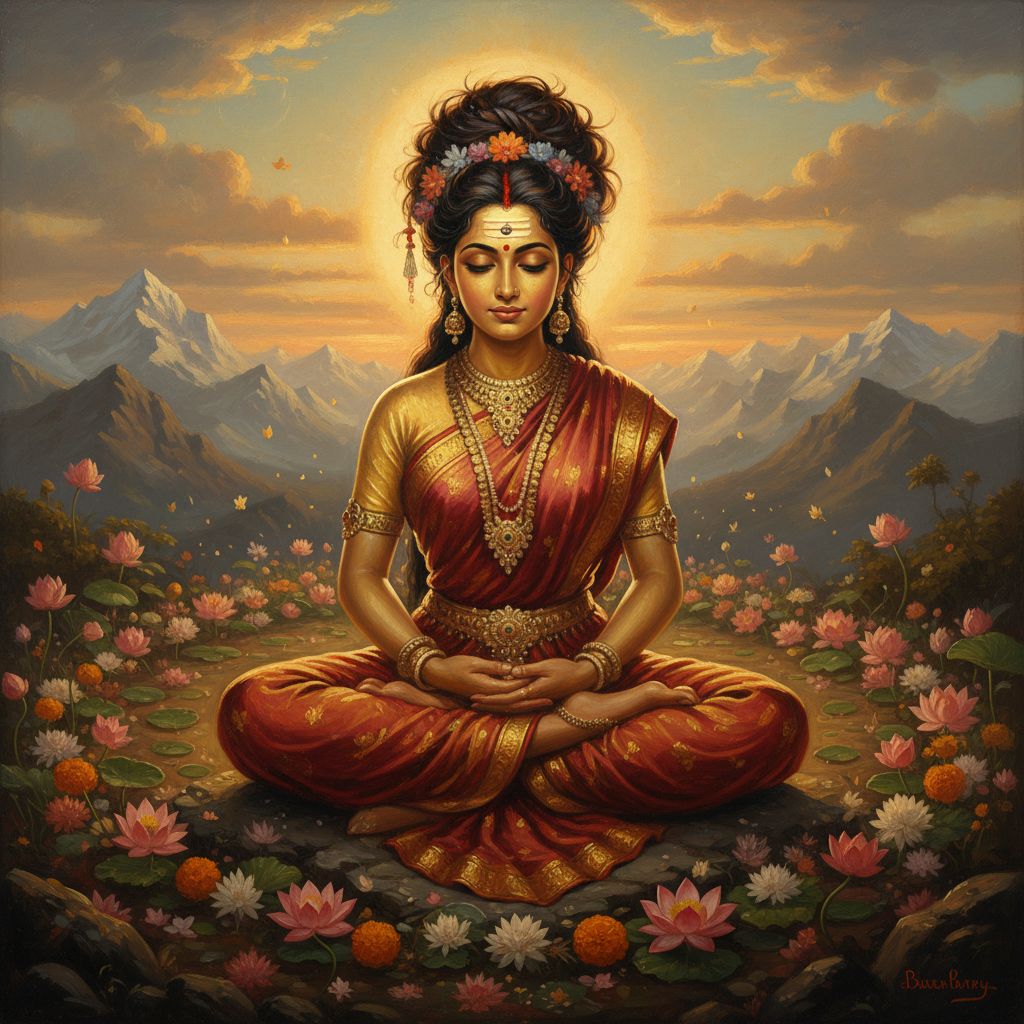
Shiva, the destroyer, the ascetic, the god who wants nothing — Parvati wanted him. And she didn’t seduce him or trick him. She out-asceticed the ascetic. She performed such fierce penance, such absolute devotion, that she generated more spiritual heat than Shiva himself. He had no choice but to love her. She is the proof that devotion is not passive. It is the most powerful force in the universe.
Hindu goddess Parvati in deep meditation performing fierce penance to win Shiva's love, golden skin glowing with tapas fire, seated in lotus position on a mountain peak, her devotion so powerful that flowers bloom around her, third eye beginning to open, serene determination on her face, hyper-realistic divine feminine portrait, warm golden lighting, the power and tenderness of the cosmic mother, not dark mythology but luminous and fierce, beauty and authority combined, cinematic composition, oil painting rendering, Rembrandt lighting, 8k5. Durga — The Goddess They Made Because Men Failed
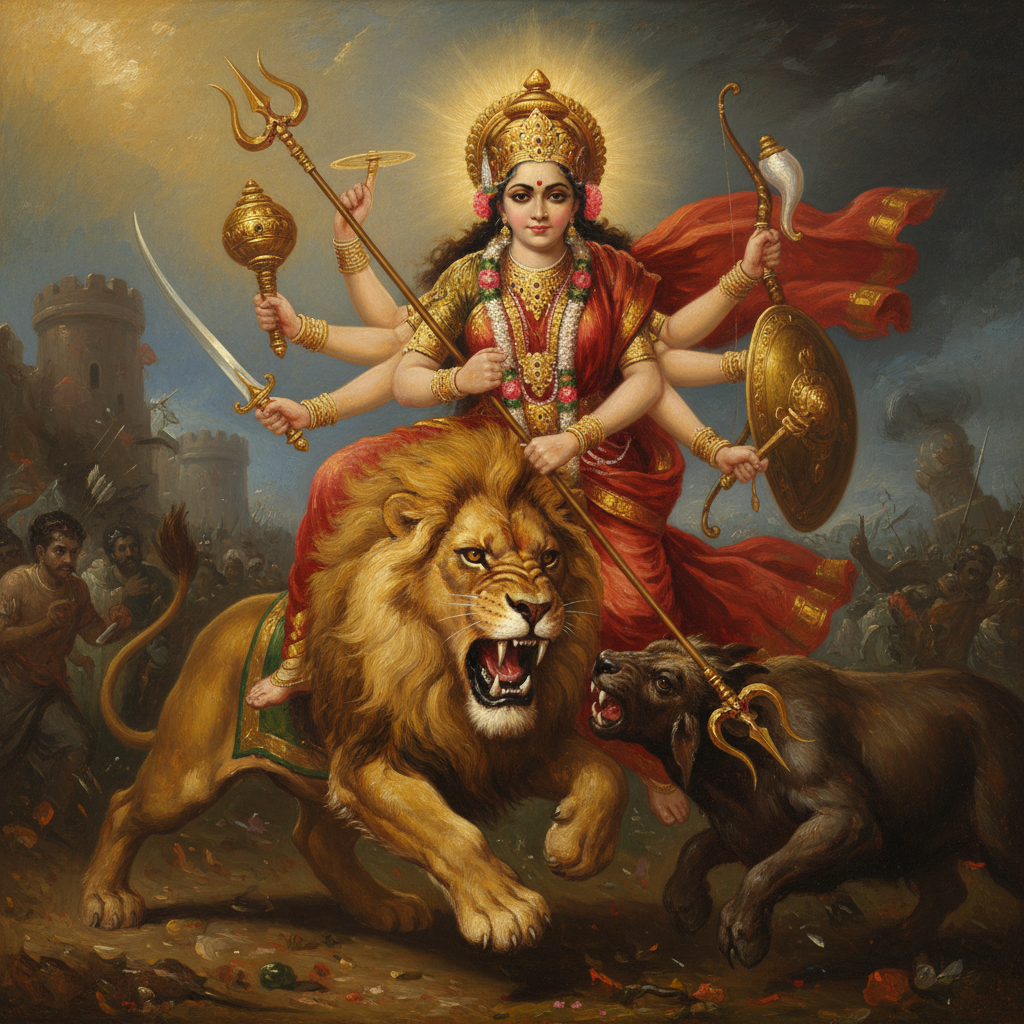
The demon Mahishasura had a boon: no male could kill him. So he conquered heaven. Every god tried and failed. In desperation, they pooled their power and created Durga — the invincible woman. She rides a lion, wields a weapon from every god, and destroys what all of them combined could not. The theology is explicit: when masculine power fails, feminine power saves creation.
Hindu goddess Durga riding her great lion into battle, eight arms each holding a divine weapon gifted by the gods, golden armor and red sari flowing, piercing the demon Mahishasura with her trident, radiant and unstoppable, the warrior-mother who succeeds where all male gods failed, hyper-realistic divine feminine portrait, warm golden lighting, the power and tenderness of the cosmic mother, not dark mythology but luminous and fierce, beauty and authority combined, cinematic composition, oil painting rendering, Rembrandt lighting, 8k6. Guanyin — She Who Hears the Cries of the World
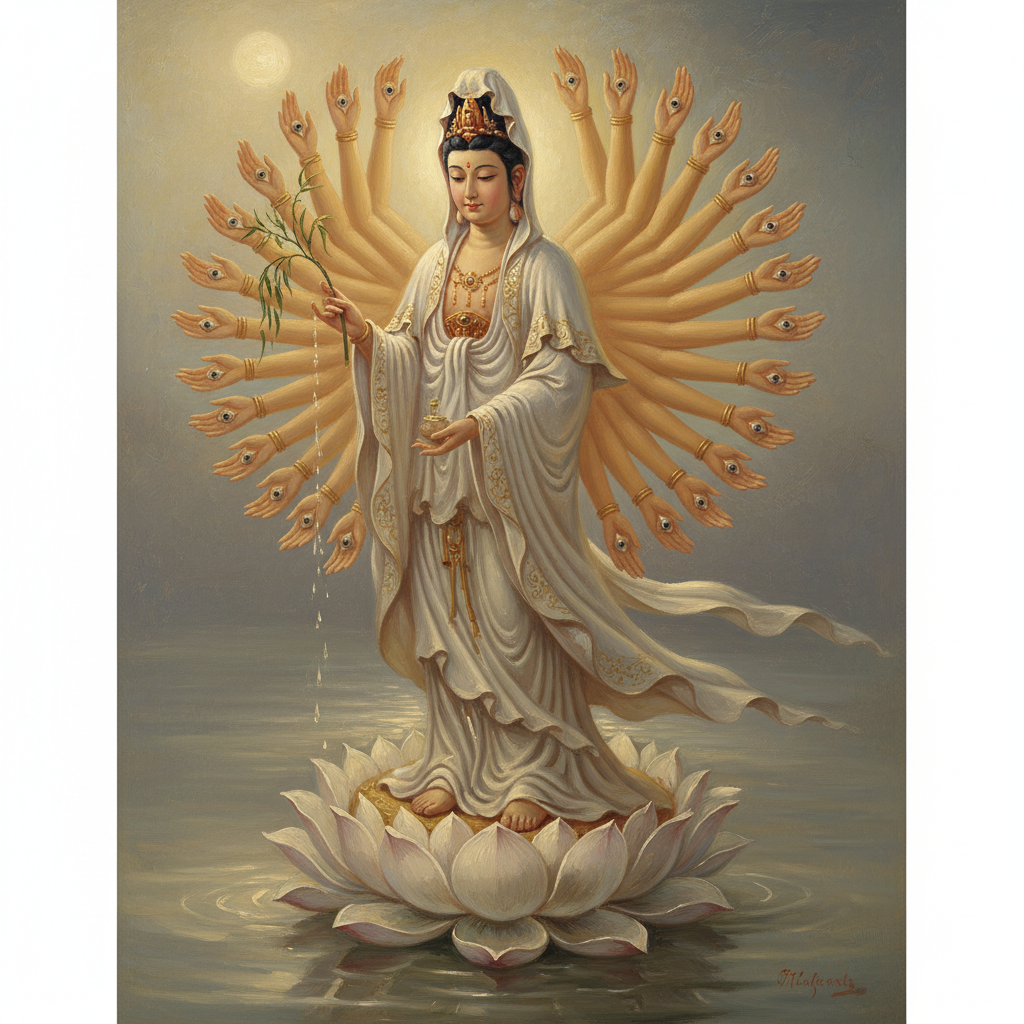
She earned enlightenment. She could have left. At the threshold of nirvana, Guanyin heard the suffering of every living being and turned back. A thousand arms to reach every person in pain. An eye in every palm so she misses nothing. She is the bodhisattva who chose compassion over liberation — who decided that no one gets saved until everyone gets saved.
Chinese Buddhist bodhisattva Guanyin in flowing white robes standing on a lotus over calm waters, a thousand arms fanning behind her each with an eye in the palm, a willow branch dripping with the dew of compassion, serene face hearing every cry of suffering in the world, soft moonlight, hyper-realistic divine feminine portrait, warm golden lighting, the power and tenderness of the cosmic mother, not dark mythology but luminous and fierce, beauty and authority combined, cinematic composition, oil painting rendering, Rembrandt lighting, 8k7. Yemoja — Mother of All Waters
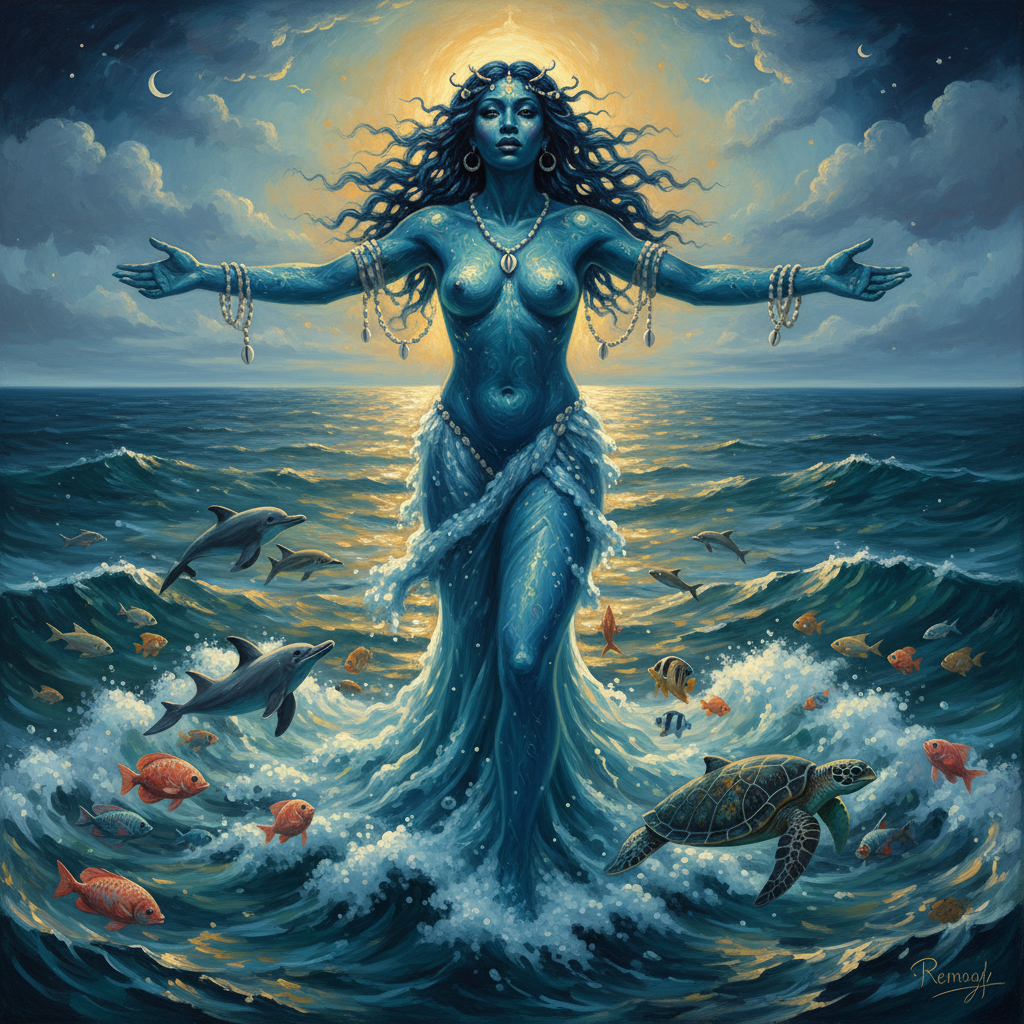
The Yoruba say all water flows from Yemoja. Rivers, oceans, the amniotic fluid that holds every unborn child — all hers. She is protector of women, guardian of children, and vast as the Atlantic itself. When her children were stolen across the ocean in slave ships, she went with them. In Brazil she became Iemanja. In Cuba, Yemaya. In Haiti, La Sirene. You cannot kill a river. You cannot enslave the sea.
Yoruba orisha Yemoja rising from the ocean, skin like deep water, her dress made of flowing waves and seafoam, cowrie shells in her hair, arms wide as the sea itself, fish and sea creatures swimming around her, the mother of all waters protecting women and children, moonlight on the waves, hyper-realistic divine feminine portrait, warm golden lighting, the power and tenderness of the cosmic mother, not dark mythology but luminous and fierce, beauty and authority combined, cinematic composition, oil painting rendering, Rembrandt lighting, 8k8. Frigg — The Mother Who Knew
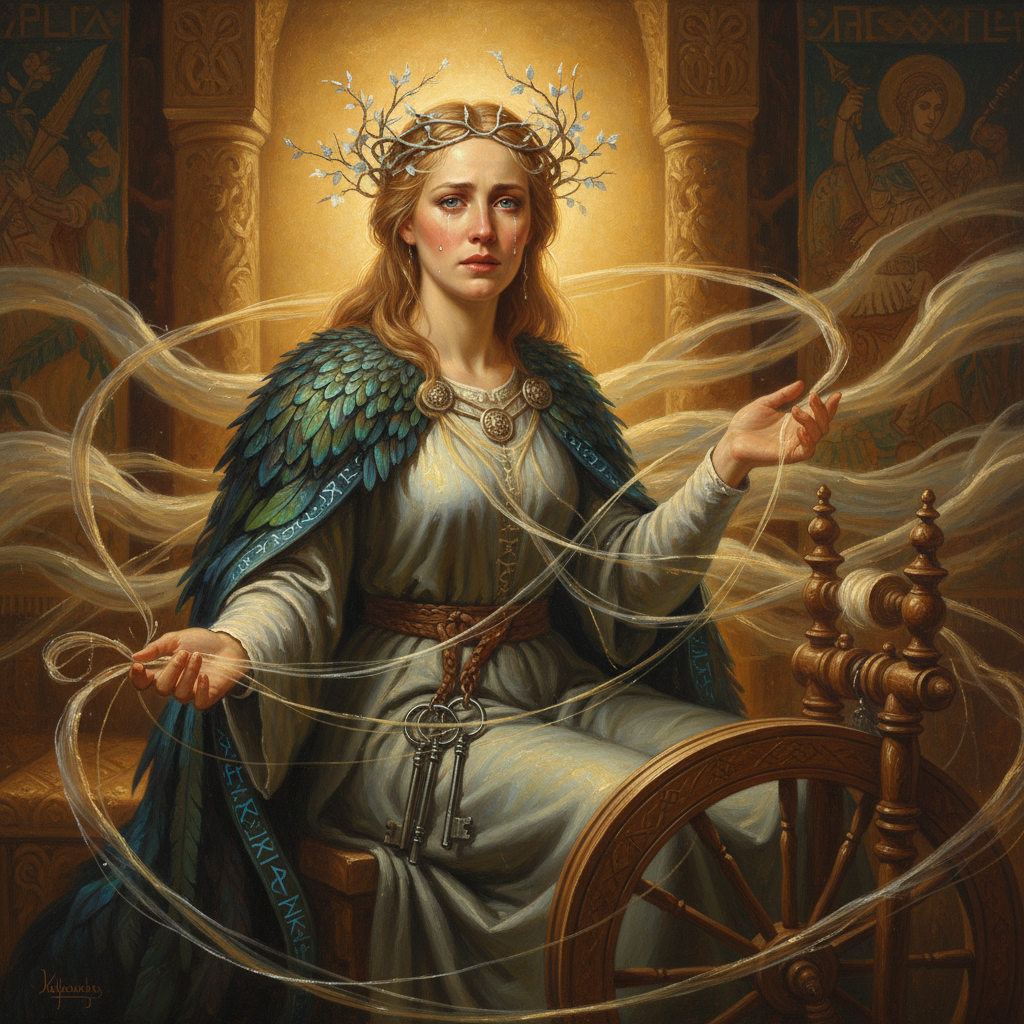
Frigg could see the future but could not change it. She saw her son Baldur’s death and did the only thing a mother could: she asked every substance in creation — every metal, every stone, every plant, every disease — to swear an oath never to harm him. She forgot the mistletoe. One small oversight. Loki found it. And Baldur died exactly as she had foreseen. The cruelest form of motherhood: to know what’s coming and be powerless to stop it.
Norse goddess Frigg seated at her spinning wheel in Fensalir, weaving the clouds of fate, wearing a crown of silver birch and keys at her belt, her face showing the sorrow of foreknowledge as she sees Baldur's death, spinning threads of destiny, raven feather cloak, Nordic runes glowing softly, hyper-realistic divine feminine portrait, warm golden lighting, the power and tenderness of the cosmic mother, not dark mythology but luminous and fierce, beauty and authority combined, cinematic composition, oil painting rendering, Rembrandt lighting, 8k9. Brigid — The Flame That Never Goes Out
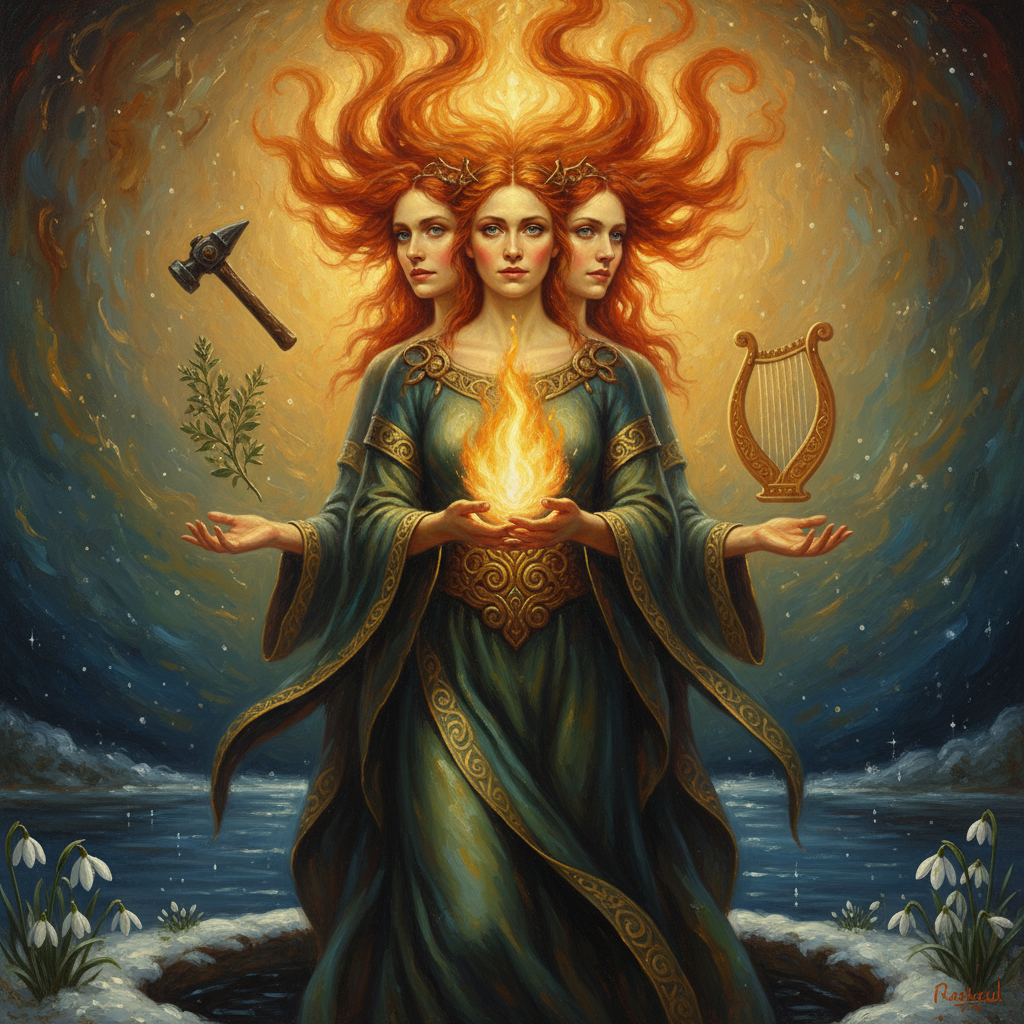
She is three goddesses in one: the poet, the healer, the smith. When Christianity came to Ireland, they couldn’t kill her. So they made her a saint. Saint Brigid of Kildare, whose eternal flame was tended by nuns for a thousand years. The goddess became the saint but the fire never went out. She is the proof that the divine feminine cannot be suppressed — it can only be renamed.
Celtic triple goddess Brigid shown as three aspects merging into one, a sacred eternal flame burning in her hands, a smith's hammer, a healing herb, and a harp surrounding her, her red hair like fire itself, standing at a holy well with the waters reflecting starlight, Imbolc snowdrops at her feet, hyper-realistic divine feminine portrait, warm golden lighting, the power and tenderness of the cosmic mother, not dark mythology but luminous and fierce, beauty and authority combined, cinematic composition, oil painting rendering, Rembrandt lighting, 8k10. Spider Woman — She Who Wove the World
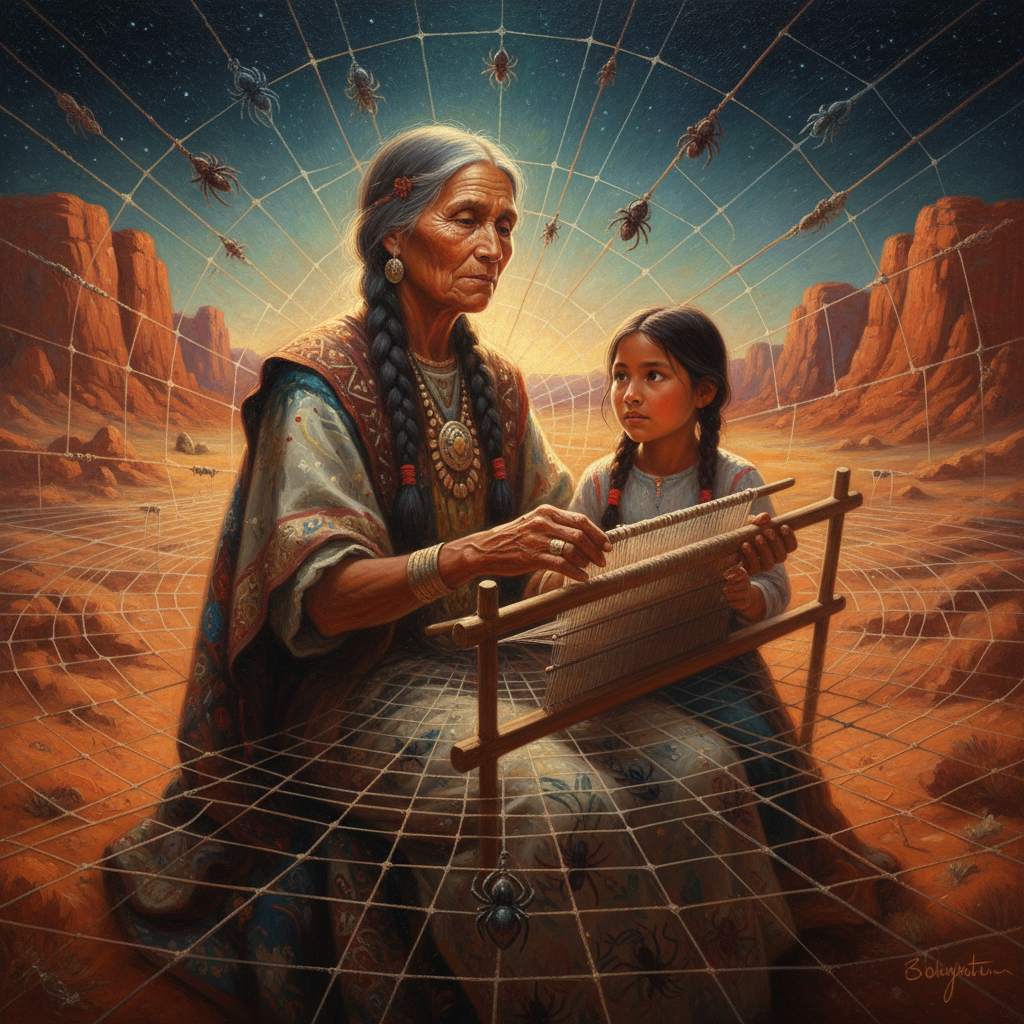
In Hopi and Navajo tradition, the world wasn’t spoken into existence or hammered together — it was woven. Spider Woman sat at the cosmic loom and thought the world into being, thread by thread. Then she taught human women to weave, passing along the fundamental act of creation. Every Navajo rug is a small echo of the original weaving. Every pattern is theology.
Native American Spider Woman sitting at the center of a vast cosmic web she has woven from thought into existence, each strand a different color representing a different people, her aged wise face full of patient love, desert red rock canyon behind her, teaching a young girl to weave on a loom, hyper-realistic divine feminine portrait, warm golden lighting, the power and tenderness of the cosmic mother, not dark mythology but luminous and fierce, beauty and authority combined, cinematic composition, oil painting rendering, Rembrandt lighting, 8k11. Amaterasu — The Sun Herself
When her brother Susanoo defiled her sacred spaces, Amaterasu didn’t fight. She withdrew. She sealed herself in a cave, and the entire world went dark. No sun. No light. No life. The eight million gods panicked. They tried everything. What finally worked? Ame-no-Uzume danced so outrageously that the gods burst out laughing. Amaterasu, curious, peeked out — and the light returned. Depression is the sun going into the cave. Joy is what coaxes her back.
Shinto sun goddess Amaterasu emerging from her cave into light, her radiance so bright it illuminates the entire world after a period of darkness, wearing white and gold robes with a sacred mirror reflecting her light, hair flowing like sunbeams, the other gods rejoicing around her, cherry blossoms falling, hyper-realistic divine feminine portrait, warm golden lighting, the power and tenderness of the cosmic mother, not dark mythology but luminous and fierce, beauty and authority combined, cinematic composition, oil painting rendering, Rembrandt lighting, 8k12. Sophia — Wisdom Was There Before Everything
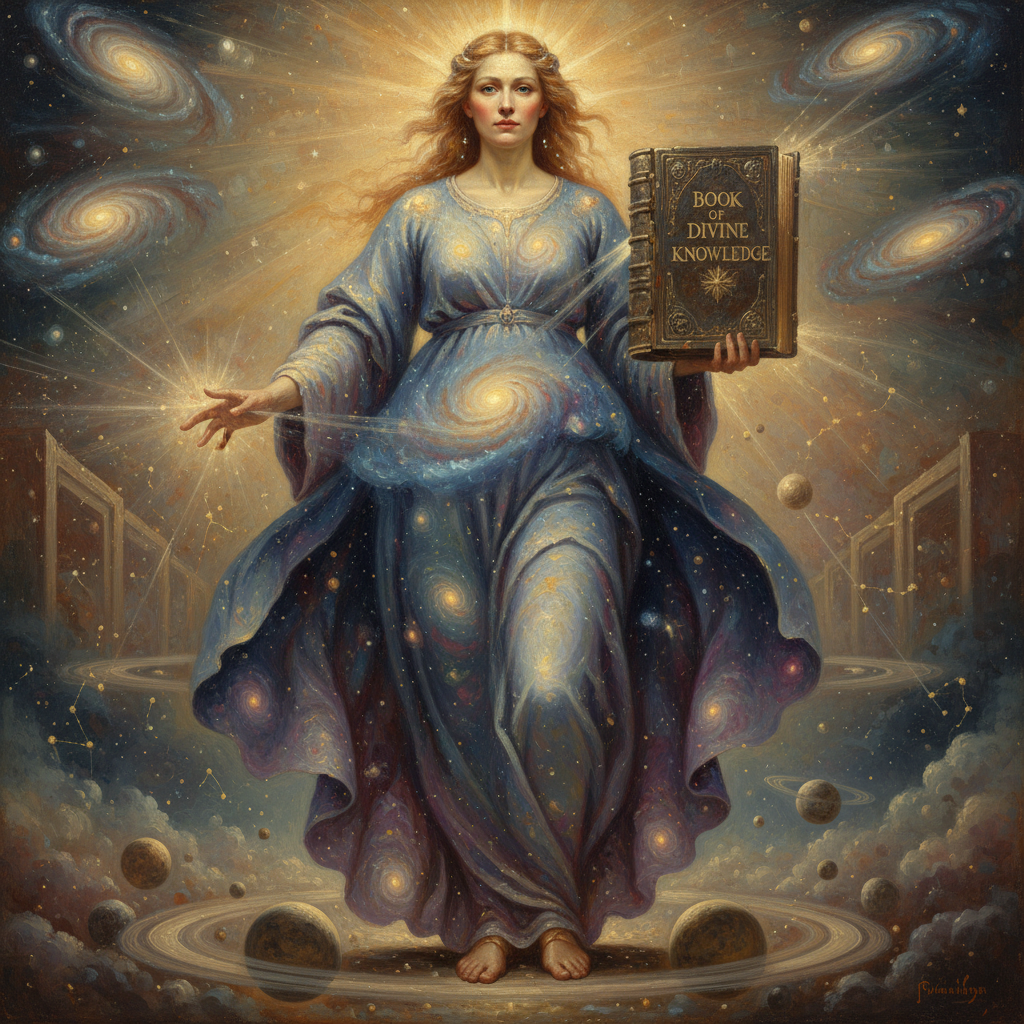
“I was there when he set the heavens in place, when he marked out the horizon on the face of the deep.” (Proverbs 8:27). Sophia — Wisdom — isn’t just an attribute of God. She is a person, present at creation, co-architect of reality. In Gnostic tradition, she fell from the divine realm and her tears became the material world. She is the reason there is something rather than nothing. The hidden feminine face of God that orthodoxy tried to forget.
Gnostic divine Sophia as Wisdom personified, a luminous woman of starlight standing at the moment of creation, galaxies and nebulae swirling in her robes, holding a book of divine knowledge, present when the heavens were set in place, her face ancient and young simultaneously, cosmic and intimate, hyper-realistic divine feminine portrait, warm golden lighting, the power and tenderness of the cosmic mother, not dark mythology but luminous and fierce, beauty and authority combined, cinematic composition, oil painting rendering, Rembrandt lighting, 8k13. Eve — The First Woman, The First to Choose
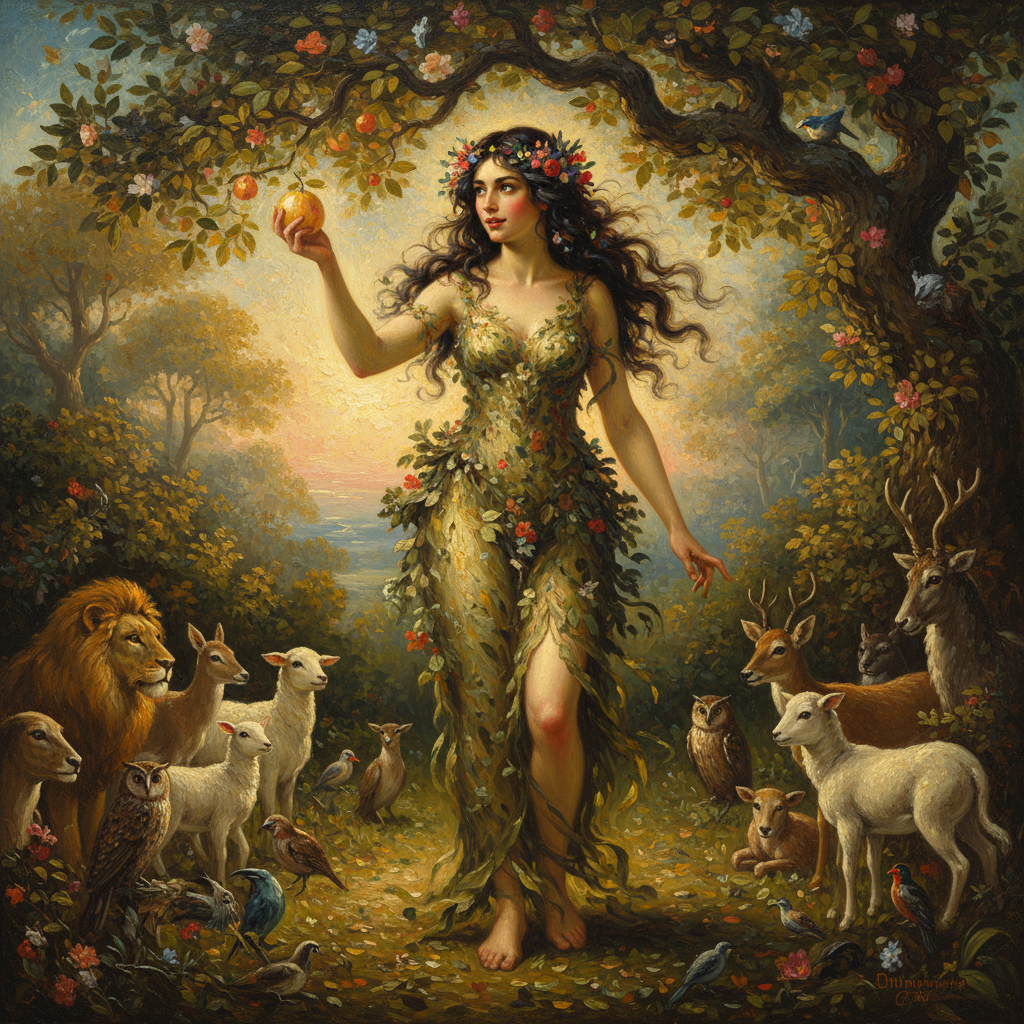
The standard reading: Eve sinned, introduced death, cursed humanity. The other reading: Eve was the first human being to make an independent choice. She saw that the fruit was good for gaining wisdom, and she chose knowledge over obedience. Without that choice, humanity stays in the garden forever — immortal, innocent, and incurious. Every scientist, artist, and philosopher is Eve’s child. She is the mother of all living because she chose to live.
Eve the first woman in the Garden of Eden at the moment of reaching for knowledge, not ashamed but curious and brave, wild dark hair with flowers woven in, standing beneath the Tree of Knowledge, the mother of all living, dawn light breaking through the garden, animals gathered around her, hyper-realistic divine feminine portrait, warm golden lighting, the power and tenderness of the cosmic mother, not dark mythology but luminous and fierce, beauty and authority combined, cinematic composition, oil painting rendering, Rembrandt lighting, 8k14. Danu — The Source
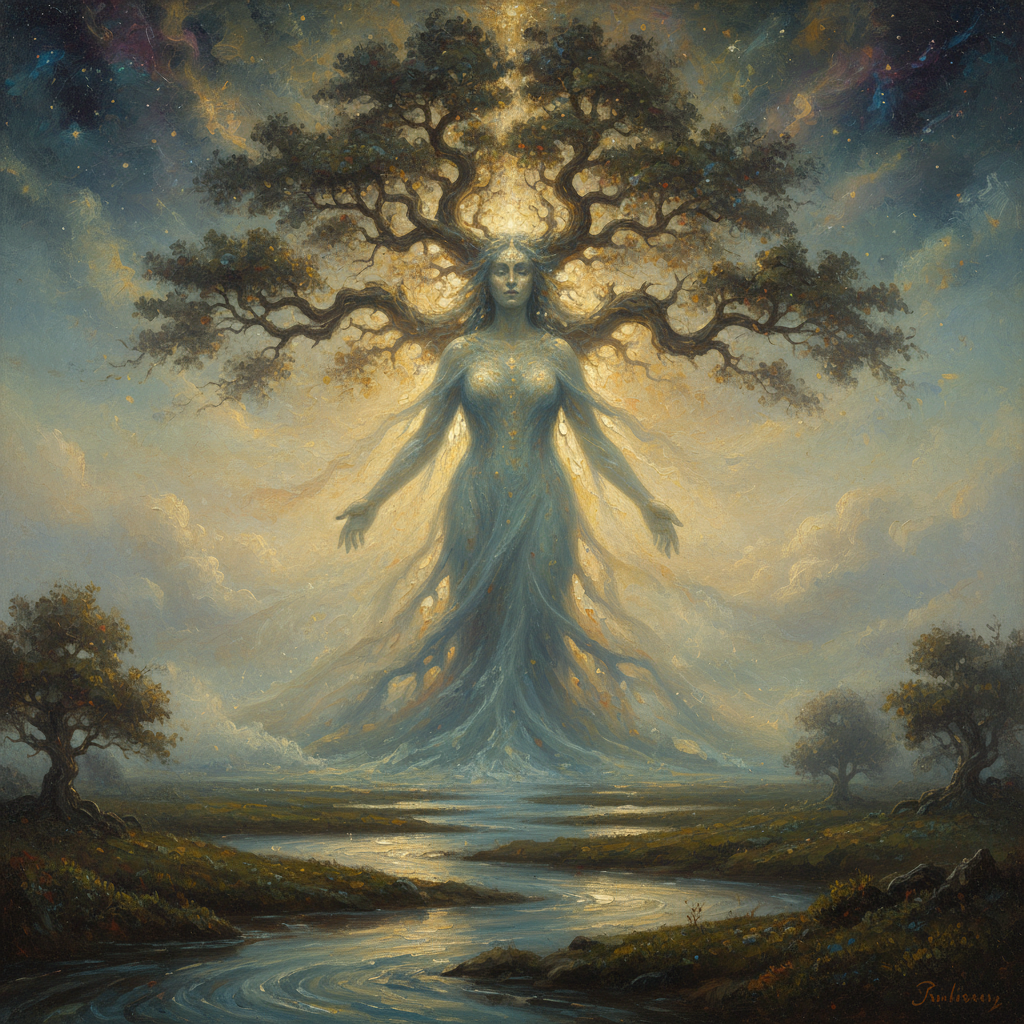
Almost nothing is known about her. No surviving myths. No complete stories. Just the name: Danu. And the fact that the most powerful race in Irish mythology — the Tuatha De Danann, “the peoples of Danu” — are named for her. She is so ancient that she predates the stories. She is so fundamental that she needs no myth. She simply IS the ancestor, the river, the source from which everything flows. Sometimes the most powerful mother is the one whose name is all that survives.
Celtic primordial goddess Danu, so ancient she is almost formless, a vast feminine presence emerging from Irish mist and river water, the ancestor of all the Tuatha De Danann, her face barely visible in swirling fog and starlight, ancient oak trees growing from her flowing hair, the source of everything, hyper-realistic divine feminine portrait, warm golden lighting, the power and tenderness of the cosmic mother, not dark mythology but luminous and fierce, beauty and authority combined, cinematic composition, oil painting rendering, Rembrandt lighting, 8k15. Pachamama — You Are Walking On Her Body
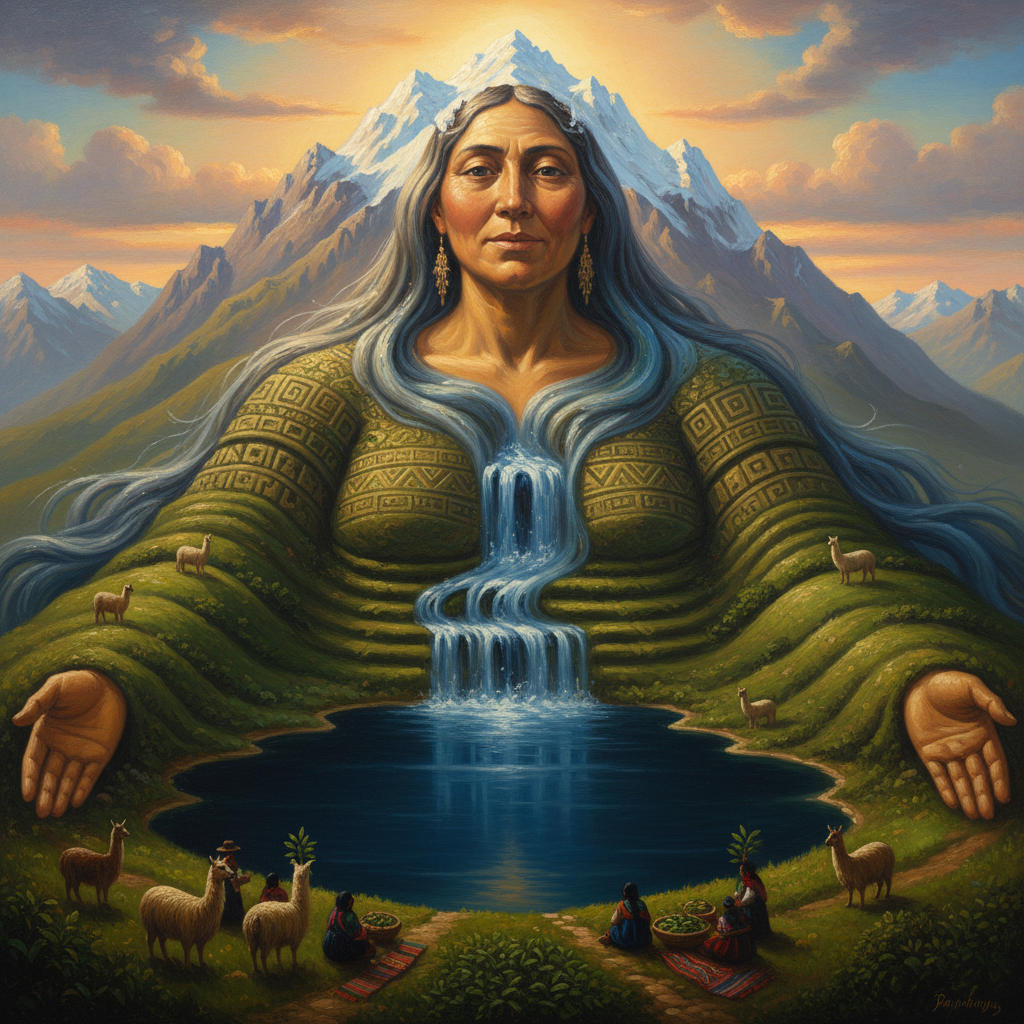
Pachamama is not an earth goddess. She is not a spirit of the earth. She IS the earth. The mountains are her body. The rivers are her veins. The crops that feed you grow from her flesh. In Andean tradition, you don’t worship Pachamama from a distance — you make offerings because you are eating from her body every day. Every harvest is communion. Every earthquake is her turning in her sleep. She is the most literal mother of all: she feeds you, holds you, and you will return to her.
Andean earth mother Pachamama shown as the living earth itself, her body IS the mountain landscape, her hair flowing as rivers and waterfalls, terraced Incan farms on her shoulders, llamas grazing on her arms, snow-capped peaks as her crown, people making offerings of coca leaves, she is not on the earth she IS the earth, hyper-realistic divine feminine portrait, warm golden lighting, the power and tenderness of the cosmic mother, not dark mythology but luminous and fierce, beauty and authority combined, cinematic composition, oil painting rendering, Rembrandt lighting, 8kWhat Every Mother Has in Common
They all create. They all protect. They all sacrifice. And every single one of them is more dangerous than the gods who tried to control them.
The mother is not gentle. The mother is everything.