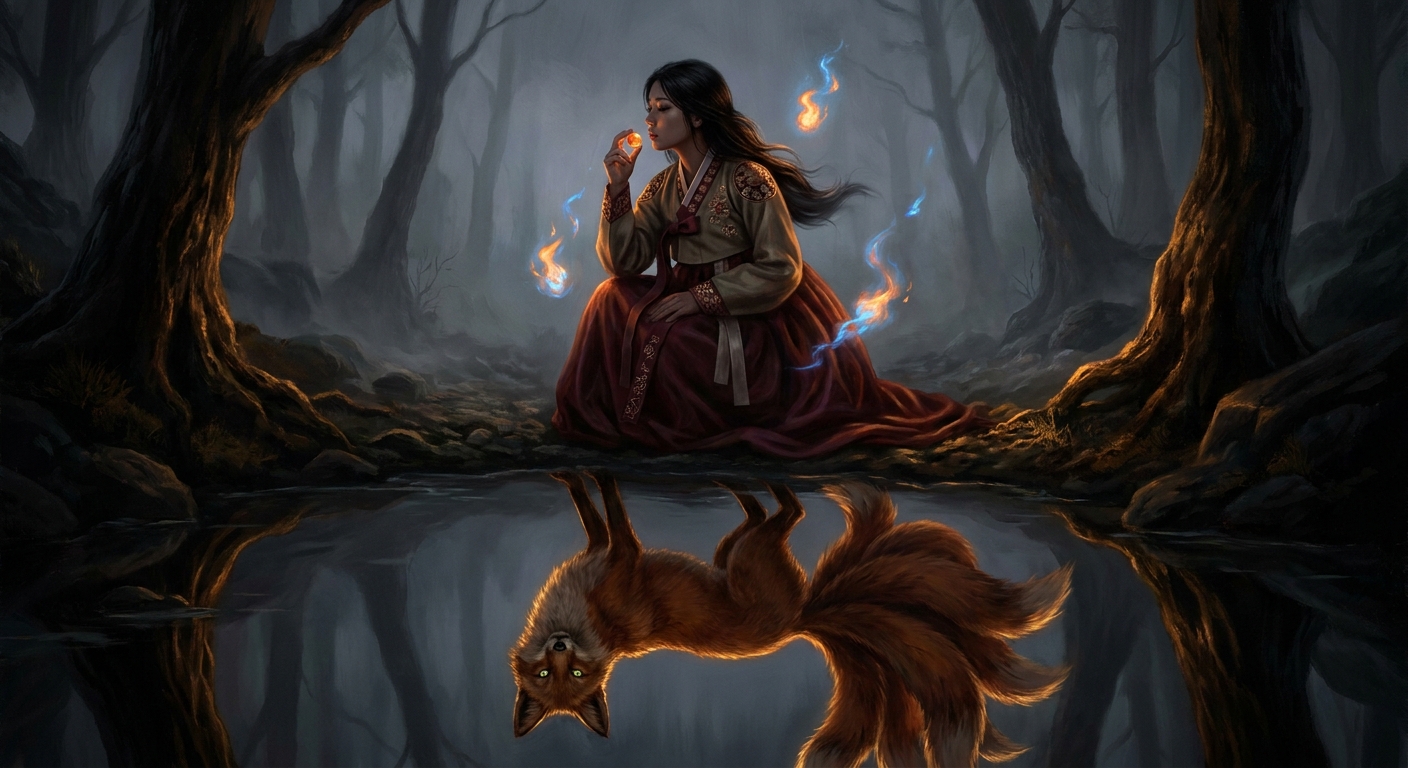
Part of the Bestiary Compendium
Almost every mythology on Earth has shape-shifters. Gods become animals. Foxes become women. Seals become lovers. Wolves eat men from the inside out. The specifics change, the principle doesn’t: form is negotiable, but identity always leaks through.
This section compares the world’s shape-shifters across traditions — who shifts, what they become, why they do it, and the one rule that almost every culture agrees on.
The Shape-Shifters
| Entity | Tradition | Forms | Why They Shift | Source |
|---|---|---|---|---|
| Loki | Norse | Salmon, fly, mare (gave birth as a horse), old woman, Frigg’s double | Deception, escape, chaos | Prose Edda |
| Sun Wukong | Chinese | 72 transformations: insects, trees, temples, women, other gods | Trickery, combat, escape | Journey to the West |
| Kitsune (9-tailed fox) | Japanese | Beautiful woman (most common), old man, child, any human | Seduction, mischief, testing humans | Japanese folklore |
| Gumiho | Korean | Beautiful woman | Must eat hearts; seeking humanity | Korean folklore |
| Selkie | Celtic/Scottish | Seal → human (removing seal skin) | Love; trapped if skin is stolen | Scottish folklore |
| Werewolf | European | Human → wolf at full moon | Curse, often involuntary | Medieval tradition |
| Skinwalker (yee naaldlooshii) | Navajo | Any animal | Witchcraft, taboo (forbidden to discuss in detail) | Navajo tradition |
| Proteus | Greek | Any form; “protean” comes from his name | Avoids giving prophecies; shifts to escape questioners | Homer, Odyssey |
| Vishnu’s Avatars | Hindu | Fish, tortoise, boar, man-lion, dwarf, warrior, prince, cowherd, Buddha, future horseman | Each form serves a specific cosmic need | Dashavatara |
| Odin | Norse | Old man, eagle, snake, Bolverk (worker of evil) | Gathering wisdom, deception, war strategy | Havamal, Prose Edda |
| Zeus | Greek | Swan, bull, golden rain, eagle, ant, flame, Artemis, Amphitryon | Seduction of mortal women (almost always) | Various |
| Tanuki | Japanese | Anything, but especially monks and teapots; famous for giant shapeshifting scrotum | Comedy, mischief, deception | Japanese folklore |
Why Do They Shift?
This is the centerpiece question. Shape-shifting isn’t random — it clusters into distinct motivational categories that reveal what each culture fears and fantasizes about.
| Reason | Who Does It | Tradition |
|---|---|---|
| Seduction | Zeus, Kitsune, Gumiho | Greek, Japanese, Korean |
| Escape | Loki, Proteus, Selkie | Norse, Greek, Celtic |
| Combat advantage | Wukong, Vishnu, Odin | Chinese, Hindu, Norse |
| Cosmic necessity | Vishnu’s avatars | Hindu |
| Curse / involuntary | Werewolves, some Selkies | European |
| Achieving humanity | Gumiho (1000 years without killing) | Korean |
| It’s their nature | Tanuki, Kitsune, Loki | Japanese, Norse |
What the reasons reveal
Seduction shifters (Zeus, Kitsune, Gumiho) tell us that these cultures understood desire as a force that dissolves identity. Zeus doesn’t seduce as himself — he becomes the thing that will bypass resistance. The swan, the golden rain, the bull — these aren’t disguises. They’re desire taking whatever shape works. The Kitsune operates on the same principle but from the other direction: the fox becomes what men want to see. The Gumiho takes it darkest — she becomes beautiful to eat your heart, and the only escape is surviving her for a thousand years.
Escape shifters (Loki, Proteus, Selkie) reveal something about power and freedom. Loki shifts to avoid consequences. Proteus shifts to avoid questions. The Selkie shifts to live between two worlds. In each case, the shape-shift is a refusal — of punishment, of obligation, of a single fixed identity.
Combat shifters (Wukong, Vishnu, Odin) treat form as tactical. Sun Wukong’s 72 transformations are battlefield weapons. Odin becomes an eagle to steal the mead of poetry and a snake to infiltrate. Vishnu’s avatars are the most systematic — each form is precision-engineered for a specific cosmic crisis. You don’t send a fish to kill a demon king. You don’t send a warrior to save creatures from a flood. The form matches the function.
Cosmic necessity is unique to the Hindu tradition. Vishnu doesn’t shift for personal reasons — he shifts because the universe requires it. The Dashavatara isn’t shapeshifting; it’s cosmic engineering. Each avatar appears when dharma collapses and takes exactly the form needed to restore it. This makes Vishnu the only shape-shifter on this list who shifts out of duty rather than desire, fear, or nature.
Involuntary shifters (werewolves, some Selkies) represent the terrifying possibility that you might not control your own form. The werewolf doesn’t choose the wolf — the wolf chooses him. The Selkie whose skin is stolen didn’t choose to be human — someone trapped her. These are stories about the loss of agency, about identity as something that can be taken from you.
The Profiles
Loki — The Shifting Flame
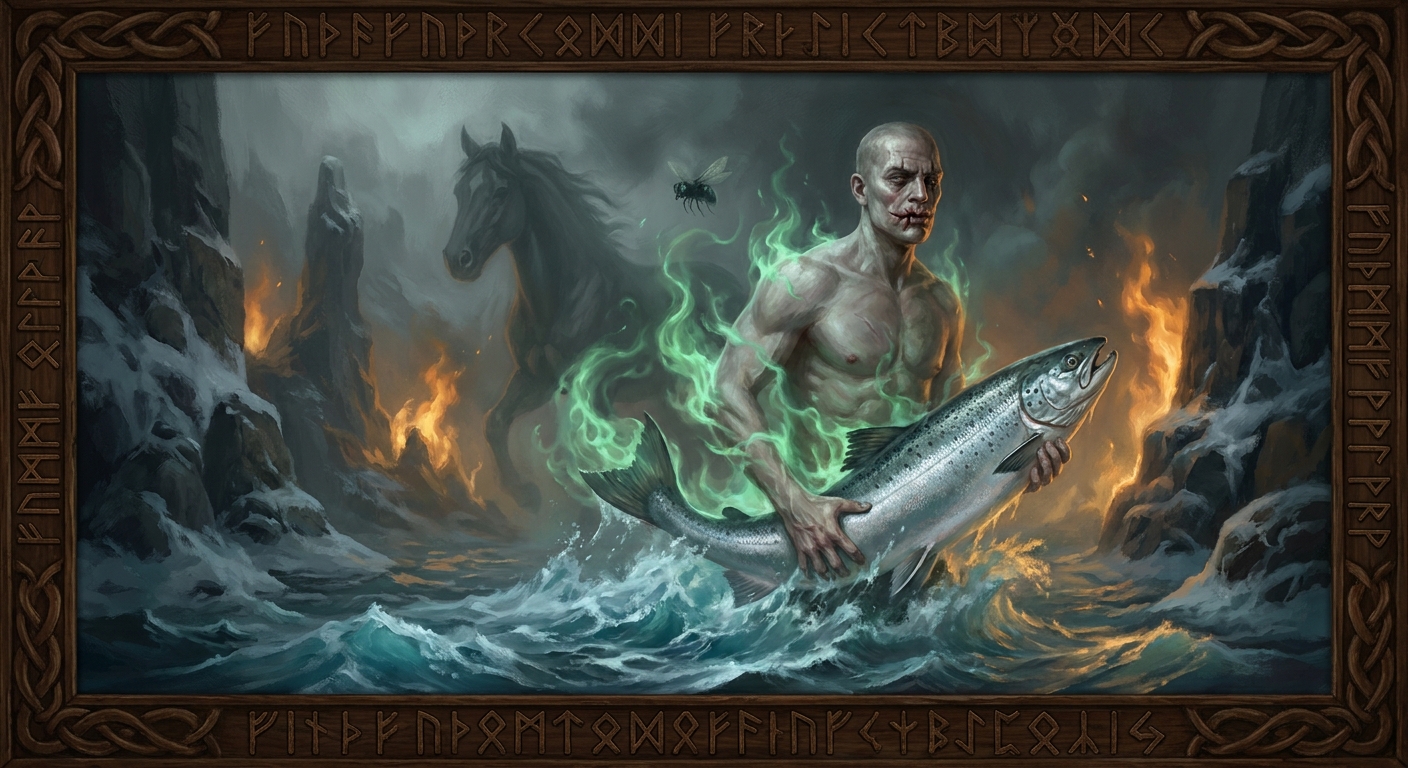
Loki doesn’t just shapeshift. He commits to the form. As a mare, he seduced the stallion Svadilfari and gave birth to Sleipnir, Odin’s eight-legged horse. As a fly, he bit dwarves to sabotage their craft. As an old woman named Thokk, he refused to weep for Baldur, trapping the god in Hel forever.
What makes Loki unique among shape-shifters is that his transformations produce permanent consequences. The mare form produced a child. The old woman form prevented a resurrection. Loki’s shifting isn’t an illusion — it’s an act of creation (or destruction) that reshapes reality itself.
The Tell: Loki’s chaos follows him. Whatever form he takes, things go wrong for someone.
Sun Wukong — The Monkey King’s 72 Transformations
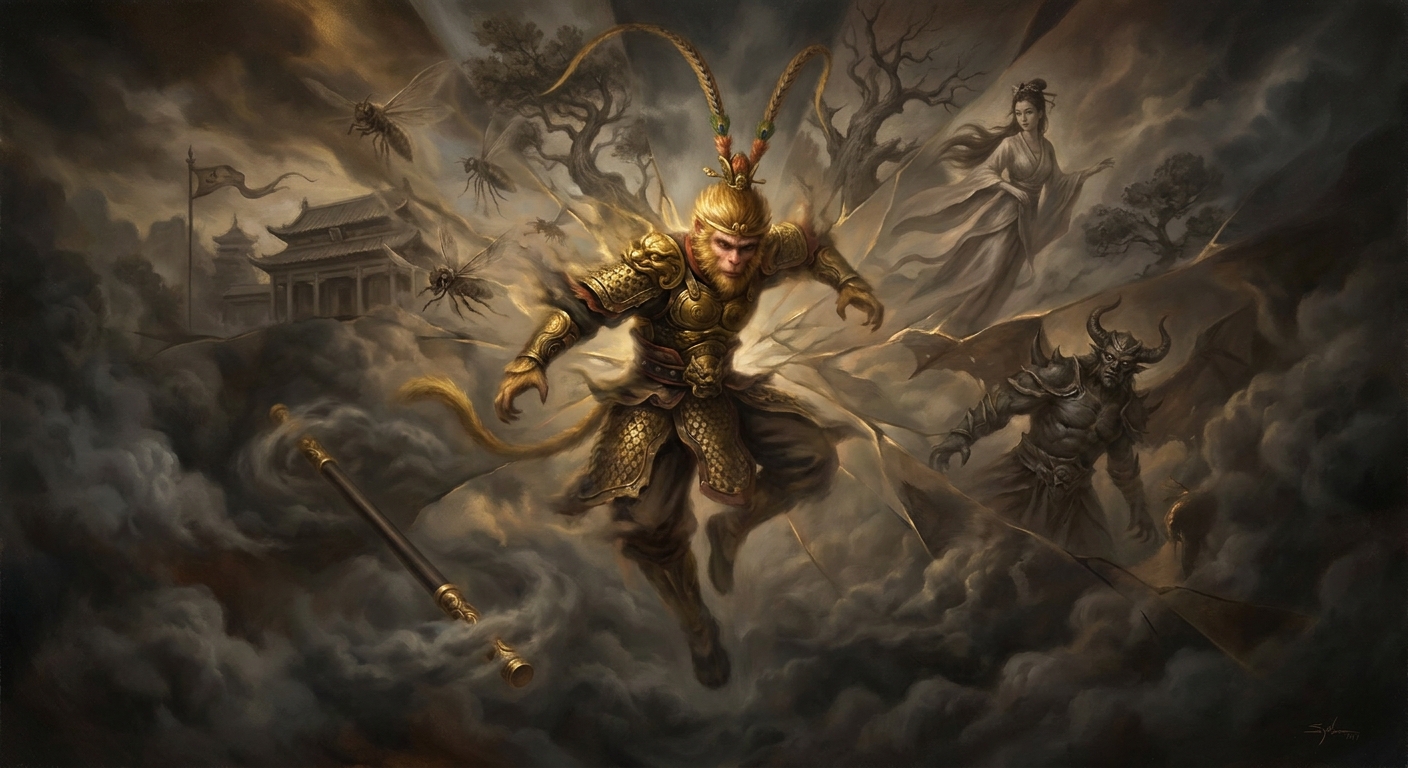
Wukong’s 72 transformations are combat magic, espionage tools, and escape hatches rolled into one. He becomes insects to spy, trees to hide, temples to trick his enemies (though his tail always becomes the flagpole — there’s the tell). He once impersonated a demon king’s wife so convincingly that the demon didn’t notice until Wukong broke character to fight.
The 72 transformations have a weakness: Wukong can’t hide his shadow. His monkey silhouette persists regardless of form. And if he transforms into something small, his weight doesn’t change — a fly that weighs as much as a monkey is suspicious.
The Tell: The shadow stays monkey-shaped. The weight doesn’t change. The tail becomes a flagpole.
Kitsune — The Fox With Nine Tails
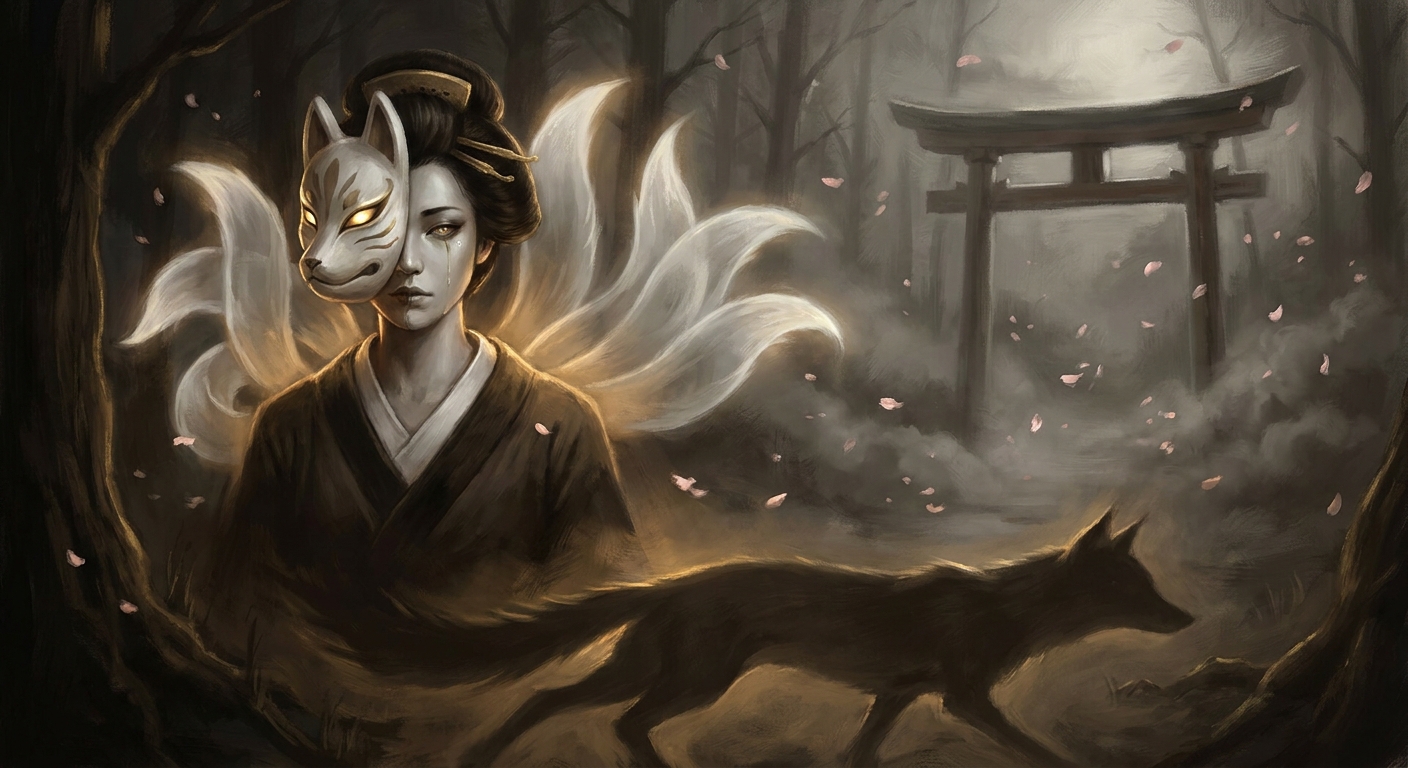
The kitsune gains a tail for every hundred years of life. At nine tails, she achieves near-omnipotence — but also becomes visible to those who know how to look. The most common form is a beautiful woman, but kitsune can become old men, children, or any human shape.
Kitsune serve Inari, the rice god, and many are benevolent — protecting families, rewarding kindness, falling genuinely in love with humans. Others are tricksters who lead travelers astray or drive men to obsession. The difference isn’t species; it’s disposition. A kitsune can be a wife, a guardian, or a predator.
The Tell: The shadow stays fox-shaped. Reflections show the fox. Dogs can always sense them. Drunk kitsune sometimes sprout tails.
Gumiho — The Hungry Fox
Korea’s nine-tailed fox is darker than her Japanese cousin. The gumiho must eat human hearts (or in some versions, livers) to maintain her human form. She’s not a trickster — she’s a predator wearing a beautiful face.
But here’s the twist: the gumiho can achieve genuine humanity. If she refrains from eating human flesh for one thousand years, she becomes fully human. Some versions add conditions — she must marry a human who knows what she is, or she must carry a marble (yeowoo guseul) in her mouth that she passes to a human through a kiss, giving him her knowledge at the cost of his life force.
The gumiho is the only shape-shifter on this list whose transformation is a moral project. She shifts to survive, but she can shift to transcend.
The Tell: She can’t fully digest cooked food. Her true reflection sometimes shows. Fox fire (dokkaebi bul) follows her.
Selkie — The Seal Wife
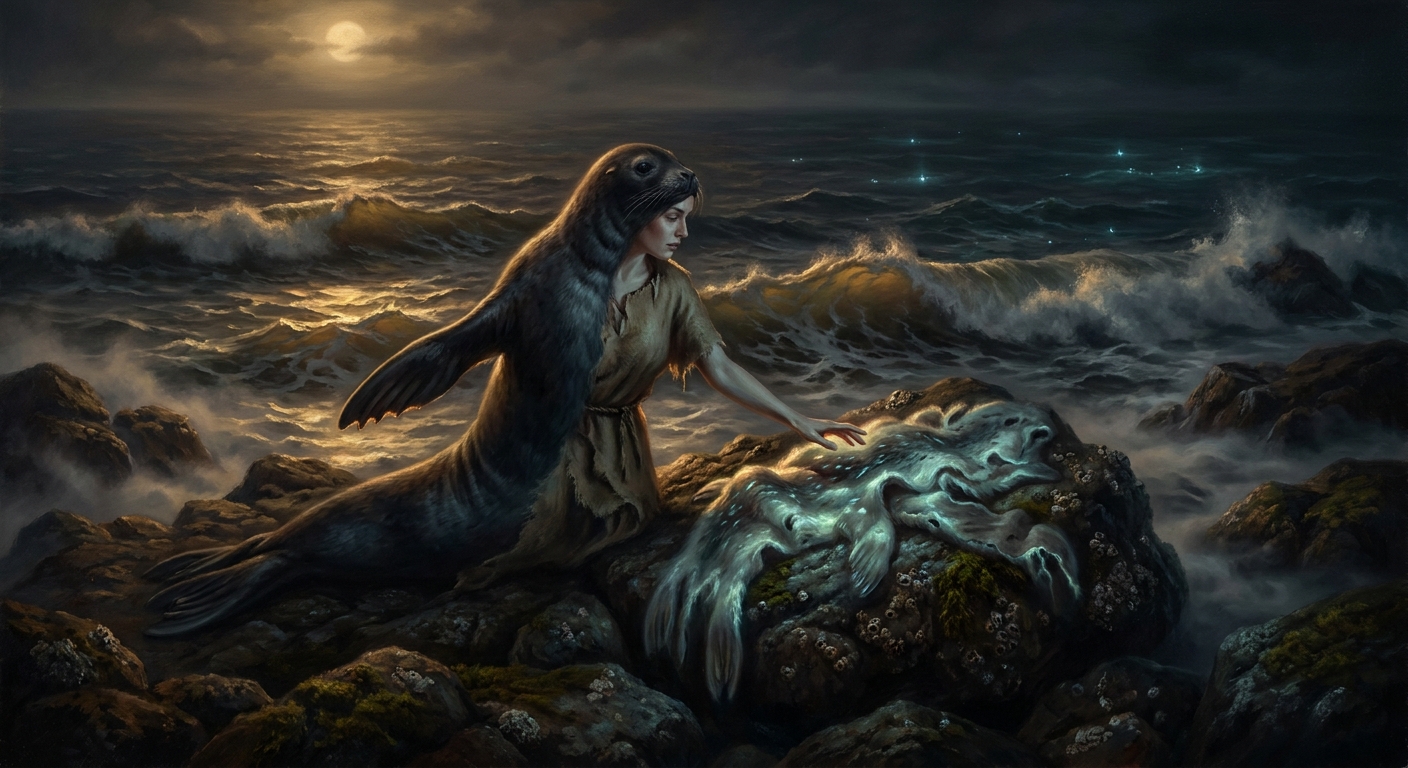
Selkie stories are love stories and captivity stories at the same time. A selkie removes her seal skin to walk on land as a human woman. If a man finds and hides her skin, she cannot return to the sea and must stay with him — often as his wife, bearing his children.
But the selkie never stops searching for her skin. Every version of the story ends the same way: she finds it, puts it on, and returns to the ocean. Sometimes she looks back. Sometimes she doesn’t. The children are left on shore.
The selkie is the shape-shifter as prisoner. Her transformation isn’t magic she controls — it’s tied to a physical object that can be stolen, and with it, her freedom.
The Tell: The skin. Always the skin. Without it, she’s trapped. With it, she’s gone.
Werewolf — The Involuntary Beast
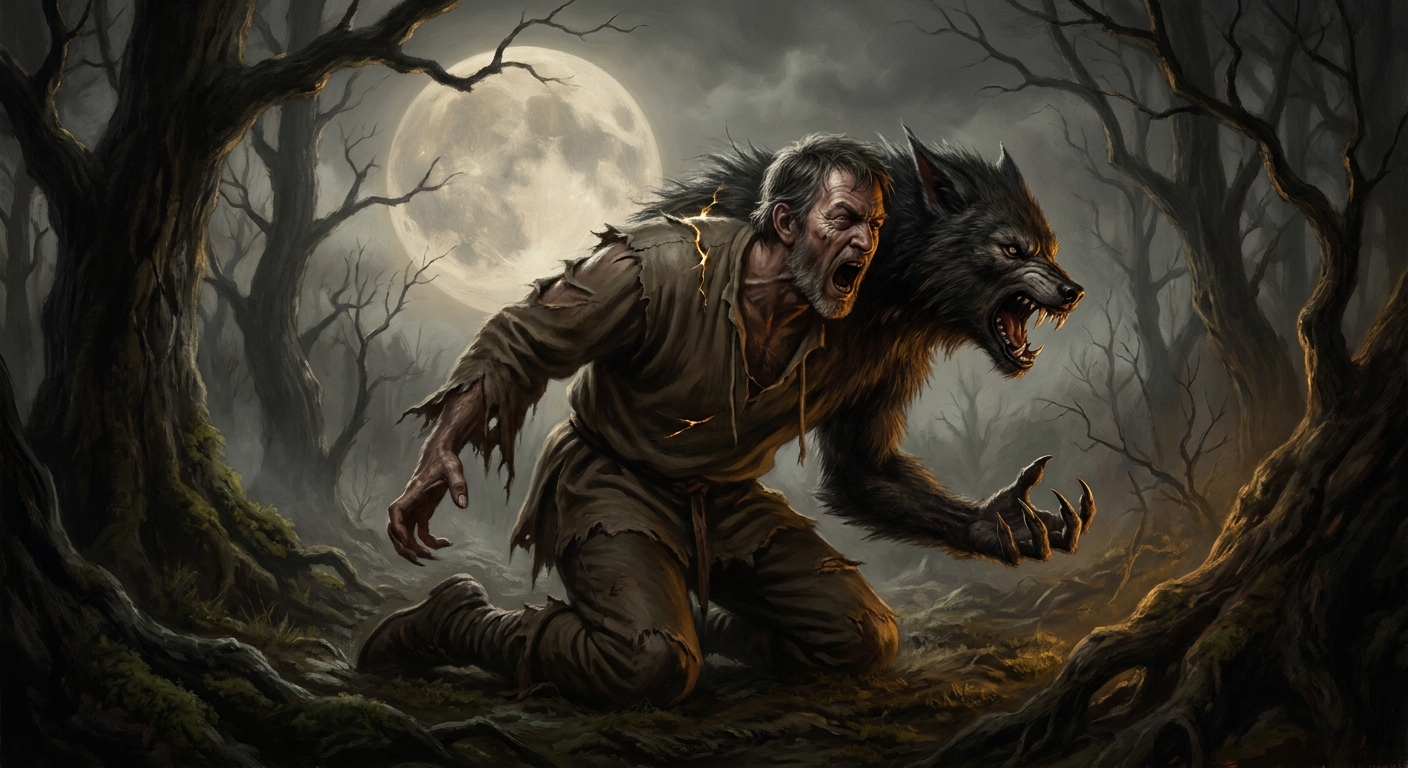
The werewolf is unique on this list because the transformation is almost never chosen. The moon rises. The body breaks. The wolf comes out. In medieval tradition, lycanthropy was a curse, a punishment, or a disease — never a gift. The Malleus Maleficarum classified it as demonic possession. The Catholic Church debated whether the transformation was physical or illusory (they settled on illusory, which didn’t help the accused).
The werewolf’s tragedy is that identity splits. The man doesn’t remember what the wolf did. The wolf doesn’t care about the man’s life. Unlike Loki, who is always Loki regardless of form, the werewolf is two creatures sharing one body — and neither one is in control.
The Tell: Returns at dawn. Silver burns. The human form shows wounds sustained as a wolf.
Skinwalker (yee naaldlooshii) — The Forbidden Shifter
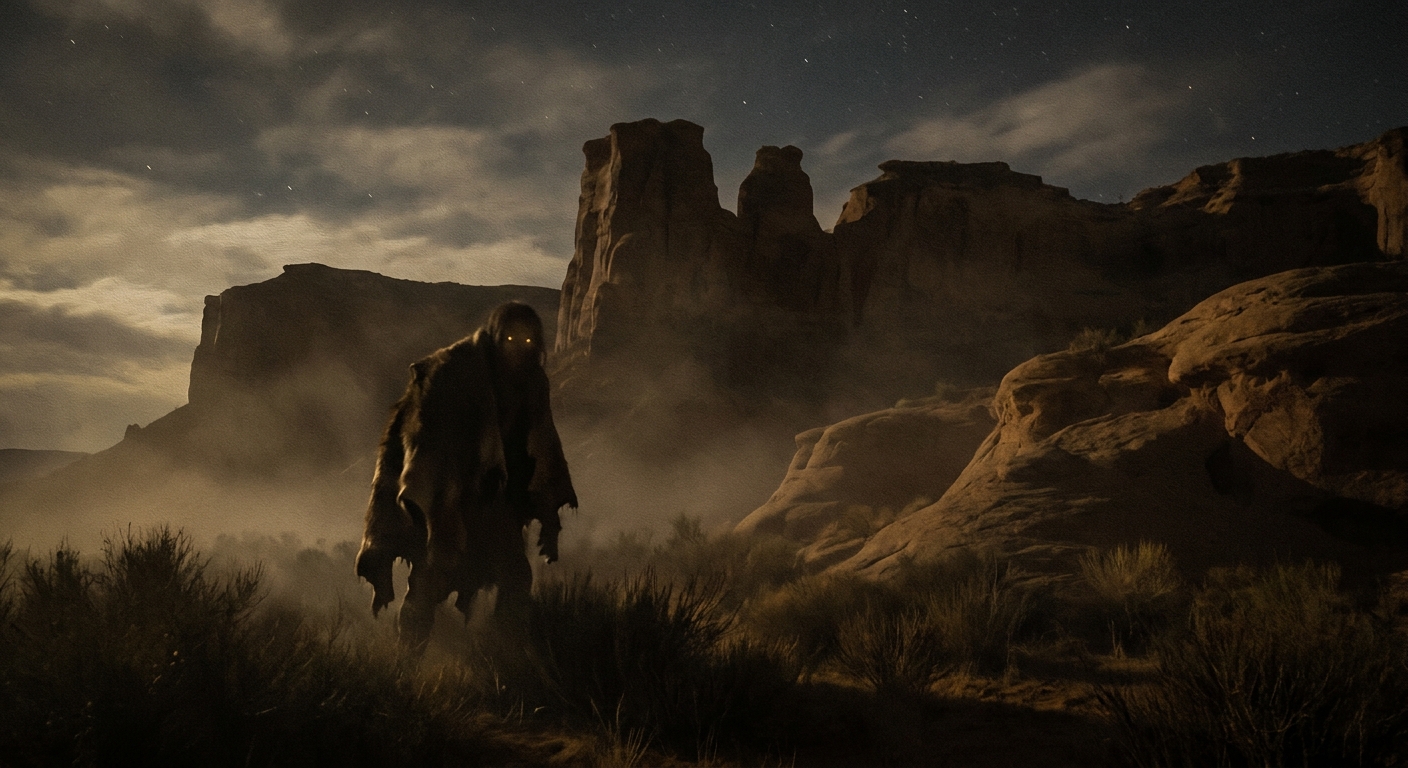
The Navajo tradition treats the skinwalker with deep seriousness. The yee naaldlooshii is a witch who has perverted traditional knowledge — specifically, the good medicine of animal transformation that was once used for healing — into a weapon. They are said to wear the skins of animals to take their forms, most commonly coyotes, wolves, owls, and crows.
This entry is deliberately brief. The Navajo consider detailed discussion of skinwalkers to be dangerous and deeply disrespectful. What can be said: they represent knowledge corrupted, power used in violation of sacred covenant. They are the dark mirror of the medicine person.
The Tell: The eyes glow. They cannot fully mimic human speech. Animals react with terror.
Proteus — The Old Man of the Sea
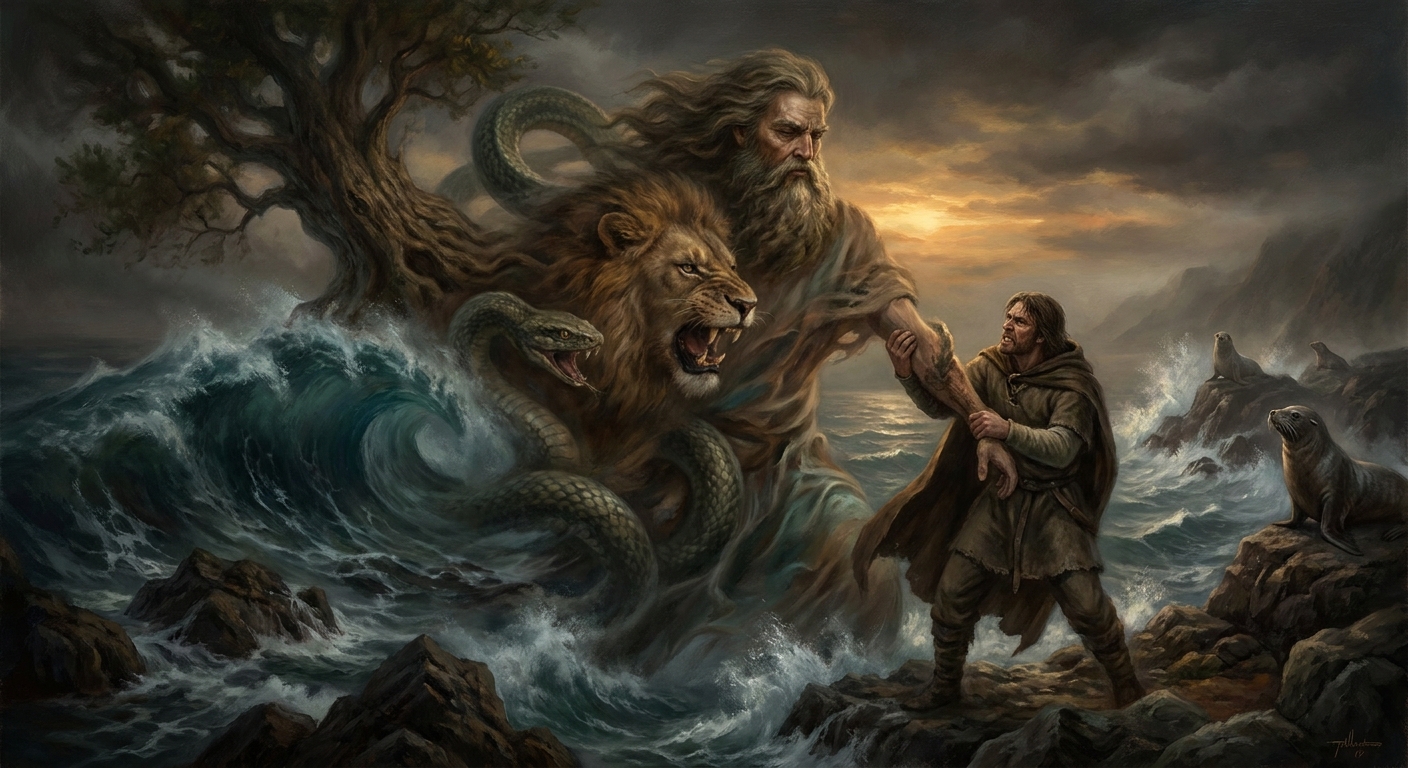
Proteus is a sea-god who tends Poseidon’s seals and knows the future. His problem: he doesn’t want to share. When mortals grab him seeking prophecy, he shifts through every form imaginable — lion, serpent, leopard, boar, water, tree — trying to shake them loose. The trick is to hold on. If you grip him through every transformation, he exhausts himself and answers truthfully.
This is why “protean” means “versatile, changeable.” Proteus gave us the word for the very concept of shape-shifting.
His shifting is pure defense. He doesn’t deceive, seduce, or fight. He just doesn’t want to talk. He is the introvert’s patron saint.
The Tell: You just have to hold on. He’ll eventually run out of forms.
Vishnu’s Avatars — The Dashavatara
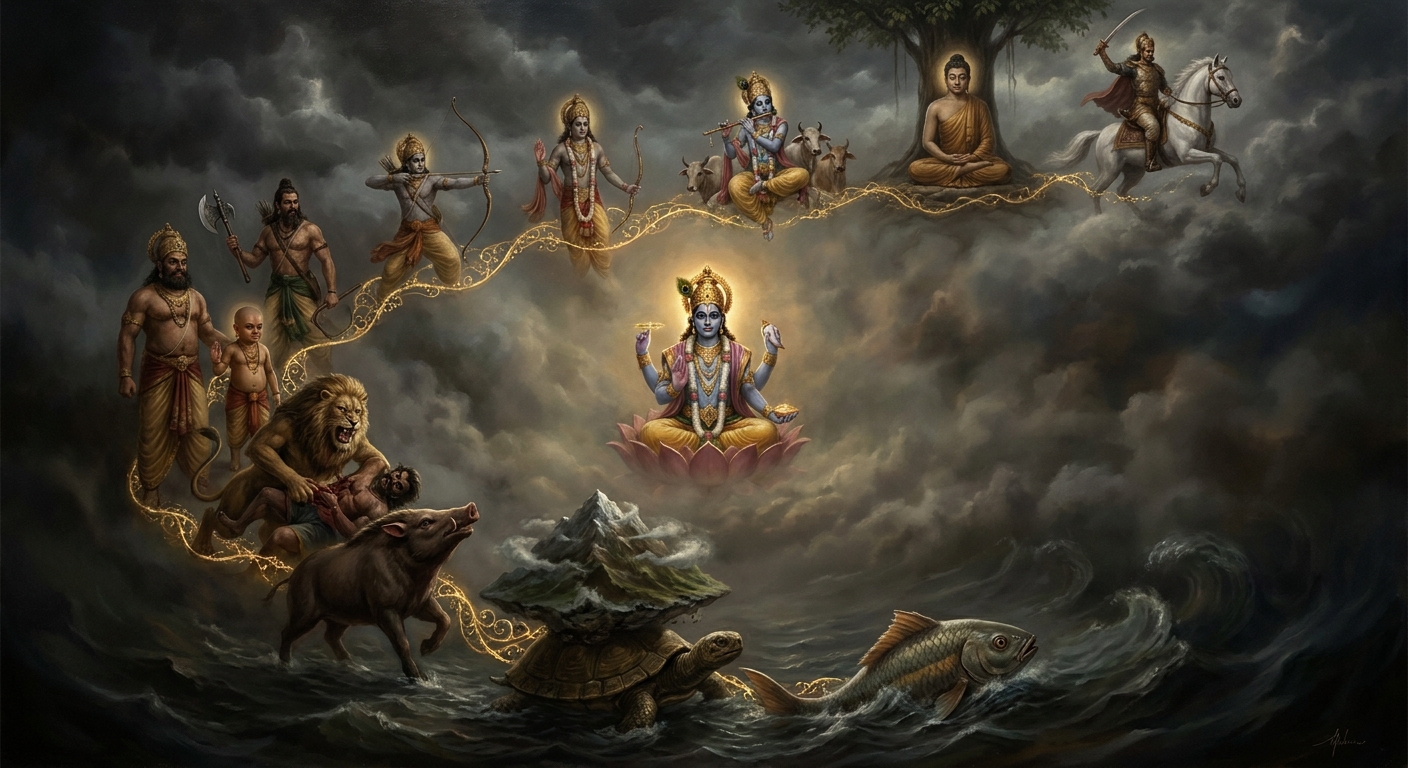
Vishnu’s ten avatars aren’t shape-shifting in the usual sense — they’re incarnations, each one a complete descent into physical form for a specific cosmic purpose:
- Matsya (Fish) — saved the Vedas from a deluge
- Kurma (Tortoise) — supported the mountain during the churning of the ocean
- Varaha (Boar) — lifted the Earth from cosmic waters
- Narasimha (Man-Lion) — killed a demon who was immune to man and beast separately
- Vamana (Dwarf) — tricked the demon king Bali with three steps that covered the universe
- Parashurama (Warrior) — destroyed corrupt warrior kings
- Rama (Prince) — defeated Ravana, established dharmic rule
- Krishna (Cowherd/King) — delivered the Bhagavad Gita, strategic mastermind of the Mahabharata
- Buddha — (contested) to teach compassion or to mislead demons
- Kalki (Future Horseman) — will end the current age and begin the next
The Dashavatara is sometimes read as a mythological parallel to evolution: from fish to amphibian to mammal to half-animal to dwarf human to full human to enlightened being. Whether intentional or coincidental, the progression is striking.
The Tell: Vishnu’s avatars don’t have tells — they’re complete incarnations. But each one carries a signature weapon or symbol (the fish carries the Vedas, the boar carries the Earth, Krishna holds the Sudarshana Chakra).
Odin — The Wanderer in Disguise
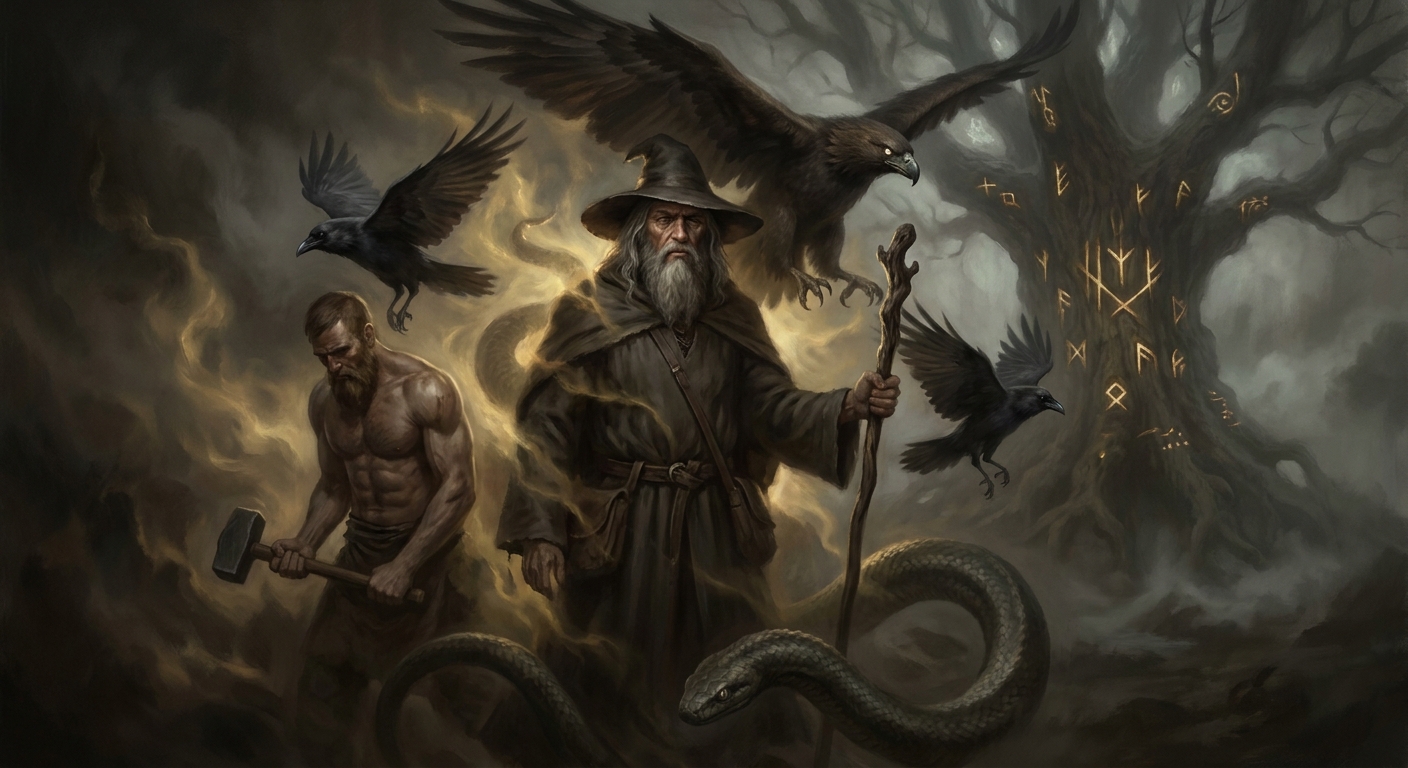
Odin is the most pragmatic shape-shifter on this list. He doesn’t shift for fun, chaos, or love — he shifts to acquire. As an eagle, he stole the mead of poetry from the giant Suttungr. As a snake, he infiltrated the giant’s stronghold. As Bolverk (“worker of evil”), he seduced the giantess Gunnlod to gain access to the mead. As an old wanderer in a broad-brimmed hat, he walks among humans gathering intelligence.
Odin’s shifting serves a single purpose: information acquisition. He sacrificed an eye for wisdom. He hung on Yggdrasil for nine days for runes. He shifts form to get what he can’t take by force. Every transformation is an investment in knowledge.
The Tell: One eye. Always one eye. Whether as eagle, snake, or old man, Odin is missing an eye.
Zeus — The Serial Seducer
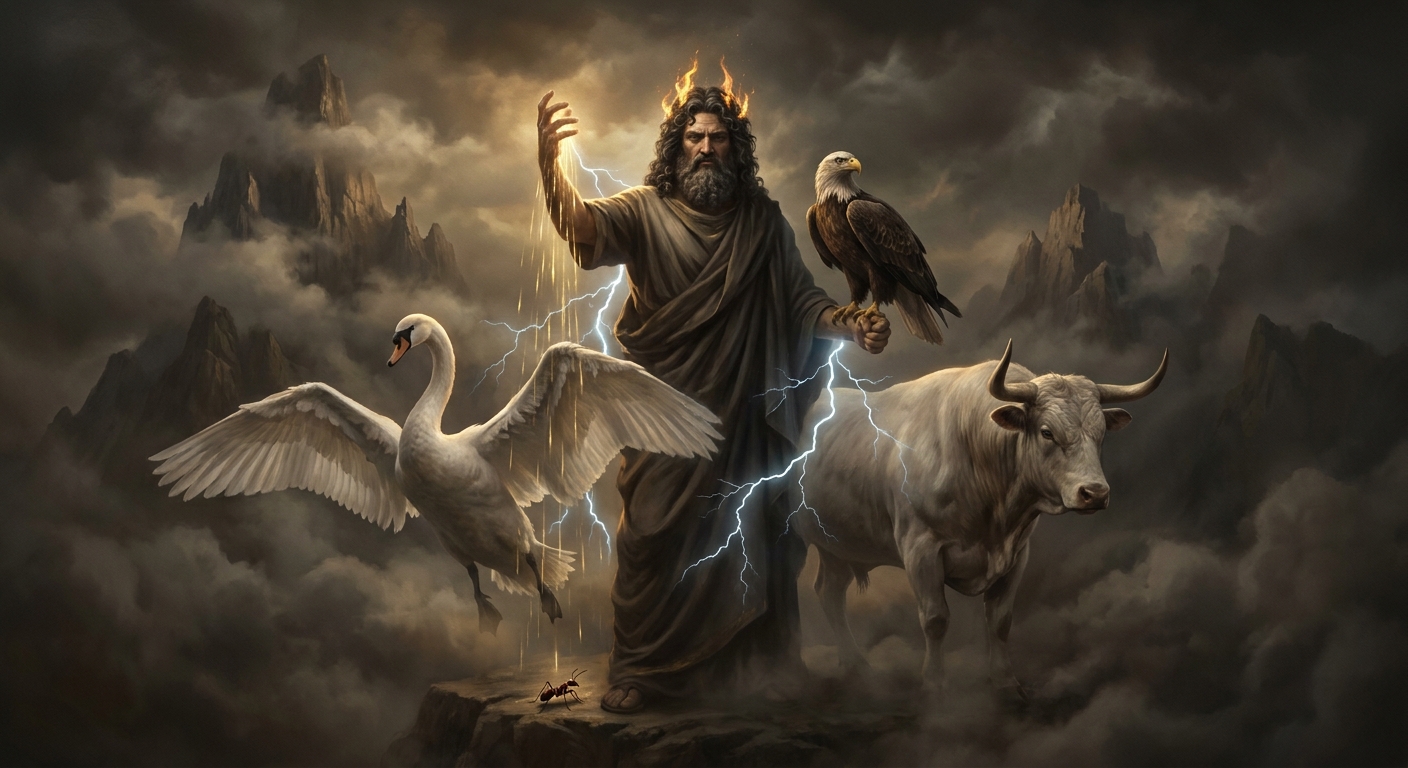
Zeus’s transformations are almost exclusively sexual. He becomes a swan to seduce Leda. A bull to abduct Europa. Golden rain to reach Danae in her locked tower. An eagle to carry off Ganymede. An ant to seduce Eurymedousa. A flame to approach Aegina. He even impersonates Artemis to get close to Callisto and takes the form of Amphitryon to sleep with Alcmene (producing Heracles).
The pattern is striking and deeply uncomfortable by modern standards: Zeus shifts form specifically to bypass consent. The swan, the bull, the golden rain — these aren’t courtship. They’re penetration of defenses. Zeus as shape-shifter is Zeus as predator.
The Tell: Thunderstorms. Divine radiance that slips through the disguise. Hera’s sudden appearance.
Tanuki — The Cosmic Comedian
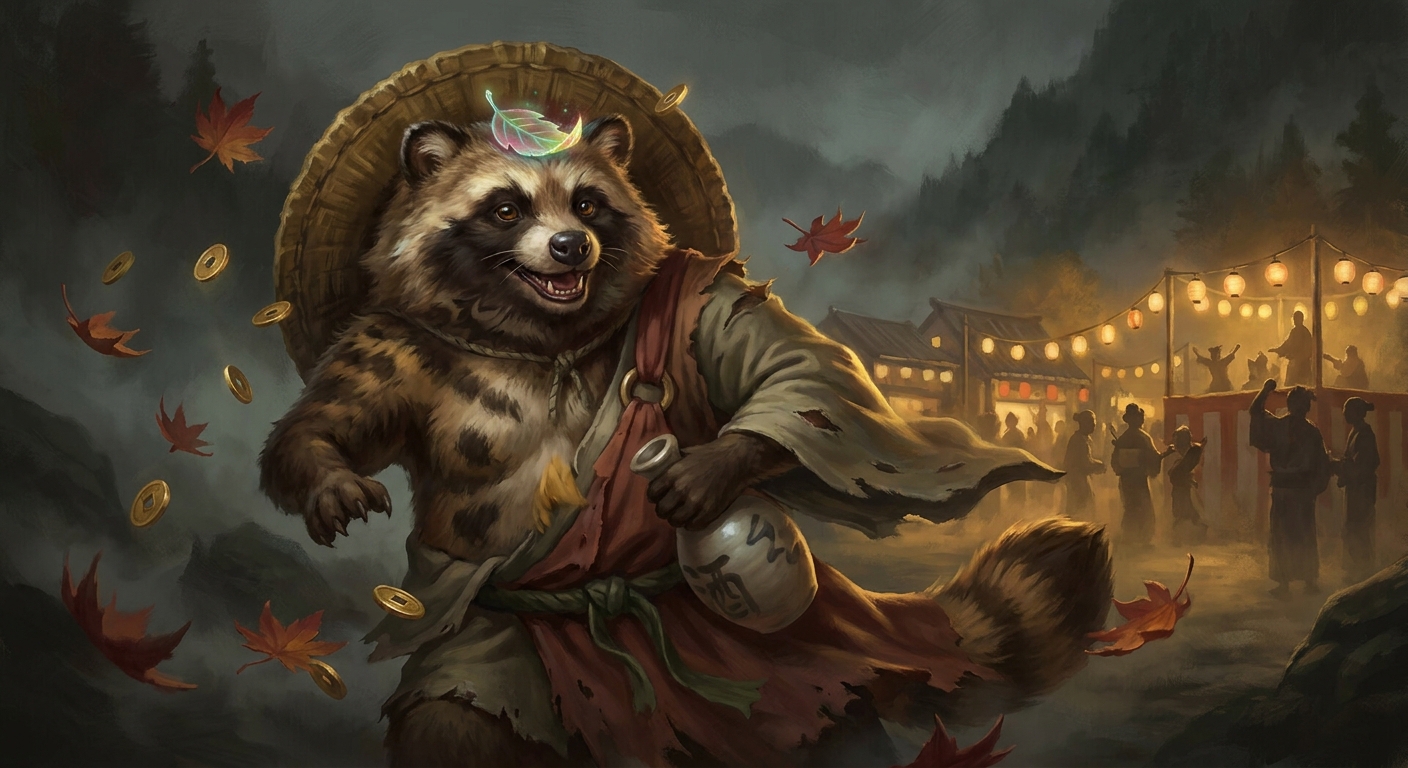
The Japanese raccoon dog (Nyctereutes procyonoides) is a real animal. The mythological tanuki is something else entirely. Tanuki can transform into anything — monks, teapots, trees, rocks, buildings — but they’re famous for their enormous, shapeshifting scrotum, which they can stretch into blankets, fishing nets, drums, umbrellas, and entire landscapes.
This isn’t crude for crudeness’ sake (well, not entirely). In Japanese folklore, the tanuki’s supernatural testicles represent abundance — they’re literally called kintama (golden balls), and tanuki statues outside restaurants and shops are good-luck charms for prosperity. The tanuki’s scrotum is a symbol of wealth and generosity, which is one of the more remarkable examples of cultural context changing everything about how a symbol reads.
Tanuki are tricksters but rarely malicious. They play pranks, pay for sake with leaves that look like money (the illusion fades by morning), and generally cause low-stakes chaos. They’re the shape-shifters you’d want to have a drink with.
The Tell: Leaves on the head (tanuki need a leaf to transform). The transformation sometimes slips when they’re drunk or startled.
The Universal Rule
Almost every tradition has one rule about shape-shifters: there’s always a tell. The kitsune’s shadow stays fox-shaped. The selkie’s skin can be stolen. The werewolf returns at dawn. The skinwalker’s eyes glow. Shape-shifting is never perfect — identity always leaks through.
This isn’t coincidence. It’s theology. If form were truly infinitely malleable, then identity would be meaningless — and every mythology needs identity to mean something. The tell is the universe’s insistence that you are what you are, no matter what you look like.
The exceptions prove the rule. Vishnu’s avatars have no tells because they’re complete incarnations — Vishnu doesn’t disguise himself as Rama, he becomes Rama. Proteus has no tell because his whole point is fluidity itself. But everyone else? There’s always a crack in the mask.
graph TD
    subgraph "Shape-Shifter Taxonomy"
        A[Shape-Shifters] --> B[Voluntary]
        A --> C[Involuntary]

        B --> D[Seduction]
        B --> E[Escape/Defense]
        B --> F[Combat/Strategy]
        B --> G[Cosmic Duty]
        B --> H[Nature/Trickery]

        C --> I[Curse]
        C --> J[Captivity]

        D --> D1[Zeus]
        D --> D2[Kitsune]
        D --> D3[Gumiho]

        E --> E1[Proteus]
        E --> E2[Loki]

        F --> F1[Sun Wukong]
        F --> F2[Odin]

        G --> G1[Vishnu]

        H --> H1[Tanuki]
        H --> H2[Kitsune]
        H --> H3[Loki]

        I --> I1[Werewolf]

        J --> J1[Selkie]
    end
Cross-References
- Loki — full entry in Norse Mythology
- Sun Wukong — full entry in Chinese Mythology
- Kitsune & Tanuki — full entries in Shinto & Japanese Mythology
- Proteus & Zeus — full entries in Greek & Roman Mythology
- Vishnu’s Avatars — full entry in Hindu & Vedic Sacred Figures
- Odin — full entry in Norse Mythology
- Selkie — full entry in Celtic Mythology
- Skinwalker — see Native American Spiritual Traditions (with appropriate cultural sensitivity)
- Gumiho — Korean folklore (not yet a standalone tradition file)
- Werewolf — European medieval tradition (cross-referenced in multiple files)
Sources
- Snorri Sturluson, Prose Edda (c. 1220) — Loki, Odin
- Homer, Odyssey (c. 8th century BCE) — Proteus
- Wu Cheng’en, Journey to the West (1592) — Sun Wukong
- Havamal (Poetic Edda) — Odin
- Dashavatara Stotra and the Bhagavata Purana — Vishnu’s avatars
- Yanagita Kunio, The Legends of Tono (1910) — Kitsune, Tanuki
- David Thompson, The People of the Sea: Celtic Tales of the Seal-Folk (1954) — Selkie
- Montague Summers, The Werewolf in Lore and Legend (1933) — European werewolf tradition
- Korean National Folk Museum, Encyclopedia of Korean Folk Culture — Gumiho
- Caroline Larrington, The Norse Myths: A Guide to the Gods and Heroes (2017) — Loki, Odin