Combat Profile
Sanguine Transmutation
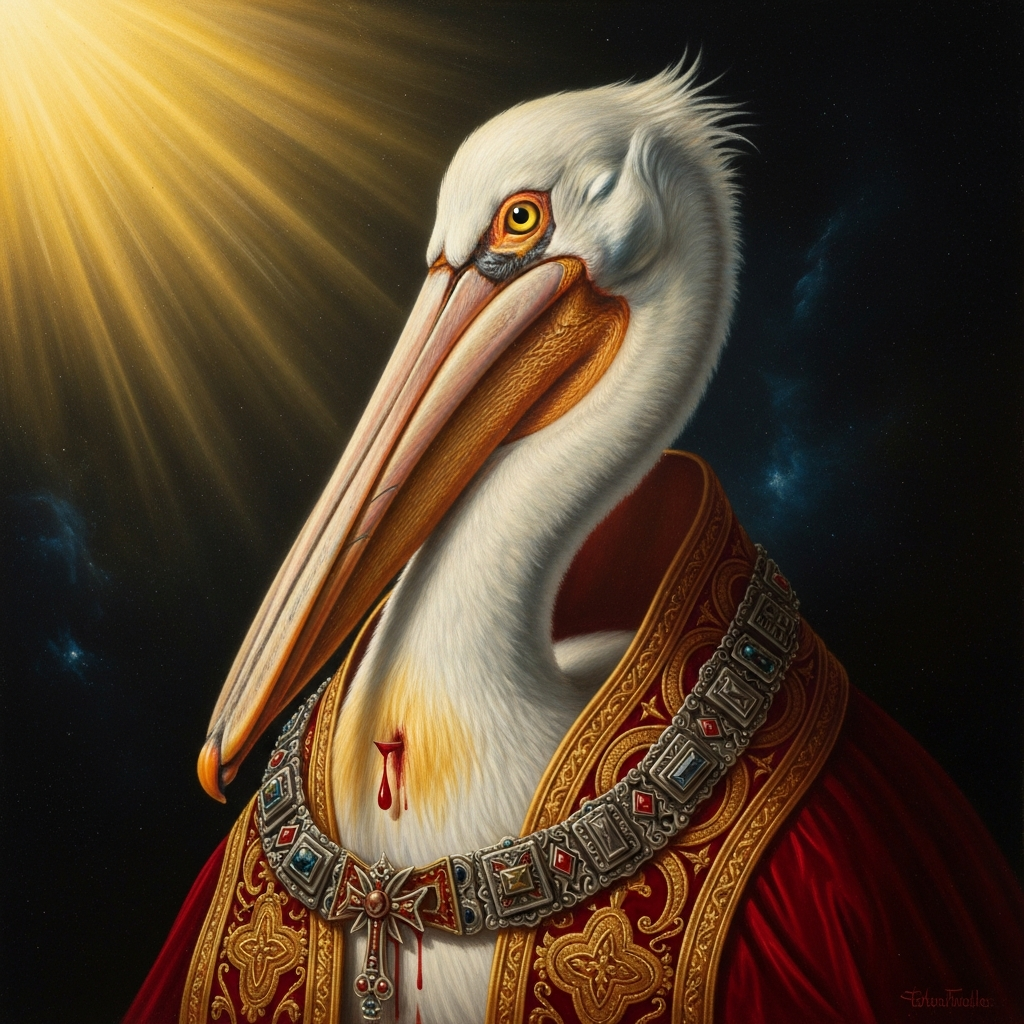
wounds the pelican's own breast to dispense life-giving blood that heals allies and transmutes suffering into salvation
Stigmata
perpetually bleeds in sacred service, converting personal pain into restorative grace that sanctifies all nearby
Total self-expenditure -- the Pelican gives everything and retains nothing; the symbol works only if what is given is received; wasted sacrifice is the deepest tragedy
“The pelican, loving its young, pierces its own breast and revives them with its blood.” — Physiologus
Lore: The Pelican was one of the most widespread Christ-symbols in medieval Christianity, long before the alchemists adopted it. The legend (from the Physiologus, the ancient bestiary) says that the mother pelican kills her young in anger, then mourns them so deeply that she pierces her own breast on the third day, and her blood revives them. The parallel to Christ’s death and resurrection was obvious and deliberate. Alchemists adopted the Pelican as the symbol of the circulatory process: the “pelican flask” has a tube that returns condensed vapor back into the boiling liquid, so the substance continuously feeds upon itself — dissolving and reconstituting until it is purified. Self-sacrifice as the mechanism of transformation.
Parallel: Christ’s blood shed for the remission of sins (Matthew 26:28). The Eucharist — “This is my blood of the covenant, which is poured out for many” (Mark 14:24). Thomas Aquinas’s eucharistic hymn Adoro te devote: “O loving Pelican, Lord Jesus, cleanse me, unclean, in thy blood.” The mother who gives everything for her children. The grain of wheat that dies to bear fruit (John 12:24).
1 min read
Indifference in the recipient; the refusal of grace; blood poured out for those who will not drink
*Physiologus* (~2nd century); *Bestiary* traditions (medieval); Dante, *Paradiso* XXV; Thomas Aquinas, *Adoro te devote*