Combat Profile
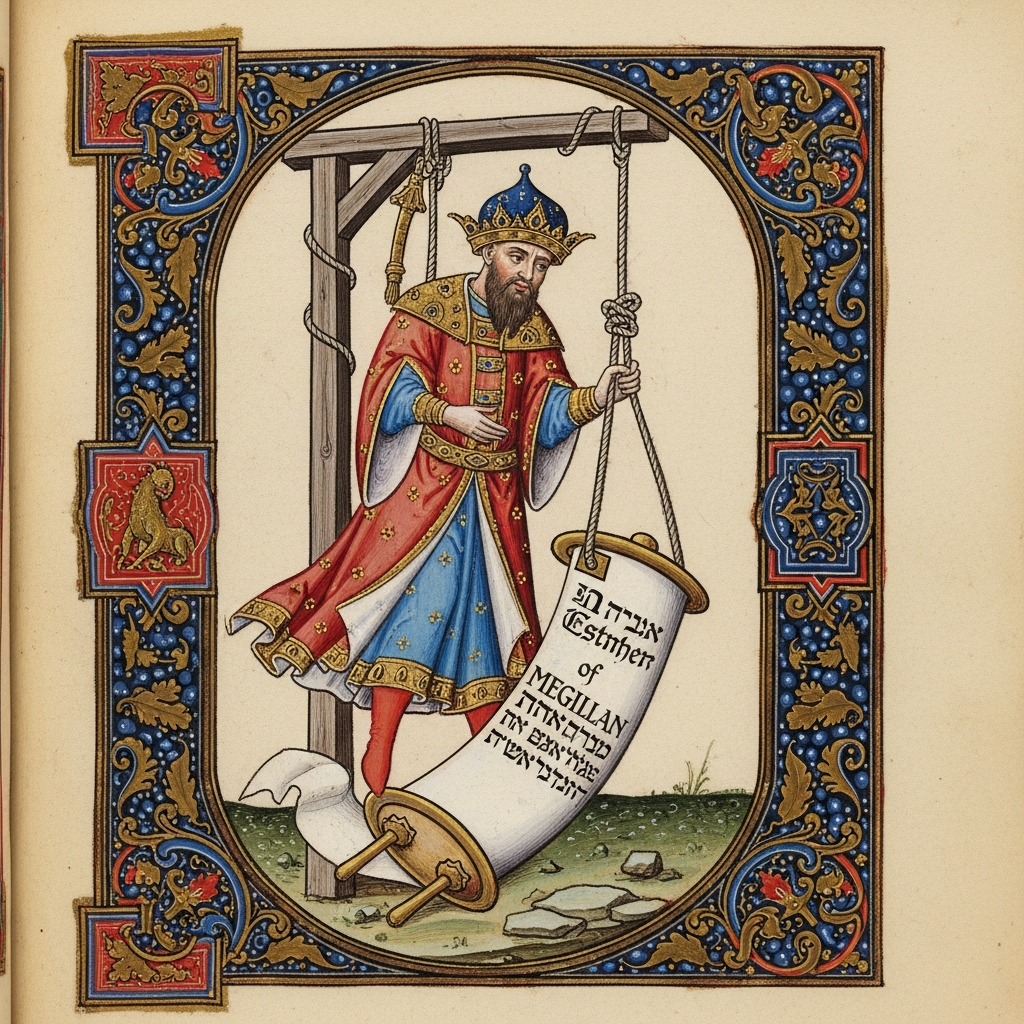
Gallows Reversal
Haman's own instruments of destruction are turned upon him, as his carefully laid plots collapse into poetic retribution.
Hubris of Power
Haman's confidence in his position grows with each scheming victory, but inevitably blinds him to approaching downfall.
Vanity; built a 75-foot gallows for Mordecai, then was hanged on it himself
Haman is identified as an “Agagite” — a descendant of the Amalekite king Agag, making the Haman-Mordecai conflict a continuation of the Saul-Agag feud from 1 Samuel 15. He cast “pur” (lots) to choose the date of the genocide, which gave the festival of Purim its name. The dramatic irony is relentless: Haman comes to the king planning to hang Mordecai; the king asks “What should be done for the man the king delights to honor?”; Haman assumes it’s about himself; describes an elaborate parade; discovers it’s for Mordecai; has to lead the parade himself (Esther 6). Then he’s exposed by Esther and hanged on his own gallows. In Jewish tradition, his name is drowned out with noisemakers (graggers) during the reading of the Megillah at Purim.
1 min read
Esther 3-9