Combat Profile
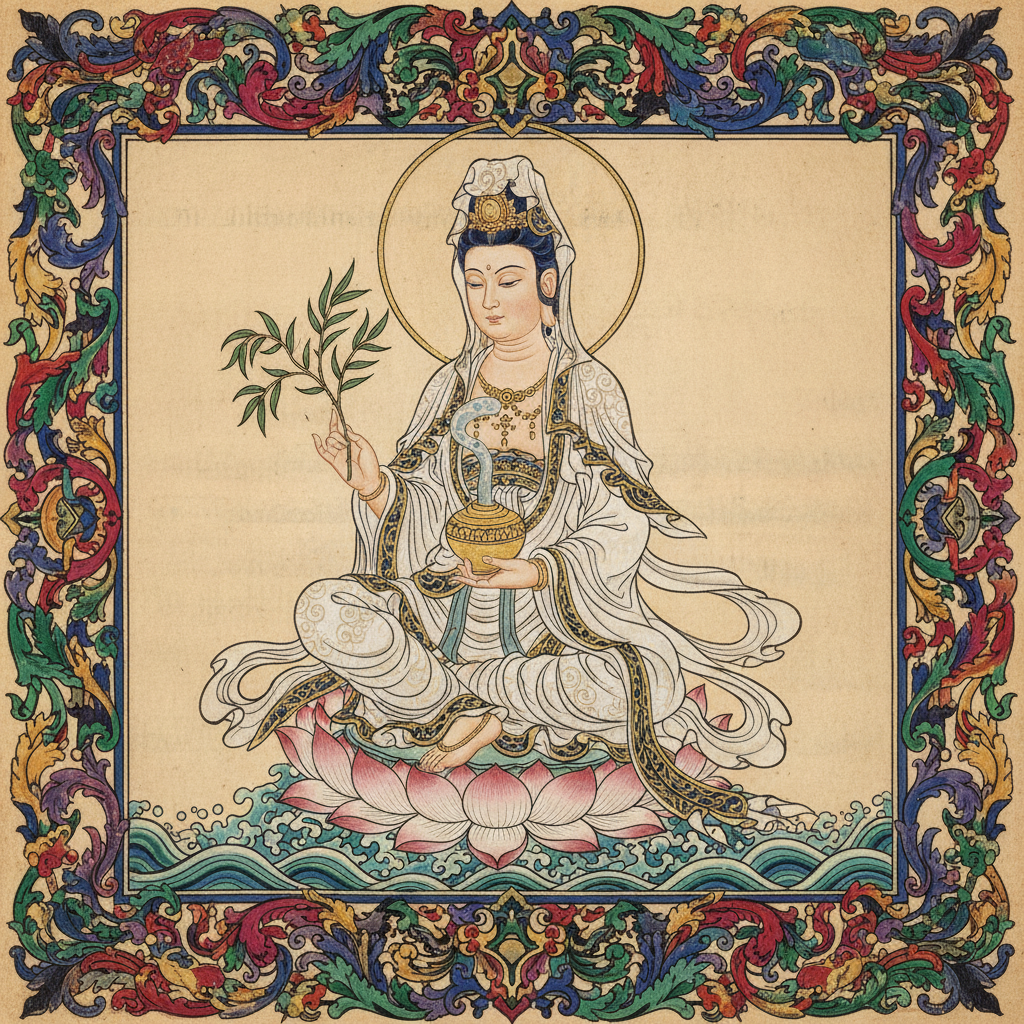
Boundless Compassion
heals all suffering beings within sight and grants them protection from spiritual harm for a duration
Avalokiteshvara's Mercy
automatically perceives the suffering of all souls and amplifies healing received by allies
Bound by compassion -- cannot act with force or cruelty. Her power works through persuasion, transformation, and mercy, not violence
“She who hears the cries of the world.”
Lore: Guanyin is the Chinese transformation of the Indian Buddhist bodhisattva Avalokiteshvara — originally male in Sanskrit texts, but gradually becoming female in Chinese devotion from approximately the 12th century onward, reflecting Chinese cultural needs for a compassionate mother-goddess figure. She is arguably the most widely venerated deity in all of East Asia, worshipped by Buddhists, Taoists, and folk religionists alike. In Buddhist theology, she is a bodhisattva — a being who has achieved the capacity for Buddhahood but chooses to remain in the cycle of rebirth to help all sentient beings achieve enlightenment. In Journey to the West, Guanyin is the architect of the entire pilgrimage: she selects the monk, recruits the disciples, provides the tools of control (the headband), and intervenes when the travelers face impossible obstacles. She is the most powerful being in the novel who actually acts — Buddha is above action, but Guanyin is in the world, sleeves rolled up, managing the salvation of her charges with a mixture of compassion and strategic brilliance.
Parallel: The parallel with the Virgin Mary is striking and has been noted by scholars since the Jesuit missions of the 16th century. Both are compassionate female figures who intercede between humanity and a higher power. Both are “mothers of mercy.” Both are the most popular objects of devotion in their respective traditions — often more prayed-to than the supreme deity himself. Both transform a patriarchal theological system by introducing a feminine face of the divine. The key difference: Mary intercedes but has no independent power in orthodox Catholic theology (she asks God on your behalf). Guanyin has immense independent power and acts directly. She is closer to a female archangel than to Mary — or perhaps she is what Mary might have become if Christian theology had allowed it.
1 min read
There is no effective counter to Guanyin. She is invulnerable because she has no ego to attack. Those who oppose her are converted, not destroyed
*Journey to the West*; *Lotus Sutra* (Chinese Buddhist adaptation); *Heart Sutra*; folk religion traditions; the *Miaoshan* legend (Chinese origin story for Guanyin)