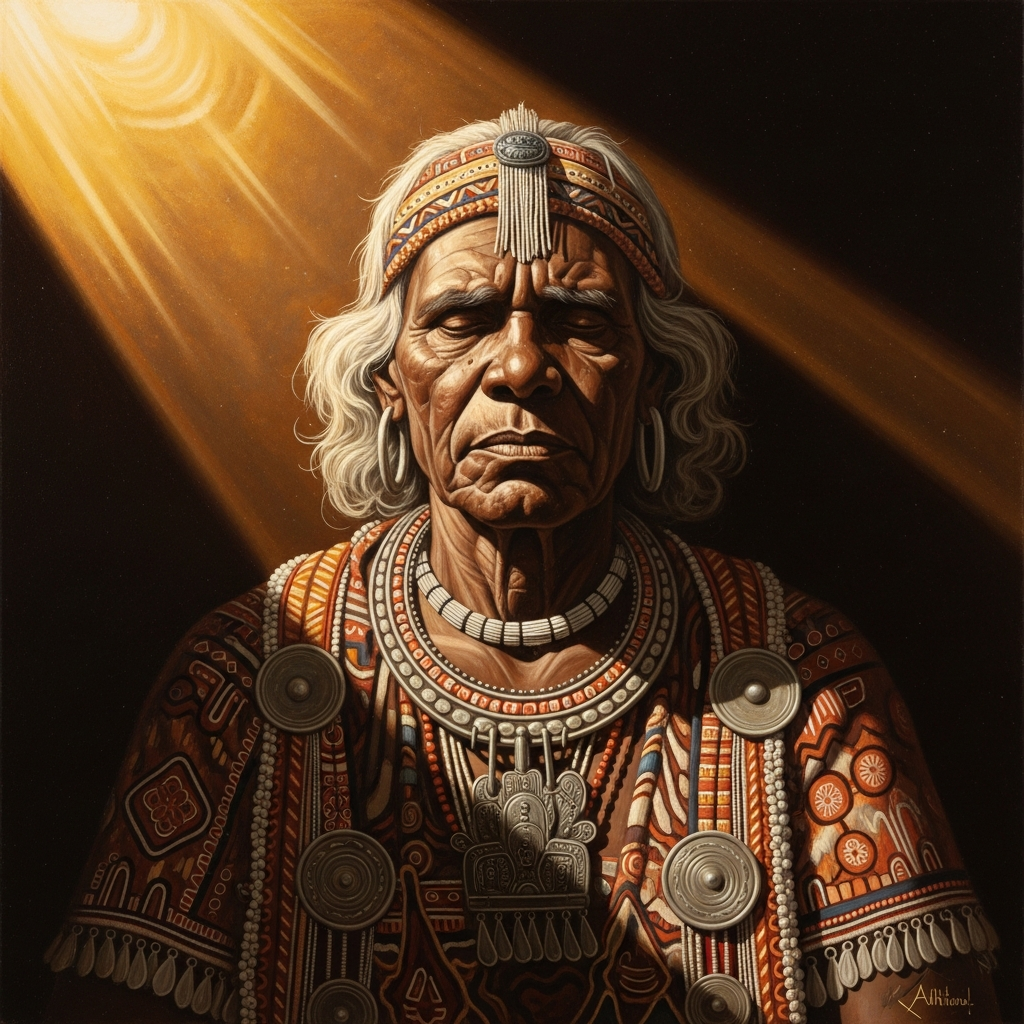
Combat Profile
Ngurra's Dreaming
Country manifests the stories sung into being, reshaping reality through the collective memory and law of all who belong to it.
Living Kinship
Country sustains all life within it; neglect causes spiritual sickness in land and people alike, while proper care and song keep all in sacred balance.
Can be damaged by mining, clearing, pollution, and -- most devastatingly -- by the removal of its custodians
“We don’t own the land. The land owns us.”
Lore: This entry is not for a spirit or a god. It is for the land itself, because in Aboriginal understanding, the land is not a backdrop for the drama of spirits and ancestors. It is the drama. Country is alive. Country knows you. Country needs you. And you need Country.
The Aboriginal concept of “Country” (always capitalized, always specific) refers to the totality of a person’s or a group’s relationship with a particular tract of land. But “relationship with land” does not begin to capture it. Country includes the land, the sky above it, the water on and under it, the animals and plants that live on it, the Dreamtime stories embedded in it, the Songlines that cross it, the ceremonies that maintain it, and the people who are its custodians. Country is kin. An Aboriginal person does not live on their Country. They live with their Country. They are part of their Country. And Country is part of them.
When Aboriginal people are removed from Country — as happened catastrophically during the colonial era and continues in subtler forms today — the damage is not merely emotional or cultural. It is ontological. A person separated from Country is a person separated from the fabric of reality. The Stolen Generations — Aboriginal children forcibly removed from their families and Country by the Australian government between approximately 1910 and 1970 — represent not just a human rights atrocity but, in Aboriginal understanding, a severing of the relationship between people and the Dreaming itself. The land suffers. The people suffer. The Dreaming weakens. Everything is connected, and when the connection is broken, everything is diminished.
Parallel: The idea that the land itself is alive and sacred appears in many traditions — Pachamama (Andean), Gaia (Greek, now ecological theory), the Maori concept of whenua (see the Polynesian section of this Bestiary). The Hebrew Bible ties the people of Israel to the Land of Israel in covenantal terms. The Navajo have dine bikeyah — the land between the four sacred mountains, which is not merely territory but identity. But the Aboriginal concept of Country goes further than any of these because it does not distinguish between the sacred and the ecological. Country is not sacred and ecological. It is one thing. The Dreaming, the law, the kinship system, the food sources, the water management, the fire management, the ceremony — all of it is Country, and Country is all of it.
2 min read
Colonization. The deliberate separation of people from Country is the deepest wound of Australian colonial history
Rose, *Nourishing Terrains*; Neidjie, *Story About Feeling*; Aboriginal Land Rights Act 1976; Native Title Act 1993; the continuing words of Aboriginal custodians