Sensitivity Notice
Aboriginal Australian knowledge systems are not organized for universal consumption. Some stories can only be told by certain people, at certain times, in certain places. Knowledge is not free — it is earned, gifted, and held in trust. There are men’s stories and women’s stories, stories for the initiated and stories that must wait until the listener is ready. This is not secrecy for its own sake. It is responsibility. Knowledge carries obligation, and to receive knowledge you are not prepared for is dangerous — not metaphorically, but spiritually.
This section presents only what has been publicly shared and published by Aboriginal authors and elders — people like Bill Neidjie (Gagudju), David Mowaljarlai (Ngarinyin), and others who chose, deliberately and with authority, to share certain teachings with the wider world. It is deliberately incomplete out of respect. What is missing is missing on purpose. Do not seek what has not been offered.
Sources include: Bill Neidjie, Story About Feeling; Deborah Bird Rose, Dingo Makes Us Human; W.E.H. Stanner, The Dreaming and White Man Got No Dreaming; A.P. Elkin, The Australian Aborigines; Bruce Chatwin, The Songlines (with significant caveats — Chatwin was an outsider writing for outsiders, and his romanticization must be read critically); and the published works of Aboriginal scholars and knowledge-holders who have chosen to make specific teachings available.
The Dreaming — Not a Time, but a Dimension
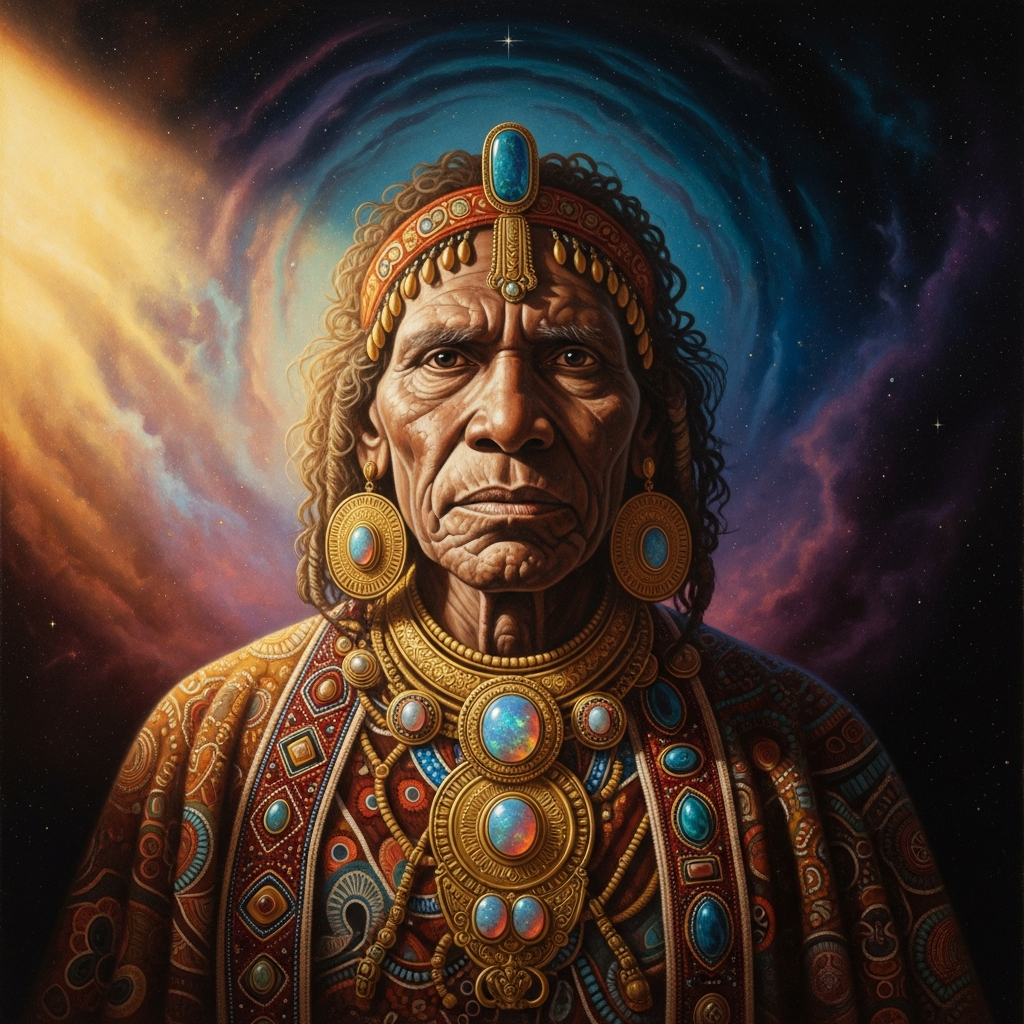
The term “Dreamtime” is a loose translation of words from dozens of Aboriginal languages — Tjukurpa (Pitjantjatjara/Yankunytjatjara), Jukurrpa (Warlpiri), Ngarrangkarni (Gurindji), Alcheringa (Arrernte, from which the English term was first derived), among many others. The word “Dreamtime” is, frankly, misleading. It suggests the past. It suggests sleep. It suggests unreality. All of these are wrong.
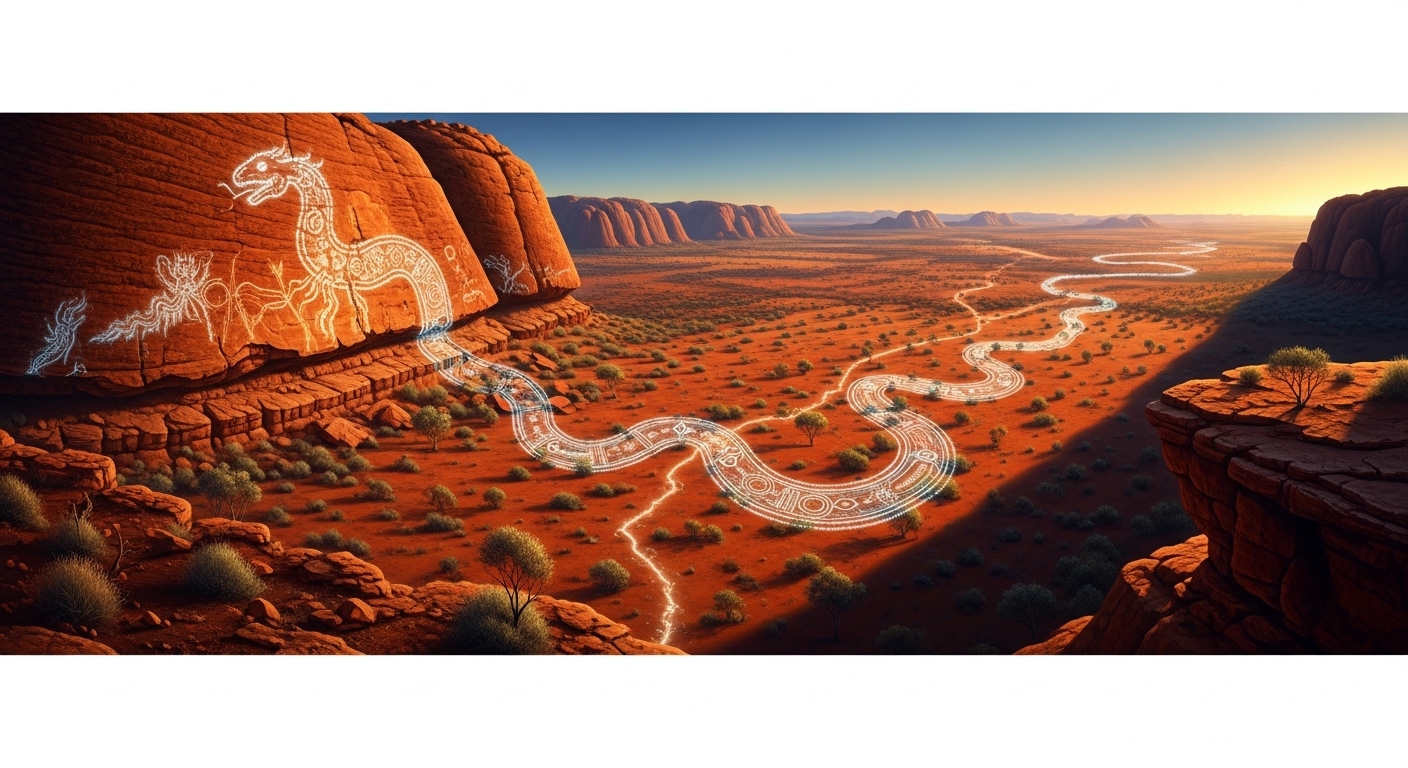
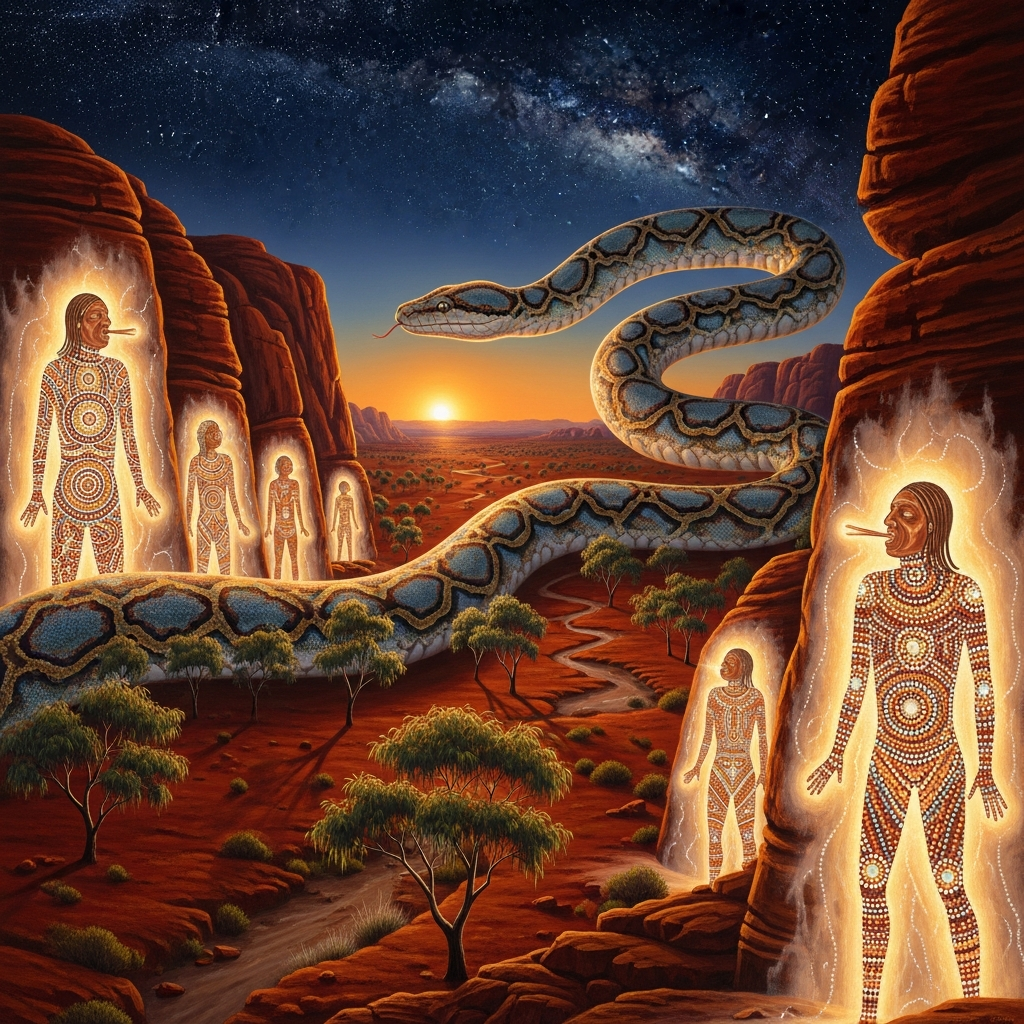
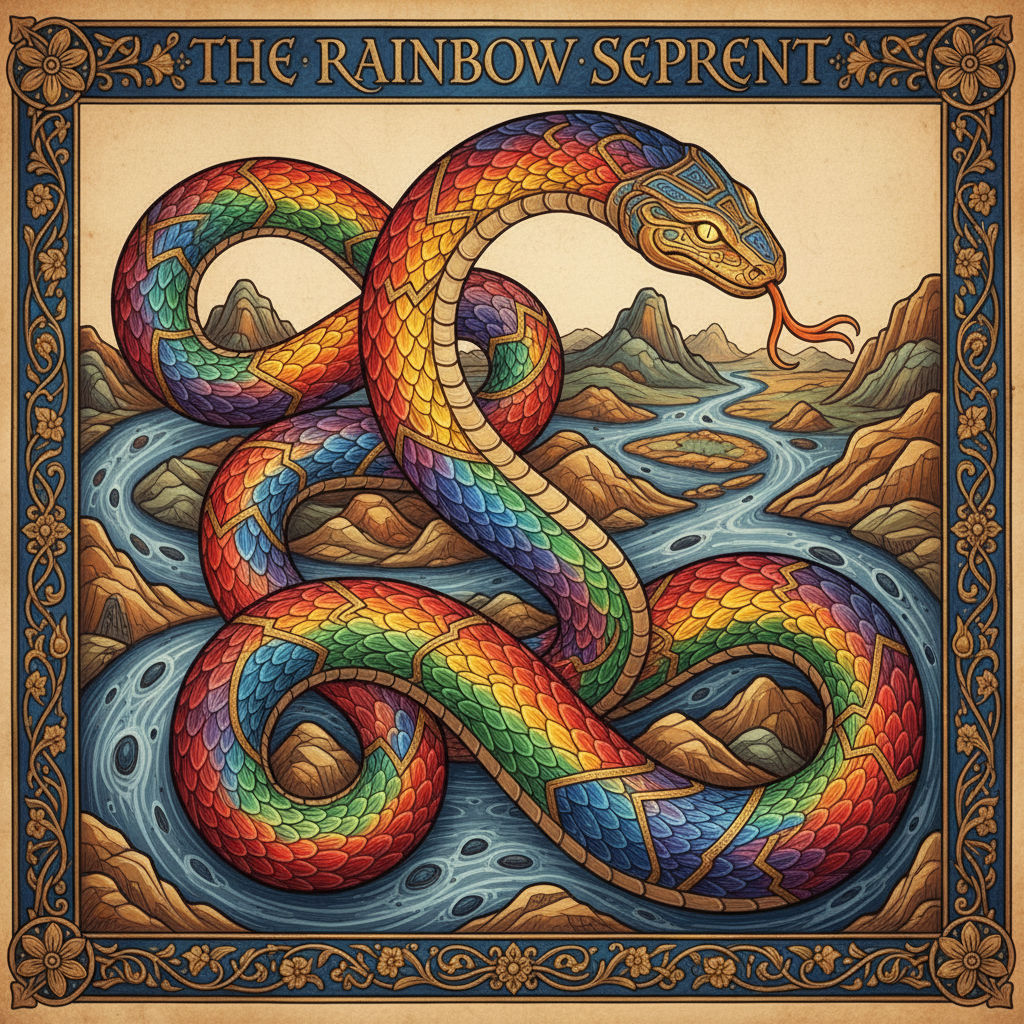
The Dreaming is not the past. It is not a “once upon a time.” The Dreaming is a dimension of reality that coexists with the present, underlies it, and permeates it. The ancestor beings who shaped the world during the Dreaming did not leave. They are still here. They became the landscape. That rock formation is not like an ancestor — it is an ancestor. That waterhole is not named after the Rainbow Serpent — it is the Rainbow Serpent, resting. The land is not a memorial. It is a living presence.
W.E.H. Stanner, one of the first non-Aboriginal scholars to take the Dreaming seriously on its own terms, described it as “a complex of meanings” that includes “a narrative of things that once happened; a kind of charter of things that still happen; and a kind of logos or principle of order transcending everything significant for Aboriginal man.” He was getting close. But even Stanner acknowledged that English cannot contain it. The Dreaming is the past, the present, and the future simultaneously. It is the law. It is the land. It is the song. It is the story. It is the obligation. It is everything, and it is always now.
Bill Neidjie, Gagudju elder, said it most simply: “This ground, this earth… like your father or brother or mother, because you born from this earth. You got to come back to earth. When you die… you’ll come back to earth. Maybe little bit your spirit go… but your body without you come back to this earth.”
This is not mythology in the Western sense. This is law, geography, ecology, kinship, and metaphysics in a single, unified system that has been continuously maintained for at least 65,000 years — making it the oldest intellectual tradition on Earth, by a factor of thirteen.
The Dreamtime Cosmos
flowchart TB
    subgraph COSMOS["THE DREAMING -- Tjukurpa / Jukurrpa"]
        direction TB

        subgraph DREAMING["The Dreaming Itself"]
            TJUKURPA["<b>THE DREAMING</b><br/>Not a time but a dimension<br/>Always was, always is, always will be<br/>The law beneath the land"]
        end

        subgraph ANCESTORS["The Ancestor Beings"]
            RAINBOW["<b>RAINBOW SERPENT</b><br/>Creator of waterways<br/>Still present in waterholes"]
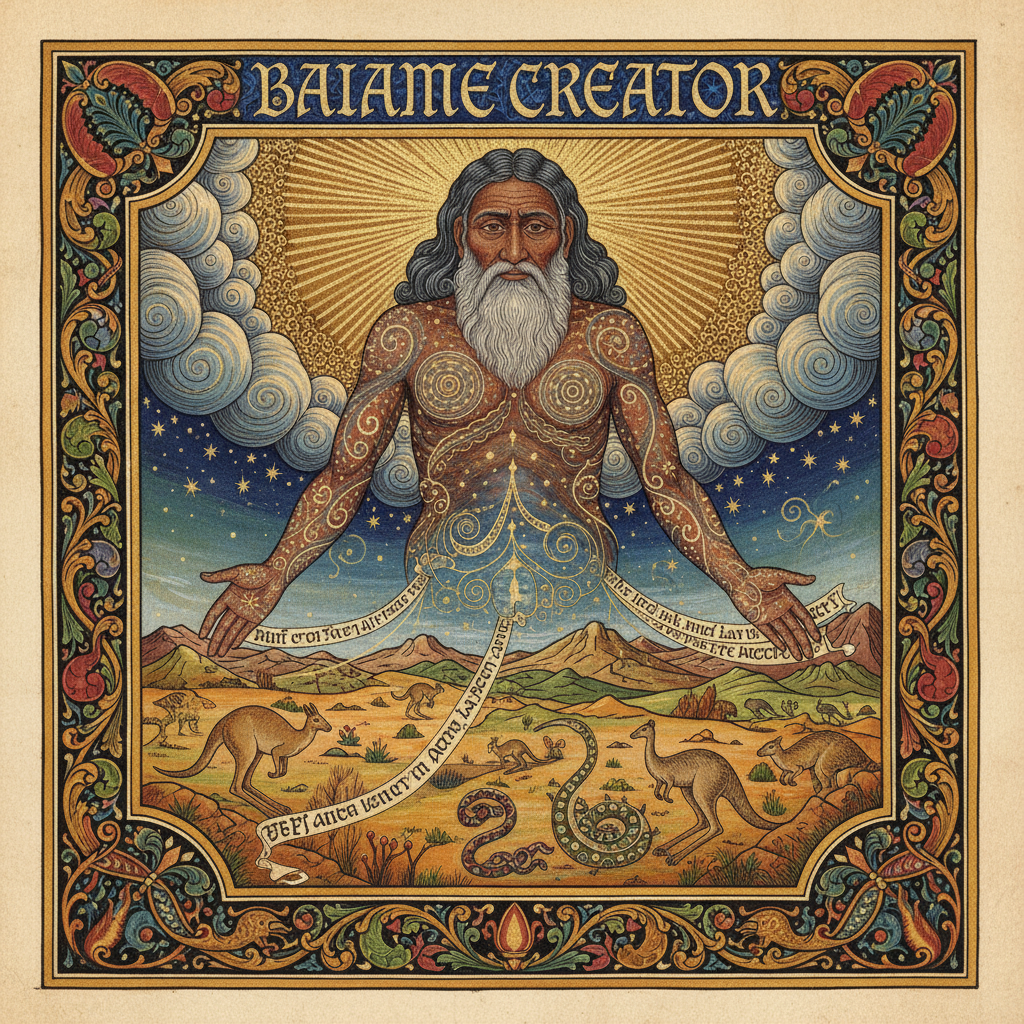
            BAIAME["<b>BAIAME</b><br/>Sky Father (SE nations)<br/>Maker of law"]
            OTHER["<b>Countless Others</b><br/>Specific to nation, country,<br/>and Dreaming track"]
        end

        subgraph SONGLINES["The Songlines"]
            TRACKS["<b>DREAMING TRACKS</b><br/>Paths sung into existence<br/>by ancestor beings<br/>The song IS the map"]
        end

        subgraph LAND["The Living Land"]
            COUNTRY["<b>COUNTRY</b><br/>Not a place you live on<br/>but a being you belong to<br/>Every feature is an ancestor"]
        end

        subgraph PEOPLE["The People"]
            CUSTODIANS["<b>CUSTODIANS</b><br/>Not owners but caretakers<br/>Obligated to sing the land<br/>to keep it alive"]
        end
    end

    TJUKURPA -->|"Ancestor beings<br/>emerge and walk"| ANCESTORS
    ANCESTORS -->|"They sing the world<br/>into existence"| SONGLINES
    SONGLINES -->|"Their paths become<br/>the landscape"| LAND
    LAND -->|"The people are born<br/>from the land"| PEOPLE
    PEOPLE -.->|"Sing the songs,<br/>perform the ceremonies,<br/>maintain the Dreaming"| TJUKURPA

    style COSMOS fill:#8B4513,stroke:#5C2D0E,color:#fff
    style DREAMING fill:#DAA520,stroke:#B8860B,color:#000
    style ANCESTORS fill:#B22222,stroke:#8B0000,color:#fff
    style SONGLINES fill:#2E8B57,stroke:#1a5c38,color:#fff
    style LAND fill:#A0522D,stroke:#6B3410,color:#fff
    style PEOPLE fill:#4682B4,stroke:#2E5A88,color:#fff
Note the circular structure. The Dreaming is not linear. The ancestor beings create the land; the land produces the people; the people maintain the Dreaming through ceremony; the Dreaming continues. There is no beginning and no end. There is no Fall, no Apocalypse, no eschatological endpoint. There is only the ongoing, eternal, cyclical responsibility of keeping the world alive through right relationship.
What Makes Aboriginal Tradition Unique
Before the individual entities, it is worth pausing to understand just how different this tradition is from every other one in this Bestiary. Not better. Not worse. Different — in ways that challenge fundamental assumptions about what religion, mythology, and knowledge even are.
| Feature | Aboriginal Tradition | All Other Traditions in This Bestiary | Why This Matters |
|---|
| Age | ~65,000 years of continuous practice | Oldest written: ~5,000 years (Sumerian/Egyptian) | 13x older than the oldest written tradition. When the Sumerians were inventing writing, Aboriginal Australians had already been maintaining their traditions for 60,000 years |
| The land | IS the sacred text | Points TO sacred places (Jerusalem, Mecca, Bodh Gaya) | You don’t read about creation — you walk on it. The landscape is not a symbol; it is the thing itself |
| Time | Non-linear. The Dreaming is always now | Linear: creation —> history —> apocalypse/judgment | There is no “beginning” or “end.” No Genesis moment, no Revelation endpoint. Just ongoing, eternal presence |
| Death | Return to the Dreaming; become part of the land | Go to heaven/hell/Sheol; reincarnation cycle; judgment | Reintegration, not destination. You don’t go somewhere — you return to what you always were |
| Narrative form | Sung, danced, painted on rock and body. Not written | Written texts dominate (Torah, Bible, Quran, Vedas, sutras) | Knowledge is performed, not read. The act of singing is itself the sacred act — the song keeps the land alive |
| Knowledge access | Owned, restricted, earned through initiation | Sacred texts are published, translated, available to all | Not everyone is entitled to know everything. Knowledge is power, and power requires preparation |
| Relationship to nature | The land is kin — an ancestor, a relative, a responsibility | Nature is created for humanity (Gen 1:28) or is illusion (maya) | You don’t have dominion over country. Country has claims on you |
| Theology | No separation between sacred and secular | Sacred/profane distinction is foundational (Durkheim, Eliade) | Everything is sacred. There is no “profane” space. Every footstep is on holy ground |
The Web of the Dreaming
flowchart LR
    subgraph DREAMING_WEB["THE DREAMING -- Everything Is Connected"]
        direction TB

        RAINBOW["Rainbow Serpent<br/><i>Creates waterways</i>"]
        BAIAME["Baiame<br/><i>Creates law</i>"]
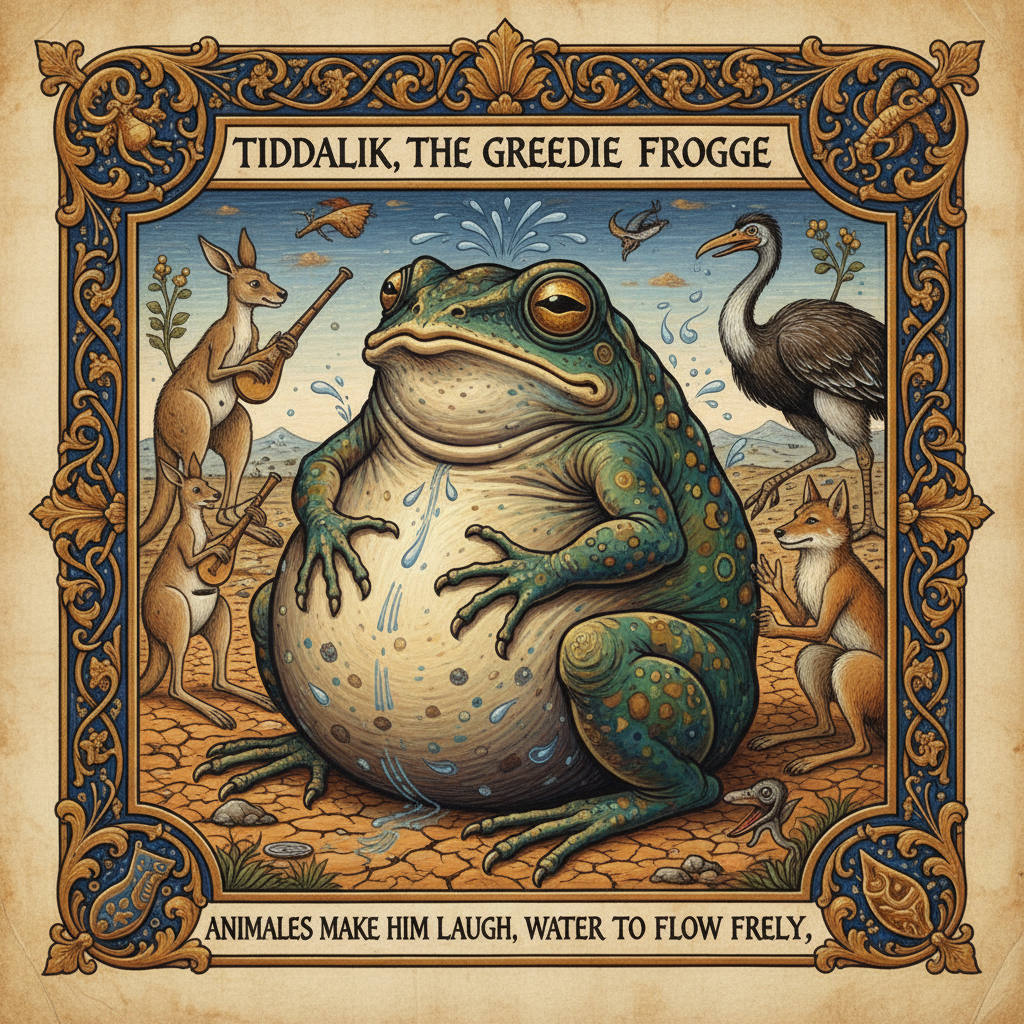
        TIDDALIK["Tiddalik<br/><i>Tests the system</i>"]
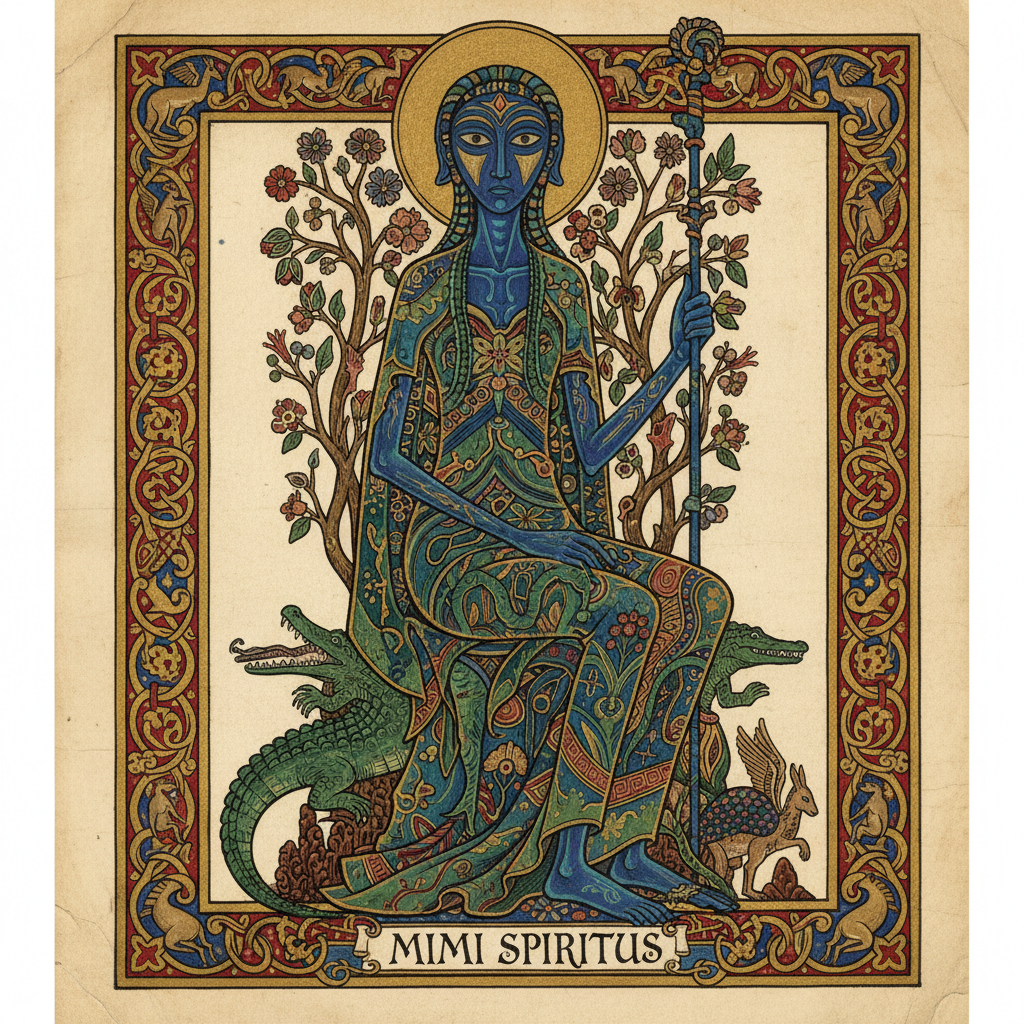
        MIMI["Mimi Spirits<br/><i>Teach art & hunting</i>"]
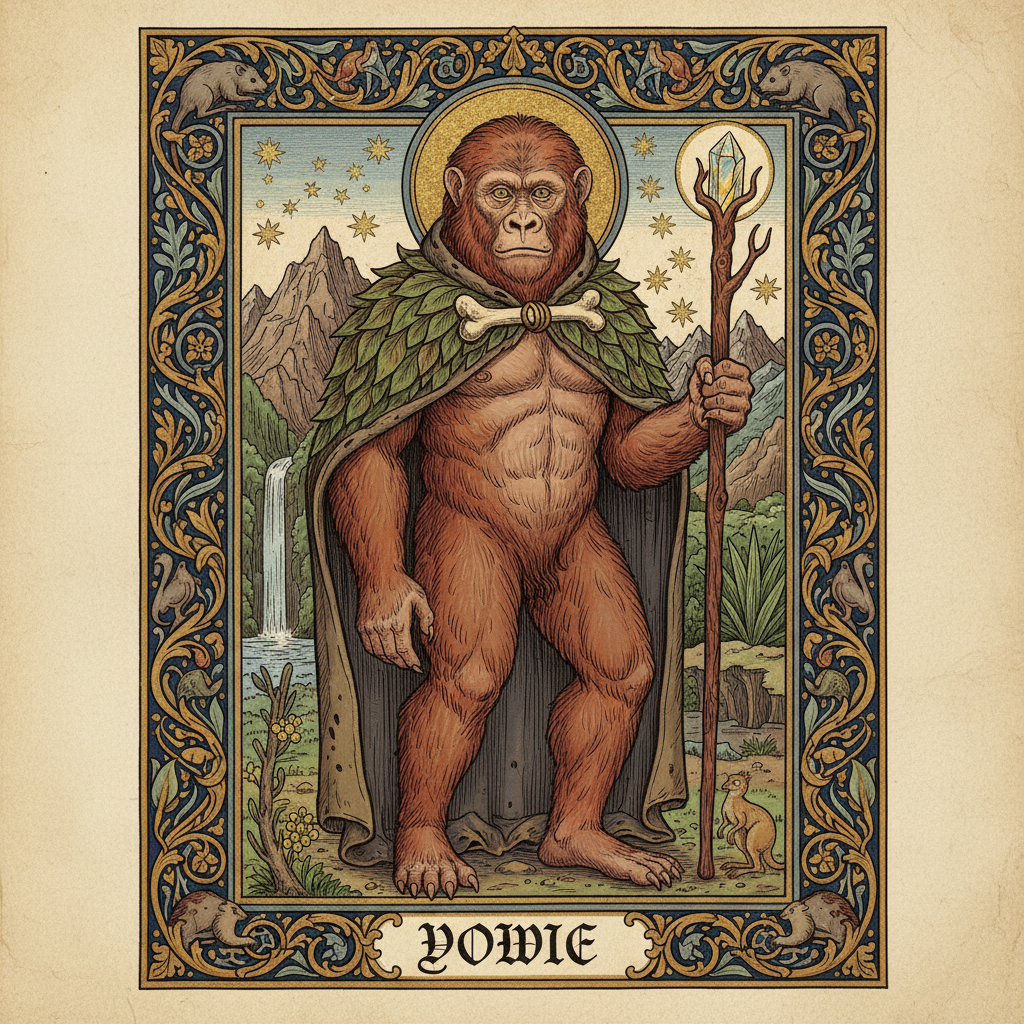
        YOWIE["Yowie<br/><i>Guards the wild</i>"]
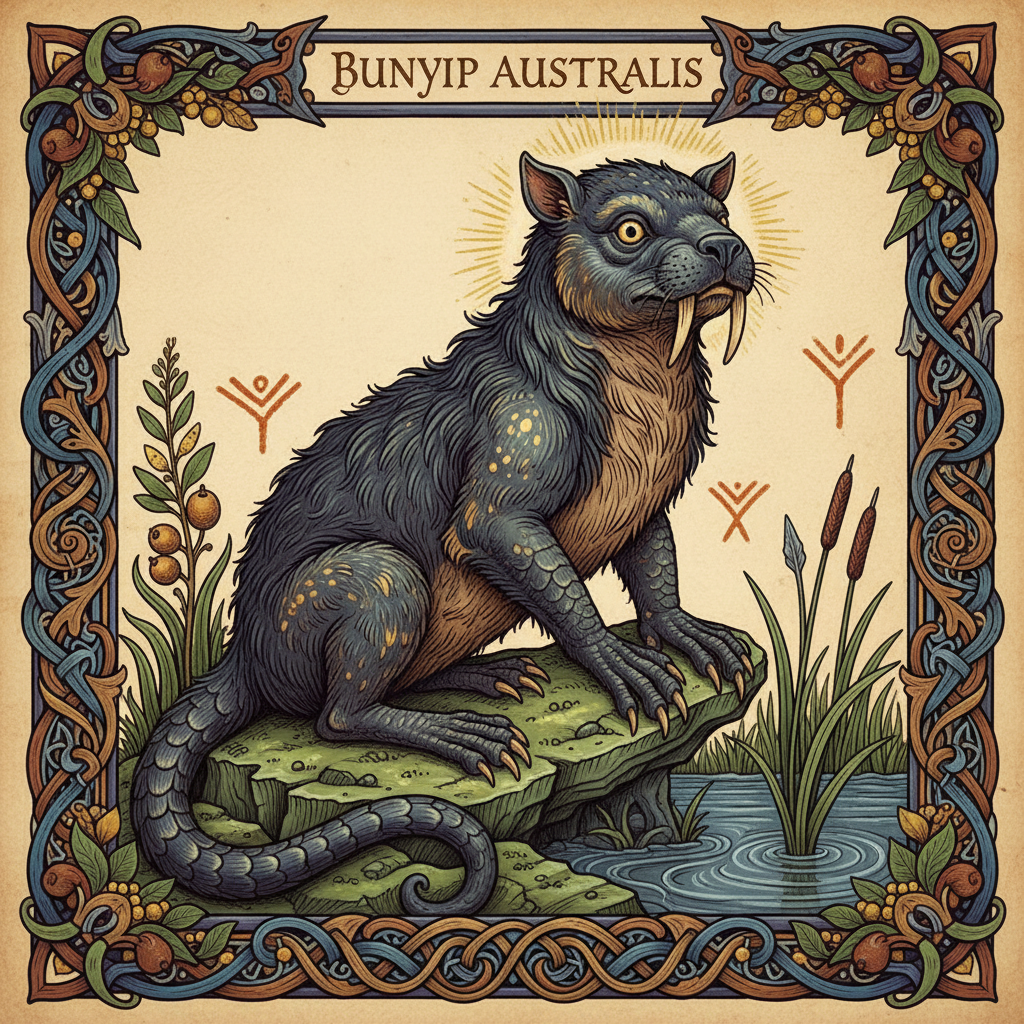
        BUNYIP["Bunyip<br/><i>Guards the water</i>"]
        SONGLINES["Songlines<br/><i>Connect everything</i>"]
        COUNTRY["Country<br/><i>IS everything</i>"]
        PEOPLE["The People<br/><i>Maintain everything</i>"]
    end

    RAINBOW -->|"carved"| COUNTRY
    BAIAME -->|"gave law to"| COUNTRY
    SONGLINES -->|"map & maintain"| COUNTRY
    MIMI -->|"taught"| PEOPLE
    PEOPLE -->|"custodians of"| COUNTRY
    PEOPLE -->|"sing"| SONGLINES
    TIDDALIK -->|"teaches about"| RAINBOW
    BUNYIP -->|"guards waters of"| COUNTRY
    YOWIE -->|"patrols wilds of"| COUNTRY
    COUNTRY -.->|"produces & sustains"| PEOPLE

    style DREAMING_WEB fill:#8B4513,stroke:#5C2D0E,color:#fff
    style COUNTRY fill:#DAA520,stroke:#B8860B,color:#000
    style PEOPLE fill:#4682B4,stroke:#2E5A88,color:#fff
    style RAINBOW fill:#FF6347,stroke:#CC3322,color:#fff
    style SONGLINES fill:#2E8B57,stroke:#1a5c38,color:#fff
The Dreaming and Time — A Diagram for the Linear-Minded
Most traditions in this Bestiary conceive of time like this:
flowchart LR
    A["Creation<br/>(Genesis, Big Bang,<br/>Cosmic Egg)"] --> B["History<br/>(The narrative of<br/>human civilization)"] --> C["End<br/>(Apocalypse, Judgment,<br/>Heat Death, Ragnarok)"]

    style A fill:#228B22,stroke:#006400,color:#fff
    style B fill:#4682B4,stroke:#2E5A88,color:#fff
    style C fill:#8B0000,stroke:#4B0000,color:#fff
The Aboriginal understanding of time looks like this:
flowchart TB
    subgraph ALWAYS["ALWAYS"]
        D["The Dreaming"] --> E["The Land"]
        E --> F["The People"]
        F --> G["The Ceremony"]
        G --> D
    end

    style ALWAYS fill:#DAA520,stroke:#B8860B,color:#000
There is no arrow pointing to “The End.” There is no beginning point. There is only the circle, and the obligation to keep it turning.
A Final Word on Incompleteness
This section is shorter than most in the Bestiary. This is deliberate. Aboriginal Australian traditions are not less complex than Greek mythology or the Hindu pantheon or the Norse cosmology documented elsewhere in this project. They are more complex — staggeringly so, representing 65,000 years of continuous intellectual development across hundreds of nations with hundreds of languages. A complete documentation would fill libraries. Some of those libraries exist only in the minds and songs of living people.
What is not here is not here because it was not available. It is not here because it was not offered. The difference matters.
For those who wish to learn more, the following works are recommended — all either written by Aboriginal authors or produced with the explicit cooperation and approval of Aboriginal communities:
- Bill Neidjie, Story About Feeling (1989) — A Gagudju elder’s account of Country, told in his own words, in his own cadence. One of the most important books ever published about the relationship between humans and land.
- Deborah Bird Rose, Dingo Makes Us Human (1992) and Nourishing Terrains (1996) — An anthropologist who spent decades working with Aboriginal communities in the Victoria River District. Her work is characterized by deep respect and a refusal to reduce Aboriginal thought to Western categories.
- W.E.H. Stanner, The Dreaming (1953) and White Man Got No Dreaming (1979) — The anthropologist who first articulated, for a Western audience, that the Dreaming was not a “stage of history” but a dimension of reality. His Boyer Lectures, “After the Dreaming” (1968), named the “great Australian silence” — the refusal of Australian historiography to include Aboriginal perspectives.
- David Mowaljarlai and Jutta Malnic, Yorro Yorro (1993) — A Ngarinyin elder’s account of the Wandjina and the law of the Kimberley, told in his own voice.
- A.P. Elkin, The Australian Aborigines (1938, revised editions) — An early and influential anthropological study; read with awareness of its era.
- Bruce Chatwin, The Songlines (1987) — Beautiful, flawed, essential. Chatwin brought the Songlines to world attention but filtered them through his own obsessions. Read it, but read it critically.
- George Chaloupka, Journey in Time (1993) — The definitive study of Arnhem Land rock art, produced in close collaboration with Kunwinjku custodians.
The Dreaming is not over. It is not “was.” It is.
Entity count for this section: 9 entries (The Dreaming, Rainbow Serpent, Baiame, Tiddalik, Mimi Spirits, Yowie, Bunyip, Songlines, Country)
Note: The relatively low entity count reflects the nature of the tradition. Aboriginal Australian spirituality is not organized around a pantheon of discrete entities in the way that Greek, Norse, or Hindu traditions are. It is organized around relationships — between people and land, between past and present, between the visible and the Dreaming. To impose a “character roster” structure on it would be to miss the point. The entries above are the aspects of the tradition that translate most naturally into the Bestiary format. The tradition itself is the land, and the land is vast.
 RARE
RARE 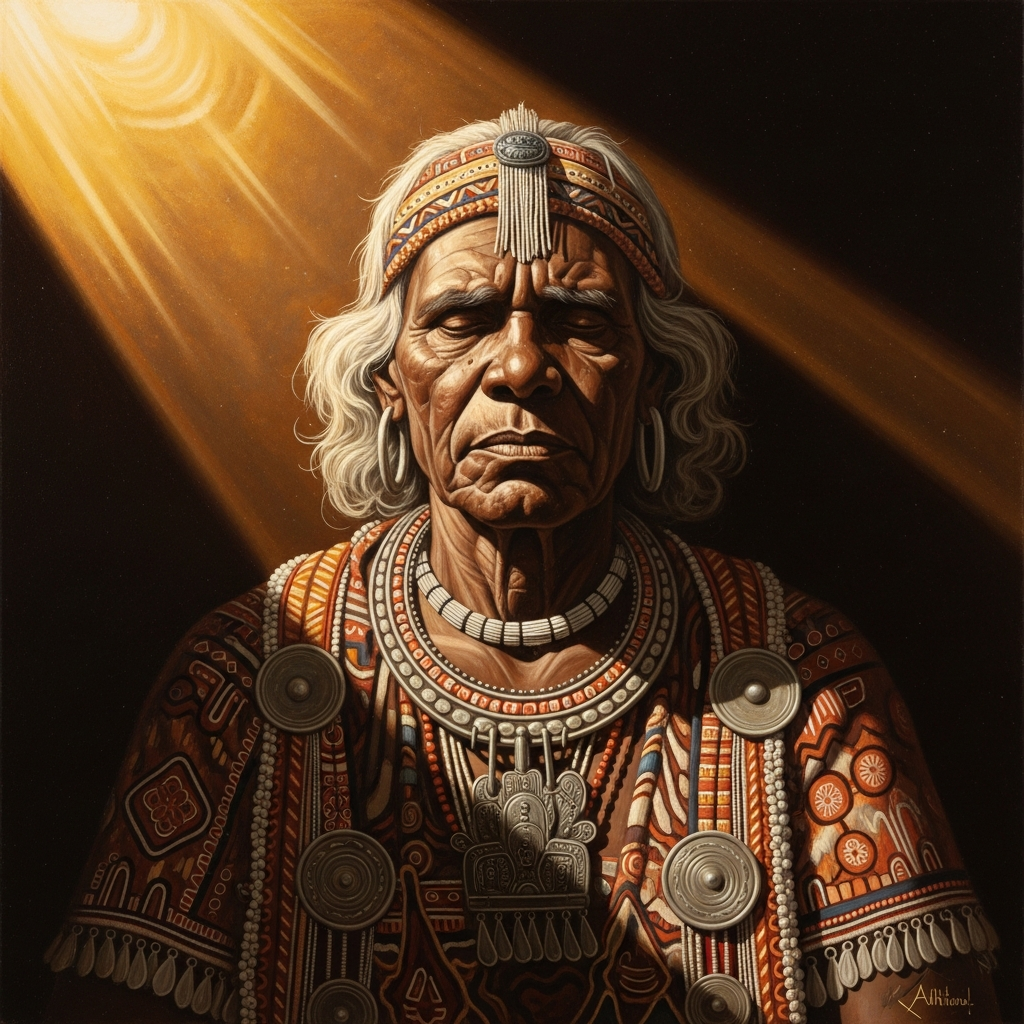 MYTHIC
  MYTHIC
  LEGENDARY