Combat Profile
Dreamtime Revelation
Mimi spirits impart sacred knowledge of hunting techniques, cooking methods, and artistic mastery directly into mortal consciousness through dreams and visions.
Between-Spaces Guardians
Mimi spirits exist in the liminal spaces between rock faces and within the Dreamtime itself, making them invisible to those who do not understand the old ways and granting them immunity to direct physical harm.
Extremely thin and fragile. A strong wind can snap their limbs. They cannot come out on windy days
“The Mimi were here before us. They painted the first pictures on the rock. They showed us how.”
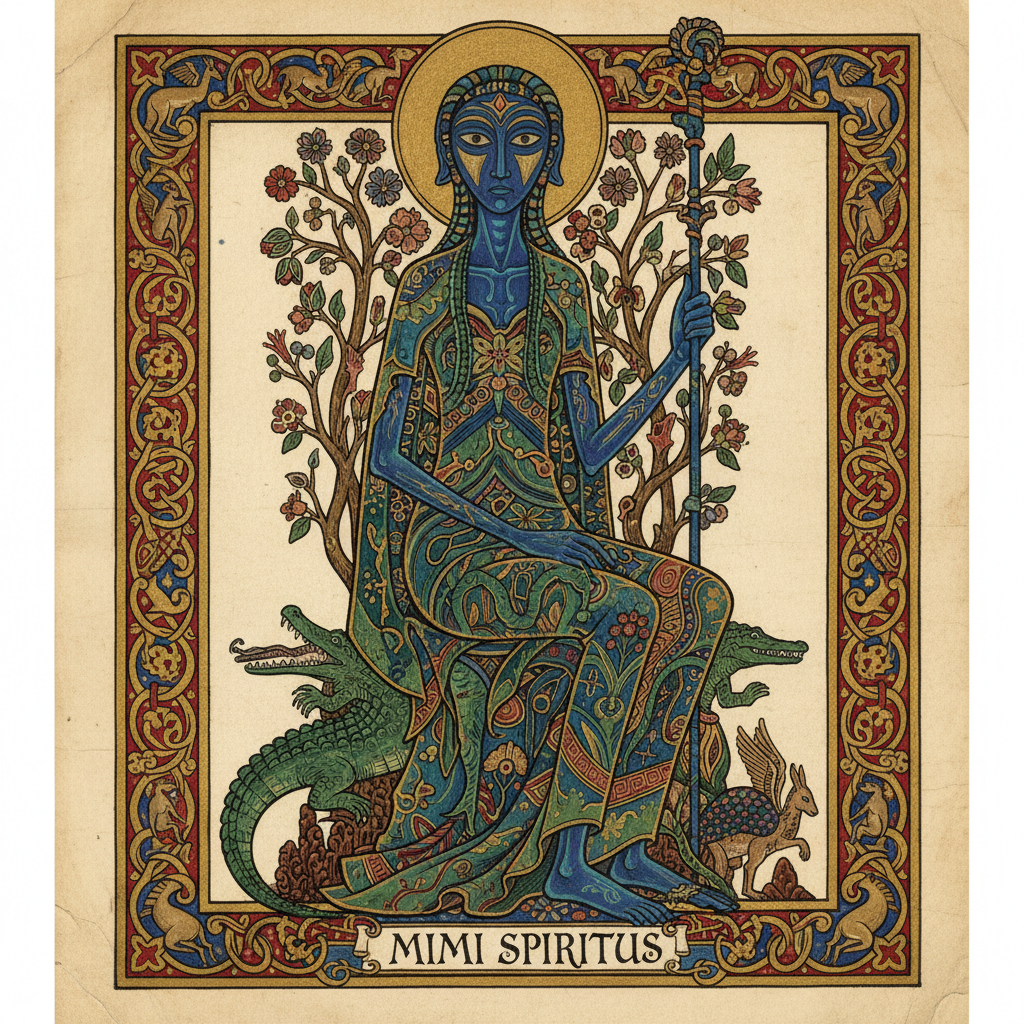
Lore: The Mimi are spirit beings of Arnhem Land, described as incredibly tall, thin figures — so thin that they live in the cracks and crevices of rock faces, sliding in and out of the stone like it was a doorway. They are shy, mostly invisible, and deeply private. They can only come out when the wind is calm, because their bodies are so elongated and fragile that a strong breeze would snap them in two. They communicate by whistling and tapping on rock.
According to Kunwinjku tradition, the Mimi were the first artists. The spectacular rock art galleries of Arnhem Land — some of the oldest and most extensive in the world, dating back tens of thousands of years — are attributed first to the Mimi, who then taught the art to humans. The Mimi also taught humans how to hunt kangaroo, how to prepare food, and how to make fire. They are, in essence, the Promethean figures of Aboriginal tradition — the beings who gave humanity the skills needed to survive.
But the Mimi are not uniformly benevolent. If a human is rude, or enters their territory without proper respect, or is too loud near the rock shelters, the Mimi can cause illness, confusion, or get a person hopelessly lost. They are not malicious. They are private, and they have boundaries, and they enforce them.
Parallel: The idea of pre-human beings who taught humanity essential arts appears across the world. In 1 Enoch, the Watchers (fallen angels) taught humanity metallurgy, cosmetics, astrology, and weapons — knowledge presented as dangerous and forbidden. In Greek mythology, Prometheus stole fire from the gods and was punished eternally. In Sumerian tradition, the apkallu (seven sages) emerged from the sea to teach humanity civilization. The Mimi differ from all of these in one key respect: the teaching is presented as generous, not transgressive. The Mimi are not punished for teaching humans. There is no jealous god withholding knowledge. The Mimi simply shared what they knew, because that is what good neighbors do. This absence of the “forbidden knowledge” trope is itself a profound theological statement about the nature of learning and its relationship to power.
The Mimi are also comparable to the fairy traditions of Europe (the Sidhe of Ireland, the huldufolk of Iceland), the Menehune of Hawaiian tradition, and the jinn of pre-Islamic Arabian belief — all being thin, shy, otherworldly beings who live in the spaces humans cannot easily access, who can be helpful or harmful depending on how they are treated. The convergence of “thin, shy, hidden people” across completely unrelated cultures is one of the more interesting puzzles in comparative mythology.
2 min read
Wind, loud noises, human rudeness (they are easily offended and will retreat permanently)
Mountford, *Art, Myth and Symbolism*; Chaloupka, *Journey in Time* (the definitive study of Arnhem Land rock art); Kunwinjku oral tradition as publicly shared