The Centerpiece: The Cargo Cult as Mirror
The cargo cult is not a curiosity. It is not an anthropological footnote. It is the single most important phenomenon in comparative religion, because it is the only case where we can see all the way through the mechanism — from the observable cause (industrial manufacturing), through the gap in understanding (Melanesian unfamiliarity with factories), to the ritual response (symbolic reproduction of associated behaviors), to the theological elaboration (John Frum, spirit-planes, the returning god). Every other religion is this same chain with the first link hidden.
All religious ritual is cargo-cult behavior. Not a dismissal. A structural observation.
Religious ritual works like this: a community observes that certain actions are associated with desired outcomes (Worsley, The Trumpet Shall Sound; Lindstrom, Cargo Cult). They codify those actions. They repeat them. When the outcomes occur, the ritual is validated. When the outcomes do not occur, the explanation is that the ritual was performed incorrectly, or the spirits require something more, or the timing was wrong, or the outcome was granted but in a form the community did not recognize. The ritual is never falsified — failure is always explicable within the system.
Cargo-cult ritual works identically (Jebens, Cargo, Cult, and Culture Critique). The symbolic airstrip does not attract planes. But perhaps the clearing was not long enough. Perhaps the bamboo tower was not tall enough. Perhaps the uniforms were not accurate enough. Perhaps John Frum requires more devotion before he returns. The ritual is never falsified.
Christian ritual works identically. Prayer does not reliably heal the sick. But perhaps the faith was not strong enough. Perhaps God’s plan is different from what was requested. Perhaps the healing will come in the afterlife. Perhaps the prayer was answered but in a way we cannot perceive. The ritual is never falsified.
Same structure. Different content. The cargo cultist builds an airstrip for John Frum. The Christian builds a church for Christ. The Hindu builds a temple for Vishnu. The Muslim faces Mecca. In every case, the ritual is a human construction designed to influence invisible forces, validated by occasional success and immunized against failure by theological explanations that make failure indistinguishable from delayed or redirected success.
And yet. The cargo cultist’s airstrip never attracted a plane. But churches, temples, mosques, and shrines have sustained communities, inspired art, fostered compassion, established law, comforted the dying, and motivated extraordinary self-sacrifice for thousands of years. Even if the mechanism is the same, the effects differ. The cargo cult is a young religion in a small community under extreme pressure. The great world religions are ancient, vast, embedded in civilizations that built hospitals, universities, legal systems, and ethical frameworks around them.
Perhaps the cargo cult is a mirror. What it shows is not that all religion is foolish, but that all religion begins the same way — as a human attempt to make sense of overwhelming reality — and that the value of a religion lies not in whether its explanatory model is correct but in what its adherents build with it. The Melanesian cargo cultists built community, identity, resistance to colonial exploitation, and a framework for hope. Exactly what every other religion has done.
The question the cargo cult poses is not “Is your religion a cargo cult?” The question is: “Knowing the cognitive mechanism is the same, what makes some expressions of it more valuable than others?” That is the deepest question in comparative religion. It is the question this entire compendium has been circling.
| Source | Focus | Notes |
|---|
| Worsley, Peter. The Trumpet Shall Sound: A Study of “Cargo” Cults in Melanesia (1957, rev. 1968) | Comprehensive survey of cargo cult movements | The foundational academic work. Worsley situates cargo cults within anticolonial resistance movements |
| Lindstrom, Lamont. Cargo Cult: Strange Stories of Desire from Melanesia and Beyond (1993) | Critical analysis of the “cargo cult” concept itself | Essential reading — Lindstrom argues that the Western fascination with cargo cults reveals as much about Western desires as about Melanesian ones |
| Harris, Marvin. Cows, Pigs, Wars, and Witches: The Riddles of Culture (1974) | Materialist analysis of cultural phenomena including cargo cults | Harris’s cultural materialism provides the sharpest analytical framework |
| Jebens, Holger (ed.). Cargo, Cult, and Culture Critique (2004) | Collected essays reexamining the cargo cult concept | Challenges the ethnocentrism inherent in the category itself |
| Codrington, R.H. The Melanesians: Studies in Their Anthropology and Folk-Lore (1891) | The foundational ethnography of Melanesian religion | The source that introduced the concept of mana to the Western world |
Cross-Tradition Parallels
| Melanesian Entity | Closest Parallel | Tradition | The Connection |
|---|
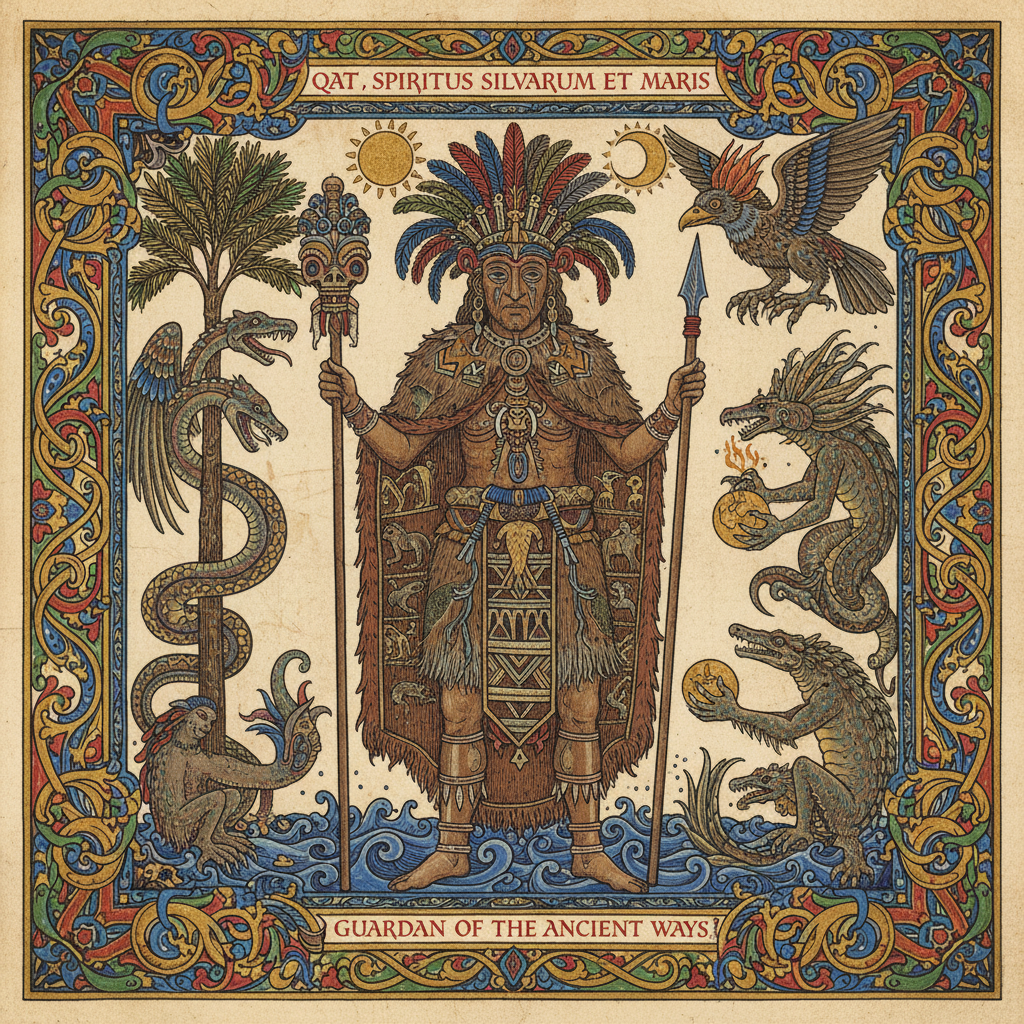
| Qat | Maui / Raven / Prometheus | Polynesian / Pacific Northwest / Greek | Creator-trickster who fishes up land and steals light/fire for humanity |
| To-Kabinana & To-Karvuvu | Prometheus & Epimetheus / Cain & Abel / Esau & Jacob | Greek / Hebrew / Hebrew | Cosmic twins, one wise and one foolish, whose interaction explains why the world is imperfect |
| Mana | Ashe / Chi / Prana / The Force | Yoruba / Chinese / Hindu / Star Wars | Impersonal spiritual force that inhabits objects and people, measurable by its effects |
| Dema Deities (Hainuwele) | Purusha / Ymir / Tiamat / Christ (Eucharist) | Hindu / Norse / Mesopotamian / Christian | Divine being whose death and dismemberment creates the food that sustains life |
| Tambaran | Masonic degrees / Eleusinian Mysteries / Aboriginal restricted knowledge | Freemasonry / Greek / Aboriginal Australian | Graduated initiation into sacred secrets, with knowledge restricted by level and gender |
| John Frum | Christ (Second Coming) / Kalki / King Arthur / Twelfth Imam | Christian / Hindu / Arthurian / Shia Islam | The returning savior whose faithful await his arrival with cargo/salvation/renewal |
| Prince Philip (Movement) | Haile Selassie (Rastafari) / Roman Emperor cult | Ethiopian / Roman | Living foreign ruler deified by a distant community he did not seek to lead |
| The Cargo | Prayer / Sacrifice / Liturgy | All traditions | Ritual reproduction of observed associations between action and desired outcome |
Sources & Further Reading
| Source | Focus | Notes |
|---|
| Codrington, R.H. The Melanesians: Studies in Their Anthropology and Folk-Lore (1891) | Foundational ethnography of Banks Islands and Solomon Islands | The book that introduced mana to the world. Essential primary source |
| Worsley, Peter. The Trumpet Shall Sound: A Study of “Cargo” Cults in Melanesia (1957, rev. 1968) | Comprehensive survey of cargo cult movements across Melanesia | The foundational academic work on cargo cults. Worsley was a Marxist anthropologist who saw the movements as anticolonial resistance |
| Lindstrom, Lamont. Cargo Cult: Strange Stories of Desire from Melanesia and Beyond (1993) | Critical analysis of the cargo cult concept | Lindstrom argues that “cargo cult” is as much a Western fantasy as a Melanesian phenomenon |
| Harris, Marvin. Cows, Pigs, Wars, and Witches: The Riddles of Culture (1974) | Cultural materialist analysis of cargo cults and other phenomena | The sharpest analytical framework for understanding the material basis of religious belief |
| Jensen, Adolf Ellegard. Myth and Cult Among Primitive Peoples (1963) | The dema deity concept and Hainuwele mythology | The foundational work on dema mythology. Jensen’s terminology remains standard |
| Tuzin, Donald. The Voice of the Tambaran: Truth and Illusion in Ilahita Arapesh Religion (1980) | The tambaran initiation system among the Arapesh | The most detailed ethnographic account of tambaran religion. Tuzin documented the system’s complexity and eventual dissolution |
| Bateson, Gregory. Naven (1936, rev. 1958) | Iatmul ceremonial life in the Sepik region | Bateson’s analysis of ceremonial transvestism and social structure remains a classic of anthropology |
| Tabani, Marc. John Frum: He Will Come (2008) | The John Frum movement on Tanna | The most thorough modern study of the movement |
| Rice, Edward. John Frum He Come (1974) | Journalistic account of cargo cults | Accessible, vivid, and sympathetic |
| Jebens, Holger (ed.). Cargo, Cult, and Culture Critique (2004) | Collected essays reexamining cargo cults | Challenges the ethnocentrism of the “cargo cult” category |
| Bonnemaison, Joel. The Tree and the Canoe: History and Ethnogeography of Tanna (1994) | Tannese cosmology and history | Provides the deep cultural context behind both the John Frum and Prince Philip movements |
| Keesing, Roger M. “Rethinking Mana” (1984) in Journal of Anthropological Research | Reassessment of the mana concept | Keesing argues that Codrington’s formulation was partly a Western misreading. Essential corrective |
The entities in this file are not relics. The John Frum movement holds its annual celebration on February 15 every year on Tanna. The Prince Philip Movement persisted beyond Philip’s death in 2021. Tambaran traditions continue in Papua New Guinea, under pressure from Christianity and modernity. Mana is not a historical concept — it is lived reality for millions of Melanesians and Polynesians. And the cargo cult, as a concept, is more relevant now than ever. In an age of algorithmic recommendation, targeted advertising, and technologies whose inner workings are opaque to most users, we are all, in some sense, building bamboo radios and hoping for cargo. The factories are still invisible. The supply chain is still mysterious. We still perform rituals (clicking, scrolling, subscribing, optimizing) and hope for outcomes we cannot fully explain. The Melanesians of Tanna are not less rational than the rest of us. They are more honest about what they do not know.


 RARE
RARE 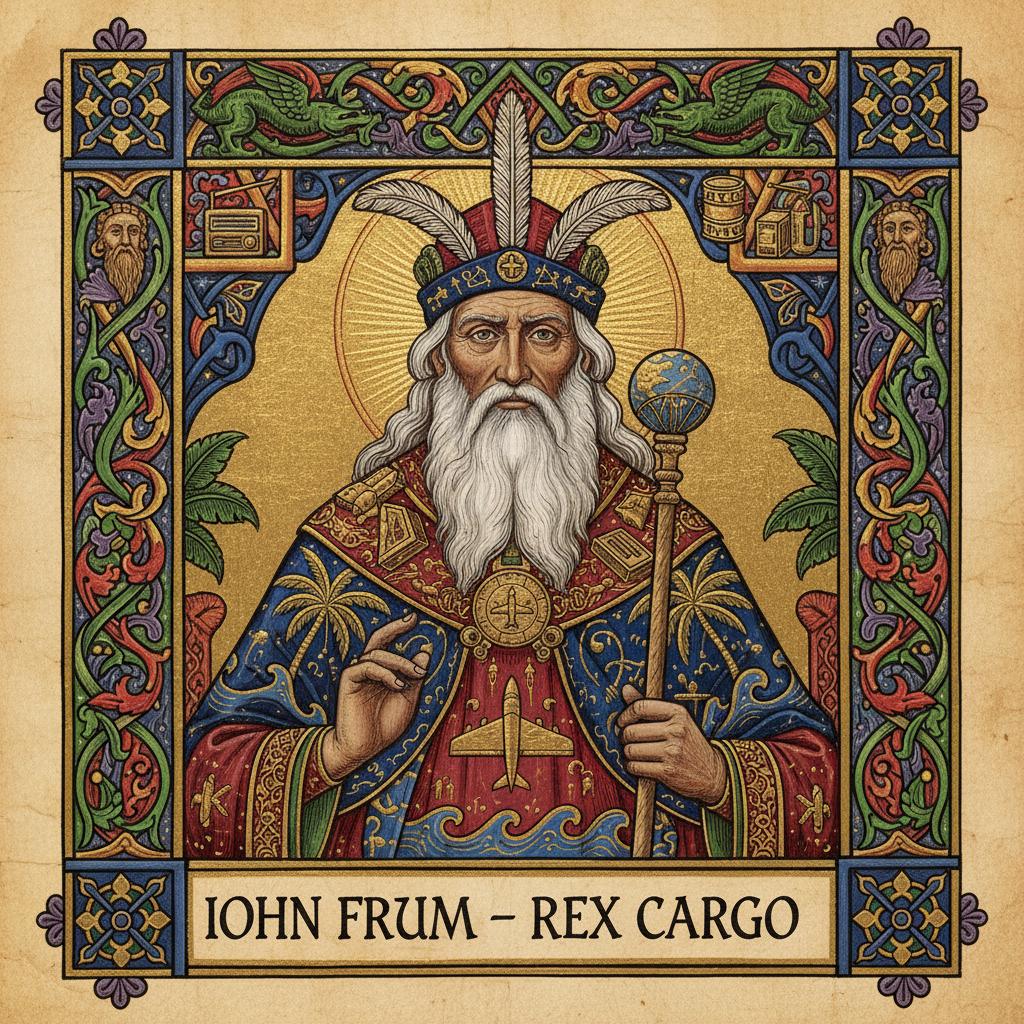 RARE
RARE 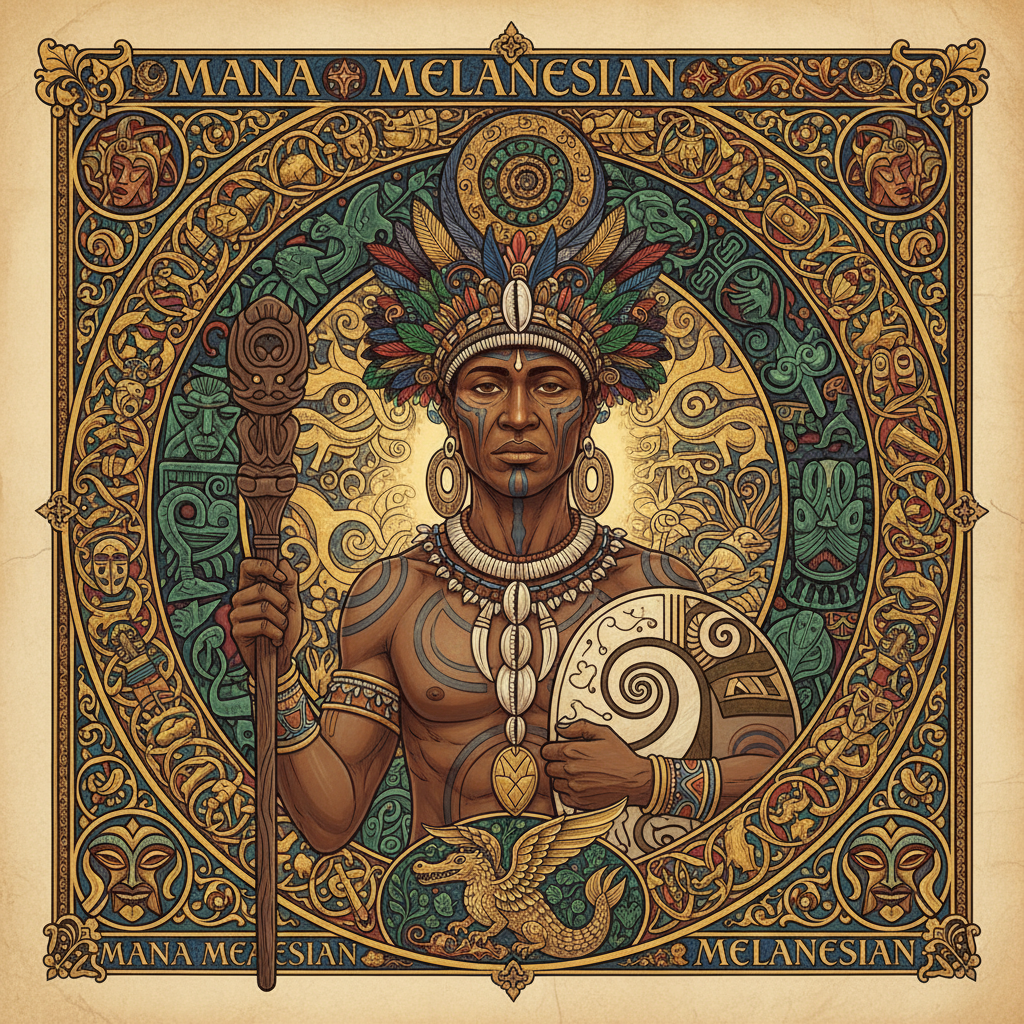 MYTHIC
  RARE
RARE 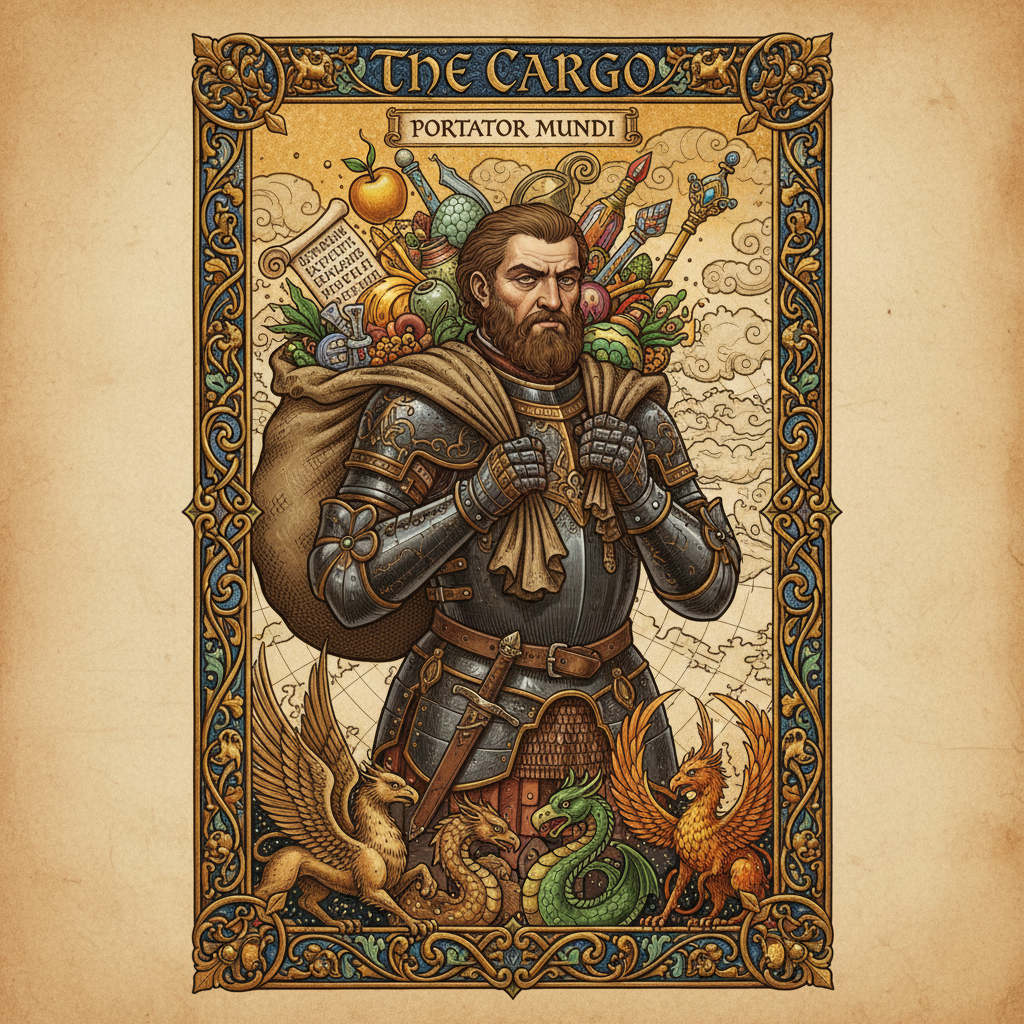 MYTHIC