Combat Profile
Bridge of Worlds
grants mortals passage between physical and spiritual realms through divine intercession and blessed presence
Incarnate Divinity
embodies the living presence of foreign power and celestial kingship, bestowing legitimacy and spiritual authority upon those who acknowledge his sovereignty
Prince Philip died on April 9, 2021. The movement's response to his death has been varied -- some believe his spirit has returned to Tanna, others continue to revere him. The death of a god is, in most traditions, not the end of the story
“He is the son of the mountain spirit. He crossed the sea and married the most powerful woman in the world. When he returns, there will be abundance.”
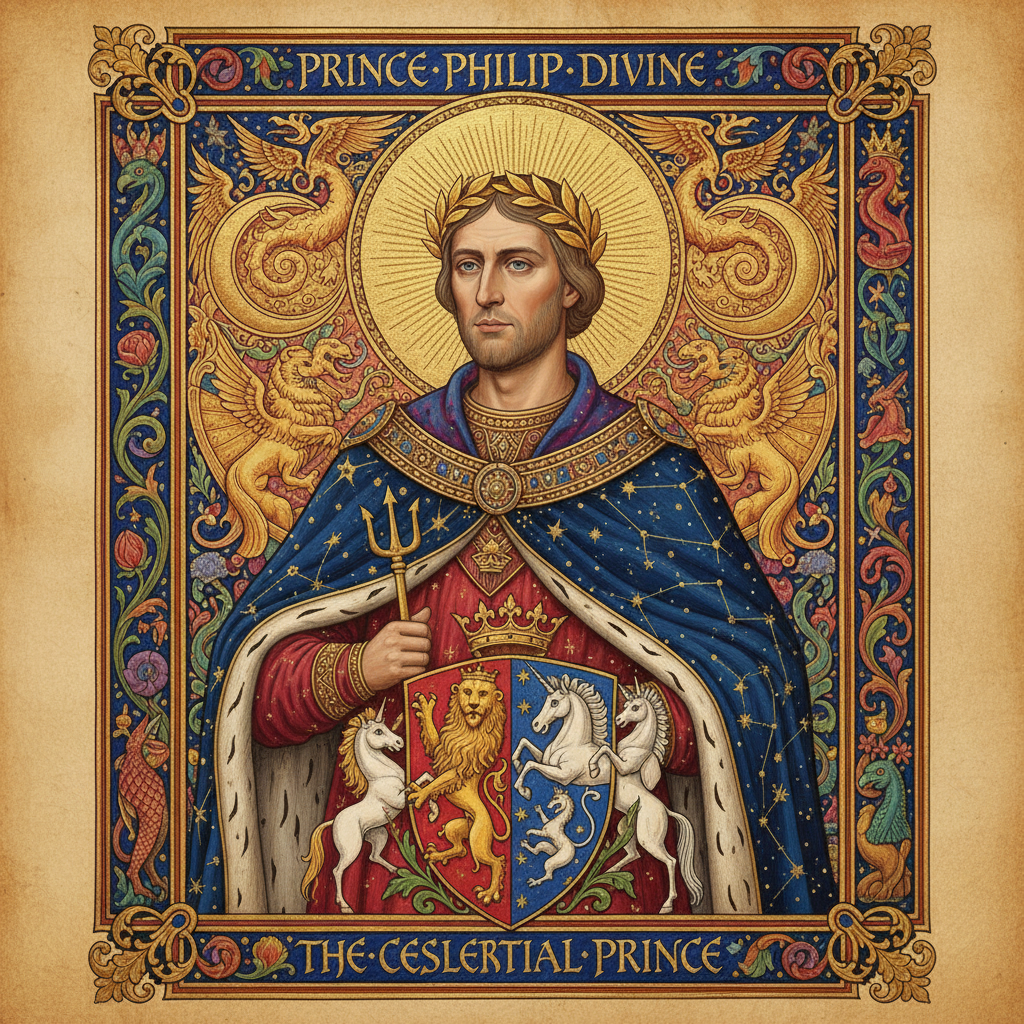
Lore: The Prince Philip Movement is, on its surface, the strangest religious phenomenon in the modern world (Lindstrom, Cargo Cult; Tabani, John Frum: He Will Come). A group of Kastom villagers on Tanna, Vanuatu, came to believe — sometime in the 1960s or 1970s, the exact origin is debated — that Prince Philip, Duke of Edinburgh, husband of Queen Elizabeth II, was divine. The theology varies, but the most common version holds he was a spirit son of the mountain who left Tanna, crossed the sea, and married the most powerful woman in the world — fulfilling a prophecy about a pale-skinned spirit who would travel far and achieve great power. His eventual return to Tanna would inaugurate an age of abundance.
This is not parody. The villagers sent Prince Philip a traditional pig-killing club (nal-nal), a weapon of deep ceremonial significance. The palace, to its credit, responded: Philip sent back a signed photograph of himself holding the club. The photograph became a sacred object. Further exchanges occurred. British journalists and documentary crews visited. The Kastom villagers were invariably polite, sincere, and patient with the visitors’ incomprehension.
When Prince Philip died in April 2021, the movement did not collapse (Tabani, John Frum: He Will Come). Some adherents reported his spirit had returned to Tanna. Others shifted their reverence to King Charles III. The death of a god is, in most mythological systems, a transition rather than an ending — Osiris dies and becomes lord of the underworld, Christ dies and is resurrected, Baldur dies and will return after Ragnarok. The Prince Philip Movement, operating on the same mythological logic, treated Philip’s death as transformation, not termination.
Parallel: No precise parallel exists. This is genuinely unique. The closest structural analogues are the deification of living rulers in other traditions: Roman emperors were declared divus (divine) after death and sometimes during life. Japanese emperors were considered direct descendants of Amaterasu. The Dalai Lama is believed to be the incarnation of Avalokiteshvara. Ethiopian Rastafarians deified Emperor Haile Selassie, believing him to be the returned Messiah — the parallel to the Prince Philip Movement is almost exact in structure: a living foreign ruler, identified as divine by a geographically distant community, who became the center of a religious movement he did not create and did not fully understand. Selassie was embarrassed by his deification. Philip was reportedly intrigued. Both responded by engaging with their worshippers rather than dismissing them. And in both cases, the death of the “god” did not end the faith.
2 min read
No counter exists. This is unique in world mythology: a living, photographable person, aware of his own deification, who engaged with his worshippers by sending them a signed photograph of himself holding their traditional pig-killing club
Lindstrom, *Cargo Cult*; Tabani, *John Frum: He Will Come*; various BBC and documentary sources; Shears, *The Story of Prince Philip's Tribe*