Combat Profile
Cosmic Duality
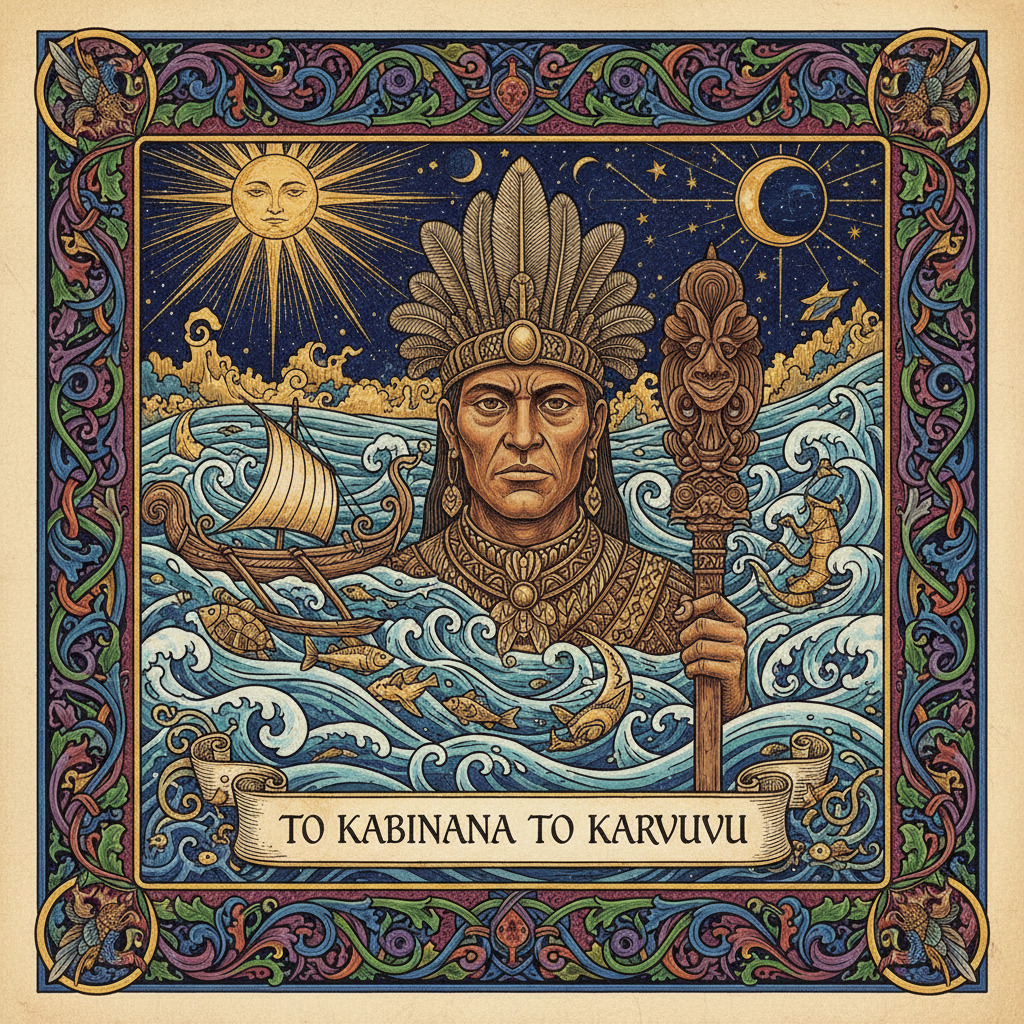
To-Kabinana and To-Karvuvu reshape reality through their eternal conflict between creation and destruction, order and chaos, making the world imperfect but alive.
Primordial Twins
Their opposing natures are inseparable; neither can exist without the other, and all existence flows from their fundamental cosmic balance.
Inseparable -- To-Kabinana cannot create a perfect world because his brother will always ruin half of it. They are bound together as two aspects of one process
“To-Kabinana said: Drop the coconut gently, and a beautiful woman will emerge. To-Karvuvu threw it on the ground. The woman that emerged was angry and caused trouble ever after.”
Lore: To-Kabinana and To-Karvuvu are the twin brothers of New Britain (Papua New Guinea) (Codrington, The Melanesians), and their myth is one of the most elegant theodicies in world religion — an explanation for why the world is beautiful and broken, delivered through the simplest mechanism: one brother is wise, the other is stupid.
To-Kabinana does everything right. He climbs a coconut palm, picks two coconuts, and carefully drops one to the ground. A beautiful gentle woman emerges. He catches tuna for food — nutritious, easy to catch. He creates useful plants, safe animals, workable tools. Then To-Karvuvu, watching, tries to copy him. He climbs the tree and throws the coconut down violently. The woman who emerges is angry, difficult, troublesome. He tries to catch tuna but creates sharks instead. He plants useful seeds but thorny poisonous things grow. He makes mosquitoes. He makes diseases. He makes coconut crabs — creatures that look like food but are terrifying and aggressive. Everything To-Karvuvu touches is a corrupted version of what To-Kabinana intended (Codrington, The Melanesians).
The myth is not a story of evil. To-Karvuvu does not intend to ruin things. He is not malicious. He is incompetent. He watches his brother, thinks he understands, gets it wrong every single time. This is why the world has tuna and sharks, gentle breezes and cyclones, medicine and disease. The world is not fallen because of sin. It is flawed because the second creator was an idiot. Arguably a more honest theodicy than the doctrine of the Fall.
Parallel: Cosmic twin myths appear across the world with remarkable consistency: Cain and Abel (Hebrew — one pleases God, one doesn’t), Prometheus and Epimetheus (Greek — one thinks ahead, one thinks after), Esau and Jacob (Hebrew — one acts, one schemes), Ahura Mazda and Angra Mainyu (Zoroastrian — one creates good, one creates evil), and the Iroquois Sky Woman’s twin grandsons (one creates beauty, one creates thorns). The Melanesian version is unique in its comedy. The other twin myths are tragic or cosmic. To-Kabinana and To-Karvuvu are funny. The world is broken because someone dropped the coconut too hard. This is either the least dignified creation story ever told or the most human.
2 min read
Each other -- one creates, the other corrupts, and neither can exist without the other
Codrington, *The Melanesians*; Lessa & Vogt, *Reader in Comparative Religion*; Worsley, *The Trumpet Shall Sound*