Combat Profile
Daylight Weaver
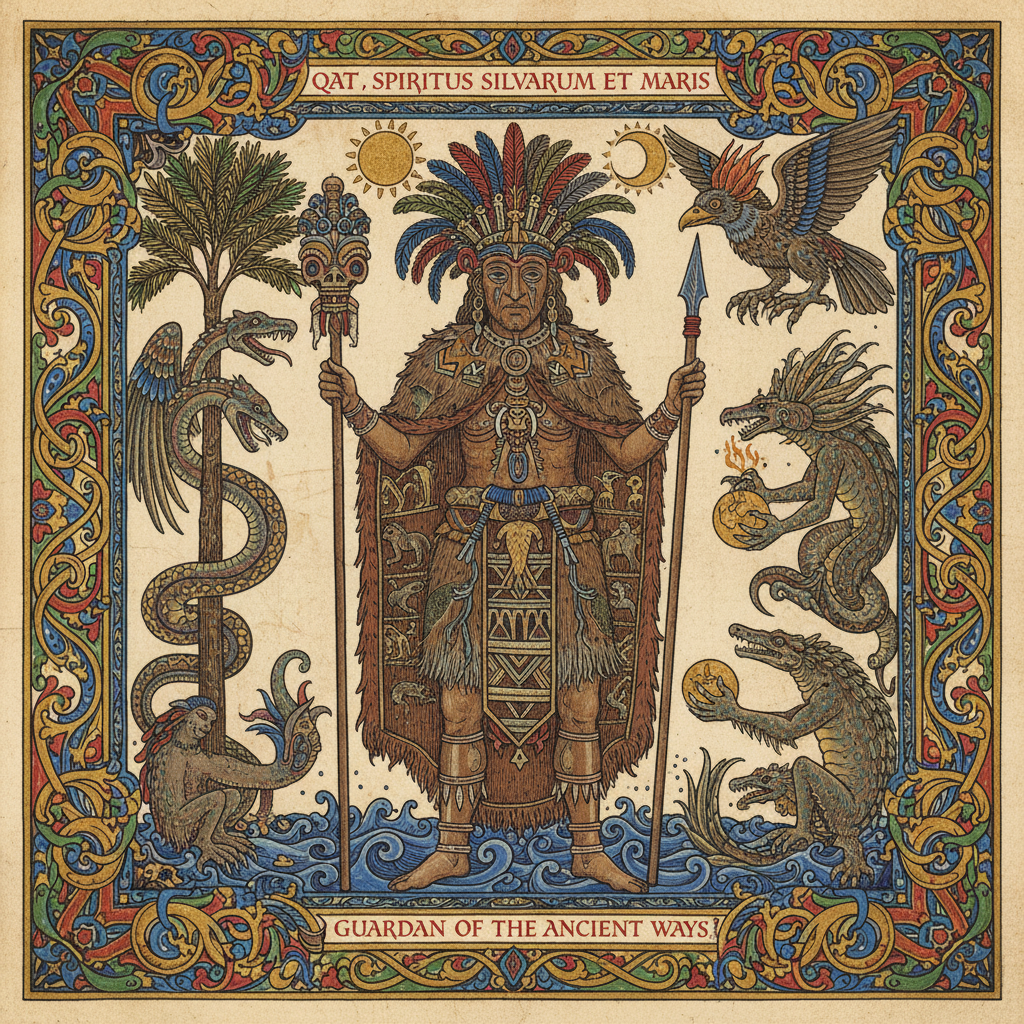
Qat reshapes reality during daylight hours, creating or destroying islands and islands' features at will, bending the rules of creation itself.
Trickster's Capriciousness
Qat's actions are inherently unpredictable; allies and enemies alike cannot fully anticipate his next move, and he thrives in chaos and deception.
Mortal despite his powers -- he voyages, ages, and can be tricked in turn. His brother Marawa is his shadow, undoing his creations
“Qat took a piece of dark wood and carved it into men, and he took a lighter wood and carved it into women, and he set them up and danced before them and they came alive.”
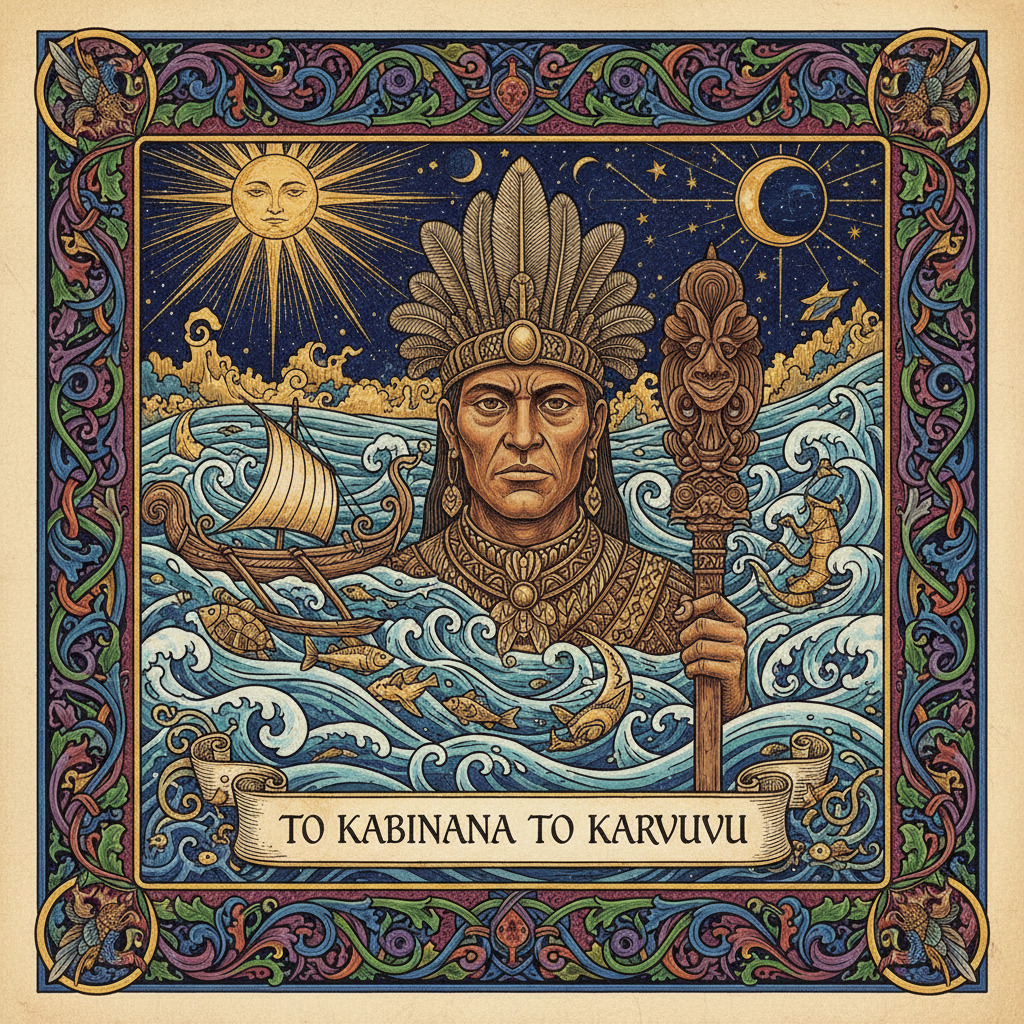
Lore: Qat is the great creator-trickster of the Banks Islands (northern Vanuatu) (Codrington, The Melanesians), and his mythology reads like a Melanesian Maui — because it is. Qat was born from a stone that burst open, already speaking. He looked at the world and found it incomplete: no islands (only open ocean), no people (only spirits), no daylight (only perpetual murky twilight). So he fixed it. He baited a fishing line and hauled islands up from the seafloor, one by one, placing them where they now sit. He carved human figures from wood — dark wood for men, light wood for women — and danced before them for three days until they quickened. But the world still had no proper day and night. Daylight existed but was hoarded by a being called Qong (Night) or, in some versions, a spider-spirit named Nuit. Qat traveled to where the light was kept, bargained or stole a piece, and brought it back — establishing the alternation of day and night by cutting the darkness with obsidian. Before Qat, the world was a dim featureless expanse. After Qat, it was home (Codrington, The Melanesians).
His brother Marawa is his dark mirror (Codrington, The Melanesians). When Qat created humans by carving them from wood and dancing them to life, Marawa tried the same — but instead of dancing, he buried his figures in a pit. When he dug them up, they were rotting. This is why humans die: Qat created life, but Marawa, through clumsiness or malice, introduced death. The brothers are not enemies exactly. They are the two aspects of existence — creation and decay — locked in a cycle neither can break.
Parallel: Qat maps precisely onto Maui (Polynesian) in function: both fish up islands, both steal a cosmic commodity (Maui lassoes the sun; Qat steals daylight), both reshape a broken world through trickery rather than divine decree. The brother-as-death-bringer motif echoes Prometheus and Epimetheus (Greek: one creates wisely, the other introduces suffering), and the creation-from-wood resonates with the Norse creation of Ask and Embla from driftwood. The spider-as-keeper-of-light echoes the Anansi traditions of West Africa, where the spider is the keeper of all stories. But what makes Qat distinctly Melanesian is his mortality. He is not a god who sits in heaven. He is a trickster who sails, who schemes, who can be outwitted, and who — in some traditions — has simply sailed away and not yet returned.
2 min read
Marawa (his rival brother, associated with death -- Qat creates life, Marawa introduces decay)
Codrington, *The Melanesians*; Lessa & Vogt, *Reader in Comparative Religion*; Bonnemaison, *The Tree and the Canoe*