Combat Profile
Heavenly Ascent
grants passage through celestial gates and reveals the true names of archons, enabling transcendence of material bondage
Sacred Syllables
all hymnic invocations resonate with gnosis, automatically elevating the spiritual frequency of those who speak or hear them
Requires spiritual preparation; the unprepared soul cannot pass the Archons
“We rejoice! We rejoice! We rejoice! We have seen! We have seen! We have seen what truly pre-exists!”
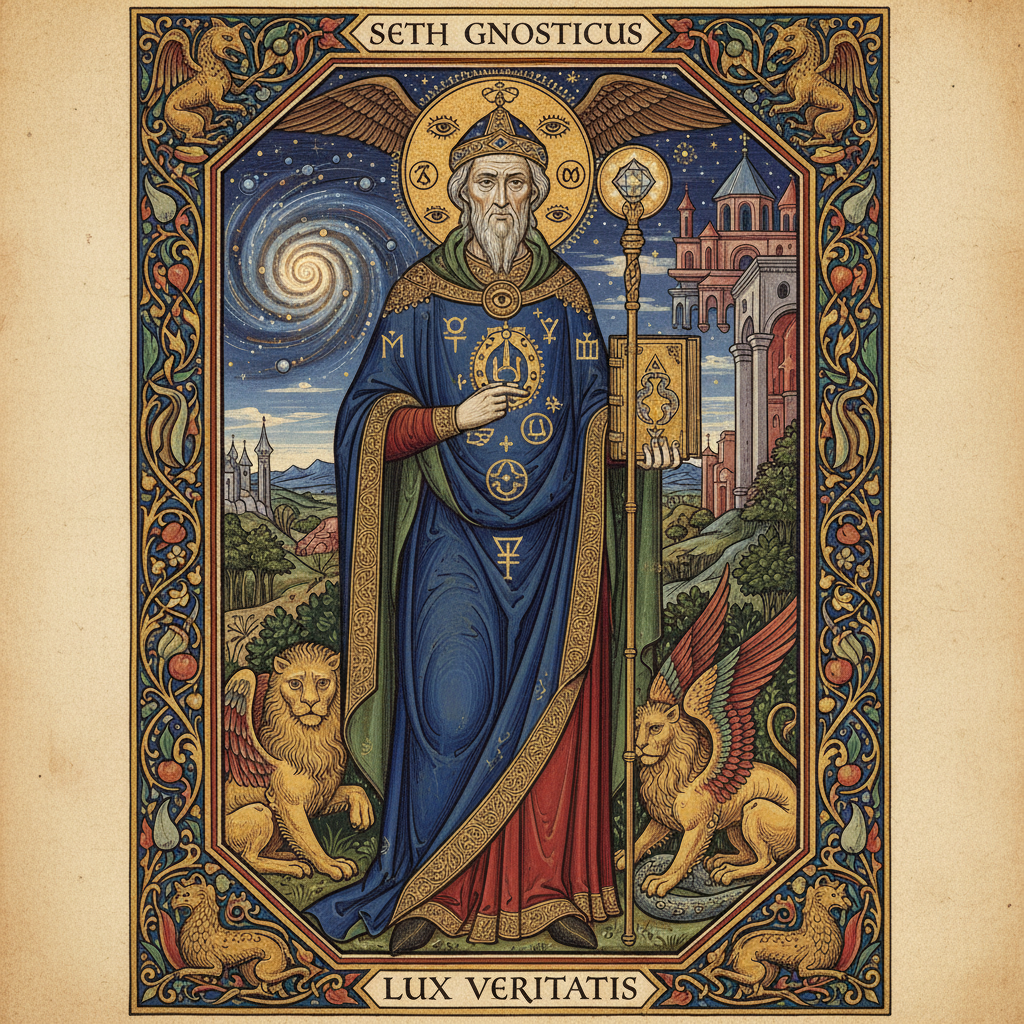
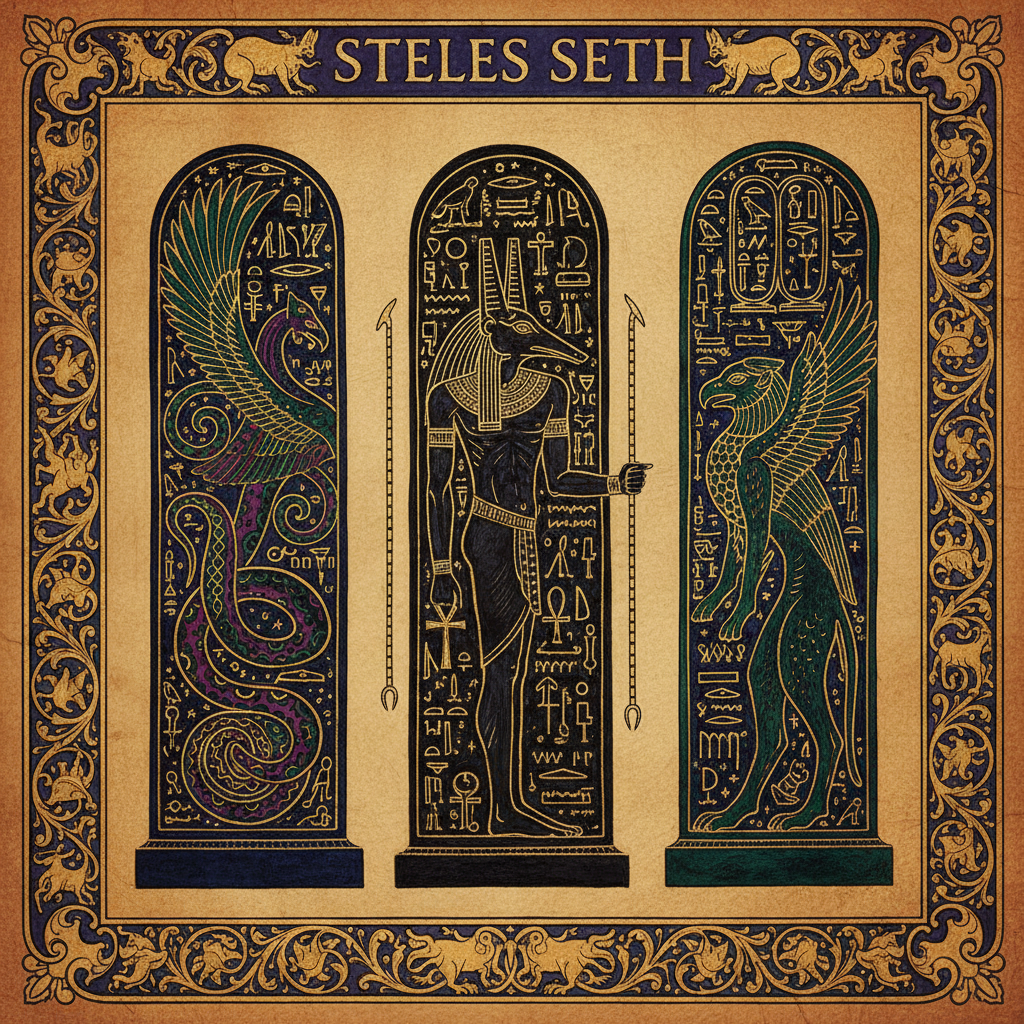
Lore: The Three Steles of Seth is one of the most liturgically powerful texts in the Nag Hammadi library — a set of three hymns of ascent attributed to Seth and preserved by his descendant Dositheos. Each stele (inscribed pillar) contains prayers and praises to be recited as the soul ascends through successive levels of divine reality: the first stele praises Autogenes (the Self-Generated), the second praises Barbelo (the First Thought), and the third praises the Invisible Spirit (the Monad) itself.
This is not merely theology — it is a practice. The Sethians used these hymns in communal worship, chanting them as a form of mystical ascent. The practitioner’s soul rises through the heavenly spheres, past the Archons who guard each gate. At each level, the soul must know the correct passwords, the secret names of the rulers, and the hymns that prove it belongs to the seed of Seth. The ascent is terrifying and ecstatic — the soul passes through zones of increasing light and power, shedding its material attachments at each level, until it stands before the Monad itself in wordless recognition. The text ends with communal instructions: “This is the way the steles are used: two together, praising. After the silence, they rejoice.”
Parallel: The Three Steles map onto mystical ascent traditions across the ancient world. The closest parallel is Merkabah mysticism (Jewish), in which the practitioner ascends through seven heavenly palaces (Hekhalot), past angelic guardians who demand passwords, until reaching the divine throne — the structure is nearly identical, and both traditions likely share common roots in 2nd-century Jewish mysticism. Shamanic ascent traditions (Siberian, Central Asian) follow the same pattern: the shaman’s soul rises through layered heavens, encountering guardians at each level. The Sufi mi’raj (Muhammad’s night journey through the heavens) and Dante’s Paradiso are later echoes of the same archetype.
1 min read
The Archons who guard each heavenly gate, demanding passwords and secret names
*The Three Steles of Seth* (Nag Hammadi Codex VII); *Zostrianos*; *Allogenes*; Robinson, *The Nag Hammadi Library*