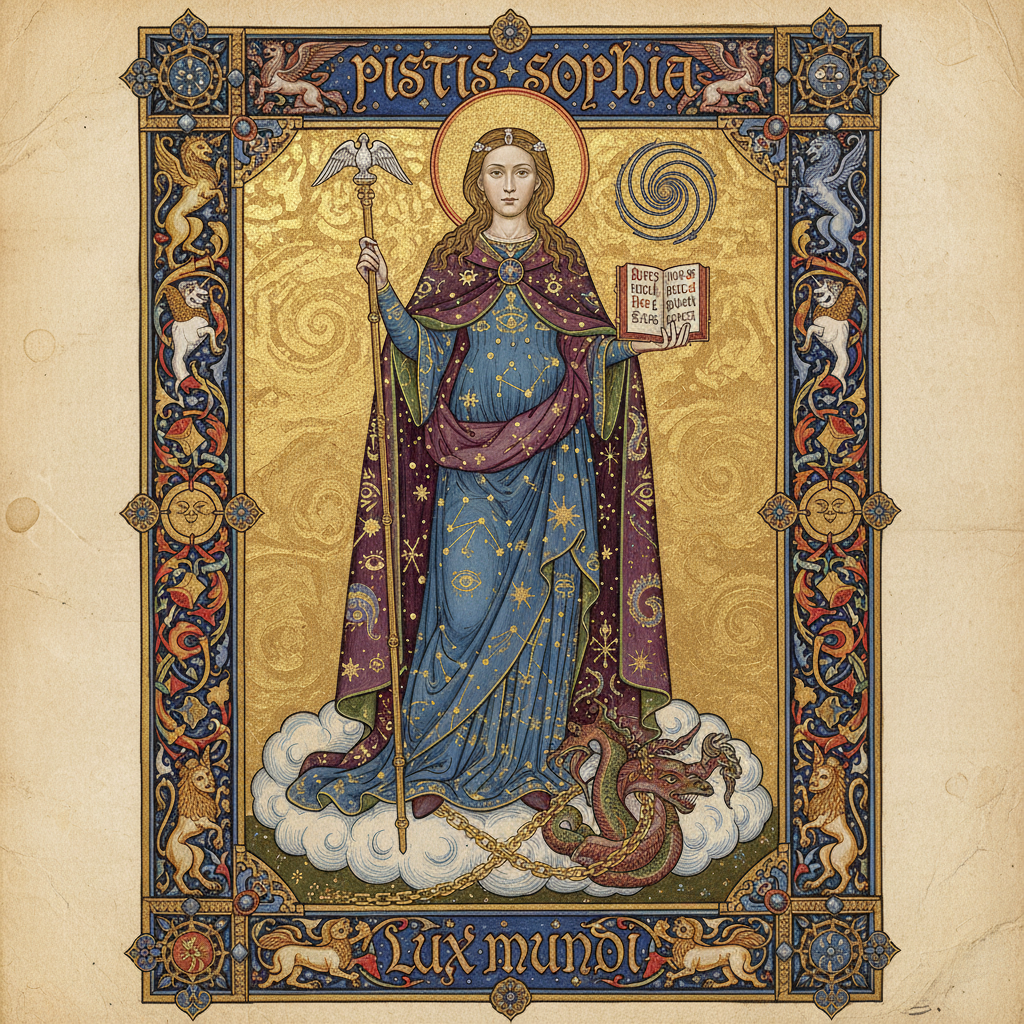
Combat Profile
Gnosis Revelation
grants mortals forbidden cosmological knowledge that dissolves illusion and liberates the soul from false creation
Divine Feminine Wisdom
all allies within her presence gain clarity of spiritual truth and resistance to deception and archontic manipulation
Its length and complexity made it difficult to transmit; survived in a single Coptic manuscript
“Mary Magdalene said: ‘My Lord, I will not tire of asking thee questions. Do not be angry with me for questioning everything.’”
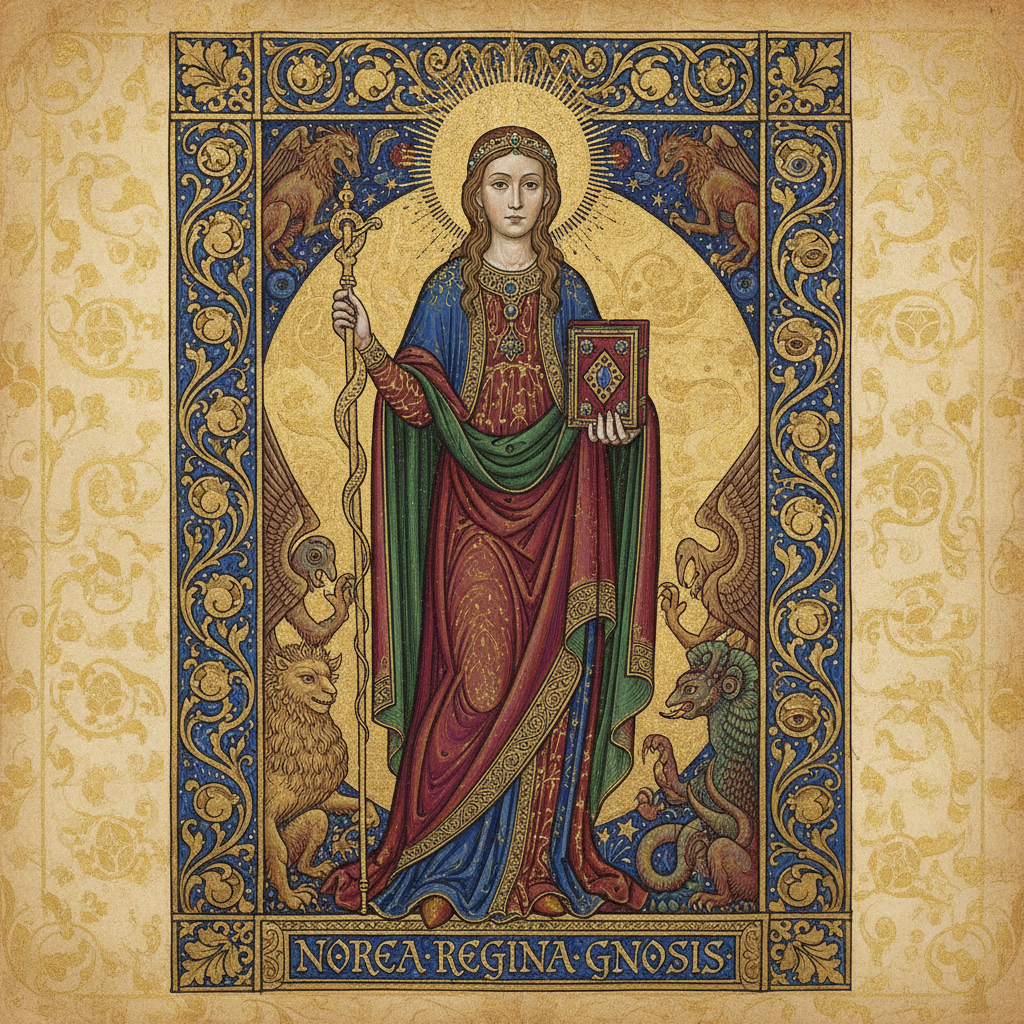
Lore: The Pistis Sophia (“Faith-Wisdom”) is one of the longest and most detailed Gnostic texts in existence — a sprawling record of Jesus’s post-resurrection teachings to his disciples over the course of eleven years. But the real protagonist is not Jesus: it is Mary Magdalene. She dominates the text, asking 67 of the 115 questions posed to Jesus. She interprets scripture, explains cosmic mysteries, and receives commendation from Jesus himself: “Excellent, Mary. You are more blessed than all women on earth, because you will be the fullness of all fullnesses and the completion of all completions.”
The male disciples are, by contrast, largely silent or confused. Peter complains that Mary talks too much. Jesus rebukes Peter (Pistis Sophia 17). The text preserves a remarkable portrait of a woman as the primary theological interlocutor — the one who understands the esoteric teaching that the male disciples cannot grasp. The cosmological content is equally extraordinary: the text describes Sophia’s fall through thirteen levels of chaos, her thirteen hymns of repentance (Pistis Sophia 21-31), and the cosmic mechanics by which light particles are extracted from the Archons and returned to the Pleroma. It is theology, mythology, and liturgy fused into a single visionary narrative.
Parallel: The Pistis Sophia’s elevation of Mary Magdalene parallels the Gospel of Mary (where Mary receives a private vision that the male disciples reject), the role of Fatimah in Shi’a Islam (the Prophet’s daughter as the conduit of esoteric knowledge), and the Prajnaparamita Sutras in Buddhism (where “Perfection of Wisdom” is personified as female). In all these traditions, the deepest wisdom is transmitted through or to a woman — often over the objection of male authorities. The Pistis Sophia is the most sustained example: not a fragment or a brief appearance, but hundreds of pages of a woman conducting the most important theological conversation in Gnostic Christianity.
2 min read
Orthodox suppression; the text was hidden and nearly lost
*Pistis Sophia* (Askew Codex); King, *The Gospel of Mary of Magdala*; Pagels, *The Gnostic Gospels*