Combat Profile
Archontic Imprisonment
Traps souls within the material world, binding them to cycles of incarnation and preventing ascent to the true Pleroma.
False Divinity
Believes himself the supreme god and enforces this delusion upon creation; his ignorance of higher realms makes him both tyrannical and fundamentally vulnerable to gnosis.
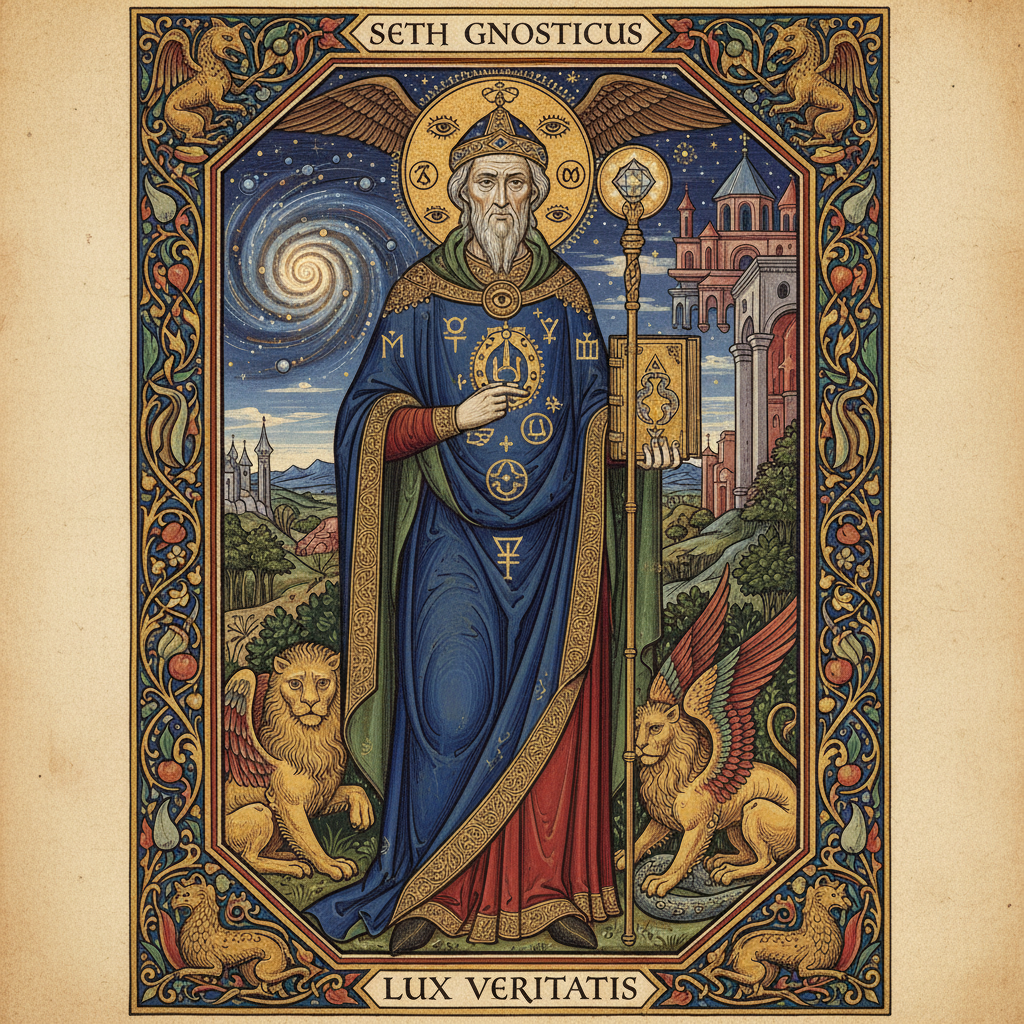
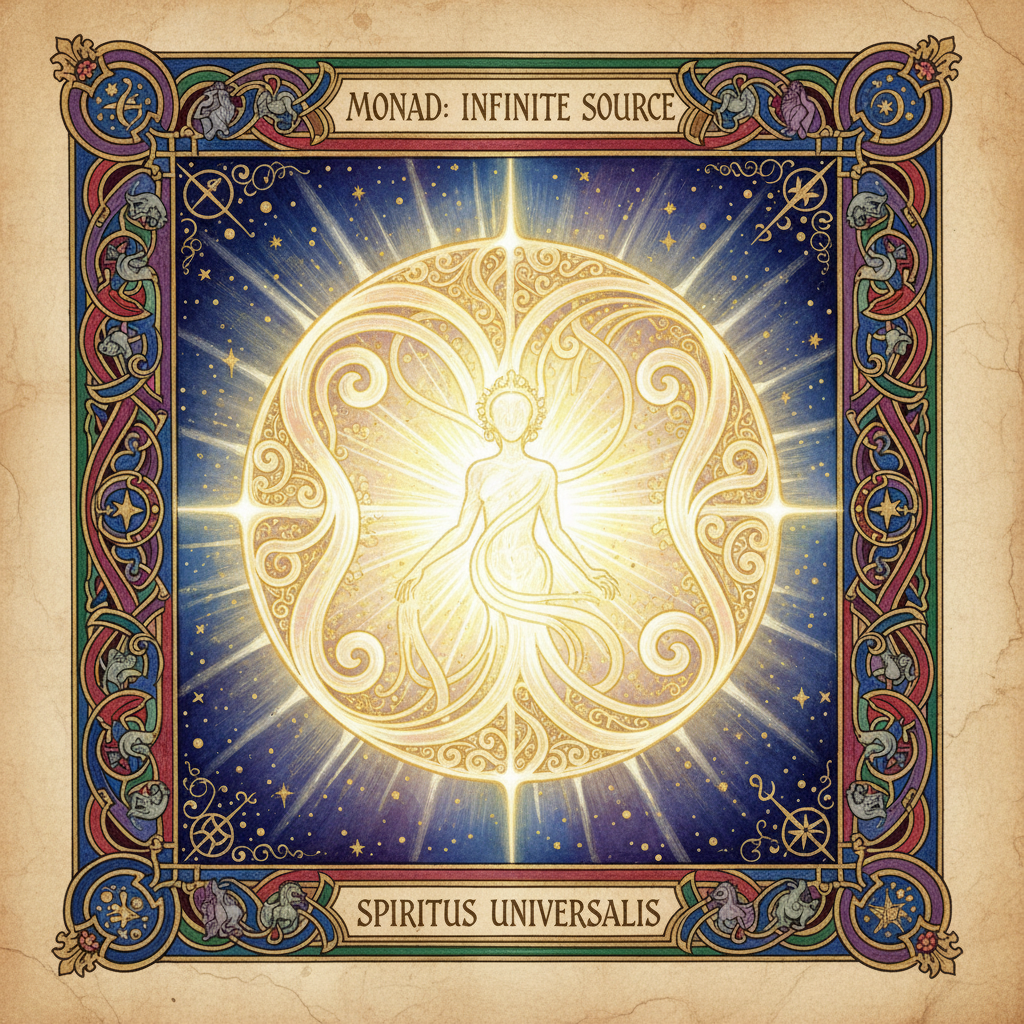
The Monad is the ineffable, utterly transcendent source from which all existence emanates (Apocryphon of John II,2-3). It is not a person or personality; it is pure being, consciousness, and potential. Unlike the God of the Old Testament (the Demiurge, according to Gnostics), the Monad is not creator in the sense of commanding or shaping — rather, all existence flows from its infinite nature the way light emanates from the sun. The Monad cannot be named, defined, or directly known. It can only be approached through the emanation of Barbelo (First Thought), which proceeds from the Monad like a daughter from a mother. All subsequent Aeons flow from Barbelo, and through them, all of creation. Yet the Monad remains eternally undisturbed, untouched by the drama of creation, fall, and redemption happening below. The spiritual goal of Gnosticism is not communion with the Monad (which is impossible) but return to the Pleroma, reunion with the divine spark that originated in the Monad’s thought.
Barbelo is the first emanation of the unknowable Monad — the divine feminine principle through which all creation flows. She is called “the perfect glory among the Aeons,” “the first thought,” and “the womb of everything.” Unlike Sophia, Barbelo does not fall; she remains within the Pleroma as its foundational matrix. In the Trimorphic Protennoia, she speaks in three voices: as Protennoia (First Thought), as the Mother, and as the Logos. She is the closest any being comes to the Monad itself, and some Sethian texts treat her as functionally co-equal with the supreme God. Where Sophia’s story is tragedy, Barbelo’s is pure radiance — the divine feminine before the fall.
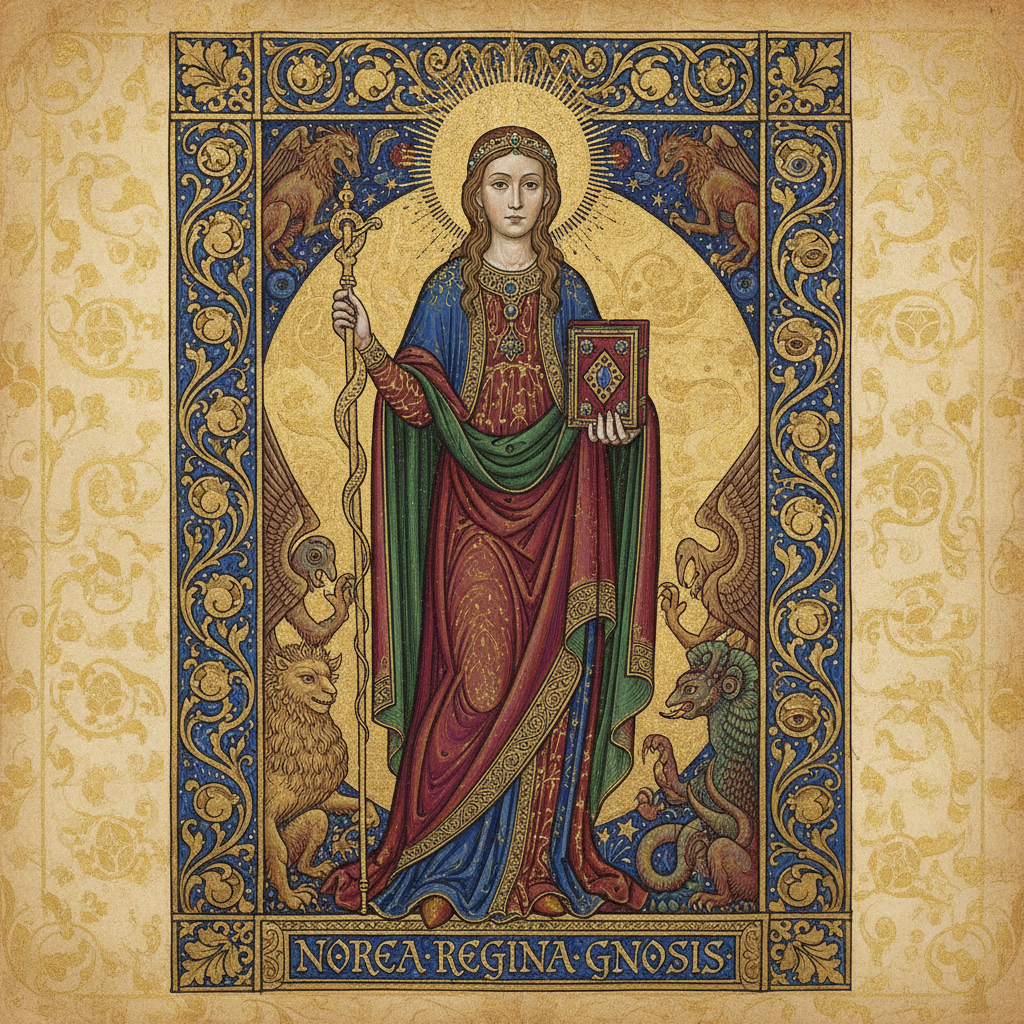
Sophia is the tragic heroine of Gnostic mythology (Apocryphon of John II,7-12). As the lowest Aeon in the Pleroma, she desired to emanate on her own — without her male consort and without the Monad’s approval. This unauthorized act of creation produced a deformed, ignorant being: Yaldabaoth, the Demiurge. Sophia’s “passion” became matter itself, and she fell from the Pleroma into the chaos she had accidentally created. The entire material universe is the consequence of her mistake. Yet Sophia is not a villain — she is a figure of longing, error, and repentance. In Pistis Sophia, she sings thirteen hymns of repentance as she struggles to return to the light (Pistis Sophia 21-31). Her story is the Gnostic answer to the problem of evil: the world is broken not because of human sin, but because even divine wisdom can err when it acts alone.
Yaldabaoth is the blind god — the lion-faced serpent born from Sophia’s unauthorized desire. He is the God of Genesis in Gnostic reading: the being who shaped Adam from clay, forbade the fruit of knowledge, and declared himself the sole deity (Apocryphon of John II,11). But he is catastrophically wrong. Above him stretches the entire Pleroma he cannot see. His declaration “I am God and there is no other” (echoing Isaiah 45:5) is not omniscience but total blindness — a child playing king in a dark room. He created the Archons, the seven rulers of the planetary spheres, and through them built the material world as a prison for the sparks of divine light that fell with Sophia. His name means “child of chaos” and his ignorance is the Gnostic explanation for every injustice, every cruelty, every defect in the physical world. The material universe is not a gift from a loving God — it is a cage built by a fool.
3 min read
*Apocryphon of John*; *On the Origin of the World*; *Hypostasis of the Archons*