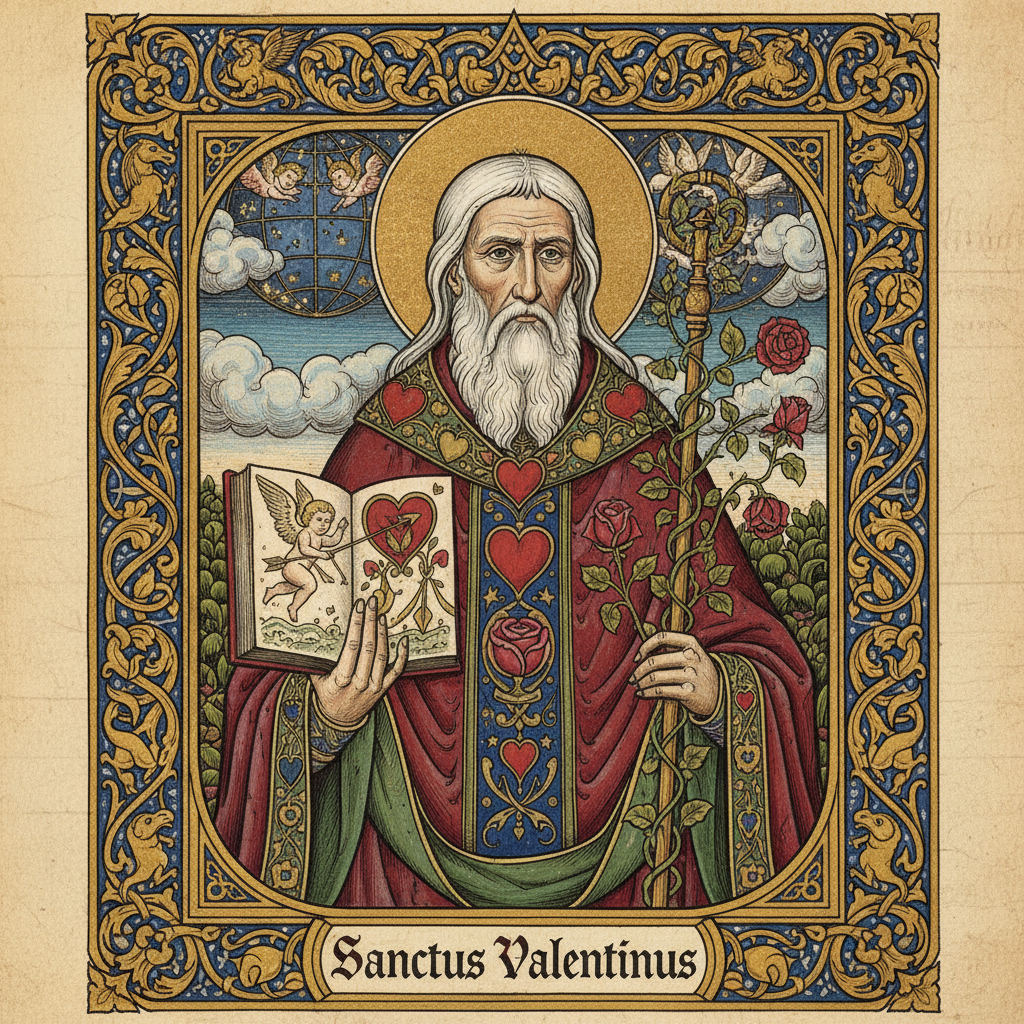
Combat Profile
Pleromaic Revelation
Unveils the hidden architecture of the divine fullness, granting allies transcendent knowledge that bypasses material illusion and unlocks gnosis.
Emanationist Wisdom
All allies within Valentinus's presence gain enhanced understanding of hidden truths, allowing them to perceive and resist deceptive forces.
Mortal; lost the papal election and was eventually excommunicated
“I saw a newborn infant, and I questioned it to find out who it was. And it answered me and said: ‘I am the Logos.’”
Lore: Valentinus was born in Egypt around 100 AD and educated in Alexandria, the intellectual capital of the ancient world. He claimed to have been taught by Theudas, a direct disciple of the apostle Paul. Around 136 AD, he traveled to Rome and became so prominent in the Christian community that he was a serious candidate for Bishop of Rome — effectively, the Pope. He lost the election, reportedly by a narrow margin, and the trajectory of Christianity changed forever. Had Valentinus won, the Gnostic vision of Christianity — with its divine feminine, its elaborate cosmic mythology, and its emphasis on direct mystical experience over institutional authority — might have become orthodoxy.
Instead, he was gradually marginalized and eventually excommunicated (Irenaeus, Against Heresies 1.1). But his school thrived for centuries. Valentinian Christianity was not a fringe cult — it was a sophisticated intellectual movement that attracted educated Romans, produced original scripture (the Gospel of Truth, the Gospel of Philip, the Treatise on the Resurrection; James M. Robinson, ed., The Nag Hammadi Library), and developed a sacramental system that rivaled and in some ways surpassed the emerging orthodox church. Valentinus’s system of 30 Aeons in 15 male-female pairs was the most intricate theology in the ancient world — a cosmic architecture that made the orthodox Trinity look simple by comparison.
Parallel: Valentinus maps onto figures who nearly redirected entire traditions: Arius (whose theology of Christ’s subordination to the Father nearly became orthodox Christianity), Al-Hallaj (the Sufi mystic executed for claiming union with God), and Martin Luther (who succeeded where Valentinus failed — actually splitting the church). The difference is that Luther’s reformation survived. Valentinus’s was exterminated. His writings were burned so thoroughly that we only recovered them by accident in 1945 at Nag Hammadi.
1 min read
Irenaeus of Lyon, who dedicated *Against Heresies* to destroying his theology
Irenaeus, *Against Heresies* 1.1-8; Clement of Alexandria, *Stromata*; *The Gospel of Truth* (possibly by Valentinus); Pagels, *The Gnostic Gospels*