Combat Profile
Gnosis Incarnate
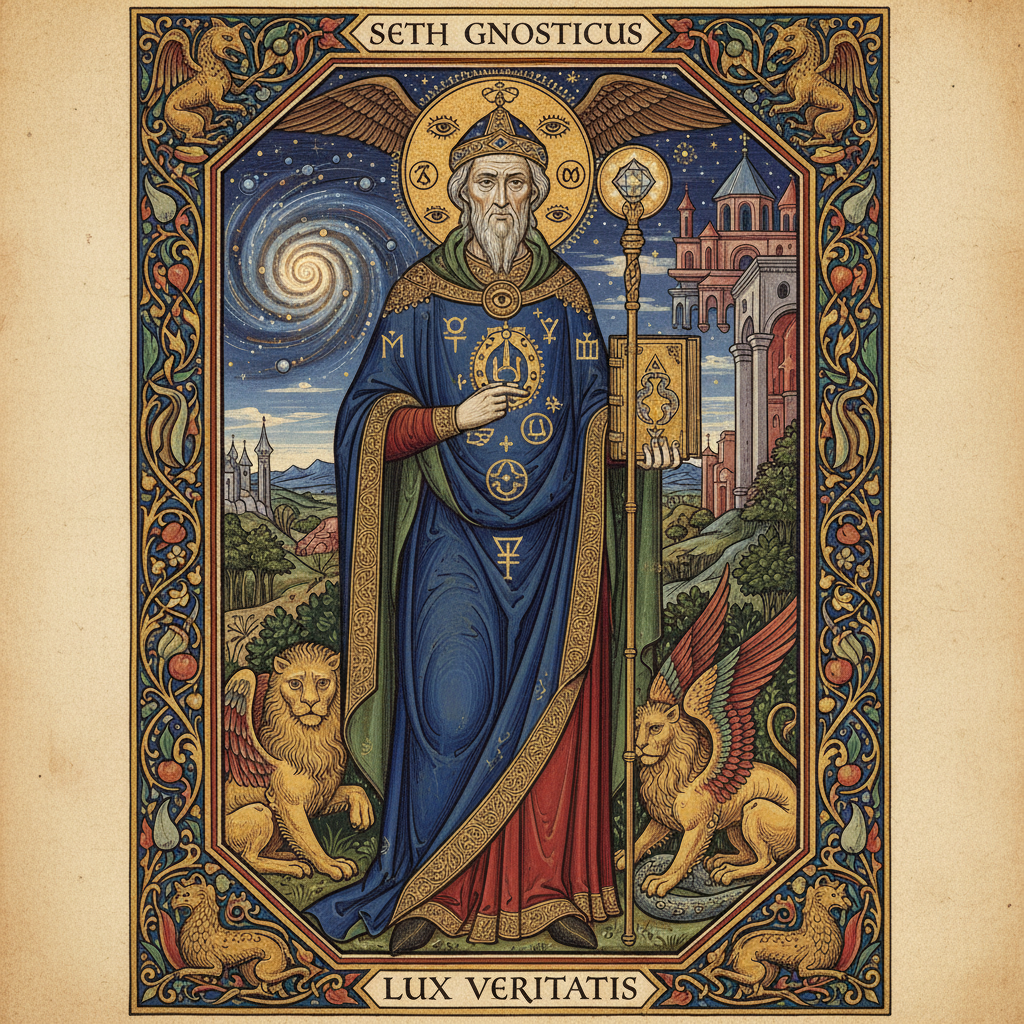
Seth descends through ages to awaken the divine spark within the elect, granting them transcendent knowledge and liberation from material bondage.
Seed of Salvation
Seth's presence persistently illuminates hidden truth and strengthens the spiritual essence of those aligned with divine knowledge.
Each incarnation must work within the constraints of a material body in the Demiurge's domain
“The great Seth was sent by the four Luminaries, according to the will of the Autogenes and the whole Pleroma, through the gift and the good pleasure of the great invisible Spirit.”
Lore: In Sethian Gnosticism, Seth is not merely Adam’s third son — he is a divine being from the Pleroma who descends into the material world repeatedly across human history to bring gnosis to those who can receive it (Gospel of the Egyptians III, 40-69). The “seed of Seth” — the Gnostics themselves — are the elect, the humans who carry a divine spark that the Demiurge cannot extinguish. Seth incarnates in each age to awaken them, to remind them of their true origin above the Archons’ prison.
The Gospel of the Egyptians describes Seth’s missions across the ages (Gospel of the Egyptians III, 40-69): he came before the Flood (which was Yaldabaoth’s attempt to destroy the seed of Seth), he came in various forms throughout history, and his final incarnation was Jesus. But this is a radically different Jesus than the orthodox version — not a sacrifice for sin, not a ransom paid to God, but a revealer of gnosis who descended from the Pleroma wearing a material body like a disguise (Apocryphon of John II,25-26). The Sethian Jesus did not die for humanity’s sins; he came to remind humanity that it was divine. The crucifixion, in some Sethian texts, was an illusion — the divine Seth laughed as the Archons crucified only the material shell.
Parallel: Seth maps directly onto Vishnu’s avatars in Hinduism — the same divine being incarnating repeatedly across ages to restore cosmic order. Vishnu appears as Rama, Krishna, the Buddha (in some lists), each time adapting to the needs of the age. Seth appears in unnamed forms throughout Gnostic history, culminating in Jesus. The structural parallel is exact: a transcendent savior who keeps returning in different bodies. The difference is that Vishnu’s incarnations are celebrated; Seth’s were suppressed and forgotten for 1,600 years until the Nag Hammadi discovery.
2 min read
Yaldabaoth and the Archons, who attempt to destroy the seed of Seth in every generation (the Flood was one such attempt)
*The Apocryphon of John*; *The Gospel of the Egyptians*; *The Three Steles of Seth*; *Zostrianos*; Rudolph, *Gnosis*