Combat Profile
Wailing Affliction
Lamashtu unleashes a devastating curse that strikes pregnant women and infants, causing miscarriage and death with supernatural inevitability.
Demoness of the Abyss
Lamashtu's presence manifests as nightmares and disease; she cannot be warded by ordinary prayers and feeds on the suffering of mothers and newborns.
“Lamashtu, daughter of Anu, whose name the great gods have named… she touches the bellies of women in labor, she pulls out the pregnant woman’s child.”
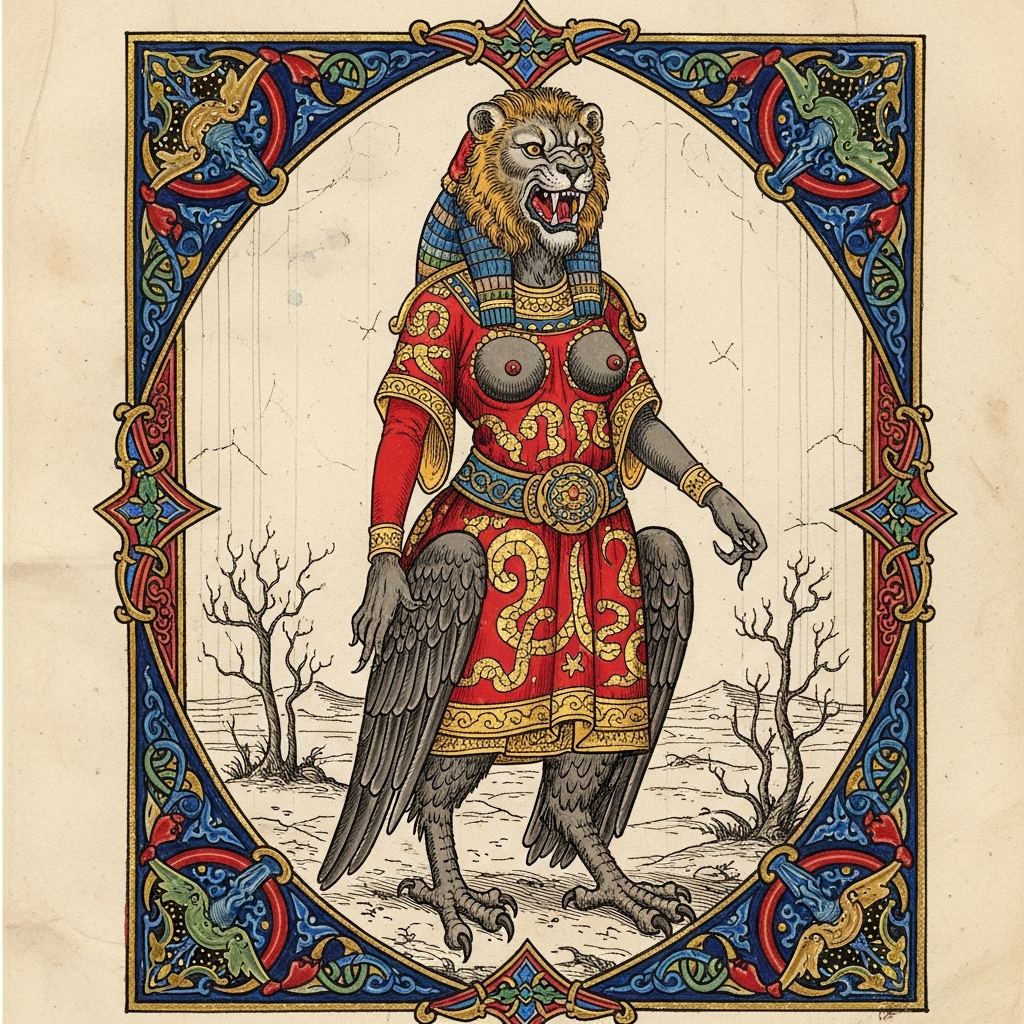
Lamashtu is one of the few Mesopotamian demons who acts of her own will rather than on divine command — she is not sent by a god but simply hunts. A daughter of Anu himself, she was expelled from heaven for her cruelty and now stalks the mortal world, targeting the most vulnerable: newborns, unborn children, and nursing mothers. She has a lion’s head, donkey’s teeth, and bird talons, and she suckles pigs and dogs at her breasts. Her parallel to Lilith is unmistakable: both are female demons associated with infant death, both are connected to the wilderness and the night, and both originate in Mesopotamian incantation literature. Isaiah 34:14’s lilit (screech owl / night creature) almost certainly draws from the same Mesopotamian tradition that produced Lamashtu and her sister demons the lilitu.
1 min read
Lamashtu incantation series (Neo-Assyrian/Babylonian)