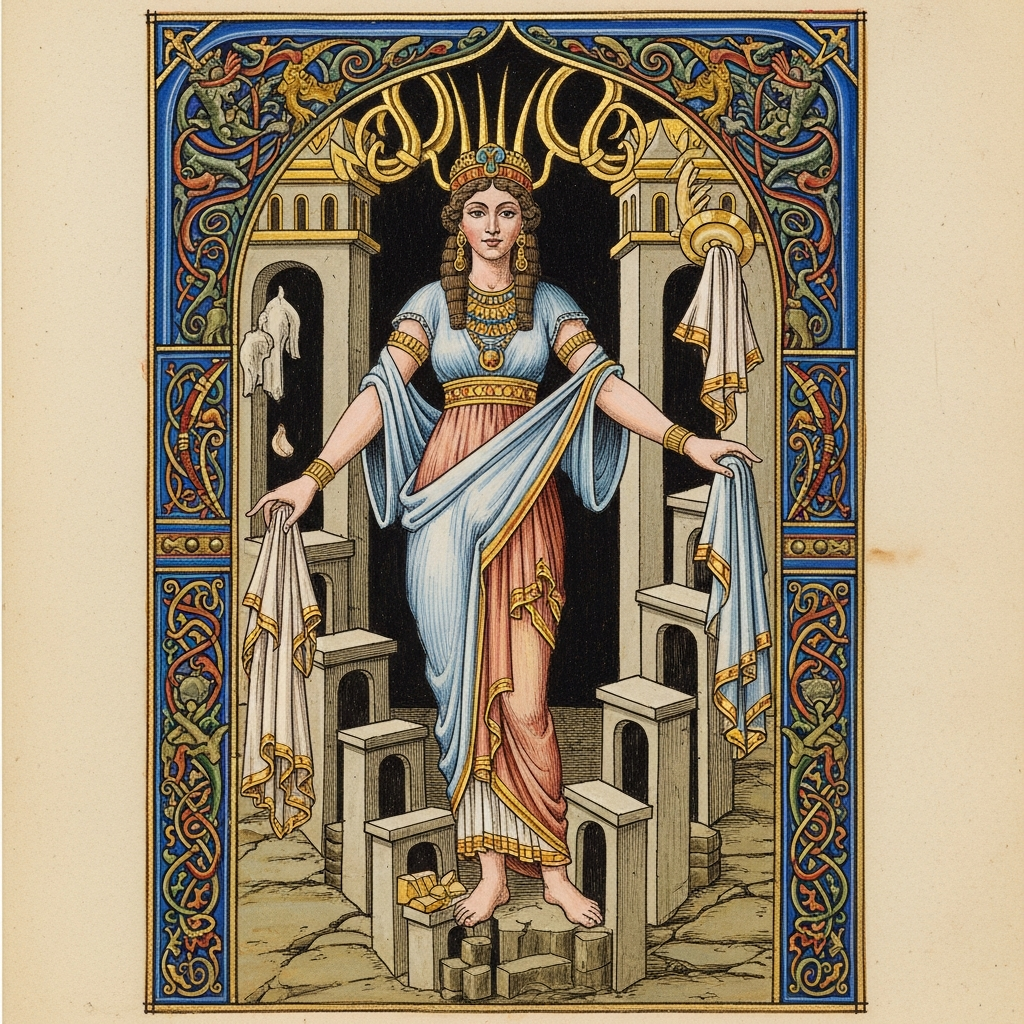
Combat Profile
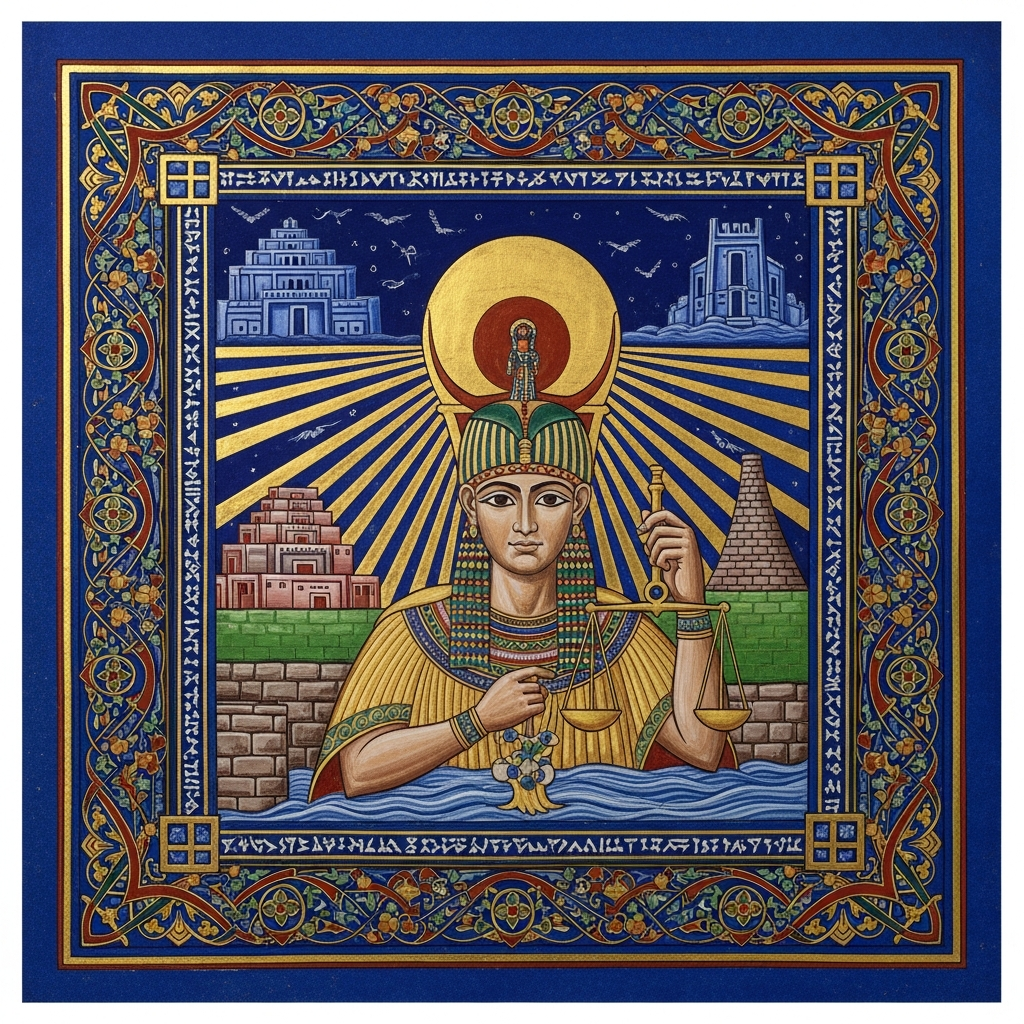
Queen of Heaven
Ishtar descends into the Underworld, temporarily removing herself from play to devastate all enemies and emerge reborn with restored power.
Morning Star Duality
Ishtar embodies both fierce battle-lust and irresistible desire; she grants herself bonus damage on attacks while allies gain increased charm/persuasion effects.
“From the Great Above she opened her ear to the Great Below. From the Great Above the goddess opened her ear to the Great Below. From the Great Above Inanna opened her ear to the Great Below.” — Descent of Inanna (opening lines)
Ishtar/Inanna is the most complex deity in the Mesopotamian pantheon: simultaneously the goddess of erotic love and battlefield slaughter, of fertility and devastation (Descent of Inanna; Gilgamesh VI). Her Descent to the Underworld is the oldest death-and-resurrection narrative in human literature (Descent of Inanna). She passes through seven gates, is stripped of one garment/power at each, stands naked before her sister Ereshkigal, is killed, hung on a hook, and then resurrected after three days when her servant appeals to Enki (Descent of Inanna). The structural parallel to Christ’s death, descent to hell, and resurrection is unmistakable — and deeply uncomfortable for theologians. In biblical tradition, Ishtar is explicitly condemned: Jeremiah 7:18 rails against Israelite women making cakes for the “Queen of Heaven” (Ishtar’s exact title). She also transmutes into the demon Astaroth (Goetia #29) — one of the 72 demons of Solomon, a male demon who “speaks of the Fall” and teaches liberal sciences. The goddess became a demon because the monotheistic revolution demanded it (Jeremiah 7:18; Descent of Inanna).
1 min read
Descent of Inanna; Gilgamesh VI; Inanna and Dumuzi cycle